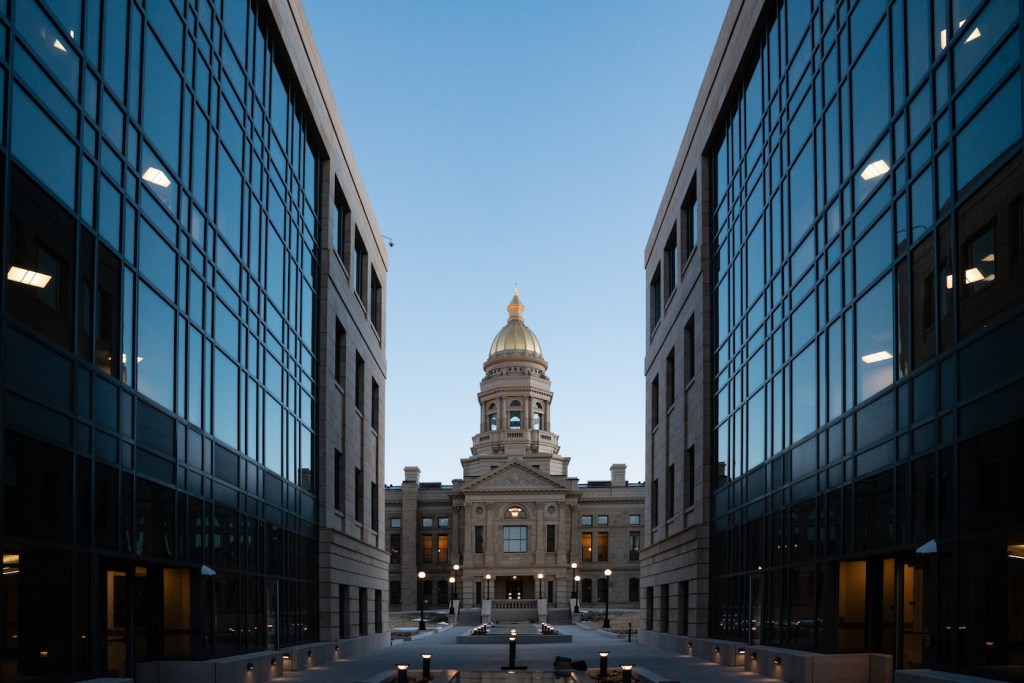


A bill to fund Wyoming’s K-12 public-school system failed introduction in the House on the opening day of the Wyoming Legislature’s budget session — the legislative equivalent of death.
The Legislature is constitutionally required to fund its public schools and is tasked every five years with the so-called “recalibration” process. The exhaustive task involves assessing the state’s school funding model and making necessary updates; it impacts everything from teacher pay to class sizes to school nutrition in all 48 districts.
The House version of the bill, House Bill 110, “K-12 Public School Finance,” was unpopular among Wyoming educators and school administrators.
A special committee of lawmakers drafted the bill over several months with the help of consultants. Though many educators praised a teacher pay raise, critics blasted elements of it that would raise classroom sizes, mandate school districts take part in the state health insurance program and delay addressing issues like school nutrition and mental health counselors mandated by a 2025 court order.

Even with recent amendments to the bill in what appeared to be response to public outcry, the legislation may have been too unpalatable, said Cheyenne Republican Rep. Landon Brown.
“To me, it looks as if there were too many downsides to the bill, that too many people saw too many downsides and therefore they were not even willing to try to fix it,” Brown said.
The vote doesn’t mean recalibration can’t still survive. A “mirror bill,” which is essentially an identical version, is still in play in the Senate with Senate File 81, “K-12 public school finance-2”. An individual lawmaker could also bring a new recalibration bill, though any fresh legislation would face the tight deadline and high voting standards of Wyoming’s budget session.
The bill’s demise is a mixed bag, according to Kim Amen, president of the Wyoming Education Association, the education lobby organization that brought the lawsuit that resulted in the 2025 court order.
“By not introducing the school funding recalibration bill in the House, it shows that lawmakers are hearing from educators, parents, and community members who know the bill falls short,” Amen said in a Monday statement to WyoFile.

She is, however, troubled by the drafting of legislation like House Bill 123, which authorizes educational savings accounts. Similar legislation is currently tied up in a legal challenge.
“Instead of continuing to divert resources to private schools, lawmakers should focus on fully funding Wyoming’s public schools and the more than 93% of Wyoming students they serve,” Amen said.
What happened
The recalibration process has unfolded in a series of meetings, studies and assessments that began last summer. It comes with extra gravity following a 2025 court decision that Wyoming has failed to adequately fund its public schools.
Working with consultants, the Legislature’s Select Committee on School Finance Recalibration drafted and refined a bill dictating how it will pay for public schools. The process has been scrutinized by educators and others who say Wyoming has failed to keep up with teacher salaries, leading to staff shortages and erosion of Wyoming’s historically stellar public school reputation. There was also vehement opposition to provisions to increase class sizes and mandate state health insurance participation, with superintendents arguing that the draft funding model would significantly reduce local control.
The bill was among a list of bills introduced to the House Chamber on Monday. Because it’s a budget session, those bills required the aye vote of two-thirds of the lawmakers, or 42 votes. The recalibration bill failed by a single vote, with 41 in favor and 21 opposed.
The voting bloc that killed it included several Democrats and a handful of moderate Republicans. Brown, who has formerly served on the Legislature’s Education Committee, said he believed it was worth trying to improve the bill draft, particularly in light of the District Court’s 2025 decision and other previous court decisions that have delineated the process. Even if it would have been an uphill battle, as he expected.
“I do believe that we needed to show a good faith effort to the [courts] that we actually attempted to fix the issues they have found to be at issue with us, and the way we are implementing current statute,” Brown said.