
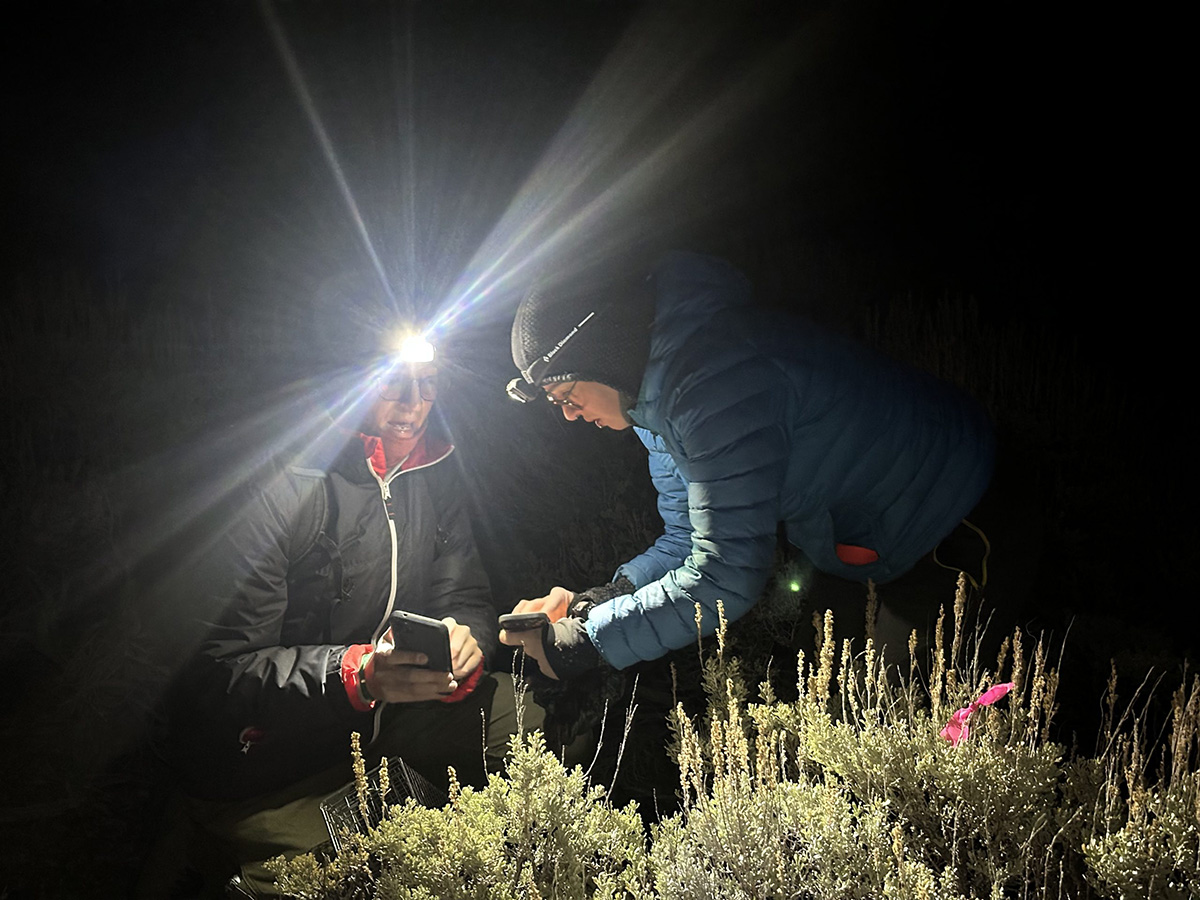

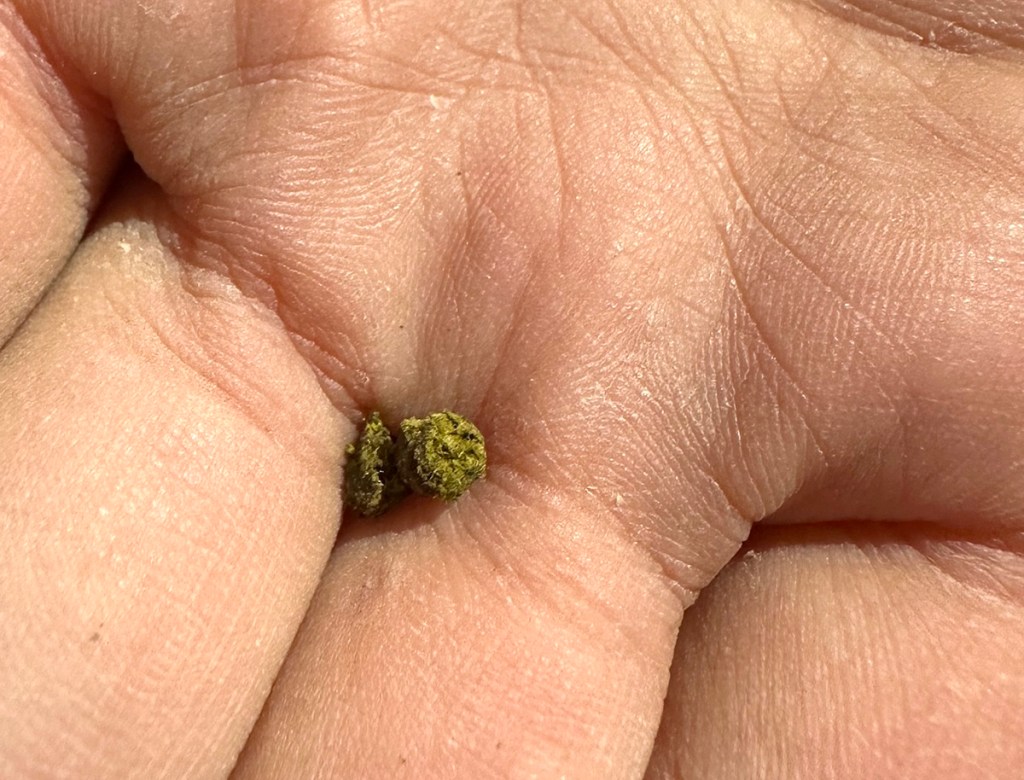
NORTHERN RED DESERT—Ilaria Bacchiocchi cracked a smile as she explained the nontechnical term her research crews use for the tiny cylinder of digested sagebrush resting in her palm.
“Fresh out the butt,” Bacchiocchi said Tuesday. “FTB, we call it.”
The tiny pellet’s green interior and pliability suggested it had been expelled quite recently, she said.
A pygmy rabbit, in other words, was nearby.
That was a promising sign for the University of Idaho doctoral student, who was setting out 67 live traps in the entrances of pygmy rabbit burrows in the dark. Catching one would allow her to take a tissue sample — a tiny punch through the ear — to learn how Wyoming’s pygmy rabbits are genetically adapted to their environment and climate.
The cryptic little rabbit is being subjected to research and monitoring partly because it’s a “species of greatest conservation need” in Wyoming, where it faces threats from disease, climate change and habitat loss. There’s also a fresh push to protect the species via the Endangered Species Act — a decision that could limit land uses in energy-rich southwestern Wyoming.
Sagebrush constitutes 99% of a pygmy rabbit’s wintertime diet. The little lagomorph simply can’t hack it without the right combination of mature, thick sagebrush and soil that allows for den-building.
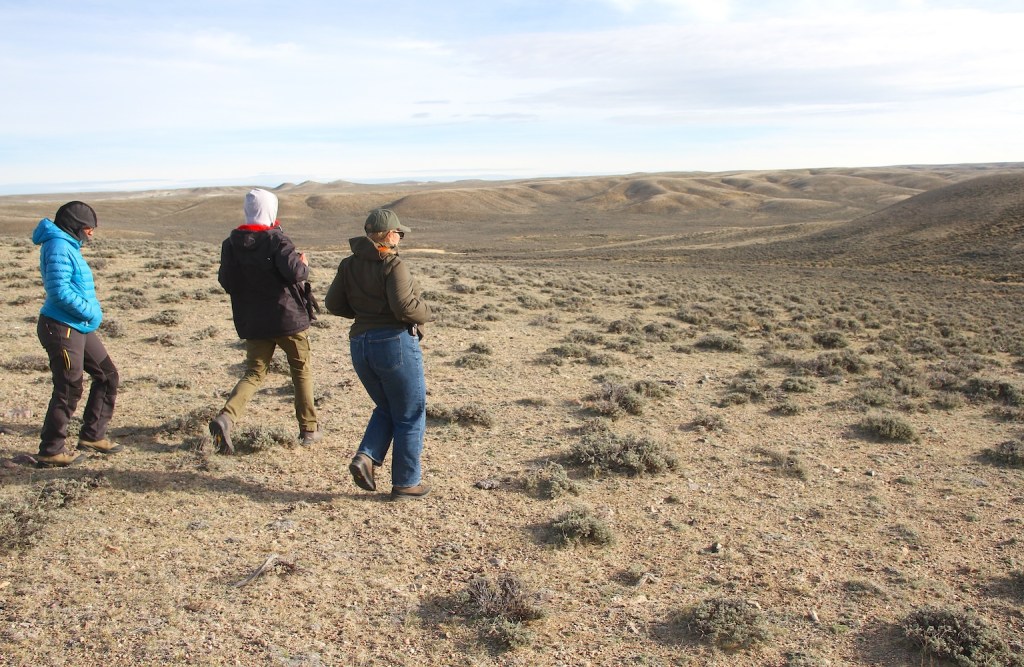
Finding their burrows is relatively easy. A brisk wind buffeted the crew — working quietly two hours before sunrise, to avoid spooking any rabbits — as they searched meticulously for the holes in the ground amid a thick, sagebrush-strewn draw near Bison Basin Road in the northeastern Red Desert.
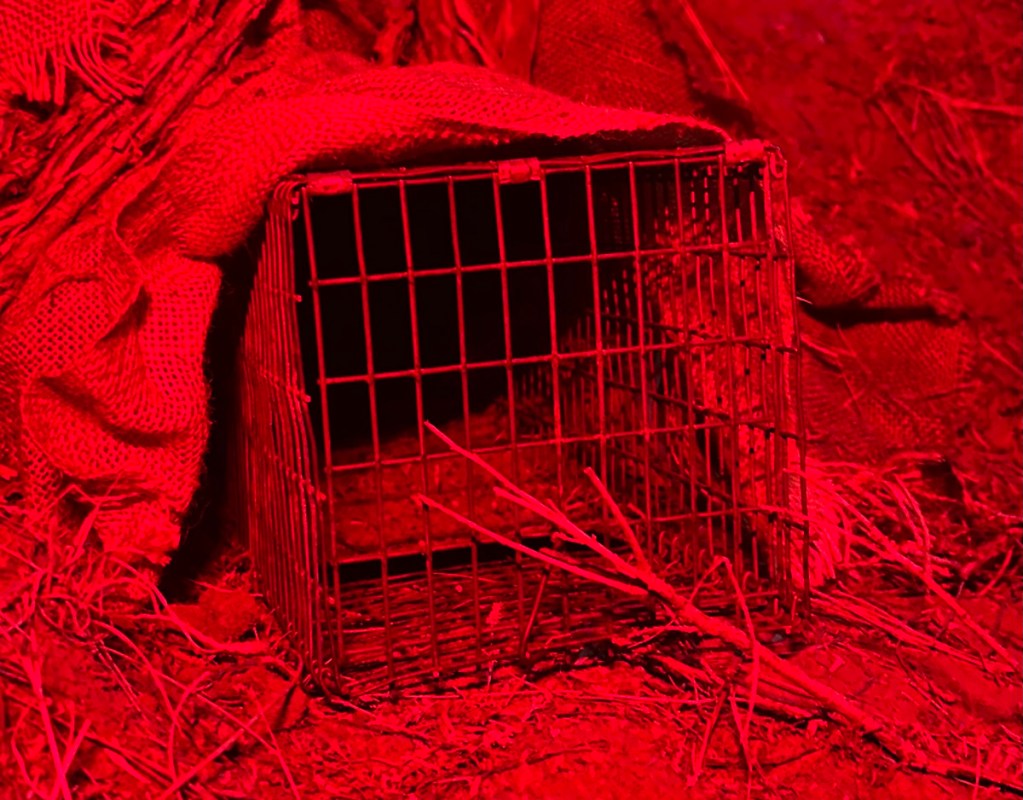
Getting genetic samples is surprisingly difficult. Along with two other biologists, Bacchiocchi placed the long, rectangular metal traps at one entrance after another. They draped them with light-blocking cloth, hoping to entice rabbits into thinking the trap was an entrance into the underground tunnel system. Adjacent burrow holes got “plugged” — wadded up black plastic bags did the trick — to deter escapes.
Even before finding the fresh turd, there was reason to believe this was a likely haunt for pygmy rabbits.
“We kind of knew they were here,” said Dana Nelson, a nongame mammal biologist for the Wyoming Game and Fish Department.
Nelson, who joined Bacchiocchi, is leading Wyoming’s latest survey of pygmy rabbits. Past surveys in 2013 and 2019 suggested that they burrowed and bounded in this draw, she said.
The pygmy’s vulnerability is tied to the habitat it depends on: The embattled sagebrush-steppe biome. Along with dozens of other vertebrate species, the pygmy rabbit can survive nowhere but this ecosystem, which is disappearing and degrading at an average rate of 1.3 million acres — an area about the size of Grand Canyon National Park — every year.
Sagebrush bound
While some aspects of basic pygmy rabbit biology are well understood, there are big questions about how Brachylagus idahoensis will fare in the long run. High on the list of threats that have emerged is RHDV2, a highly contagious and deadly hemorrhagic disease. It hasn’t been confirmed yet in Wyoming pygmy rabbits, but some populations in Nevada, where the disease was confirmed, appeared to blink out, Nelson said.
There are also questions about how pygmy rabbit populations respond to mounting disruptions to habitat. Past research suggests they like for their sagebrush to be left alone: Prescribed burns and crushing sagebrush (i.e., aerator treatment) inhibit pygmy use of an area, according to Wyoming’s species account, and could negatively impact this species.
“Fragmentation and loss of sagebrush habitat due to energy development currently is occurring throughout the species’ range in Wyoming,” state wildlife officials wrote. “Furthermore, exposure of Pygmy Rabbit to energy development in Wyoming is predicted to increase 105% by 2030 based on models of current species distribution and projected energy development.”
Climate change — the sagebrush sea is already heating up with more warming expected in the decades ahead — is yet another threat.
“They do appear to be pretty thermally sensitive,” Nelson said, “and they have a fairly narrow range of temperatures that they can tolerate.”
By analyzing differences in pygmy rabbit genetics around the species’ range, Bacchiocchi’s research could eventually pinpoint populations that are better suited to deal with the heat.
Meantime, it’s difficult to say exactly how pygmy rabbits respond to the various habitat stressors.
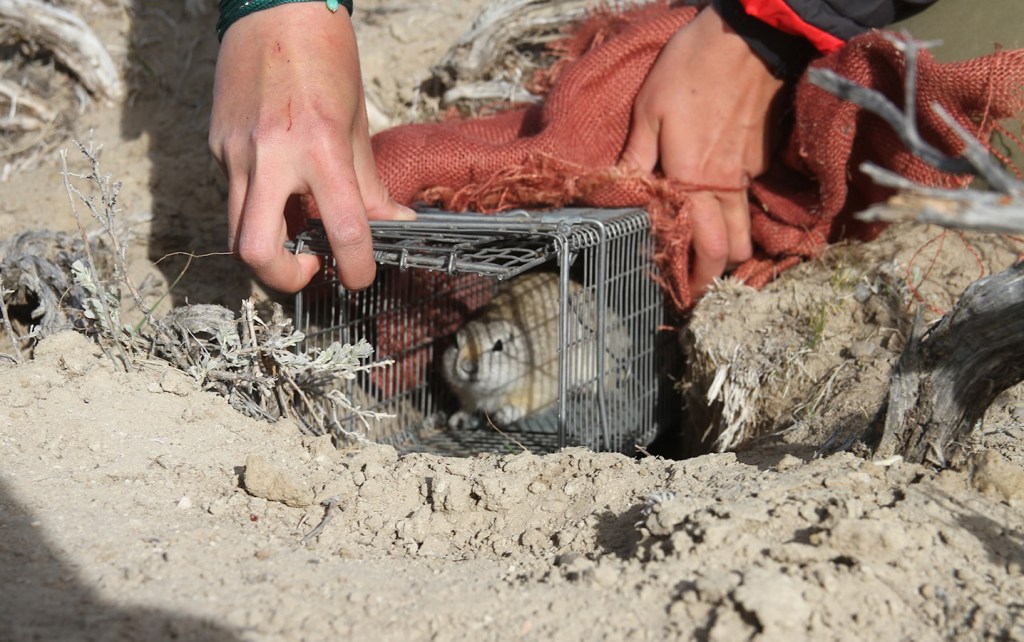
Partly that’s because individual animals are tough to catch — their wariness on display Tuesday. Nelson, Bacchiocchi and University of Idaho wildlife tech Sacha Wells checked the 67 traps for the first time at 9 a.m. A good chunk of them, perhaps 10, were closed.
A small, restless mammal awaited in each.
Wyoming ground squirrels. Every time.
The ubiquitous chislers were released, and traps reset for a second round of checks later in the morning.
Quirky little pygmies
Pygmies, or “pigs,” as affectionate biologists call them, are both the world’s smallest rabbit and the only lagomorph species that digs its own burrows. They’re arboreal, at least with sagebrush, and sometimes leave their itty-bitty pellets behind in the waist-high crown of plants they’ve climbed.
Like any good rabbit, they’re eaten by everything. Bacchiocchi has encountered lots of weasels in colonies and she’s seen evidence that ravens will go after kits.
“Their predation rate is nuts,” Nelson said. “It’s the main source of mortality. Some of the old papers say that up to 80% can die each year due to predation.”
Pygmy rabbits weren’t known to exist in Wyoming until 1981, when Jackson Hole biologists Susan Clark and Tom Campbell came across some south of Kemmerer.
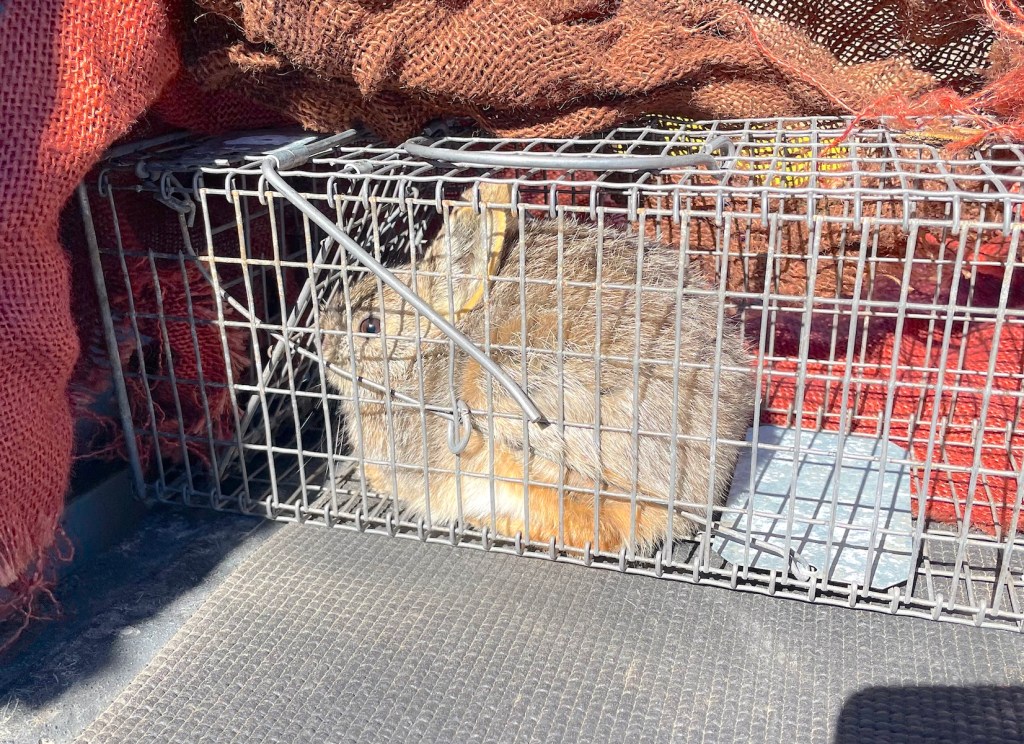
Clark remembers it well 45 years later. She was out doing black-footed ferret surveys when she came across a different critter she wasn’t expecting to see, she told WyoFile.
“Every once in a while we’d come to these draws with really big dense sagebrush,” Clark recalled. “I noticed this little rabbit in those areas. I worked in Idaho before, so I knew about them. And I realized pretty quickly exactly what they were.”
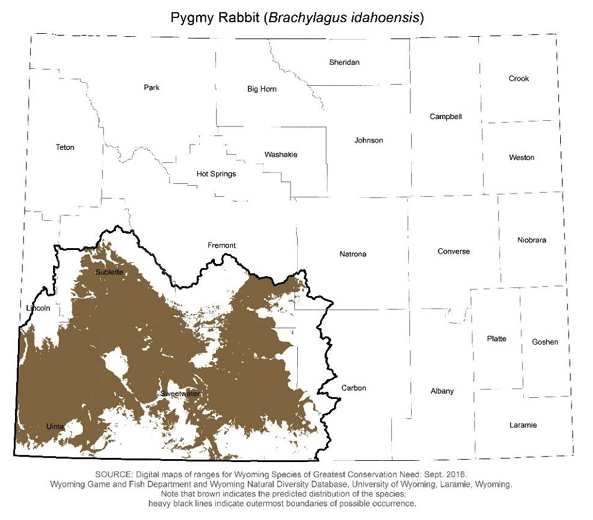
Today, biologists have a pretty good grip on where exactly pygmy rabbits are found within Wyoming. Generally, they dwell in the state’s southwestern corner, with a range that includes the Bear, Green and Sweetwater river watersheds, plus the Red Desert.
Game and Fish’s 2026 surveys include 108 different locations. Nelson and her colleagues have documented pygmy rabbit sign at about half of those sites. That’s “encouraging,” she said, because 2013 surveys found them at a similar proportion of survey sites.
“Relative to other parts of their range,” Nelson said, “Wyoming looks pretty good.”
Tuesday’s Red Desert capture attempts occurred near the very easternmost reach of pygmy rabbits’ eight-state range, which extends west all the way to the Cascades in southern Oregon.
Pygmy rabbit populations are thought to be fragile enough that they’ve repeatedly been petitioned for protections under the Endangered Species Act.
Efforts to list the species in 2003 and 2010 failed, though did yield “endangered” protections for an isolated, genetically distinct population in Washington.
A third attempt at listing the broader species has some traction. In January 2024, the U.S. Fish and Wildlife Service signaled it would take another look in response to a new listing petition from Western Watersheds Project. The agency wrote that “the compound effects of fire, cheatgrass, and climate change” suggest there is a “substantial” indication that listing the pygmy rabbit rangewide “may be warranted.”
‘Threatened’?
Federal wildlife officials have been studying that possible listing ever since, albeit at a pace that has displeased petitioners. Western Watersheds Project sued over the agency’s failure to meet timelines required by the Endangered Species Act.
Clark, the biologist who first identified Wyoming pygmy rabbits, encouraged federal officials tasked with overseeing wildlife to err toward listing.
“The bottom line is we need to protect all the biodiversity that we have,” she said. “I would be for trying to protect them. The business-as-usual things that we do need to be looked at very, very carefully.”
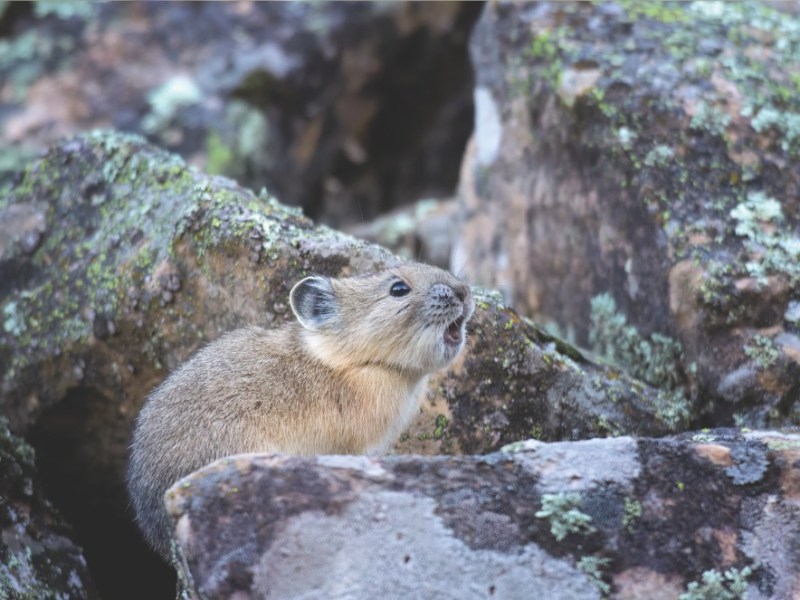
For now, pygmy rabbits are keeping their current designation as a state-managed species.
They’re slated to remain a “species of greatest conservation need” in Wyoming’s under-review State Wildlife Action Plan, which is set to be finalized by the end of June.
At this juncture, there’s not a lot that land and wildlife managers do deliberately aimed at helping pygmy rabbits.
“It’s hard to prescribe conservation actions,” Nelson said, “when it’s a species we’re still learning more about every day.”
So little is known about the pygmy rabbit, even a dead one is a prize.
Pygmy rabbit carcasses are shockingly seldom seen, the rabbit biologists bemoaned during a break between checking traps in the Red Desert. Because they live in the thickest patches of sagebrush, people rarely tread through their habitat. When they die, they’re typically eaten quickly. Even their little bones are quick to decompose.
“It would be a gold mine,” Nelson said of coming across a dead pygmy. “I don’t think our state vet lab has done pathology or a necropsy on one. It would just be cool.”
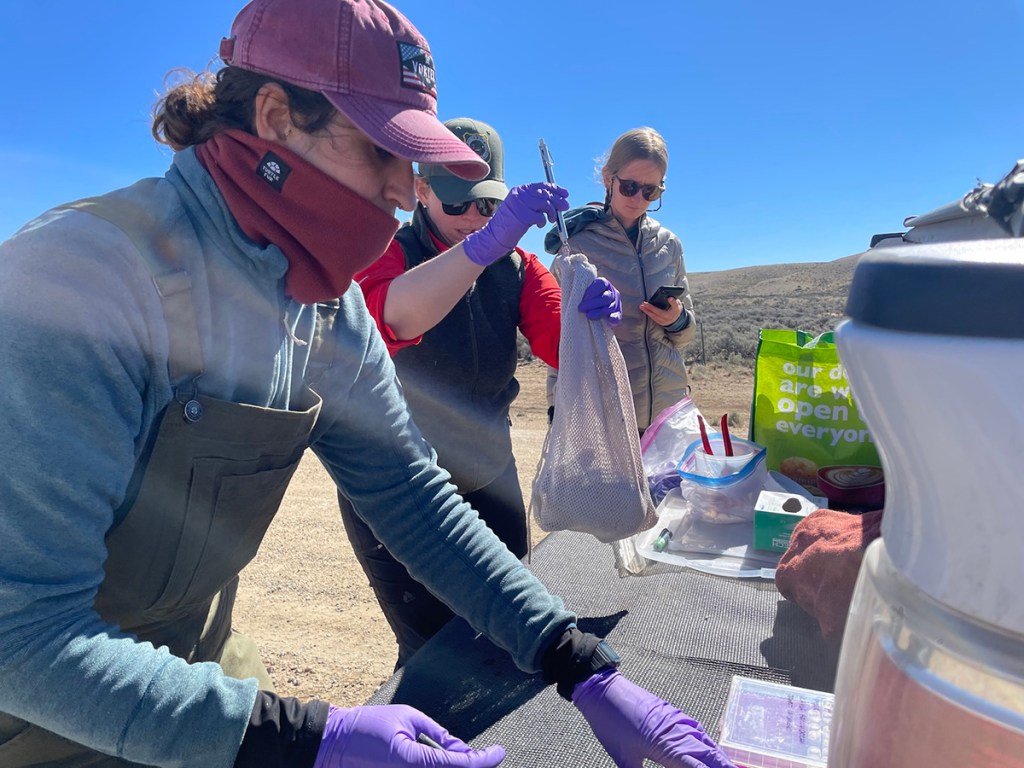
Sometimes pygmy rabbits are found dead after being struck and killed on roads that cross the sagebrush sea, Bacchiocchi remarked. The University of Idaho researcher hasn’t seen a road-killed specimen personally, but she knows they exist.
“There’s one in Oregon waiting for my ear punch,” she said.
During the second trap check at 11:30 a.m., it was much of the same: Wyoming ground squirrel, then another false alarm and another. No Red Desert pygmies were captured that day.
The crew did manage to trap a pygmy for a Bacchiocchi ear punch the Thursday prior. Chatting during downtime on the day fresh scat was the best the biologists could do, they marveled at how plump and healthy the little rabbit seemed. She tipped the scale at 1.1 pounds — a whopper of a pygmy.

The “embattled” sagebrush steppe the article pretty much leads with tells us exactly what these studies will show.
Energy development and livestock grazing that is blamed for climate change will be the culprit of the little rodents struggles. If these activities aren’t curtailed or stopper it will lead to their demise.
Excellent story, as always, by Mike! Fascinating little creatures!
Excellent article that highlights the importance of saving habitat. I didn’t see where the article remarked how this important sagebrush relies on the pygmy rabbit as much as the pygmy rabbit relies on the sagebrush. I can’t imagine the sagebrush-steppe biome exists in more than a few areas in the United States, which makes this little pygmy rabbit very special and unique to Wyoming. What other ideas are there to harvest energy without disturbing this paramount environment?
Sylvatic plague – additional comments: pygmy rabbit populations have a high probability of being decimated by sylvatic plague an introduced disease which affects prairie dog colonies; however, the plague kills virtually all rodents during an out break including rabbits, mice, chipmunks, ground squirrels, etc. I do not have personal experience with plague in SW Wyoming but I assume the SW is exposed to plague similar to other areas in Wyoming. My reading years ago found that an early documented sylvatic plague outbreak in the 4 corners area near the Navajo reservation in 1949-1951 wiped out about 500,000 acres of prairie dog colonies after its introduction into the US via a west coast port. Its here to stay and has caused serious problems for Wyoming’s black tailed ferret program; so, there is the potential for pygmy rabbits to likewise suffer. Not good news for a struggling population. Could be reason for listing as a T&E???
Another excellent article by Mike Koshmrl! It demonstrates the ongoing struggle that is occurring between human desire to protect the existence of other species & human self-interested desires to achieve profit. Humans have enacted major altruistic acts with respect to other species, most notably, the Endangered Species Act, but this Act & other protective measures are proving vulnerable to the powerful forces that want to exploit natural resources even those necessary to continue the existence of other species. During certain periods (e.g., the 1960-1970s), several legislative acts were passed that promoted aimed at protecting other species & our biodiversity but the Trump Administration’s policies show these protections can be reversed & thus welcome to the era of more species extinctions unless we have a reversal of this Administration’s policies which hopefully will come as a result of midterm elections.
Excellent article. The loss of 1.3 million acres per year of sage brush habitat is very concerning. Examining the loss from a cause and effect point of view, its directly attributable to population growth in the western US – the population of the US has almost doubled in my lifetime largely due to immigration. The pygmy rabbit is just one of many species which are threatened by subdivisions, solar farms, mining activity, wind turbine development, etc. The Biden administration did create several new national monuments in the west which will protect habitat; however, that positive conservation action was more than offset by flooding the country with illegal immigrants via an open border. Make no mistake, the environment including widlife will suffer greatly from unchecked population growth. I’m dismayed by the acreage lost to solar farms – especially in fragile desert environments. We must be looking at over 30,000 acres of solar farms in Wyoming – energy exported from Wyoming to the states experiencing unsustainable population growth now being threatened by available water restrictions. We had a lively discussion over coffee about the need to limit population growth in Jackson – my contention was that the challenge was how to protect the wildlife from too many people!!! We now have the third most people of any country in the world surpassed only by China and India. That can mean only one thing for pygmy rabbits and sage bruash ecosysytems – disaster.
These scientists are dancing around the elephant in the room. Prey animals need cover, something excruciatingly obviously MISSING. BLM Range manners have mismanaged horribly. The observers out there are studying the last vestiges of true wildlife and they know it. Try not to jump on the bandwagon of preferred blindness. Sickness and disease are the consequences of stressing wildlife and now you blanket their habitats with traps. Nice job. Get back to your desk