


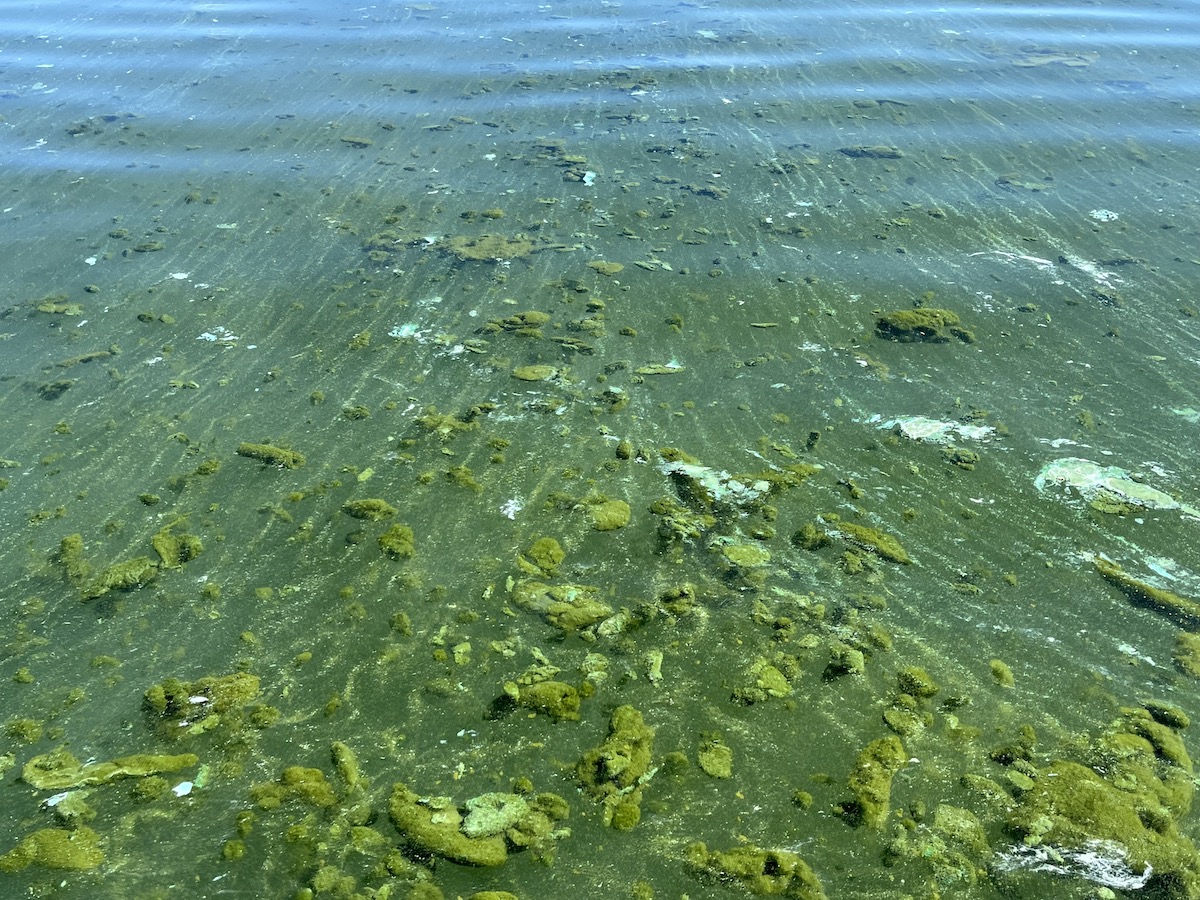
This summer, families arriving at reservoirs across Wyoming have encountered an unsettling message: Stay out of the water and keep dogs away. Why? The water may be poisonous.
Opinion
The state has issued toxic algae advisories at 20 lakes and reservoirs, including Boysen, Pathfinder, Glendo, Guernsey, Grayrocks, Big Sandy, Bighorn, High Savery and Lake DeSmet. These are places where generations of Wyoming families have swum, fished, camped, boated and cooled off during the hottest weeks of the year. They expect them to be clean and safe.
The technical term is “harmful cyanobacteria bloom.” I prefer “toxic algae outbreak” because it better describes what people see and what is at stake: Green scum, floating clumps, paintlike streaks and water that can make people or animals seriously ill.
Contact with toxic algae can cause skin irritation, vomiting, diarrhea and other illnesses. Some cyanobacteria produce toxins that affect the liver or nervous system. Dogs face an especially serious risk because they drink while swimming and lick water and algae from their fur. A dog can die within hours of exposure.
Wyoming agencies are right to investigate reports, test the water, post signs and alert the public. Those warnings may prevent a child from getting sick or save someone’s cherished pet.
Still, a warning sign means prevention has already failed.
But imagine if we could have avoided the whole mess to begin with through smart prevention efforts.
Many affected waters are in watersheds where agriculture and livestock production are dominant land uses. Runoff carrying fertilizer, manure and eroding soil can deliver phosphorus and nitrogen to streams and reservoirs, feeding the toxic algae. Livestock with direct access to waterways and irrigation return flows can also contribute pollution. In more developed areas, failing septic systems and sewage discharges can add to this problem. Warmer water creates conditions in which outbreaks occur more readily.
This is not about blaming every ranch or farm, and agriculture has not been proven to cause every outbreak. It does mean Wyoming should examine the pollution sources most likely to affect these waters and address them before toxic conditions threaten public health and recreation each summer.
For many Wyoming communities, a reservoir is where people spend summer weekends, children learn to swim and boaters enjoy our public waters. These waters also support irrigation, fisheries, wildlife, livestock, and in some places, drinking water supplies. When toxic algae make them unsafe, the loss is personal as well as economic.
We should not settle into a routine in which outbreaks occur, the state posts an advisory and everyone waits for colder weather — only to repeat the cycle next year.
Wyoming needs a prevention strategy focused on keeping pollution out of the water.
The state should identify waters with recurring outbreaks, determine where fertilizer, manure, sewage and other pollution enter them, and develop practical, enforceable plans to reduce those loads. Where agricultural pollution is a significant source, Wyoming should work with producers — and require action where necessary — to keep manure, fertilizer and soil on the land and out of rivers and reservoirs.
Solutions can include fencing livestock away from sensitive shorelines and streams, providing off-channel watering, improving manure storage and application, restoring streamside vegetation, reducing erosion and managing irrigation return flows. State and federal conservation programs should direct more money and technical assistance toward watersheds with repeated toxic algae problems.
Communities also need help repairing failing sewage and septic systems, and wastewater permits must protect downstream waters. But Wyoming’s response should reflect the landscape. In many affected watersheds, agricultural runoff and livestock-related pollution deserve more attention.
Monitoring remains important. Wyoming needs enough staff, sampling and laboratory capacity to quickly find outbreaks and tell the public to avoid the area. But monitoring documents the problem, it does not prevent it.
The state also needs clear, protective water quality standards and measurable pollution-reduction goals. Without them, agencies can record the same outbreaks each summer without anyone being responsible for improving the water.
These measures will cost money, but so will allowing the problem to get worse. Toxic algae restricts swimming, boating, fishing, threatens pets and livestock, harms local businesses and can raise drinking-water treatment costs.
People should continue to check state advisories before heading to the water. Avoid green or discolored water, surface scum, floating clumps, foul smells and dead fish. Keep children and dogs out of suspicious water and report possible outbreaks to the Department of Environmental Quality.
The recent advisories tell us that pollution prevention is not keeping pace with the threat.
Wyoming’s leaders have a responsibility to protect clean water and public health. They should track down the sources of pollution, reduce fertilizer and manure pollution, strengthen water-quality safeguards and act before another favorite lake becomes unsafe.

The fact that Brook’s lake is on the advisory list demonstrates that even high elevation lakes that don’t receive significant agricultural runoff, whether from fertilizers or manure, can have problems with toxic algae. While attempts to reduce or eliminate the flow of pollutants into our lakes and streams are laudable and worth the effort, at best success in that venture will probably only reduce the severity of blooms when they do occur. With the continued warming of our climate, toxic algae advisories and the closing of lakes to swimming and boating are just one more unfortunate thing we’ll all have to learn to live with.
As a Casper, Wy citizen and General Manager of Phoslock USA, great article. However managing external inputs is never enough. Internal loading from lake bottom sediment can contribute more than 50% of the nutrients needed for cyanobacteria to proliferate. To your point, prevention is needed and Wyoming needs to start looking at how they can manage these eutrophic lakes before they get worse and cause greater problems for the communities that surround them. I deal with this all over the western hemisphere.
Justin,
Well done. As you know I fully agree. That is why we are funding the AR comparative community waste water study. When you are in Jackson Hole, I also should introduce you to the Brain Chemistry Labs. I serve on the board there and they have perfected testing equipment that can show how some algae (with BMAA) has dramatically raised the risks of neurological disease in humans and even dolphins. We should talk. Bob Paulson,
email = bob4aerostar@gmail.com, cell = 310 699 9936
Copper sulfate is a very effective algae control. Using copper sulfate has been banned because of water quality regulation due to possible toxicity to young fish. Answer this: what is preferable? Toxic algae blooms and clogged water ways or possible damage to trout population??