


The Department of the Interior is proposing updates to the regulations that govern Bureau of Land Management land-use planning, three years after a management planning process for 3.6 million acres of public land in southwestern Wyoming fueled a political firestorm.
The proposals aim to update a decades-old set of regulations by cutting unnecessary red tape, improving coordination with state and local governments and hastening decision-making for public lands across the country, according to an announcement from the department.
“The current planning process is too slow, too complicated and weighed down by outdated requirements,” BLM Director Steve Pearce said in the announcement. “These proposed changes would help the BLM make decisions more efficiently, reduce costs for taxpayers and improve coordination with the people and communities that rely on public lands.”
To conservation organizations, however, the changes would hinder public input and weaken what they consider to be a vital tool for protecting resources, the Area of Critical Environmental Concern designation.
“The administration’s new proposed rule on BLM land-use planning grievously limits public input and critically undermines the agency’s ability to conserve naturally or culturally significant places,” Wyoming State Director for The Wilderness Society Julia Stuble said. “It is another clear attempt to put politics over people and ensure top-down directives override local community input.”
The proposed changes are available for review in the Federal Register. The public can comment through Jan. 11.
The rules would impact BLM field offices nationwide. There’s no indication the furor surrounding Wyoming’s Rock Springs resource management plan revision influenced the proposal.
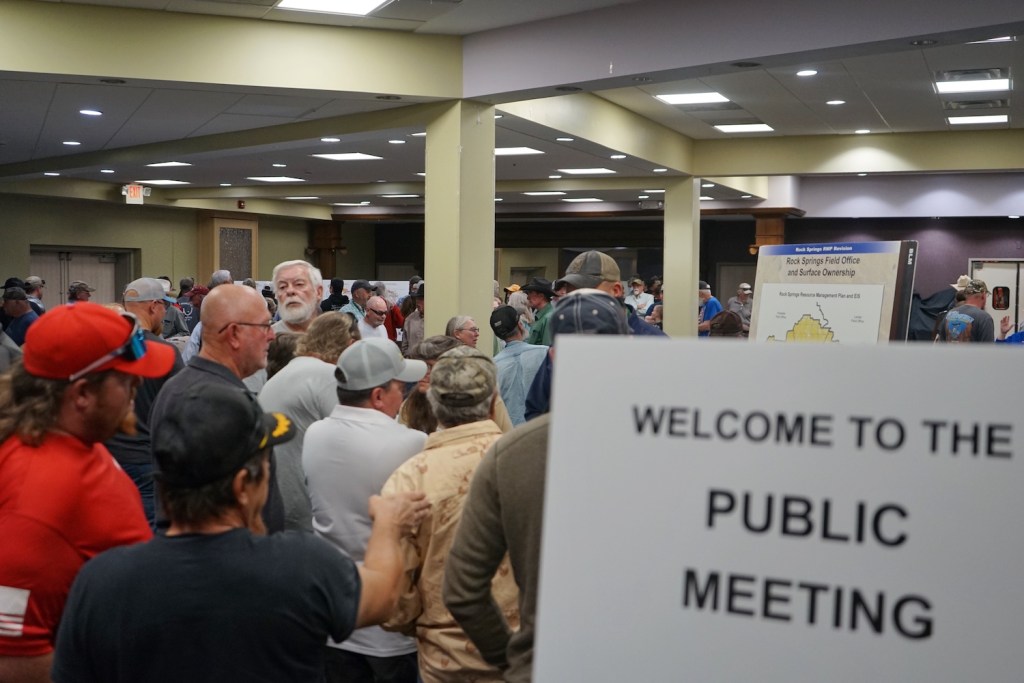
But for many state residents, the contention elevated a document once synonymous with a dry and tedious process — a resource management plan — into a household term. More than 15 years after officials embarked on its rewrite, the Rock Springs field office resource management plan update is yet to be finalized.
Land-use blueprints
The BLM manages more than 245 million acres, the most of any federal agency. The land is concentrated in the West, including Wyoming, where the agency oversees 18.4 million acres of public surface land — about one-third of the state.
The agency manages for multiple uses including recreation, mineral leasing and grazing. It also uses various designations, including Areas of Critical Environmental Concern, which are lands deemed to require special management to protect important values and resources from irreparable damage.
BLM field offices rely on resource management plans to guide the management of their particular zones. These documents act as blueprints, identifying areas that can be drilled, grazed, recreated on or protected.
The creation of a finalized resource management plan entails a regulated series of steps like public scoping periods, public comments, resource inventories and exhaustive environmental impact statements. That process is what the agency is considering changing.
The BLM first adopted its land-use planning regulations in 1979. The rules have been updated twice since then. The latest proposed updates would “update planning terminology, eliminate duplicate requirements and simplify parts of the planning process that have become unnecessarily burdensome over time,” according to the Interior Department.

The proposed changes include many tweaks, revisions and deletions. Among them:
- Redesignate the section titled “Environmental Impact Statement” to “Environmental compliance,” and remove language in the section that requires the BLM to prepare an environmental impact statement every time it develops or revises a plan.
- Amend the public participation guidelines to: remove a requirement to publish notice in the Federal Register at the initiation of the planning process; remove a 30-day public comment period on any significant changes made to a proposed plan prior to issuing a decision; and remove the 90-day public comment period requirement for all draft land use plans, revisions, and amendments supported by environmental impact statements.
- Remove “burdensome” requirements in the existing regulations for Areas of Critical Environmental Concern. These include the existing requirement for the identification of Areas of Critical Environmental Concern in a draft land-use plan, the associated 60-day comment period and the existing requirement for a Federal Register notice publication.
These changes aim to achieve a more efficient and accessible process by cutting red tap and improving coordination with state and local authorities, according to the Interior Department.
“Public lands are set aside for the benefit and use of the American people,” Secretary of the Interior Doug Burgum said in a release. “They should be managed by the people closest to the land, not held back by outdated bureaucracy in D.C.”
But Stuble with the Wilderness Society said the proposals would actually do the opposite by shutting down public input opportunities — including shortening the governor’s review period.
“This is the type of top-down political over-reach that Wyomingites routinely reject,” she said.
What happened in Wyoming
In August 2023 the BLM released a long-awaited Rock Springs field office draft resource management plan. Its release followed more than a decade of scoping, inventories and stakeholder meetings aimed at updating the original plan — which was signed in 1997.
The area the plan would oversee is enormous — 3.6 million acres of public lands and 3.7 million acres of federal mineral estate in southwestern Wyoming, including the vast Red Desert, the prized hunting grounds of the Greater Little Mountain Area and several ungulate migration corridors.

The 2023 draft plan drew intense backlash. The draft’s conservation-heavy “preferred alternative” sparked outrage over stricter limits on energy extraction and expansions of protected areas. Critics lambasted the plan as an instrument that would kill the area’s economy and close off much-loved areas to outdoor recreation. Anger and misinformation — including erroneous information accidentally disseminated by the BLM itself — characterized the packed meetings that immediately followed. Some 35,000 comments poured in during the extended public comment period.
Amid that extended comment period, Gov. Mark Gordon announced the formation of a gubernatorial task force, tapping the University of Wyoming’s Ruckelshaus Institute to facilitate stakeholder conversations. The intent was to hammer out recommendations supported by all the interests represented — everything from trona mining to oil and gas, conservation and hunting.
The 11 members reached consensus on more than 100 recommendations for the BLM. The agency finalized the plan’s 550-page record of decision in December 2024, but nine months later the agency announced it would be amending the plan. When it made that announcement, the BLM said it would “review and revise” the plan to ensure it complies with several executive orders issued under the Trump administration, including Unleashing American Energy and Reinvigorating America’s Beautiful Clean Coal Industry.
Though BLM-Wyoming Acting State Director Kris Kirby told WyoFile in December the agency would have amendments signed by October, the plan has yet to be finalized.
