

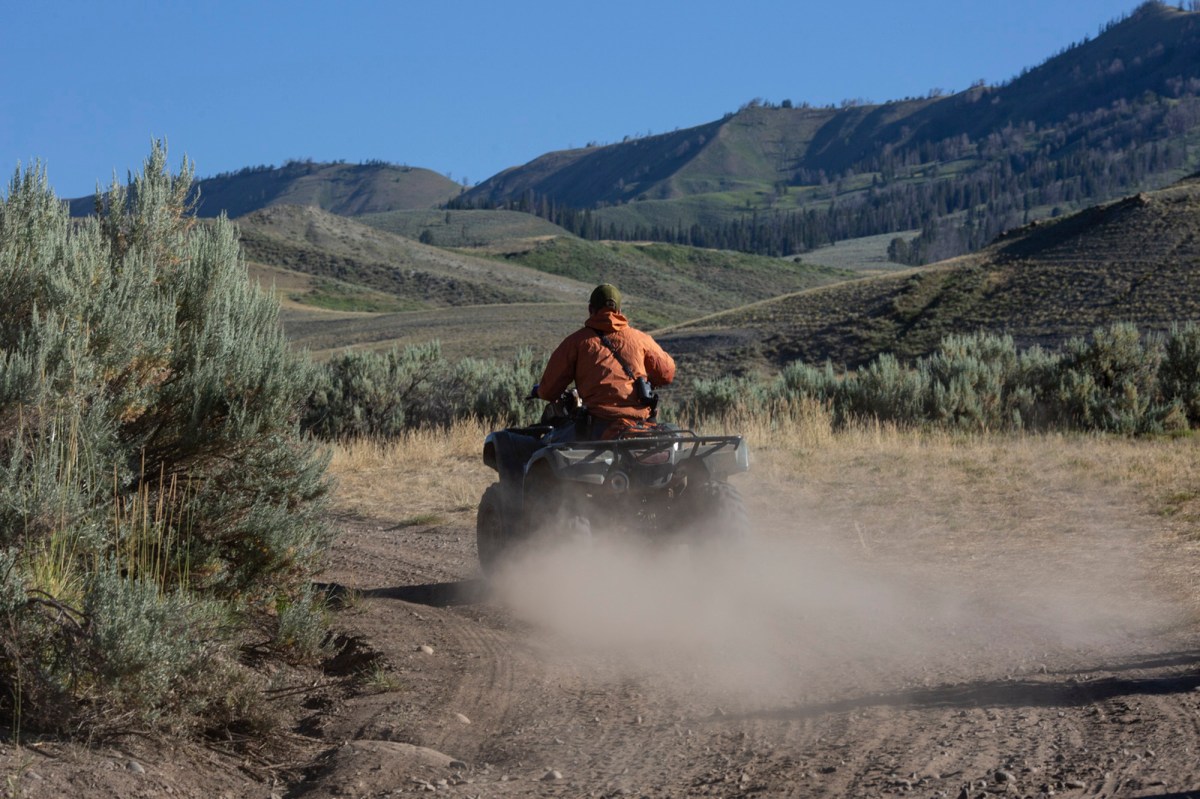
Declaring that Forest Service regulations “for too long … have stood in the way of public recreation access,” the Trump administration seeks to open some 6.2 million acres of public forest land in Wyoming to virtually unbridled motorized access, prompting widespread criticism from conservationists.
U.S. Department of Agriculture Undersecretary Mike Boren announced the plan Friday, saying that existing rules create “unnecessary barriers for Americans to enjoy the national forests and grasslands that they own.” The action, to be analyzed through an environmental impact statement, would increase access for motorized vehicles, e-bikes “and other mobility devices,” according to the agency.
Current rules would remain in place until updated at the local level, the announcement said.
A spectrum of conservation organizations criticized the plan, finding it galling that it came two days after the administration said it was removing protections for about 3.2 million acres of roadless national forest in Wyoming.
The Wyoming Wilderness Association warned the change would create “a greater free for all,” with “undue impact and unsustainable outcomes for our public lands.”
“I would argue that this is not in the public interest,” said Peggie dePasquale, national forest wildlands program director for the association.
National Forest visitors will see erosion, degradation of water quality, “loss of solitude for human-powered and quiet recreation types,” she said. “Hunting and fishing groups are saying that there stands to be impacts to those uses as well.”
Title 36 … Part 212 …
The plan would strengthen rural economies, maintain safe and sustainable transportation systems, and support working lands, the USDA said in the announcement. A new “uniform national policy” would presume that all “existing roads, trails, airfields, trailheads, and other access routes and points on National Forest System lands are open to appropriate public use.”
Areas and routes that would be closed must be “supported by specific, documented and justifiable reasons based on science-based resource conditions, public safety, conflicts among uses, or maintenance and administrative capacity.” National forest supervisors and their staffers would enact the new plan and seek input on what areas might be closed to engine-powered access, the announcement suggests.
That doesn’t sit well with conservationists.
“I would argue that this is not in the public interest.”
Peggie dePasquale
“The threat of changing the paradigm from closed-unless-designated-open to open-unless-designated-closed comes with the risk of widespread expansion of user-created motorized routes and a fear of significant damage to important habitat such as streams and wetlands,” dePasquale said.
Those who drive or ride over public Forest Service property aren’t out to be destructive, she said.
“When people are able to go wherever they want, it’s not always malicious,” she said. But, user-created two-tracks and single-track motorized trails, “can create a large impact that is irreparable in a short amount of time.”
Existing travel management plans were not put in place to limit access per se.
“The goal [of existing rules] is to create a better, more durable access plan that works for everyone and keeps public lands worth visiting,” dePasquale said.
“We can’t even imagine, because of the evolution in these technologies, where these motorized uses will go into the future,” she said.
WyoFile sought reaction from Wyoming’s State Parks, Historic Sites and Trails agency, which operates a trails permit system and publishes off-road vehicle maps of trails on state and federal land, but officials did not immediately respond.

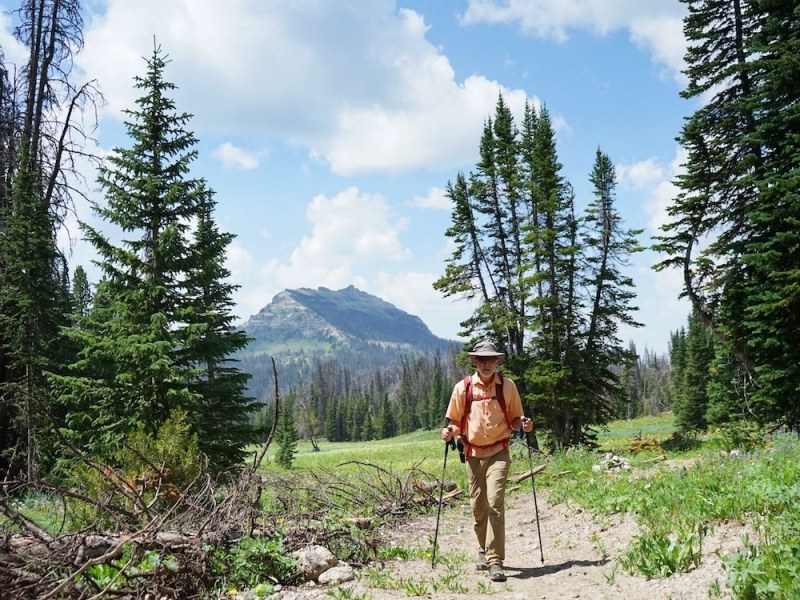
While the proposal from the U.S. Forest Service’s parent agency is cloaked in layers of administrative jargon spread over a bureaucratic warren (Code of Federal Regulations Title 36 Chapter II part 212; Travel Management Subpart A — Administration of the Forest Transportation System), people who travel into national forests shouldn’t shy away from reading it for themselves, dePasquale said.
Understanding firsthand what the change could mean will be important, opponents of the paradigm shift argue, even if the administration ignores public opposition.
“We have to stay hopeful,” she said. “We have to recognize the importance of being able to show the public record to an administration down the road to breathe life back into these protections that so many Americans care about.”
There are 9.2 million acres of national forest in Wyoming, 3 million of which are designated as congressionally protected wilderness where motorized use is not allowed. That leaves about 6.2 million acres that would be affected by the proposal.
People can comment by Sept. 23 at the government’s website for the plan.

There are already ATVs and side by sides all over the place being noisy and making dust. Getting harder to find quiet places where it’s humans or horses only. More ATVs will increase invasive species spread and wildfire risk.
yeah, well said
Well, actually it’s not going to make much of a big deal. If we continue with the drought we’ve been in for about 26 years, and, which was predicted by scientists way back in the late 1800’s there won’t be any forests here. I have a ranch where creeks and ponds have been drying up for most of my 7 decades. Our biggest issue is with climate change but – hey – it’s just a hoax, right? At least the armchair experts claim.
Throwing his supporters a bone after emptying their wallets.
more uses on USFS ground that is negative to wildlife. This is Senator Mike Lee’s backdoor acquisition of public land!
Trump’s never been to a national forest.
It’s about time, they closed so many active roads after slick Willie got in, just open the roads they closed and most people would be happy, and like I said in my last post that wyofile did not post , log off the dead timber, that will cure your wildfire problems!
Mr Poppe,
Sawmills will not take dead standing timber. Sawmills would not take beetle killed timber. As for wildfire woes, from Federal data:”more than three-quarters of all the wildfires in the U.S. tend to be started by people, whether through negligence such as a campfire that wasn’t fully extinguished, a downed power line or deliberate arson.” So I’m having issues with why you think it’s such a great idea to reopen roads that have been closed for decades. A 6 billion dollar backlog in road maintenance exists currently just with the road system we have. Where do you propose the funds will come from to open those roads that have seen no maintenance for a couple of decades.
2010 the Black Hills National Forest went from “open unless designated as closed” to “closed unless designated as open” It has taken over a decade to get people to recognize this change, and still there are some who refuse to accept it. Today, there is over 3800 miles of roads and trails available within the BHNF. There are those who insist that you can’t tell where a motorized vehicle has gone, but they’re wrong. Herds of people descend every summer on the Black Hills to recreate. Many of them either bring their motorized UTV with them or rent one while they are on vacation. For those vacationers, it’s a tremendous opportunity for them to see and enjoy something “non urban” for a change. Most of these vacationers are good responsible people. But there are always some that will take advantage of regulations. Don’t get me wrong, there are also some locals that refuse to kowtow to the changes and continue go around gates or barriers that have been placed to limit public access. Personally I feel that back in 2010 we, for the first time, headed in the right direction to limit access, preserve land and protect unnecessary encroachment on wildlife. This proposed change is stepping backwards, I see no good that will come from it, and unfortunately if it does come about…it will take us decades again to get back to where we are now. Public lands have always been open to the public, but that doesn’t give anyone the right to take a motorized vehicle anywhere you want to go. Try getting off your butts and walk, you just might be amazed at the things you see and the sounds of the forest as it is meant to be.
there are place for atv’s keep them out of the forest’s
Reopening motorized vehicle access does not “unleash” vehicles from existing rules or regulations. Designated wilderness and National Parks will maintain their restrictions. In all other multi use public lands there will still be restrictions or regulations on types of vehicles, requirements to stay on existing roads, trails, or tracks. Seasonal closures to preserve roads from damage, or problems with erosion, etc. The hand wringing is just performative outrage to keep public lands restricted for public use.
Give an ATV rider an inch and he’ll take a mile.
That’s just the “fake” atv riders, Gordon.
Most in the off roading community are responsible and conscious stewards of the lands they have access to.
You seem to often paint with a very broad brush.
It only takes a few, and there are more than a few.
exactly!
Having motorized vehicles going deep into the forest wheel will drive animals like elk onto private ranches. Hunters will have less success hunting. Ranchers will have issues with their haystacks. What could possibly go wrong?
They need to control it.or it will be a mess. But on the other hand people take their campers and leave them 3 months or more and they only should be there 16 days.then they will come close a road down that has been being used for many year…just because they can.you never see them opening a road up. Needs new kind of management
Yes, Steve, closing access and never reopening has been happening since Clinton. I have personally seen the Feds go to great lengths and cost to close roads, dispersed campsites, even foot access, etc. from in WA., OR., AZ, and Wyoming.
It’s called Rewilding, and it is an agenda that has been implemented for over 30 years now to make human access to public lands more difficult.
It only makes access difficult to those who won’t leave their vehicle.
How about George Washington, did he have anything to do with it?
From the Federal Register…
The proposed access rule would establish processes and conditions for limited off-route motor vehicle use and other motorized equipment for, among other things, downed big-game retrieval, firewood collection and dispersed camping, and for designating areas for over-snow and other motorized recreation.
Yesterday was 3 for 4 on the Trump headlines.
“Trump proposal”?
Trump doesn’t even know what an ATV is.
Between the war/fuel prices and debt spending\inflation you have more than enough material to hang on Trump directly. At least Mike’s beef article literally contains Trump’s direct participation.
The reaching tarnishes credibility.