


Two more plaintiffs have joined a lawsuit alleging abuse at the Wyoming Boys’ School, including one who asserts he was shot with a bean-bag and run over by a side-by-side.
Haiden Willis and Koby Cranford joined the suit in U.S. District Court on Tuesday, adding their names to four others who claim they were abused and mistreated at the facility operated by the Wyoming Department of Family Services.
The suit names the two state agencies and 10 state employees as defendants in the action that alleges violations of rights protected by the Constitution, Americans with Disabilities Act and Rehabilitation Act. The two newest plaintiffs were held at the reform institution near Worland between 2019 and 2021, according to an amended complaint filed Tuesday.
“[A] security guard in the vehicle shot him with a be[a]n bag gun, and they ran him over with the side-by-side.”
Attorney Allison Mahoney
“They were boys, minors at the time, all with disabilities and all treated in quite a punitive and abusive manner at the Boys’ School,” said Allison Mahoney, an attorney who represents Willis and Cranford. The correctional institution for juveniles is designed to be a rehabilitation center but “appears to not have been rehabilitating at all,” she said.
Both boys have been diagnosed with mental health and emotional disabilities and Cranford also suffers from PTSD, bipolar disorder and other maladies, the suit states. Employees at the Boys’ School denied Willis’ necessary medical treatment and ignored his pleas for help, the suit alleges.
Cranford’s incarceration and treatment exacerbated his mental health disabilities and “eradicated his ability to become a functioning member of society,” the suit asserts.
Defendants have denied charges in previous filings and have requested that the case be thrown out.
“Safety and security continue to be priorities for all boys court-ordered to the Wyoming Boys’ School,” DFS spokesman Clint Hanes wrote in an email Wednesday. “We do not tolerate abuse and deny any allegations of wrongdoing.”
Beaned by a bag
The two new plaintiffs’ allegations add to the list of abuses alleged by the other boys who claimed improper and inhumane use of handcuffs, shackles and restraint chairs, unjust solitary confinement and misuse of medications.
In Cranford’s case “the Boys’ School staff regularly provoked and triggered Koby in ways that they knew would manifest symptoms of his disabilities, giving the staff an excuse to restrain him and place him in solitary confinement,” the complaint alleges. “Staff also repeatedly changed Koby’s psychotropic medications, causing him to feel nauseous, loopy, and throw up,” documents state.
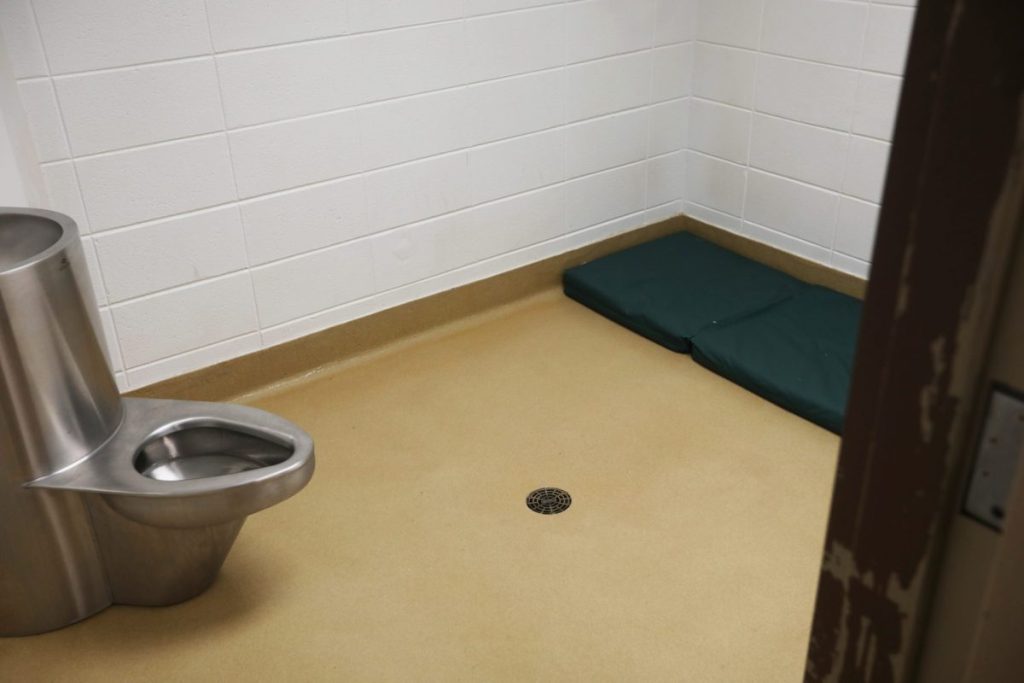
He was put in solitary confinement “including once for a month and a half,” the suit alleges. While in solitary, he went at times for several days without showering and was forced several times to shower while in shackles while staffers watched.”
The alleged abuse caused Cranford to try to run away.
“When Koby [Cranford] was outside, Boys’ School staff chased him on a side-by-side vehicle,” the complaint reads. “While following alongside Koby on the side-by-side, a security guard in the vehicle shot him with a be[a]n bag gun, and they ran him over with the side-by-side.
“Koby suffered several physical injuries and could barely walk for a few days as a result,” the suit states.
He twice tried to commit suicide, the filing states, once by hanging and another time by “smashing his head repeatedly against the wall.”
Boys’ School actions were “in reckless disregard to a substantial risk of physical and psychological harm to [Cranford],” the suit states. Defendants acted in bad faith and with deliberate indifference when they “disregarded” his suicide attempt, the filing claims.
Four months solitary
The Boys’ School incarcerated Willis twice, placing him in solitary confinement the majority of the time, the filing states. Staffers deprived him of medication, used excessive force and heaped ruthless psychological abuse on him, according to the allegations.

“School staff regularly provoked and triggered [Willis] in ways that they knew would manifest symptoms of his disabilities, giving the staff an excuse to restrain him and place him in solitary confinement,” the new filing reads. “[Willis] was held in solitary confinement for approximately three-fourths of his time at the Boys’ School, ranging from weeks to up to four months at a time,” the suit alleges.
Staff forced him to sleep on a concrete floor without a mattress, according to the allegations.
“[Willis] was allowed out of the room for approximately one hour each week to exercise,” the suit states. He “was also allowed out of his room for less than ten minutes every other day to shower,” according to the complaint.
Staffers slammed his head against a wall on one occasion, the suit claims. “Defendants subjected [Willis] to a substantial risk of serious harm by isolating him in confinement, placing him at risk for suicide, exacerbating his psychiatric disability, and causing him to experience further trauma,” the filing states.
Legitimate safety concerns
Defendants have denied the essential allegations in response to the second amended complaint introducing a fourth plaintiff, but not yet to the latest court filing introducing two more, for a total of six boys. In the state’s most recent response – which predates the recently added complaints — Senior Assistant Attorney General Debra Hulett asked the court to dismiss the complaint and award defendants costs they incurred.
In its response, the state offered 14 defenses, including legal constructs that protect government actions, require plaintiffs to have what’s legally known as “clean hands” and for the boys to act on their complaints promptly.
The state and its employees’ actions were the result of “legitimate safety requirements,” the response stated. Some of the boys’ problems stemmed from “unrelated, pre-existing, or subsequent conditions unrelated to Defendants’ alleged conduct” the response states. Finally, the boys can‘t collect some damages from the institutions and staffers because of laws that protect prison workers, the response states.


How can I join the suit? I was there twice, and can testify to everything the other plaintiffs mentioned, as well as my own experiences with being kept in that detention room for days or weeks at a time. I can say that the facility is a huge mental and physical strain, with a focus on mental abuse (staff was consistently racist, verbally abusive, etc) as well as times when they got overly physical (six to ten men pinning me to the floor, physically dragging me into the detention room). I want to see reform, so if there is any way I can help I would love to.
I’m glad that you have been covering this story and not barred the abuse claims made by the boys who were CHILDREN while staying at the home! They deserve to be heard and given compensation for the abuse they endured during their stay at the home and for changes to be made in the future of the boys home!
This is a very important topic. Thank you or picking up on it. Children learn from the example set by adults. What are the goals and philosophy of the Wyoming Boys School? What are the qualifications and experience of staff? What is the pay scale? Who overees the quality of care? How do we treat children who are dependent on the state for their well being?
Run over a wolf, run over a disabled kid. Run over anything you don’t understand.
One of the benefits of having a home grown news service is reporting histories on chronic problems such as those at the Boys School. The two stories above Thuermer’s byline are part of this history. Two parts of this systemic problem at the Boys School is staffing and DFS data collection and reporting. Thuermer documents the effects of both in this article.
Those who work with children at the boys school should have bachelors degrees at minimum. Already traumatized kids, no matter what they’ve done, should not be re-traumautized by State employees, which is a state of affairs at least 25 years old (when I first toured the boys school).
Line staff need to be educated in how to develop therapeutic relationships – which simply means the relationship exists to help the young man rehabilitate, to learn to deal with stressors in healthier, and legal ways. The way things work now everything is set up so that staff can control the movements and behaviors of the kids in their charge – the current system benefits the line staff, not kids.
I can see so many roll their eyes and condemn this kind of thinking as having some sort of liberal agenda. These young men were convicted of a crime and are being punished. What’s this about developing relationships? They are there to serve their sentence. Commit the crime, do the time.
If this is the actual thinking of Legislators who create policy, then why not be overt and honest and say the Boys School exists to punish, not rehabilitate. As it is the Department of Family Services does its best to obfuscate what’s happening on the ground. DFS had no data collection and reporting system 25 years ago that was honest, and still does not. DFS is failing to do its job, protect kids in its care. No matter what legal games the State plays, the bottom line is it is complicit in, and supports damaging already damaged Wyoming boys.
These are not throwaway kids although DFS and Legislature treat them as if they are.