


Hundreds of Rocky Mountain Power customers in the state have taken to social media to vent their frustration and ask why their monthly bills have skyrocketed.
Customers will soon have a chance to pose those questions about what’s driving a recent spate of electric rate hikes in Wyoming in person at a series of public meetings hosted by Rocky Mountain Power next week in Laramie, Casper and Rock Springs.
The increases are significant — inflating monthly bills by about 15% so far this year. The company, which serves some 144,000 households and businesses in the state, wants to add another 14.7% increase to monthly bills — and it is sure to find an impassioned audience at its meetings next week.
Casper resident Melissa Matheson recently posted on the Casper Business Rants and Raves Facebook page, “Holy hell, that [Rocky Mountain Power] increase is a gut punch. Damn! And they’ve already requested another?!?!?”

Her post generated 90 comments. Another Facebook post on the topic generated more than 160 comments — most of them from Wyoming residents concerned about their pocketbooks and wondering why the regulated monopoly utility is allowed to impose such large rate increases.
“I got my bill in August and I was just like, ‘Oh my goodness.’ It was much higher than I’d ever seen it before,” Matheson told WyoFile, adding that she’s a single mother who relies on electric baseboard heaters in one portion of her “older home.”
“I’m really blessed,” Matheson said. “Today, I have a good job … But if something like this had happened before I had finished school and before I got into the line of work that I’m in now, it would have absolutely crushed me.”
Series of rate hikes
Rocky Mountain Power, Wyoming’s largest electric utility, is part of billionaire Warren Buffet’s PacifiCorp, which operates in six western states. The company drew outrage from Wyoming ratepayers and elected officials last year when it proposed a historic 29.2% rate increase, listing investments in renewable energy generation and increasing costs related to fossil fuels to justify the hike.
Though the Wyoming Public Service Commission pared the rate hike request to a 5.5% increase in January, Rocky Mountain Power was permitted to add an $86.4 million, one-time fuel cost adjustment to ratepayer bills in July — a 9.3% increase that is “subject to refund” because regulators may retroactively adjust it later this year or in January.
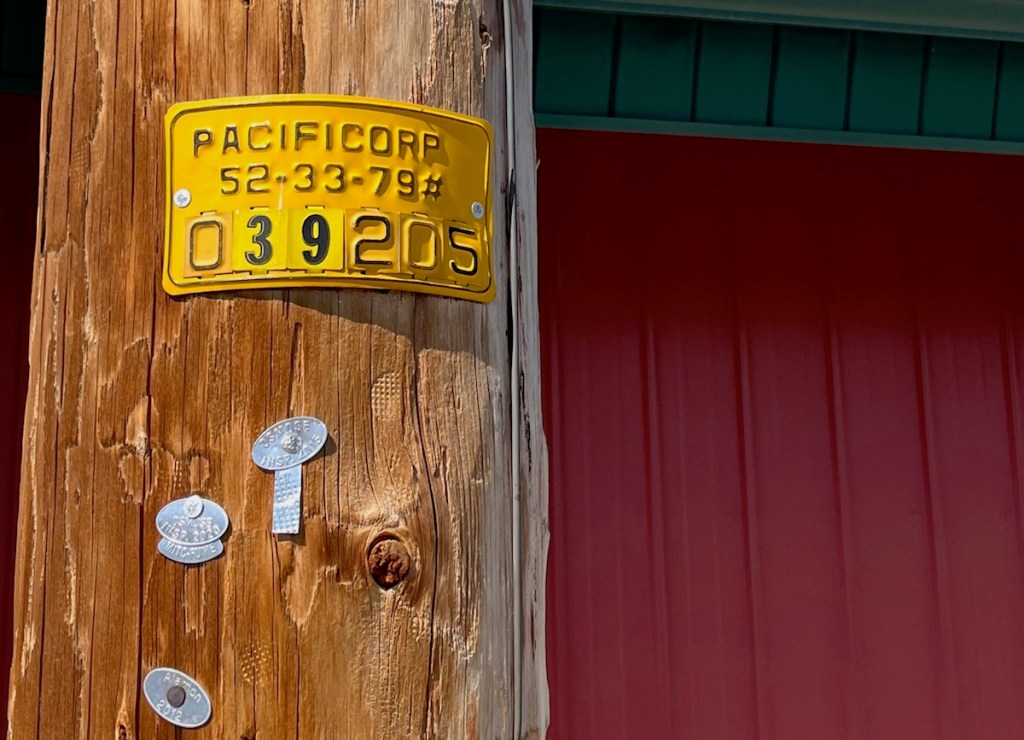
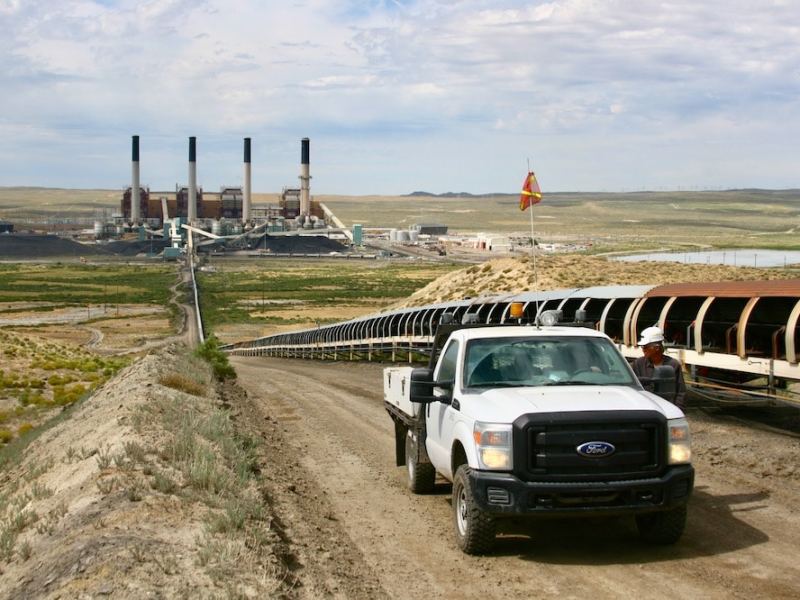
Now, the company has applied to state regulators for an additional 14.7% rate hike, tapping its Wyoming customers for an extra $123.5 million annually. This time, the drivers behind the request include $52.7 million to cover Wyoming’s share of new wind farms and the Gateway South and Gateway West interstate transmission lines connecting new wind energy in the state to markets in the southwest.
The other major driver behind Rocky Mountain Power’s latest rate hike proposal is liability insurance related to more frequent and intense wildfires across the West due to human-caused climate change.
Rocky Mountain Power’s parent company, PacifiCorp, could end up paying billions of dollars in various settlements for its liability in 2020 wildfires in Oregon. Those settlements, as well as the insurance industry’s response to electric utility liabilities for sparking wildfires, could potentially be passed on to ratepayers. Wyoming lawmakers are weighing how to potentially limit such liabilities, which industry analysts say could bankrupt some utilities and throw economies into disarray.
“Holy hell, that [Rocky Mountain Power] increase is a gut punch.”
Melissa Matheson, Casper resident
Rocky Mountain Power president Dick Garlish has testified before Wyoming lawmakers that, as a monopoly utility, it also has an obligation to provide the lowest cost, most reliable electrical service possible, and that requires upgrading aging infrastructure and investing in new facilities that — after initial investments are paid off — will help it meet those mandates, along with increasingly more stringent environmental standards. That’s difficult in a policy and economic environment that is going through rapid and historic changes.
“We recognize the impact that the rising costs of providing electric service has on customers,” Garlish said in a prepared statement earlier this month.
Customer meetings
Regulated electric utilities are not required to host customer forums when requesting a rate hike. However, Public Service Commission Chair Mary Throne admonished then Rocky Mountain Power president Gary Hoogeveen in October for not including Wyoming customers in the company’s outreach efforts regarding its proposed 29.2% rate hike in 2023. The company, however, did meet directly with its largest Wyoming customers — which includes a coalition of oil, natural gas and trona producers and refiners — as well as city councils and other local governments.
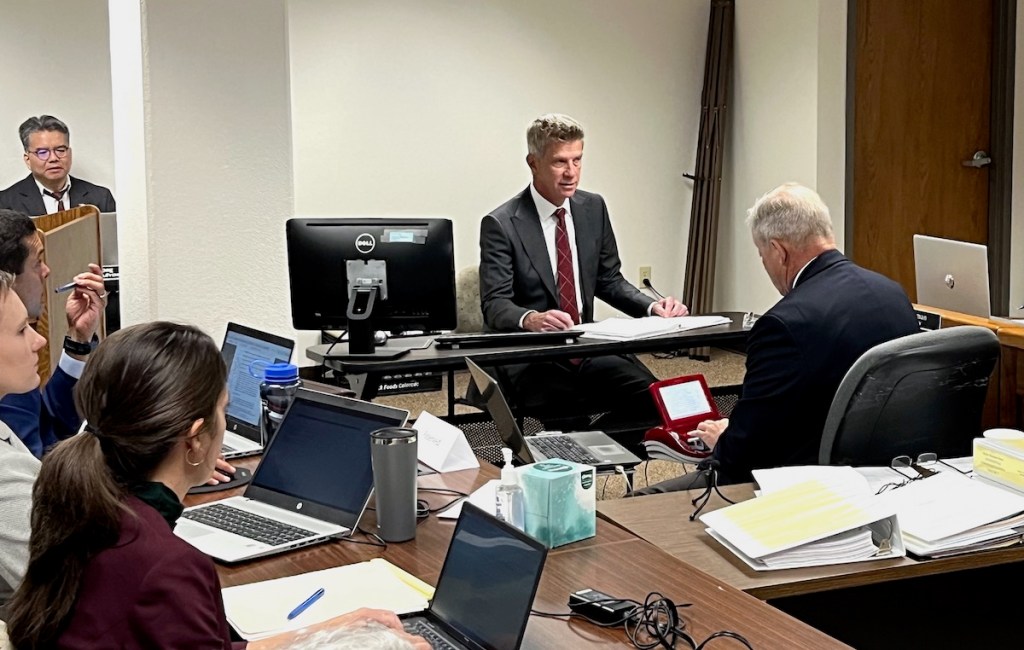
Instead, it was the Public Service Commission that took the unusual step of conducting five public comment hearings — prompted by the significance of the large rate hike request and a flood of public inquiries to the commission, Throne noted in October.
In response, the company held a series of customer forums in Wyoming in May regarding its proposed fuel-cost adjustment. The utility will host three customer meetings in Wyoming next week regarding its latest rate increase proposal. The company will provide information about why it is seeking rate increases, answer customer questions and accept customer input. However, any material changes to Rocky Mountain Power’s rate request “would most likely result from updated financial analysis or other evidence from the litigation process with regulators and intervenors,” Rocky Mountain Power spokesman David Eskelsen said.
° Laramie: Monday, from 2-4 p.m. for industrial customers, and 4-7 p.m. for residential and commercial customers, at the Hilton Garden Inn, 2229 Grand Avenue.
° Casper: Tuesday, from 2-4 p.m. for industrial customers, and 4-7 p.m. for residential and commercial customers, at the Ramkota Hotel & Conference Center, 800 N. Poplar Street.
° Rock Springs: Thursday, from 2-4 p.m. for industrial customers, and 4-7 p.m. for residential and commercial customers, at the Holiday Inn, 1675 Sunset Drive.



Although Dustin’s article is focused on utility rate increase discussions and my comments are perhaps too extensive and are perhaps better placed elsewhere, I had to respectively respond to the comment by Sarah Krall. Although Ms. Krall is absolutely correct that moving away from carbon-based energy is essential for the long-term conservation and protection of bird populations, and the general well-being of all other life for that matter, her comment ignores one of the primary issues facing wind energy development in WY. Moreover, the study she cited cannot, must not, be blindly used to justify development of any and all green energy projects – there are enormous differences in ecological risks between them! The truth is there are more than enough areas across the U.S. to fulfill wind and solar resource development needs without building inherently dangerous wind projects on top of sensitive and rapidly declining wildlife habitats, especially some exceptionally important habitats found here in WY. Of particular concern, almost all existing WY wind projects are constructed on top of some of the most critical golden eagle habitats found in N. America and are having a direct and profound impact on this species.
I have been involved in satellite telemetry studies of golden eagles in WY since 2014 and have captured a total of 217. Of those, I have satellite-tagged 147 eagles, 114 of which were actually captured/tagged on, or adjacent to, existing or proposed wind projects (as summarized, May 2024). Mortalities from the sample of satellite-tagged eagles have been surprisingly high with many dying from undocumented causes (mostly because of an inability to recover carcasses quickly due the remoteness and/or snowpack for areas where they fell). Nevertheless, 28 satellite-tagged golden eagles died from causes conclusively determined via necropsies or other kill-site evidence. Only 11 percent of those eagles died from “natural” causes (disease, other eagles). Eighty nine percent died directly from human related causes including wire strikes, lead poisoning, shooting, vehicle collisions, electrocutions, and finally, wind turbine strikes. Indeed, wind turbine kills represent, by far, the single greatest cause of golden eagle deaths here in WY (36 percent, compared to the next highest cause — electrocutions, at 20 percent, and historically regarded as perhaps the greatest contemporary cause of golden eagle mortality). These results are strikingly similar to the percentage of golden eagles killed by wind turbines (41 percent) during a landmark study of the Altamont Pass wind project area in California (Grainger Hunt W, David Wiens J, Law PR, Fuller MR, Hunt TL, Driscoll DE, et al. (2017) Quantifying the demographic cost of human related mortality to a raptor population. PLoS ONE 12(2): e0172232.
That percentage of turbine kill represents an astonishing rate of population loss, and an enormously significant, additive mortality factor for the golden eagle, a species which achieves sexual maturity at about 5 years of age, and has a relatively low, slow recruitment rate (compared with bald eagles, for example). In my informed opinion, local population levels of golden eagles in portions of WY are now in serious decline, and the impacts of existing wind farms in WY are already much too severe! Furthermore, wind company mitigation efforts designed to reduce eagle losses are largely ineffective, and the federal agencies responsible for properly managing golden eagles and other sensitive wildlife resources in the face of ever-expanding wind development are failing at their job!
Finally, the golden eagle should be viewed as a keystone/indicator species, and although it is perhaps uniquely susceptible to turbine strikes, golden eagles occupy habitats and focused migration corridors that are important to a myriad of other bird and bat species; undoubtedly, species also significantly impacted by improperly sited wind facilities! There is enormous differences in wildlife risk between constructing wind farms over monotypic, cultivated flatlands farther East, for example, than the native grassland and steppe habitats framed by narrow ridge-line migration corridors in WY. The potential consequences of accelerating wind development in WY are too dire to short shrift this issue in indifference or mischaracterization, and greater public focus on the severity of this problem is needed if golden eagles and other wildlife resources are going to be adequately protected for future generations.
This is all nonsense. Rocky Mt Power is a subsidiary of Pacific Power that has a hugh liability for the fire it caused (sparking power lines) in CA.
Rocky Mt Power has invested little in infrastucture in the 35 years I have been their customer. Pacific Power, far as I can tell, is now keeping Rocky Mt. Power on a short leash. The Utility, any utility, can get authorized
approved rate increases under Utility Regulations for inctessed fuel costs and infrastructure investment. So for all the years the tiny to negligible demand from low population WY was nothing much to bother with, and with high electric demand from oil and gas operations down its an opportunity for Rocky Mointain Power/Pacific Power to raise capital from its customers, rate increases.
They want the customers in energy producing states like WY to feel they are victims of renewable energy and higher gas prices, not the economic structure of Pacific Power/Rocky Mt Power a private Investor owned Utility regulated under outdated regulations poorly equipped to move into the future. The arguments about wind power for example is just what the company wants. It distracts from fundamental issues of centralized electricity and the grid with Utility companies in charge.
South Dakota just hit a milestone with f moving to #2 spot in renewable energy generation. Mainly wind generation. Now the catch is. It is 4167 Mega Watts a day! Sounds like a lot. But the catch is every Mega Wat will run 1000 homes. Reality is that is not many homes lite up. The grid is set up as is for reason. You can’t supply energy just as locally system. It doesn’t work due to fluctuations in demand. Even power plants rise and fall on output. Wind turbine/solar only have 12-15 year life. Demolition of old turbines to replace with new is expensive. Battery backup is not the answer either for large usage.
Are folks mentioning this study? Fossil fuel power plants kill 35 times more birds per GWh of electricity produced than wind turbines.
https://www.distilled.earth/p/fossil-fuel-power-plants-kill-35x
Most of which are pigeons. Not raptors.
One may empathize with many of the captive rate payers . . . but they are receiving the government they voted for.
In most cases the mere cost of fossil fuel electricity transmission is higher than the cost of electricity produced and transmitted via solar, wind, and battery (SWB). SWB is the cheapest electricity ever. It costs more to just operate a fossil fuel plant, that it costs for building and operating a SWB system and its transmission.
The utilities and politicians are forcing their captive rate payers to pay for the utilities stranded assets and to bailout the utilities clinging to an obsolete, bankrupt business model. Jacking up rates merely incentivizes and increases the pace of the day when residents will produce their own power – or do so in efficient neighborhood power arrangements. Solar panels are now so cheap that the panels are used for fencing and as construction panels in lieu of wood.
Not true. Without the IRA money’s most SWB couldn’t compete at all.
Appears clearly in my opine that Pacific Corp is hanging the 2020 wilfire settlement costs and other deeds of corporate and operational failures on Wyoming residents.
A. There needs to be a state law that prohibits monopolistic corporations from charging Wyoming residents for incidents or other factors that did not occur within the State of Wyoming.
What Pacific Corp is doing here is to rob Wyoming residents to pay Oregon for events that did not occur within the boundaries of Wyoming.
To do so is a corporate slap and dismantling of state sovereignty and the sovereignty and protections from predatory billing by corporations that do not recognize Wyoming state law and the sovereignty of the state and its citizens.
This has become a national phenonena, corporations blatantly ignoring the sovereignty, state rights and protections afforded the citizens of Wyoming under the United States and Wyoming Constitutions.
Corporations believe they have some divine inherent right to blatantly upsurp the rights and protections of The People of the State of Wyoming under the Rights and Protections afforded under the State and Federal Constitutions.
They do not have that divine inherent right to do so.
Therefore, it is imperative that the Wyoming legislature as well as Governor Gordon pick up this matter with urgency, formulate, and pass an effective block against predatory rate hike increases by out of state corporations to protect the rights and sovereignty of Wyoming and its people.
An election year cannot be an excuse for the Governor and the Wyoming legislature to ignore addressing this matter in an expedited, agressive manner.
And if Warren Buffet wants to rebalance the sheets after paying off the debts incurred due to Pacific Corps malfeasance, he can take that amount out from the dividends to Berkshire Harhaways stock holders as a qualified investment risk as part of operational costs.
Its not Wyoming’s problem and its damn well the time they clearly get the message.
Signed, A Son of the American Revolution
Grandpa. Tell us the bedtime story of nice economical rates on electricity. You know when it was steady and reliable, cheap. Tell us again.
It costs a lot of to run aging coal plants and even begin to look at co2 capture as the state has mandated. I’m an oilman man, have been my whole life, but energy is changing and it’s beyond time to face the facts. The idea about steady, 60hz baseload power affects industrial users, not the homeowner. It is certainly a concern, but that argument doesn’t affect the average person in this state. Anyone who thinks wind is costlier than coal has either never put on a hard hat and steel toe boots or is delusional.
I have a hard hat, steel toed boots and FR clothes, I work in power generation and I know for a fact wind is more expensive.