

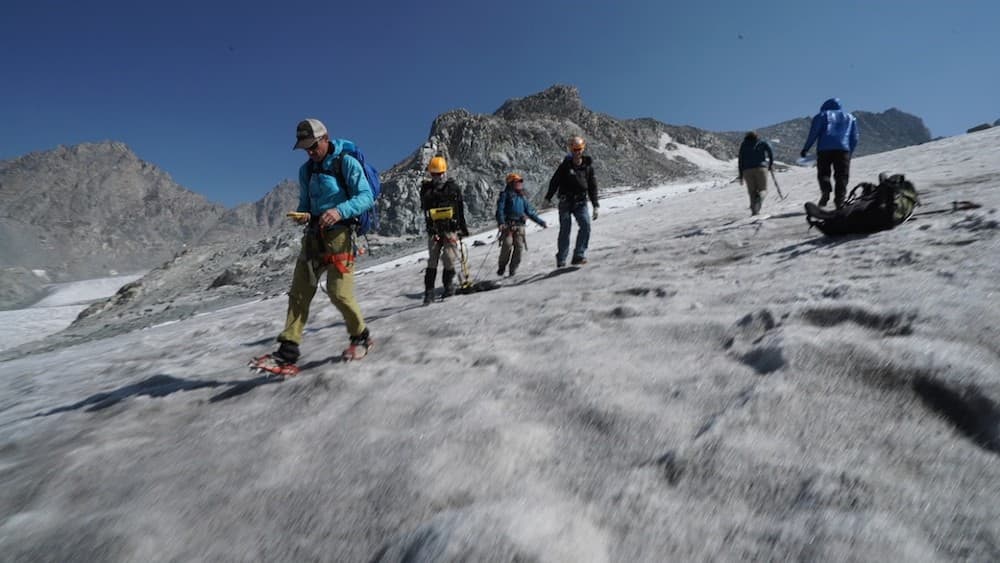
University of Wyoming researchers are responding to rapidly shifting climate and water dynamics that threaten the state’s economy with a five-year study to help communities better prepare.
The university recently received a $20 million grant from the National Science Foundation “to help Wyoming communities deal with projected significant and lasting changes in water availability,” according to a UW press release. The climate and water assessment work will focus on glacial systems and headwaters — mostly in the western portion of the state — to learn how changes there affect the future availability of water throughout the rest of Wyoming.
“What happens to water will really impact everyone, so our intention is really to understand those cascading impacts,” University of Wyoming Assistant Professor of Environment and Society Corrie Knapp said.
Interdisciplinary research
The “Wyoming Anticipating Climate Transitions” program builds on two previous NSF grants to the university to “stimulate” wide-ranging research of Wyoming water resources, according to UW. It will establish a Center for Climate, Water and People at the university, as well as a Regional Earth System Modeling laboratory that taps into the National Center for Atmospheric Research-Wyoming Supercomputing Center in Cheyenne.

The grant will support five new faculty positions at the university. The effort will also strengthen a partnership between the university and Cheyenne-based WEST Inc., an environmental and statistical consulting firm, to develop training and labor force strategies around climate change in Wyoming.
“Our primary objective is to generate cross-cutting observations, data sets and understanding that will support the adaptive capacity of Wyoming’s rural communities and economies in the face of rapidly changing and uncertain climate conditions,” University of Wyoming professor of botany Brent Ewers said.
More than an academic effort, UW researchers and program partners will host a series of public meetings and respond to local input in assessing how communities and businesses might best prepare and adapt, according to Knapp. That includes an interdisciplinary team of university and business leaders who will make recommendations for how to educate and train a labor force for an economy that will change with the environment.

“We’ll be working with communities and stakeholders in designing and then implementing the research,” Knapp said. “It’s an opportunity to not only provide really relevant, useful science when communities and stakeholders need it, but this model is really shifting how we do science.”
Climate and water challenges
The NSF grant will also support work at the UW-National Park Service Research Station in Grand Teton National Park. The research station was integral in publishing the Greater Yellowstone Climate Assessment in 2021.
Among the study’s findings: snowpack is already shrinking between 5,000 and 7,000 feet of elevation; average temperatures in the region are projected to increase 0.31 degrees Fahrenheit per decade; and changes in the timing and rate of snowmelt are already impacting fish spawning and the general health of aquatic systems.
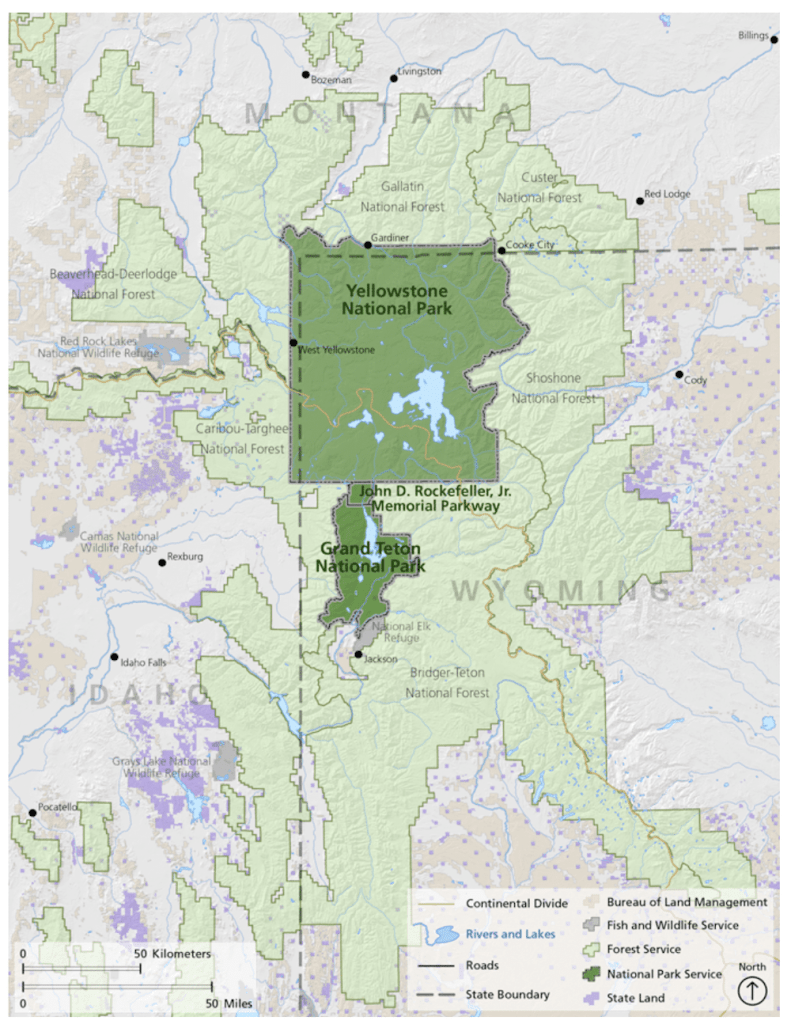
The changes are unfolding rapidly and present a complex challenge for people in Wyoming and across the West, University of Wyoming professor of geology and geophysics Bryan Shuman said.
“Because these trends are projected to continue, water availability will become less certain and predictable, even while society’s demand for water is likely to increase,” said Shuman, who contributed to the Greater Yellowstone Climate Assessment.
The same types of trends are seen statewide.
Wyoming’s annual mean temperature increased 2.2 degrees Fahrenheit from 1920 to 2020 — a rate that outpaces the global mean temperature rise of 1.8 degrees Fahrenheit, according to National Oceanic and Atmospheric Administration data. Especially concerning is the fact that Wyoming’s winter and spring seasons — as well as its highest elevations — are warming even faster.
Those warming trends are already having a significant impact on snowpack and annual water flows, according to J.J. Shinker, professor at the University of Wyoming’s Department of Geology and Geophysics.
“While increases in temperature don’t appear to be reflected in significant changes in precipitation, the temperature increases are impacting water resources through early snowmelt, faster runoff and greater evaporation at the surface, all of which enhance drought,” Shinker told WyoFile in November.
