

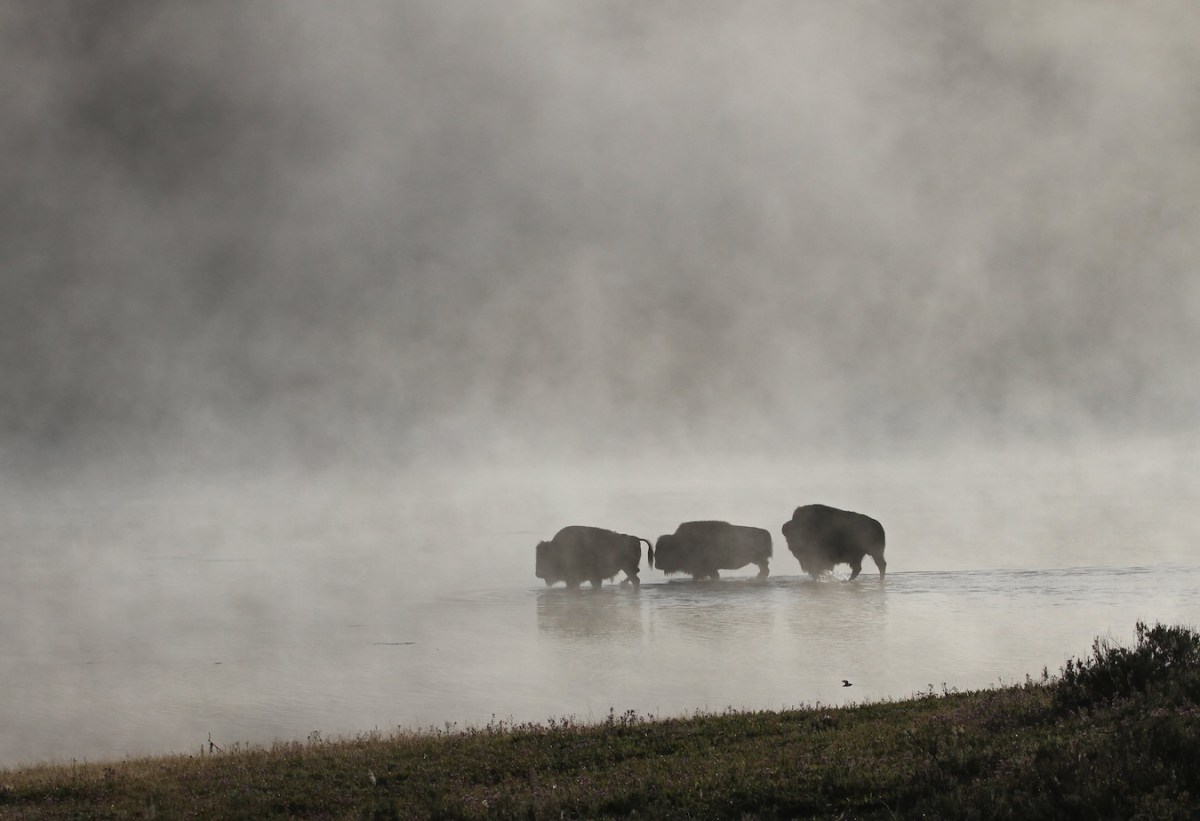
The American people hold Yellowstone in special reverence. They speak often of its mountains, its rivers, its forests and of the great animals that roam there — wolves, grizzlies and vast herds of elk moving across a landscape that has become a symbol of our national inheritance.
Opinion
Yet we make a grave mistake when we imagine that Yellowstone exists apart from the lands beyond its borders.
Nature does not recognize boundary lines on a map. Elk do not pause at the park gate and declare themselves protected. Pronghorn do not alter ancient migrations to accommodate human convenience. Mule deer do not survive by sentiment alone. Bison never had boundaries.
For generations, these animals moved freely across vast stretches of the American West, wintering in places such as Wyoming’s Red Desert and returning seasonally to Yellowstone’s high country. These migrations were not incidental to their survival — they were indispensable. They remain indispensable still.
And yet, through neglect, fragmentation and the persistent belief that conservation begins and ends at the boundary of a national park, many of these vital connections have been weakened.
A nation that claims to value conservation must be honest enough to understand conservation in full.
That responsibility requires us to see the whole landscape. Fire, drought, disease, migration routes, winter ranges and vegetation cycles are not separate concerns to be managed in isolation. They are threads of the same fabric. When one weakens, the entire system is placed at risk.
Too often, modern conservation falls into the habit of elevating one species above all others. The greater sage grouse has become one such example. It is undeniably important, but no healthy ecosystem can be governed through narrow devotion to a single species while ignoring the broader balance that sustains all life upon the land.
The sagebrush country itself must not be treated as though it were a museum exhibit frozen in time.
These lands have always been shaped by fire, drought and natural disturbance. Such forces renew the land. They create younger plant communities that species such as mule deer depend upon for survival. When policy becomes focused solely on preserving mature sagebrush at all costs, we risk creating landscapes less resilient and less capable of sustaining wildlife.
The great herds of the West remain among our most important natural assets. Mule deer, elk and pronghorn bind together summer range, winter range and migration corridors into one living system. Their movements are the circulation of the land itself.
Wyoming’s efforts to identify migration corridors deserve recognition, including work led by the Wyoming Migration Initiative. But maps alone do not preserve habitat. Reports do not restore landscapes by themselves.
Conservation written only on paper is often conservation in name alone.
We must also confront an uncomfortable reality: We are often eager to preserve the lands we find beautiful, scenic or entertaining, while neglecting the winter ranges and transitional landscapes that are less celebrated but no less essential.
This is shortsighted stewardship.
In southwestern Wyoming, meaningful conservation work has been undertaken, but too often it is weakened by political compromise and development pressures that place immediate gain above long-term responsibility. Mitigation has too frequently become an excuse for delay when decisive action is required.
The natural resources of this nation are not ours to exhaust. They are ours to protect for those who come after us.
If conservation is to succeed, we must move beyond managing wildlife as isolated attractions and begin managing for the great natural processes that sustain life itself — migration, renewal, adaptation and connectivity.
The mule deer and pronghorn of Sublette County deserve our protection no less than the wolves and grizzlies that capture headlines and tourist dollars. Not because one species matters more than another, but because each plays an indispensable role in the health of the whole.
The future of Yellowstone will not be decided solely within the borders of Yellowstone National Park.
It will be decided in the sagebrush sea beyond it — in the winter ranges, migration corridors and working landscapes that remain the foundation of the American West.
If we fail to protect those lands, we may one day discover that we preserved the symbol of Yellowstone while allowing its living reality to disappear.
That would be a failure not merely of policy — but of national duty.

I appreciate this article. Those of us who believe in this viewpoint need to scream louder.
Thank you Dan. You hit the nail on the head. WY is a beautiful state with an abundance of wildlife. I wish every person in that state appreciates the animals as much as you do.
Thank you for this very well written opinion piece. It gives me hope to have such dedicated knowledgable people advocating for wildlife that is irreplaceable in the face of uncaring human development. I don’t advocate for no human development, but a greater restraint and more thoughtful approach to the long term effects would do wonders for wildlife sustainability. Don’t weaken!!
Excellent commentary, Dan!
very good opinion piece
Bravo Dan!
Dan, well said. I will be fighting Mike Lee of Utah and this current federal administration with everything I have to protect and conserve wild things and wild places.
Great piece Dan, stewardship is placing the long term health above short term gain. We “ strut and fret our hour upon the stage and then are heard no more” , but the damage we do to creation or the repair and maintenance we do remains. Thanks Dan!