


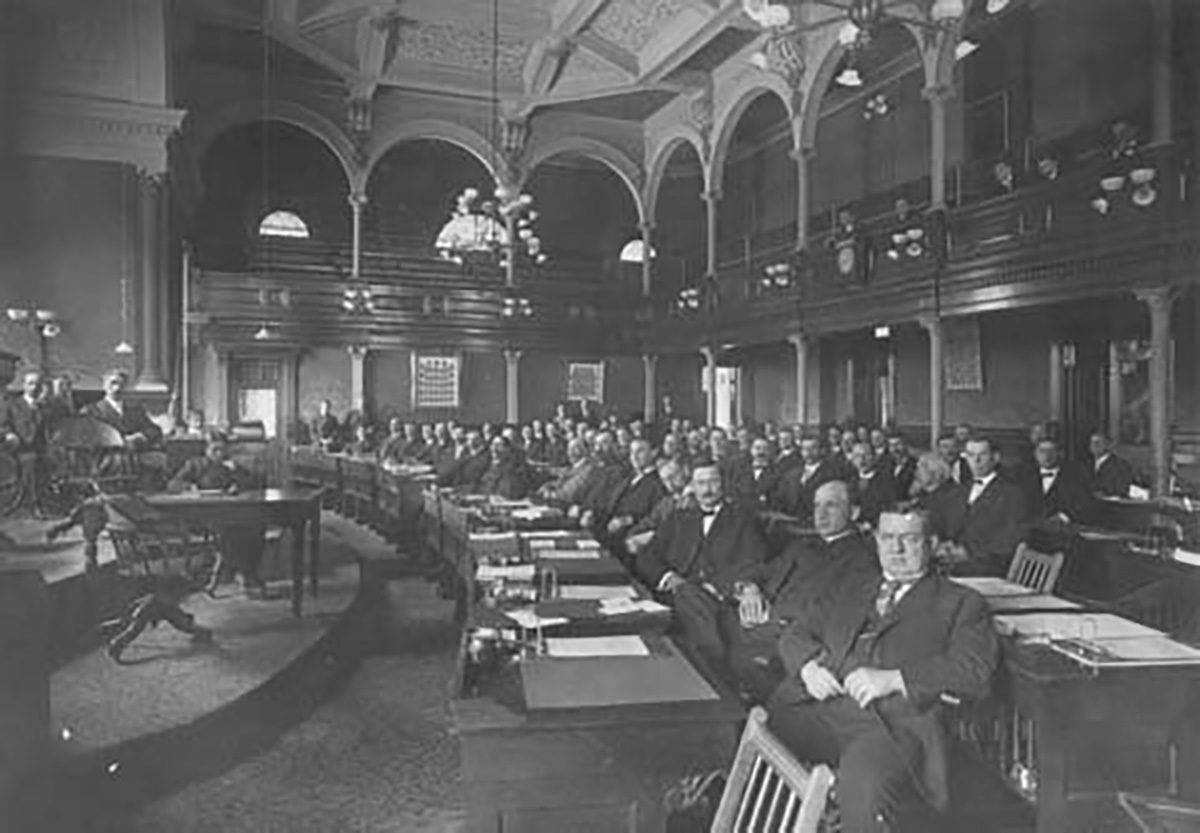
In the early hours of a Sunday morning in January 1891, the chief clerk of the Wyoming House of Representatives stood up to read a few lines off the back of a bill, and the state’s brand-new government nearly came apart at the seams.
The big clock on the wall read 11:40 p.m. It had read 11:40 for hours. Lawmakers had stopped it on purpose, a trick still used today to keep legislating past a deadline. Other clocks around Cheyenne showed the real time: 3:15 a.m. Wyoming’s first state Legislature, in session since November, was supposed to have adjourned the night before. Instead, exhausted lawmakers were still grinding through bills and trading favors, with no idea that one clerk’s handwriting was about to ignite into a full-blown accusation of fraud.
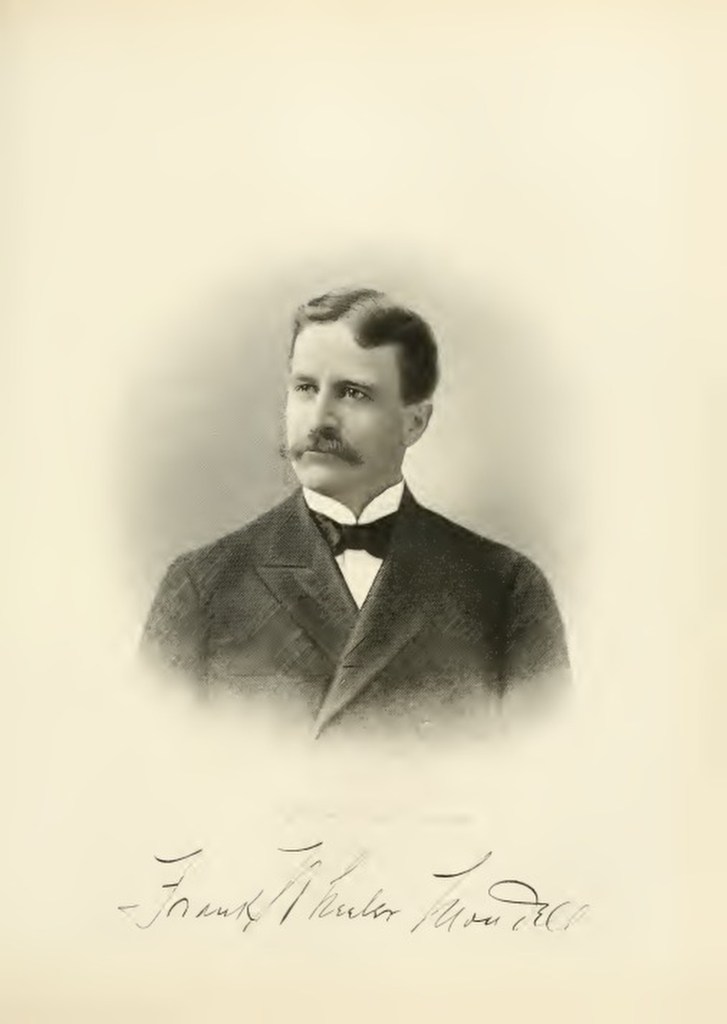
At the center of it all sat a bill that read like dry legislative housekeeping: apportioning House and Senate seats based on the new 1890 census. It was sponsored by Republican Sen. Frank Mondell, a freshman lawmaker from Newcastle who would later spend 13 terms in the U.S. House. Getting his bill passed came down to a technicality. If the bill had already received its required second reading, supporters had just enough votes to push it through outright. If it hadn’t, they’d need a two-thirds vote to suspend the rules, a vote they didn’t have.
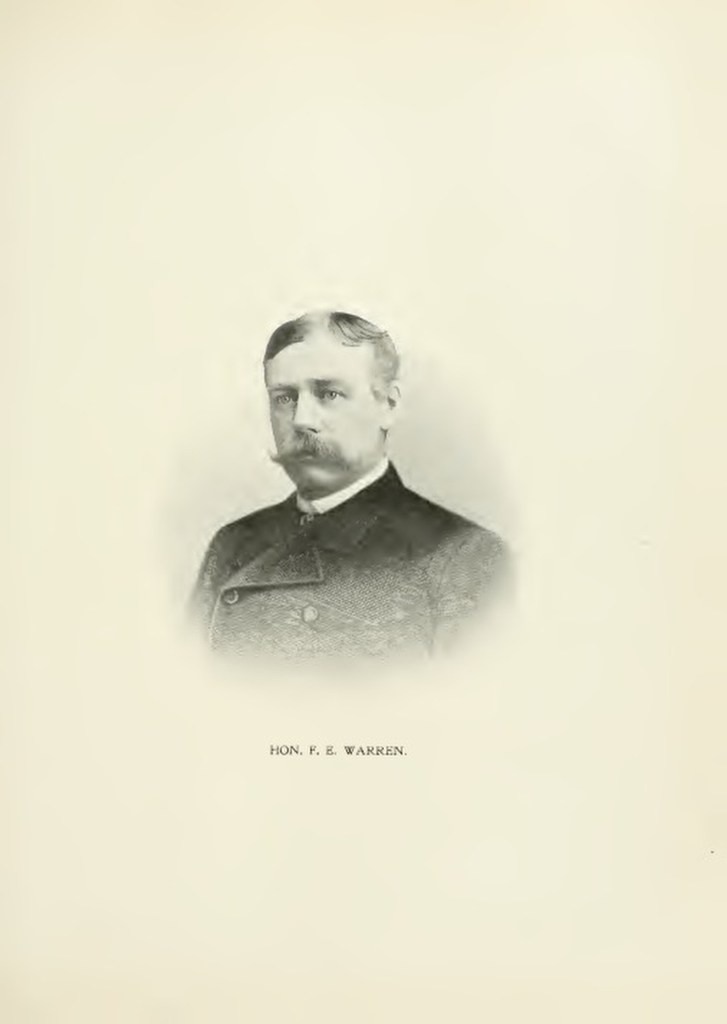
Apportionment decided how many House and Senate seats each county held, and those seats would shape how the next Legislature would fill a U.S. Senate seat, a job that wouldn’t be left to voters for another two decades. The Cheyenne Daily Leader suspected the bill’s district lines were drawn to help keep Francis E. Warren, the state’s dominant Republican, in his U.S. Senate seat when his term expired in 1893 — an accusation the paper never proved. Whether that theory is right or not, it helps explain why a fight over apportionment could get heated enough to end in an accusation of forgery.
So, everything hinged on one question: Had the bill actually been read twice, or not?
Rep. Nat Baker, a Converse County Democrat, demanded that the clerk read the bill’s endorsement. Every bill carried one: a set of notes on the back, added by clerks as it moved through the Legislature, tracking exactly when it had been introduced, read and voted on. With obvious reluctance, Speaker A.C. Kellogg gave the order to Chief Clerk Ichabod S. Bartlett, who read through the notes in a low voice. Partway down, he stumbled, doubling back as though he’d forgotten something, then announced that the bill had indeed been read a second time. The Leader reported that the assistant clerk “went through a series of contortions that made it evident to close observers that he was suffering from some mental torture.”
Rep. William H. Brown was on his feet immediately. The Sheridan County Democrat had chaired the committee of the whole that considered the bill. He claimed he knew for a fact it had never gotten that second reading. The endorsement, he said, was false.
Brown moved to indefinitely postpone the bill, and the House plunged into an hourslong fight over parliamentary rules and unrelated business. In the middle of the uproar, Baker walked up to Speaker Kellogg’s desk and struck up a conversation. It looked friendly enough. Kellogg was clutching the bill tightly when the floor debate pulled his attention away. His grip loosened, and the bill slipped free. It had barely touched the desk when Baker grabbed it. He refused to give it back until he’d read the endorsement himself. He found what he was looking for. The ink on the “second reading” notation, he announced, was still wet. The docket said Jan. 8. The ink said minutes ago.
The chamber came apart. Members shouted, demanding to know who was responsible. “Bartlett, the chief clerk,” Baker answered, according to the Leader. When the chamber pressed him on whether Bartlett admitted it, Baker said, “He does.” All eyes turned to Bartlett, seated near the rostrum. He nodded, without objecting, in front of the whole House.

Then a second accusation tangled up the first one. Rep. Brown also claimed that Rep. Frank Bond of Laramie County had tried to buy Rep. Amandes Startzell’s vote, offering to slip a $5,000 appropriation for the Rawlins penitentiary into a separate spending bill if the Carbon County lawmaker backed the apportionment. Bond didn’t deny it.
The apportionment bill died that night. Amid the debate, Rep. Edward Thorpe of Sweetwater County jumped on a desk and shouted: “There isn’t money enough in the Republican party to make me do a dishonest act. This is wrong and I’m against it to the last turn in the road,” the Leader reported. “I’m with you, my lad,” shouted a fellow Sweetwater County lawmaker. Brown then moved to indefinitely postpone the bill, in effect killing it, and the motion carried to a roar of noise from the floor.
Warren finished out his current term regardless — but the Legislature’s taste for gridlock wasn’t done with him. When his term expired in March 1893, a new legislature, now split three ways among Republicans, Democrats and Populists, couldn’t agree on a successor either, and Wyoming had only one U.S. senator for the next two years, until lawmakers finally sent Warren back in 1895.
But the story doesn’t end there, and it doesn’t end cleanly.
The news accounts published two days later only went so far. It reported that the assistant clerk was cleared of complicity, since he’d written every endorsement on the bill except the disputed one. Yet nothing was said about Bartlett being cleared of anything.
Chief Clerk Barlett told his own version of events, but it didn’t hold together. In a personal defense published in the Leader, he insisted that the endorsement was procedurally sound, but his own account of how it got there kept shifting. He first said he’d personally written every notation on the bill, second reading included. Soon after, he instead pointed to the House’s official daily record, which he said already showed the second reading in the assistant clerk’s hand, and claimed his only failure was not copying that same notation onto the bill itself until later.
He also went on the offense, recasting the whole affair in a statement to the Cheyenne Sun as three sore-losing Democrats staging “mad ravings” to kill a bill they couldn’t beat honestly, and arguing the bill’s defeat would cost the young state a costly extra session. He further claimed Baker himself had moved that same night to exonerate him by unanimous vote, although that claim was not verified.
Whether Bartlett was a forger, a scapegoat or something in between depends on whose story you believe. What’s clear is that Wyoming’s first elected lawmakers spent their final hours in office in a shouting match over a wet signature, with a U.S. Senate seat and a costly do-over session hanging in the balance.
Bartlett, for his part, landed on his feet. He went on to serve as managing editor of the Cheyenne Leader from 1906 to 1908, the same paper that had accused him of forgery in its pages a decade and a half earlier. Ten years after that, he edited the multivolume “History of Wyoming.” The man accused of doctoring the state’s legislative record ended up editing its history.
Related Articles
Wyoming Becomes a State: The Constitutional Convention and Statehood Debates of 1889
Frank Mondell: A Congressman for His Times
Francis E. Warren: A Massachusetts Farm Boy Who Changed Wyoming
John E. Osborne and the Logjammed Politics of 1893


Thanks for this part of history that ushered in one of the worst ideas to impact individual State Power, which is the 17th Amendment. Prior to the 17th Amendment, we had trickle down corruption in each state, which eventually gets solved, now we have consolidated power in the hands of out of state donors that keep the likes of Barrasso and Hagemen in thrall to DC and NY, instead of Wyoming.
Spot on, the 17th created Americas form of Royalty in US Senators to join SCOTUS justices.
The Federal Reserve Act, the 16th and the 17th Amendments were essentially the coordinated takeover of US Govt. by The Bankers in 1913.
They have been in control ever since.