
Wildfires once ran on deadlines.
After a series of catastrophic blazes in the early 20th century, the U.S. Forest Service sought to show it was able to control and protect forests under its care. In 1933, the agency mandated the “10 a.m. Rule,” declaring that any wildland fire should be extinguished by 10 a.m. the day after it was reported.
Snuffing all fires quickly, the agency reasoned, would prevent disasters like the Big Burn of 1910. That incident scorched more than 3 million acres along the Montana-Idaho border during a 36-hour rampage, killing at least 85 people and destroying five towns.
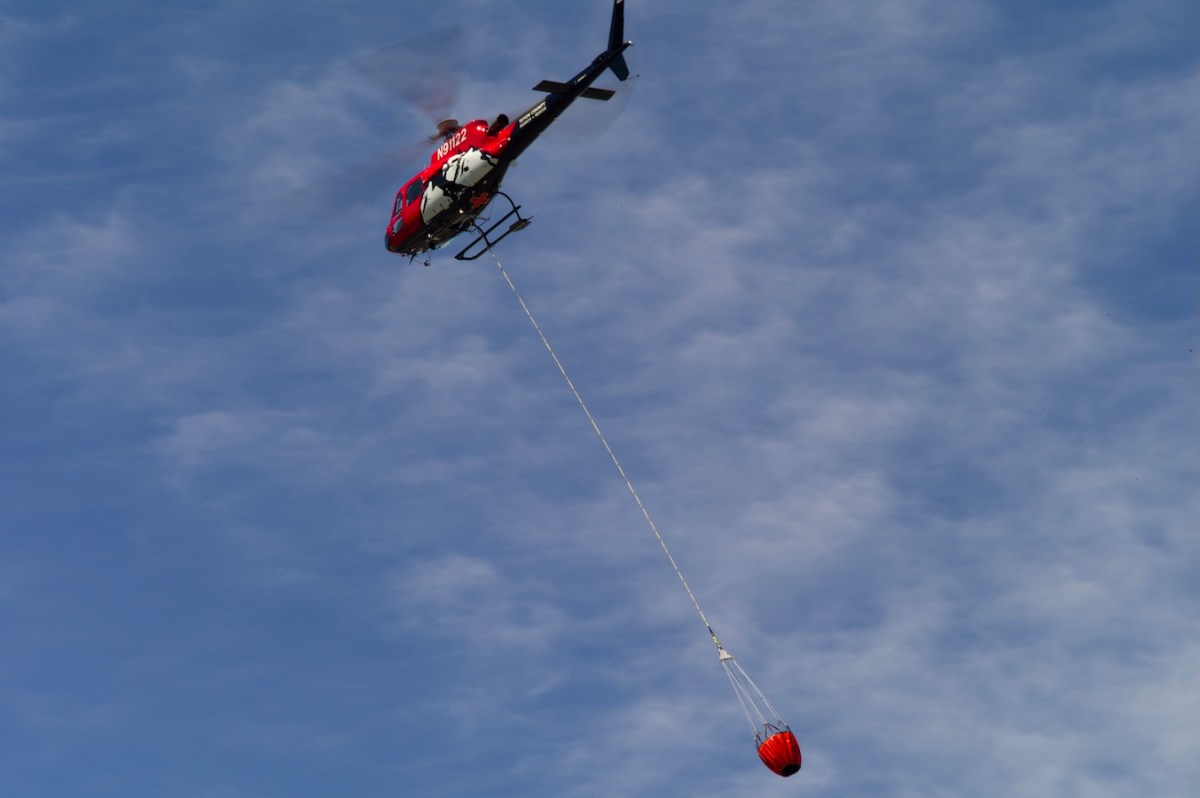
Unlike earthquakes or tornadoes, wildfires have weaknesses. We can suppress flames with water or retardant chemicals. Wildland fire crews remove fuels with hand tools and bulldozers. Sometimes they use tactical burnouts — literally fighting fire with fire.
These tools can obscure crucial facts about wildfire and reinforce strategies that can backfire.
Tales of heroism following the Big Burn established the Forest Service as a necessary government service. As New York Times reporter Tim Egan put it, “To this day, I think that agency owes its existence to this fire.”
But Egan also described the consequences of that successful effort to control wildfire: “Actively trying to put out every fire left a lot of standing dead timber. So some of the big fires we had in the latter 20th century, including the Yellowstone fires of 1988 and some of the Idaho fires of the late 1990s, and fires still to come, are the result of having timber that probably should have burned every now and then during the seasonal fires.”
Rocky Mountain Research Station scientist David Calkin described the phenomenon as the “Wildfire Paradox” in a 2013 article published in the Proceedings of the National Academy of Sciences. “Using wildfire suppression to eliminate large and damaging wildfires ensures the inevitable occurrence of these fires,” Calkin wrote. “Wildfire suppression, effective 95% to 98% of the time, inevitably leads to ecologically significant wildfires with higher intensities and rapid growth that are unable to be suppressed.”
Fire researchers began to notice the paradox in the 1960s, and began implementing “let burn” strategies in remote forests to reduce those fuel loads. The Forest Service modified the “10 a.m. Rule” in 1971 to allow some fires to burn, and officially abandoned the policy in 1978.
Over the following decades, wildfire managers adapted to a changing climate, shifting public opinion and funding challenges. A mid-century moist period began drying out toward the tail of the 20th century. The 1988 fires in and around Yellowstone National Park burned 1.4 million acres in one of America’s best-known landscapes. Colorado’s South Canyon fire in 1994 killed 14 wildland firefighters and prompted major federal fire policy reviews. One of the most consequential shifts was the growing focus on the wildland-urban interface, or WUI — the increasing overlap between private homes and fire-prone landscapes.
Several record-breaking fire seasons in the early 2000s made federal budget watchers aware that the Forest Service was spending more to fight fire than almost anything else in its mission, and frequently didn’t have enough funding to do so. In 2017, federal wildfire suppression costs topped $2 billion — six times as much as was spent in the 1990s.
The year 2018 produced one of the worst wildfire seasons in history and included the Camp Fire, which killed more than 80 people in and around Paradise, California.
More recently, political pressure for a more aggressive response to wildfire has renewed fire suppression.
Last June, President Donald Trump issued an executive order “Empowering Commonsense Wildfire Prevention and Response,” which in its first sentence declared “The devastation of the January 2025 Los Angeles wildfires shocked the American people and highlighted the catastrophic consequences when State and local governments are unable to quickly respond to such disasters.”
Draft versions of the policy included a return to the 10 a.m. Rule, according to numerous sources in the wildfire community.
“No one was dumb enough to use 10 a.m. policy language, but there was fear of a fire getting away,” said Bobbie Scopa, a 45-year firefighting veteran who worked at the local, state and federal levels and now is vice president of the advocacy group Grassroots Wildland Firefighters. “Anytime you light a fire or purposefully don’t put out a fire, you own it and you own every bad thing that can happen. You’re taking a risk when you do that.”
Draft versions of the Fix Our Forests Act also included a call for full suppression of all wildfires.
Matt Weiner, CEO of the advocacy group Megafire Action, said putting that into law would have had dangerous consequences.
“We were able to get that out of it,” Weiner said. “And long-term, we will push aggressively against the 10 a.m. Rule being included in statute anywhere. We don’t want to just create a suppression super-agency. We want a system that recognizes the need for a lot more beneficial fire on the landscape.”
Nevertheless, at a July 22 hearing before the House Subcommittee on Forestry and Horticulture, Forest Service Chief Tom Schultz told members of Congress his agency remained committed to prioritizing aggressive initial attack on wildfire this year.
“Keeping fire small protects firefighters, communities and also saves funding,” Schultz said. “I assure you every fire has a full-suppression strategy.”

Ya we’re missing the bigger picture of not logging areas that need it! thx slick Willie! Roadless crap and let’s let nature take over, doesn’t work!
Schultz has adopted what the CSD was promoting when they published an opinion/article by Karl Brauneis on October 9, 2020. I read the article and sent old Bill Sniffin a missive about that misguided view of fire on the landscape. The story I provided still applies as we elected a President that picks the wrong people for every position so no surprise with Schultz.
——————————————————————–
If you only want 1/6th of the story on US Forest Service Management then by all means take the word of Karl Brauneis, former Hot Shot, Smoke Jumper, Forester, Ranger Conservationist, Fire Management Officer (FMO), Burn Boss and Incident Commander who served a long and narrow minded career with the United States Forest Service.
Granted he served in a very important role in fighting fires and conducting proscribed burns and rose to a very senior position in that area. I for one respect that knowledge and I am daunted by the prospect of doing that job without that experience that the USFS provided Karl, as it has served our country well.
However Karl just assigns blame to environmentalists for current Forest conditions with nary a mention of the history of nearly 100 year history of fighting every fire on our National Forests due to the cultural arrogance of the white man when the USFS was founded.
With the ubiquitous message from Smokey Bear almost to the midway through Karl’s career the public only heard Fight Fire not Start Fire, so the public knows very little about proscribed fire, but he wrote like it has been part of the USFS toolbox since its inception?
Karl doesn’t explain how the European settlers failed to notice that all America’s lands were previously managed by Indigenous Population with Fire in order to enhance food production, specifically grass for Bison. In fact Bison were as far south as Florida when Columbus sailed the ocean blue, but Karl says grazing cows is the answer, just like his settler ancestors thought, as that style of clear cutting with overgrazing, was enshrined in Forest Service Land Management and in education at our Land Grant Universities.
Karl also fails to connect the dots with his career and how his profession as a smoke jumper and fire fighter were jobs based on the culturally ignorant choice to fight fire and our desire to provide jobs during the depression, but the jobs idea really accelerated as our victorious Veterans returned from WWII.
These sometimes broken individuals found comfort in the camaraderie and mission of serving one’s country by jumping out of planes to put out every fire by 10 am the day after it was spotted. I admire the guts to jump out of operable plane to fight fire but in hindsight it was wrong, but somehow environmentalists are to blame and not Karl the Smokejumper?
Karl does make a point that USFS was required to change the all white, male clear cutting workforce to represent modern sensibilities. Instead of understanding American History and our mistakes of the past poor practices with regards to land, people and animals, he just claims he knew what was the right thing to do all along without any consideration of history.
I will admit that bureaucrats in DC have not helped our Land Management issues, but the laws and processes that Karl complains about were a result of the historical ignorance of proper land management that would directly contend with those that have power in places like Wyoming.
We could change the management of Forest Lands to be better if we acknowledged all of our past mistakes and worked for something better. Karl’s presentation of the fire issue is short sighted which debases his credibility in crafting the argument.
It appears you have a very weird obsession with Karl Brauneis. Ten paragraphs ranting about someone who isn’t even mentioned in the article.
Bill, the obsession appears purely political.
Nah it explains the hole in Schultz and Karl’s argument about what is the best approach to managing our Forests. The 10 am rule was dumb from the start and trying to pursue it again without a comprehensive approach for proscribed burning was going to result in failure.
The GOP wants to wreck the USA so they can justify selling of our assets (our Public Lands) ala the stupid British approach under Thatcher. Chad, I would posit that when you see my name that you cannot help yourself but to chime in.