


WyoFile now provides Al-generated audio versions of all articles.Feel free to send feedback to casey@wyofile.com
Do you have questions about this story? Or information to share? Reach out to Maya Shimizu Harris at maya@wyofile.com.
Detention rooms at the Wyoming Boys’ School “were well below the standard of care and, when compared to other juvenile facilities, way more dangerous,” an expert witness testified Tuesday at a trial concerning alleged abuse, including unconstitutional isolation, at the state facility.
Forensic psychologist Dr. Max Wachtel said that based on his evaluation, Blaise Chivers-King, the former boys’ school resident suing school staff, had PTSD that was “directly caused by his isolation time at the Wyoming Boys’ School.” Because of his previous trauma history, which includes witnessing domestic violence and being removed from his home when he was 12, Chivers-King faces greater challenges to healing, Wachtel said. “The boys’ school damaged him further in a way that’s going to be a lot worse than a kid who didn’t have that prior trauma.”
Wachtel’s 239-page report on conditions at the boys’ school and their impact on Chivers-King was based on his review of medical documents, school records, video and images. He testified that he asked Chivers-King’s attorneys if he could visit the school but wasn’t given a tour.
Chivers-King is one of six former boys’ school residents who sued school staff in 2024. The school, which detains delinquent boys ages 12 to 21, is a 38-acre residential facility near Worland that’s overseen by the Wyoming Department of Family Services. Chivers-King, who spent time at the boys’ school between 2020 and 2022, alleged school staff violated his 14th Amendment rights by placing him in isolation, using excessive force and infringing on due process. Chivers-King is suing school staff in part for days he spent locked in 7-by-10-foot cinderblock rooms under conditions that his attorneys consider solitary confinement. One of those stints lasted two weeks.
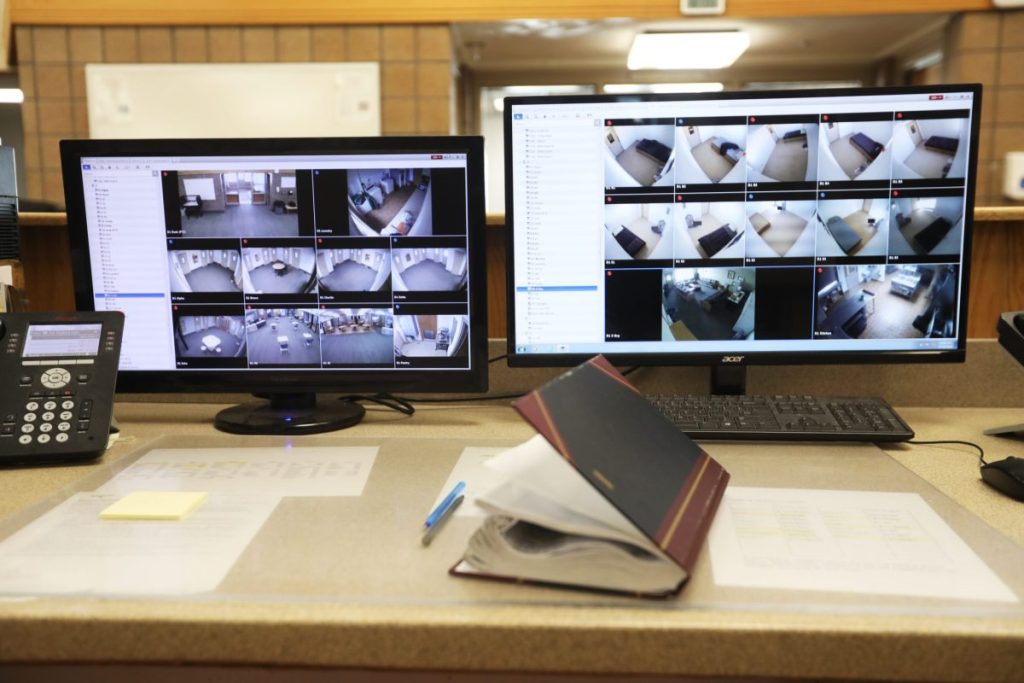
Boys’ school employees argue that they interacted with Chivers-King frequently while he was confined, though the school’s logbook doesn’t reflect some of those visits.
Wyoming Boys’ School employee Chisun Bennett testified that staff would talk with Chivers-King “quite often” while he was confined. “I don’t believe in leaving kids alone,” Bennett said. Staff also offered the former resident exercise, school work and reading material while he was in the detention room, though he often declined, Bennett testified.
“It’s much more work to keep a student like Blaise on detention status,” boys’ school employee Mike Nelson, a defendant in the case, testified. “It’s just resource intensive. And it’s stressful.”
Wachtel testified that getting even four hours of interaction with staff in a day doesn’t change that the child is in isolation. “It’s also an indication that the kid doesn’t need to be in isolation anymore,” he said.


In his experience working with juveniles, Wachtel said on average kids might be held in a detention room for an hour to an hour and a half. If it took them longer to calm down, he would call an ambulance to get the child to a higher level of care at a hospital where the juvenile could be put on a mental health hold — when a person is held against their will in a medical setting for a period of time if they show a substantial likelihood of hurting themselves or others.
Isolation for juveniles can cause PTSD, “significant depression and anxiety” and “acute anger and aggression,” Wachtel said. Prolonged isolation can also lead to psychosis and breaks from reality, as well as “acute and chronic” cognitive problems, according to Wachtel. For kids with prior mental health challenges, those risks are magnified. “It greatly increases the risk of suicide or some sort of self-harm. That’s extremely common.”
Videos and images show Chivers-King attempting to strangle himself in the detention room and the injuries he sustained after banging his head against a detention room wall. He testified that he began hearing voices when he was confined.
A defense attorney suggested that calling an ambulance would simply pass off the responsibility to someone else. Wachtel testified that it would be appropriate to get a child to a hospital where staff could use emergency medicine and “more ethical restraints,” including chemical restraints. Using chemical restraints long term is “absolutely barbaric,” but though it’s “not ideal,” it’s the standard of care to use them short term, Wachtel testified.