

Opinion
When I was doing research for my book “Pushed Off the Mountain, Sold Down the River,” I stumbled across a little gem: A University of Wyoming research associate’s paper from 1965.
In “A Study of Wyoming People,” Thomas S. Davis examined demographic data, parsing out the changes from 1950 to 1960. Davis found the movement of the 20-to-34-year-old demographic alarming. They were leaving the state. Casting aside neutrality, Davis declared, “Wyoming can ill afford such inroads in the productive potential of this important age group.”
Sixty years have passed. Here we are again.
In 2024, Harvard University’s Growth Lab looked at Wyoming’s economy. Their conclusions did not differ much from Davis’ findings. “By the time people born in Wyoming reach their thirties, nearly two thirds have left — one of the highest rates in the country. Without access to this workforce, it is exceedingly difficult for the Wyoming economy to diversify.”
What’s going on? Wyoming has the fundamental concepts in place to diversify its economy and keep young people. The constitutions of the High Plains and Northern Rockies states — including Wyoming — ascribe to the philosophy of positive freedom. That is to say, governments, if managed properly, play a role in accelerating human potential.
Contrast this with the idea of negative freedom: We can thrive only in the absence of limitations or regulations. The concept is also used, somewhat dubiously, to argue for limited state spending outside of the bare essentials, like roads and prisons.
What is Wyoming’s version of positive freedom? Historically, we’ve been pretty conservative, for example, giving ranchers low-cost, long-term credit. Over the years, we’ve slowly eased restrictions on the use of state money, like funding the Wyoming Business Council, or, in 2006, establishing the Hathaway Scholarship program.
Something’s still not working. Young adults who don’t want to work in the mineral industry or government are slipping away.
Why? Wyoming still believes in magical thinking. The state continues to embrace a limited version of positive freedom. Let’s put more money into commodities, especially energy; then, by golly, we can turn this demographic ship around.
To that end, our first task is to stop second-guessing and micromanaging energy sources. Let the market be the primary guide. This means stop giving coal, oil and gas financial props, whether it’s tax breaks or direct funding. For example, Wyoming has spent roughly $141 million on energy matching funds, almost all dedicated to mineral and mining companies.
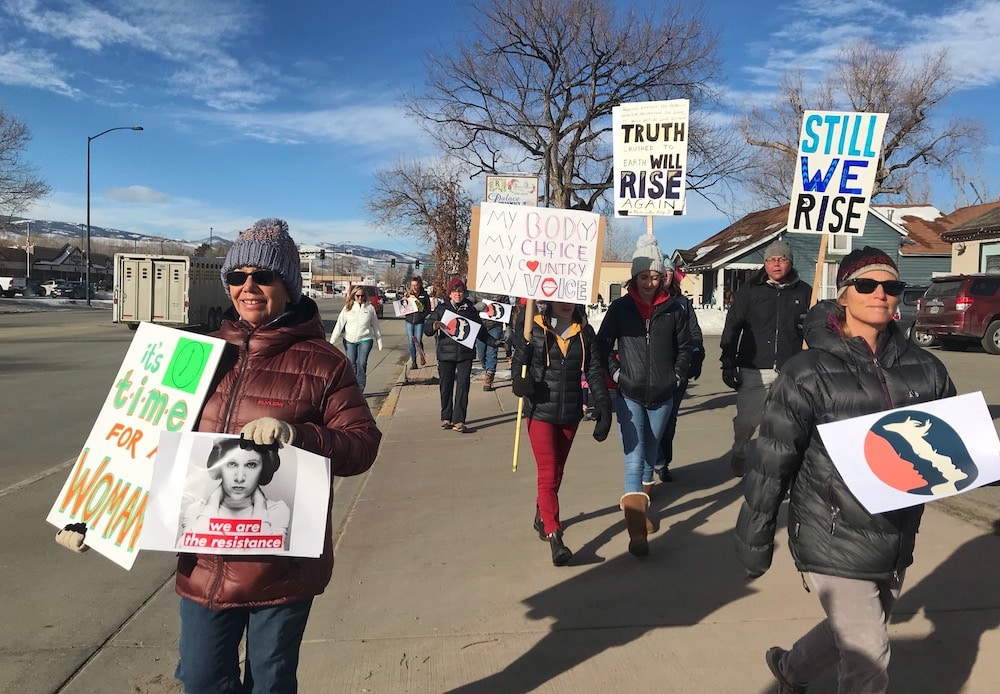
Our second job is more difficult: Wyoming needs to be woman-centric. Anyone who follows educational trends knows that women are eclipsing men for bachelor’s and advanced degrees. The overall graduation rate for women at UW is 65% versus 54% for men. This disparity is most clear in graduate degrees; almost 60% of all doctorates in the US are awarded to women.
Here’s a recent headline from The Wall Street Journal:
“Healthcare Jobs Have Become the Engine of America’s Labor Market.”
Women occupy nearly 80% of America’s health care jobs. Over 80% of students in the US studying to be veterinarians are women. Women represent over half of all financial service employees. Over 95% of all preschool teachers and childcare workers are women.
How can Wyoming keep or attract these essential citizens?
First, let’s have a realistic conversation about funding child care. Wyoming families have to shuck out about $10,000 per year per child for child care. By comparison, in-state tuition at the University of Wyoming is $8,245. Through a mix of state, federal and private money, Wyoming now has a Childcare Provider Start-Up Grant. It gives up to $20,000 to child care providers in underserved areas. It’s not nearly enough. Harvard’s Growth Lab report summed it up: “Much of rural Wyoming is functionally a childcare desert.”
By contrast, in 2023, North Dakota committed nearly $66 million to boosting child care coverage.
Secondly, encourage women-centric health providers, including OB-GYN services. “Women living in many Wyoming towns and cities lack access to emergency, OB and mental health services,” Rebekah Smith Hazelton of the Wyoming Women’s Foundation wrote in an email. “For instance, four labor and delivery wards in Wyoming closed between 2022 and 2025, leaving nine counties without labor and delivery service. Healthcare seems to be considered an amenity to some lawmakers, evidenced by the fact that without expanded Medicaid, some Wyoming citizens can’t access it due to the cost — even if it is within geographic reach. Meanwhile, the ability to get and stay healthy — and to get to work — is essential for a high quality of life.”
The ambiguous language of the state’s anti-abortion law — currently blocked by the courts — which could lead to criminal prosecutions of obstetricians who perform any kind of abortion, isn’t helping much.
Think policy doesn’t matter? Idaho has lost 35% of its OB-GYN specialists since it passed its strict anti-abortion law in 2022. As of 2025, Wyoming has the lowest number of obstetricians in the nation.
Women now make up over half of the medical students in the US. Wyoming is short on physicians and about to lose 335 more, said Republican Rep. Jacob Wasserburger of Cheyenne. We’re not going to attract and keep women physicians by putting more money into coal.
Finally, make our cities and towns places where women can thrive. Granted, this is a complicated and subjective need. Safe streets and good internet services are essential. So are good schools, which Wyoming mostly has. The Winnebago Industries Spotlight Survey for 2025 revealed that record numbers of women are participating in outdoor recreational activities. Above all, women want a sense of belonging and community.
Does your city or town offer these essentials to women?
Charles Marohn, author of the remarkable book, “Strong Towns,” has observed that there are numerous paths to having prosperous and diverse communities. But the successful ones all have one thing in common: They focus on the future, particularly building for the next generation. Try fulfilling that mission without women.

I get legislative updates from the Wyoming Women’s Foundation. Highly recommend. They report on bills and issues that directly impact women in our state. Supporting women is synonymous with supporting families without fail. I don’t feel this is a priority of the current legislative body in our state.
The ultimate question that needs to be asked is, why do people come to places like wyoming? What can we offer that is going to be more appealing to women compared to heading to one of the Cities on the coasts, where the climate is comfortable and the services are diverse?
At the same time, educated High income women are having less and less children, so redeveloping the population towards that approach is demographically suicidal. It’s a bitter calculus, but the simple fact seems to be, Highly Educated women do not have enough children to sustain the population.
So why your ideas are certainly appealing from a standard of living perspective, I do not see them as being a viable long-term approach.
Making Wyoming appealing to Outsiders is going to take a much more dramatic shift, and it may not be possible at all. The simple fact is, the United States population is beginning to decline, and will probably continue to decline for the foreseeable future. In a time of decline, Wyoming is going to see its populations move away, concentrating into areas with more services and amenities. Every time an old timer dies, their shop or service will not be replaced, eventually leaving ghost towns, inhabited only by energy workers and the rare hermit. And you aren’t going to change that with child care subsidies or tax incentives. The same exact thing is happening worldwide, and nobody seems to be able to slow it down.
The best thing Wyoming could do right now is invest in long-term infrastructure, so that if and when the population does Rebound, it will be ready and waiting for a new generation to come in and recolonize.
thank you, sam. you are spot on here.
This comment makes no sense: “This means stop giving coal, oil and gas financial props, whether it’s tax breaks or direct funding. For example, Wyoming has spent roughly $142 million on energy matching funds, almost dedicated to mineral and mining companies.”
You do realize that 50-60% of the tax revenue generated in this state is directly tied to minerals? And in comparison, the revenue generated is far more than the paltry $142 million you mention in your article. The citizens of this state have been riding the mineral gravy train for a very long time. Effectively the $142 mil is being given back to the same people/companies paying a majority of the taxes in Wyoming in the first place.
I would also advocate for adding the goal of gender parity in the Wyoming Legislature to your prescription Sam. Much of what you are preaching here is traditionally sung in a soprano register; and to put it bluntly–the biggest problem with Wyoming’s Capitol Choir since it’s inception has always been too many tenors trying to out-caterwaul the tone-deaf baritones.
Thank-you for this column – unfortunately our current Freedom Caucus has no interest in improving women’s lives – only in controlling them.
Mr. Western – thank you for Pushed. I’ve read it multiple times and gifted sun-bleached, used Amazon copies to others. Pushed helped me understand this state much better and I wish all WY legislators were required to read it. – – Please give us a follow-up to this column about why WY attracts the least remote workers out of any state. Might it have something to do with our “brand?”
I Support Wyoming Women and Girls! I really appreciate you writing this article. Thank you.
Yes, stop subsidies for energy, and others. The free market economy doesn’t exist. Additionally, our taxes should go to the people that pay them. Saving for the future is stealing MY tax dollars. Think about what your parents were able to afford and then look at yourself. Corporations and a very rich few are taking advantage of us. Their profits are huge, while we struggle.
I have opined that the march to overturn ROE has led to the voters electing less then effective legislators. As I have watched that debate play out over my time in Wyoming, there are two distinct observations I have made about the process. As women’s rights were eroded, the testimonies offered up by women about their terrible experiences in trying to get healthcare in the form of obtaining an abortion never seemed to matter to people. In fact I stopped going to those rallies because I grew worn out by the emotion projected.
I myself wanted to argue that if one looked at the Constitution and the Bill of Rights, I just could not see how any US Citizen could argue they have the right to manage a neighbor’s womb. In fact I would argue that if you voted to have the power of the state to do your bidding then you are voting for tyranny. See the current use of ICE and CBP force to deport hard working brown people from the US as an example.
I have used my arguments in committee meetings when these Bills are discussed and I get under people’s skin with my clearly reasonable Constitutional arguments. However, this year the light finally went off about what stories are most effective for legislation against the rights of women. The male emotional abortion story wins the argument. The stories Gary Brown and Kevin Campbell win out over the stories of women and that alone my friends tells you why any self respecting young woman would leave Wyoming in a minute. Based on my observations of the young women that come to the University of Wyoming, they are far more numerous and confident than the sheepish young males and will definitely be gone from this place as they do not need to be trapped by a state that uses the stories of men to manage their bodies.
” trying to get healthcare in the form of obtaining an abortion ”
Ending the life of an unborn human being is now popularly being remarketed as “healthcare”.
It certainly is not healthcare for the human being that is having it’s life extinguished.
Much like taking away law abiding human being’s natural right to self defense is being deceptively called “common sense gun safety laws”
Edward Bernays societal conditioning methods still being applied today over 100 years later.
Chad,
If abortion weren’t healthcare, restricting it wouldn’t be linked to worse health outcomes, but the data show the opposite. States with abortion bans have higher maternal death rates, higher infant mortality, and even documented increases in excess infant deaths after bans took effect. We’ve also seen thousands of additional births in ban states without the healthcare or educational infrastructure to support those families, alongside research showing increased strain on foster care systems. Doctors don’t treat ectopic pregnancies, sepsis, or catastrophic fetal diagnoses because of “marketing” they do it because patients lives and health are on the line. Abortion is healthcare, because the impacts are catastrophic when access is taken away. I also find it ironic that many of the loudest supporters of abortion bans consistently vote for politicians that vote against policies which are known to reduce abortion, and actually even encourage families to have kids; paid family leave, accessible and affordable childcare, postpartum care, mental health services, child tax credits, etc…
Susan, ectopic pregnancies\sepsis are for the life of the mother and the unborn won’t survive or is already dead.
Abortion ends a human life and in the vast overwhelming majority of cases (90-95%) are done for convenience not due to health of the mother.
Excellent article and a very good perspective on what Wyoming needs. If only we could instill a more progressive legislature to bring it to fruition. During my long life in Wyoming, I feel the tide has just been steadily receding to obstructive conservatism.