

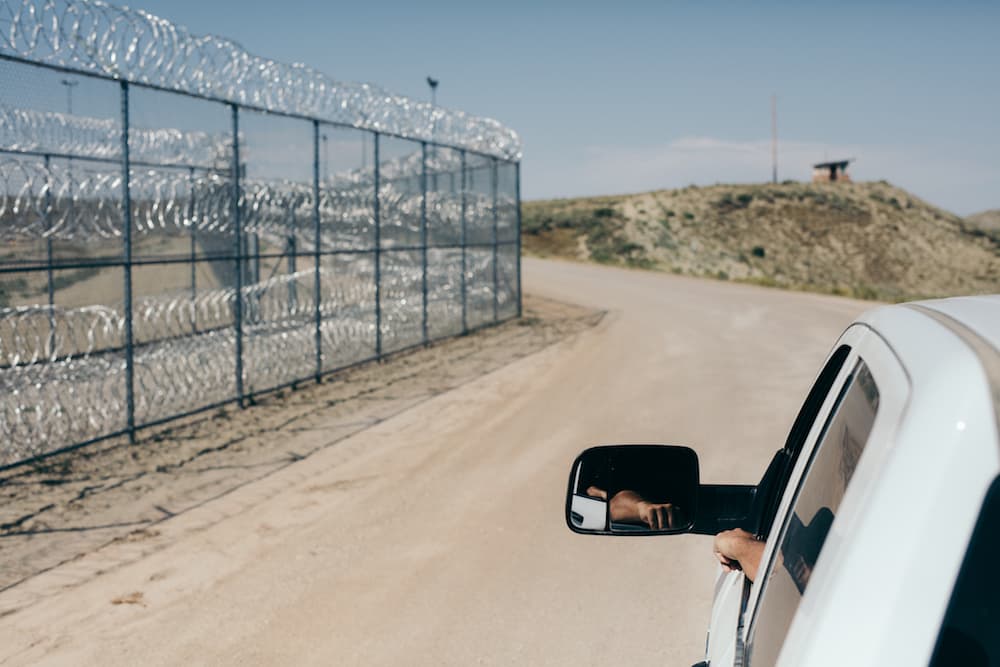
The Wyoming Department of Corrections’ transfer of 240 inmates to a private Mississippi prison due to a staffing shortage is a temporary fix to an ongoing problem, WDOC Director Dan Shannon says.
“We don’t have an inmate housing issue,” Shannon told WyoFile. “We have a staffing problem.”
Roughly 25% of the department’s uniformed staff positions are vacant, with most of those occurring at the Wyoming State Penitentiary in Rawlins and the Wyoming Women’s Center in Lusk. To account for that, the department has also transferred 40 inmates to the Lincoln County Detention Center and eight others to the Sublette County Detention Center.
The out-of-state transfers took place on Nov. 29 and Nov. 30. Those inmates are now housed in the Tallahatchie Correctional Institute in Mississippi, a private facility run by CoreCivic. In 2018, the department sent 88 inmates to the same facility, which spurred Wyoming lawmakers to take action on criminal justice reform before $23 million was cut from the department’s budget in 2020.
“I want these folks back as soon as possible,” said Shannon, who’s anticipating that a Dec. 1 pay boost will attract more workers. Retention isn’t the issue, he added, pointing to this year’s rate of 90%.
“That being said, we’re receiving no applications,” Shannon continued. Between January and September, for example, the department accepted just 17 applications total for jobs at the Women’s Center and the State Penitentiary. Those two facilities currently have a combined 81 officer vacancies.
This issue, according to one lawmaker on the Joint Judiciary Committee, comes down to pay. Starting pay for a correctional officer is $25.26 an hour, according to the state’s job posting.
“I want to be clear — this is the state Legislature’s fault,” Rep. Karlee Provenza (D-Laramie) said. “It’s unfortunate that we haven’t valued our public employees in this state and paid them what they’re worth. So that’s exactly why we have vacancies.”
In February, lawmakers will meet in Cheyenne to work out a budget, and part of that conversation will involve employee pay. Additionally, lawmakers will need to replace federal relief dollars that were used as revenue replacement during the last two-year budget cycle for certain state agencies including the Department of Corrections.
The costs
Funds made available from staff vacancies helped make last week’s pay boost possible.
Working within the confines of the department’s budget, Shannon said the state’s human resources department was able to approve the increase for correctional officers without going to the Legislature for funds. Those wages are now competitive with county jails near WDOC facilities, Shannon added. But it will be up to the Legislature to decide to maintain those rates.
The vacancies have also created difficulties for current staff. Over the past year, corrections staff have worked “exorbitant hours,” costing the state upwards of $400,000 in overtime pay some months when the department had to shuffle employees between facilities to cover mandatory posts, Shannon said.
When Shannon began looking for transfer opportunities, he first contacted facilities closer to Wyoming, like Montana, Colorado, California, Texas and Arizona. None of those places worked out, Shannon said, since they were only interested in female inmates or wanted a larger inmate transfer in order to make the arrangement profitable.
Ultimately, Mississippi won out and will cost the state less per inmate on a daily basis than the rate to keep them in Wyoming. But that’s not the only cost to consider, Shannon said.
“Keeping them away from home with no home visits and limited family interaction — they do have access to video conferences and things like that — it does have a negative impact on the rehabilitative mindset,” Shannon said.
Provenza said the lower daily cost is not necessarily a good sign.
“Private prisons cut every corner they can to make every penny they can off of our money,” Provenza said. “By doing so, they make folks more likely to reoffend when they come back home in our neighborhood. They have no skin in the game whatsoever other than their bottom line.”
While transferring inmates to a county jail may be closer to home, Provenza said, those facilities lack the same services provided by the state’s prisons, like educational programming and more visitation options.
Without ample access to communication with friends and family, Provenza said, “I don’t understand how someone is supposed to continue to have a meaningful relationship with people in their community, so that when they get out they have a place to land on their feet.”

What to do
“I prefer we really drill down on criminal justice reform,” Sen. Cale Case (R-Lander). “I think we have too many people locked up, too many things that are crimes.”
But Case and Provenza — who sit on the Joint Judiciary Committee together — both say the Legislature has little appetite for that approach.
For Judiciary Chairman Rep. Art Washut (R-Casper), it’s a matter of both pay and establishing modern workplace incentives within state government.
“This generation of employees that’s out there right now, they’re looking for work-life balance. They’re looking for opportunities to go out and enjoy life. They don’t want to just work every day,” Washut said. “And we’re gonna have to attend that as a state government.”
Every other state is facing the same challenge as Wyoming, Washut added, so if the Legislature isn’t “willing to pay those people the market rate, we’re going to have these kinds of [vacancies]. It’s a pay-me-now or pay-me-later kind of dilemma.”
Starting Tuesday, state agencies like the Department of Corrections will present their proposed budget to the Joint Appropriations Committee in Cheyenne.

There was an effort to prohibit the use of private prisons, at least federally. As Director Shannon pointed out, a private prison’s incentive (“skin in the game”) is strictly to make money. Rehabilitating offenders involves more costly effort and programing. Rehabilitation also results in less future “business” for the private contractor. With these perverse incentives, the odds for successful reformation in private prisons, let alone humane treatment, diminish significantly. Take a look at Wyoming’s relevant constitutional provisions: Article 1, Sections 14, 15 and 16. The failures of this particular “business” are legion. The responsibility for imprisonment of fellow citizens should never be abandoned to private contractors. It is a moral failing to send inmates into such circumstances.
By the way, well done article Maggie Mullen.
Are there candidate snow plow operators among the inmates? A 20′ shackle chain would keep them close to their work. They would be handy to I-80
Perhaps the lowest bidder approach would work for snow plowing and emergency response services as well as it does for penitentiary services.
Or, the state could accept and address fiscal needs as some other states do.
Hmmmmmmm which inmates, how were the ones selected decided upon? What is, are or were their “connection” to the community?
My fellow Americans and Wyoming neighbors I would highly recommend you research the “facility” that “won” the bid and while doing such research check “history” say around and about 1992-1997 and we are told if we forget our history we are doomed to repeat it, hmmmmmmmm does that include an American prisoner or are these prisoners considered “Americans anymore? Please ask their friends, relatives and immediate family then ask yourself… Finally could we be going in a direction that these AMERICANS could finally be exported to another foreign country to possibly never to be returned?
Reasoning for the question:. How many misdemeanors does it take to to be converted to a FELONY? How many felonies to get LIFE in PRISON? These are real questions to as oneself as YOUR NEXT BREATH! as always SEMPER FI!