

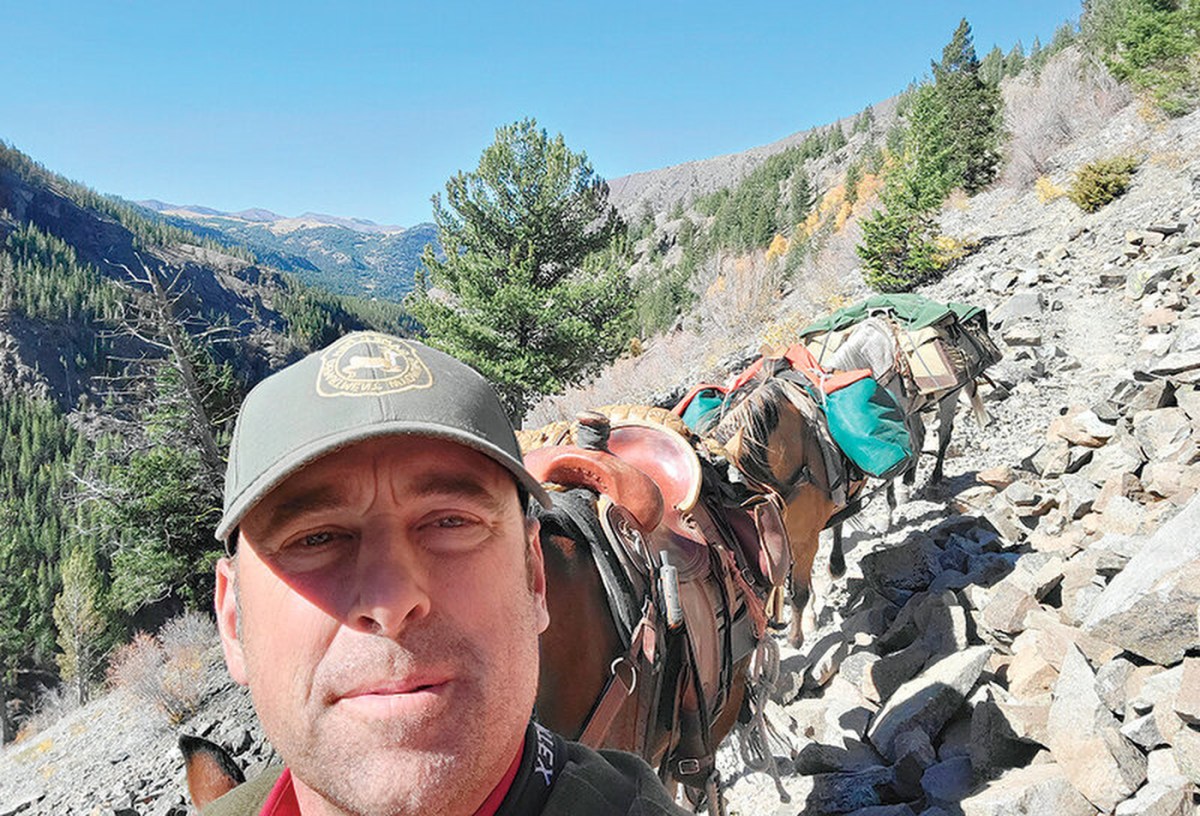
Senior wildlife biologist Tony Mong left the Wyoming Game and Fish Department without much fanfare.
Mong had been one of the most recognizable faces of the department in the Cody region. He worked directly with the public and had the trust of many outdoor enthusiasts and professionals. That’s not an easy thing to do with the diversity of opinions and passion for wildlife within the region. Often passion ran over, yet Mong maintained his composure and proved his value to outdoors enthusiasts through his transparency and obvious respect for wildlife and their habitat.
He has a way of serving concerning news, but always with a side of silver lining. His calm demeanor and confidence in his process made it easy to come to an understanding, even in disagreements. But now his dream job is over.
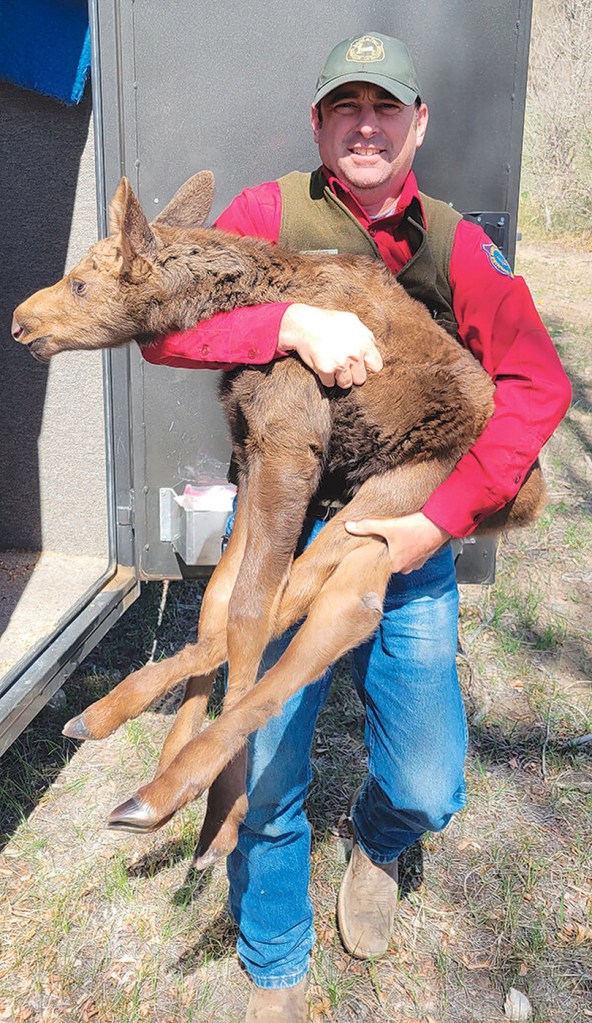
“It’s a weird deal not to put on the red shirt,” Mong said. “But I’m very confident I’ll be able to continue to fight for wildlife like I did as an employee of the Game of Fish, just in a different capacity.”
Without notification on his status, many have been surprised by his decision. Mong was someone you could count on to be straight forward and, as always, helpful.
“Tony’s great. I’m sorry to see him move out of his Game and Fish role. He’s been a hell of a biologist, and he was a boots-on-the-ground biologist. It wasn’t biology from a desk,” said former Park County Commissioner Lee Livingston, who is also one of the area’s top outfitters.
One of Mong’s most important traits was keeping his word, Livingston said.
“That’s one thing that I appreciated most,” he said. “For years, any time Game and Fish cut seasons, we hardly ever saw them come back, and Tony told us when he wanted to cut some deer seasons, if things got better the department would put those dates back.”
Things did get better — not great, but better, he said — thanks in part to Mong’s work in Cody.
“Then, he followed through on his promise,” Livingston said.
Growing frustrations
Mong felt it was time to search for a new opportunity after seeing changes in the department that left him frustrated. He understood there were political pressures on leadership, but Mong is the kind of guy who has a hard time compromising on his mission.
The final straw was the Wyoming State Shooting Complex, being built on what Mong called “critical habitat” for mule deer and other wildlife. He felt it was his job to protect habitat for the species — especially after spending nearly the past decade working day and night to bring mulies back from a dark place in the Cody Region.
“There were a lot of sleepless nights,” Mong said. “It was just another indication that maybe I had a different idea of what our mission was than those that were leading me.”
It angered Mong. Yet he saw it as a beginning of a death by a thousand cuts. Despite a 16-year tenure, he found it difficult to align with, what he called, the agency’s new approach.
Though he gave up his “dream job,” he never stopped believing in the importance of the work done by the department and hopes to have a strong relationship with them in the future.
Mong was born in south-central Missouri. He grew up hunting, fishing and foraging — like most kids born in the rural Ozarks region. It was a place where panfish and wild game were more than occasionally on the dinner table. Mong received a baseball scholarship to play at a small college. Playing America’s game was also a dream for him, but his arm went south along with his dreams of the big leagues and he transferred that passion to his career.
When he got the offer to work for Game and Fish in Baggs, Wyoming, he said he found a challenge that both afforded him a chance to make a good living to support his family and make a real difference in an exciting ecosystem. Moving to the Cody area after about seven years in Baggs was like icing on the cake.
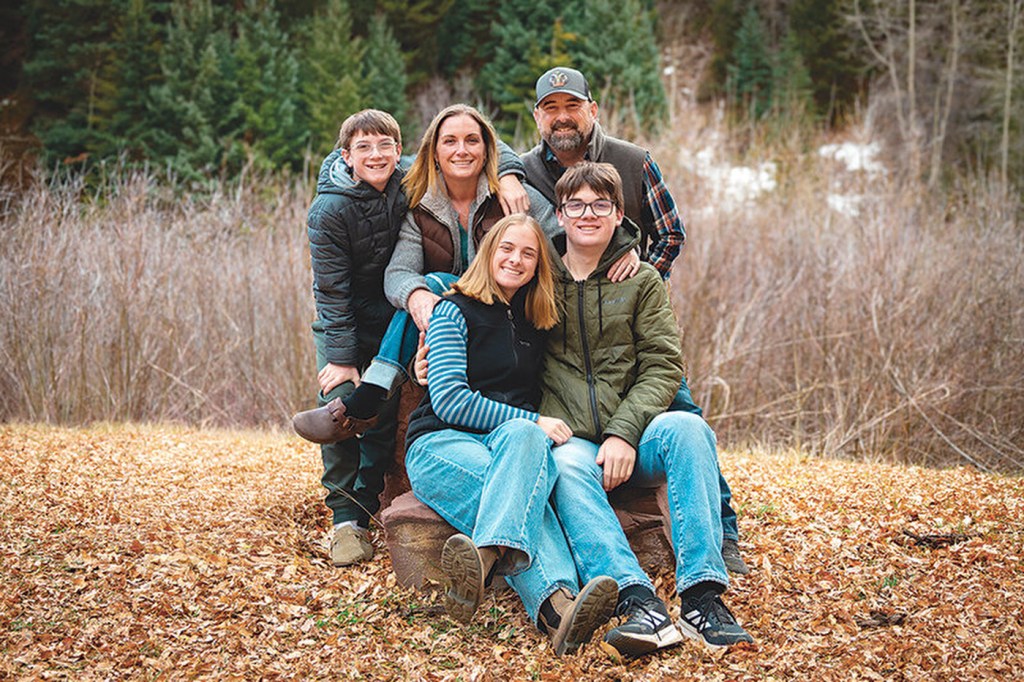
“It has been a dream job. I mean, the 16 years have been phenomenal. Just you know, all the things that I’ve been able to do,” he said. “It just became more difficult to do the things I thought were of importance to protect wildlife.”
He stood by his guns about the importance of the habitat being displaced by the shooting complex, despite his leadership’s public approval of the site. Mong was very vocal, but in the end he was unable to sway the Legislature and his bosses to find a new space for the facility.
“I think it’s pretty evident there was a discrepancy in how we proceeded with that particular project. Now, is that particular project going to be the end all, be all? You know, kill every mule deer? No, but it is another cut to that population that I believe makes it more difficult for them to continue to thrive and grow in this area,” Mong said.
Game and Fish Director Angi Bruce told the board that the agency was “100%” behind the project.
“We all know that there’s been some miscommunication, or maybe some department staff sending a different message, and I just want to apologize for that,” Bruce told the Wyoming State Shooting Complex board a year ago. “Definitely, like I said, we’re 100% supportive, and I want to show that in any way, shape or form that we can and that you feel would be helpful.”
Bruce said the project plays right into the department’s efforts to recruit and retain new hunters — extremely important in keeping a firm grip on the Cowboy State’s outdoors heritage. And the shooting complex joint powers board has made a number of decisions, especially regarding the timing of various construction projects, to try and lessen the impacts to species during key times of the year.
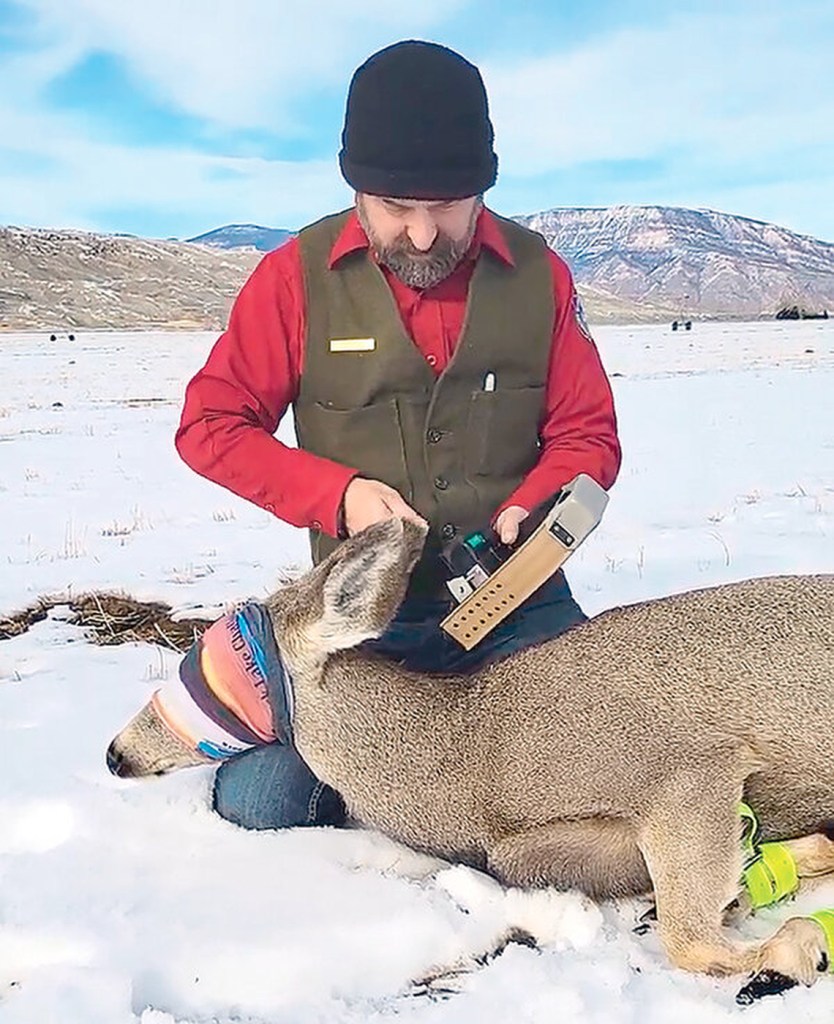
Yet, to Mong, sometimes you need to make hard decisions to protect habitat and wildlife. Mong was unyielding in his commitment.
When he retired early from the department — leaving a large portion of his pension on his way out the door — Bruce offered kind words.
“Tony is a prime example of a Game and Fish employee; he is passionate, dedicated, and has an incredible ability to use words to build understanding and interest in wildlife management with everyone he interacts with. Tony will be missed, and we wish him the best in his new adventures,” she told the Tribune last week.
The kind words could go a long way in fostering a good working relationship with the department into the future. And, for Mong’s part, he is already taking time to help his replacement, former Cody Region wildlife biologist Austin Wieseler, who he fully supports.
A new future
Mong’s qualifications made it easy to find a new job allowing him to continue to fight for habitat and wildlife. Mong joined LegacyWorks Group as its East Yellowstone Initiative team regional project director on July 7. LegacyWorks Group works in the spaces between other organizations, inviting diverse groups to the table to address complex challenges.
“Through collaborative work in the East Yellowstone region, we work alongside many partners to support the working lands that provide habitat and connectivity for the migrating wildlife of the Greater Yellowstone Region,” the organization heralds.
The organization is excited to land a talent like Mong.
“With 16 stellar years as District Wildlife Biologist with the Wyoming Game and Fish Department, he is looking to make a significant impact in a different role. Tony’s passion for the wildlife and people of the Absaroka Front extends to his understanding of the larger challenges of the Greater Yellowstone Ecosystem. He is well positioned to step into this new role and flourish: He knows the country, the landowners, the partners, the researchers, the issues, the data and many of the funders that make this work possible,” the organization said in a press release announcing Mong’s new position.
The release celebrated Mong, saying when Tony hasn’t been collaborating with an array of stakeholders in the Cody area, he has traveled hundreds of miles in the backcountry following collared wildlife, investigating wildlife mortalities, talking with hunters and outfitters, learning about the challenges migrating wildlife face, checking camera traps, and spending time with the landowners who provide habitat for our migrating wildlife.
Mong took the job knowing the importance of leadership roles in making sure habitat and wildlife are protected at a time when the future of wild and public lands are uncertain.
“I believe our ability to conserve wildlife and wild places depends in part on our ability to tell the stories of those landscapes and the animals that depend on them.” Mong said. “I feel a responsibility to share these stories in ways that spark curiosity, inspire wonder, and ultimately motivate people to care for these landscapes and the wildlife that depend on them.”

Having worked with Tony Mong for part of my career, I have no question about his dedication to Wyoming’s wildlife resources. When I worked for the Wyoming Game and Fish Department, the reigning philosophy was that the resource came first. Sure, there were levels of politics involved in decisions, but generally the agency was allowed to speak up from professional and scientific perspectives for the wildlife resources and the people who enjoyed them. Some decisions were overturned or modified above the agency or Commission level, but the analyses and recommendations got presented to the public and higher levels of government. They were at least a part of the record.
If Wyoming wants a top notch wildlife agency making science-based recommendations for maintaining our wildlife and outdoors opportunities, then we need to let them conduct the analyses, formulate alternatives and make recommendations. In my observation, the Wyoming Game and Fish Department over the last several administrations acts intimidated, whether you are talking Greater Sage-grouse, feed grounds, CWD, wolves or a myriad of other topics. The agency should be allowed to fully present the implications to wildlife of projects and decisions. For that, they need to recruit and retain good professionals, like Tony Mong. Our wildlife resources need the best people we can get to face increasingly complex challenges. We need to let them do their jobs. I am sure Tony will continue to speak out for wildlife in a new capacity. I wish him well.
WYGFD has been plagued with bozo leadership, from the hq’s in Cheyenne up to the Cody regional office. Speaking of Cody, the amount of quality hunting and fishing is at an all time low yet redshirts in green trucks are burning fuel everywhere. Gov Gordon has done some good things but his past appointments of WYGFD directors has been a bust. I’m guessing Mr. Mong could read the tea leaves and got out while the gittin’ was good
It’s sad that our legislators goes ahead with this kind of stuff in the name of politics without listening to the experts that are actually in the field.
A huge loss for the WGFD but a great gain for LegacyWorks and the public as a whole. It seems most red shirts that have retired or quit have become better advocates for wildlife once they don’t have corrupt leadership breathing down their neck behind closed doors. May he join the ranks of Dan Stroud, Bill Brinegar, and others who truly advocate for wildlife and sportsmen/women in our state. Let us hope that whoever the new Governor is gives Bruce the boot and gets someone with a true appreciation for wildlife and habitat in the Director position.
What a shame to lose Tony Wong in his position. Once again, WY fails the wildlife it has been blessed with. When will WY wake up? Probably never.
I admire Tony for staying true to his principles. It is not an easy thing to do. The department still has good people on the ground, but the leadership is lacking. I hope we can change that.
I don’t know Tony Mong. Wouldn’t recognize him in the grocery store. But I wish I did know this dedicated, principled, fully and happily hard-working man. Dedicated, I will say again. I would thank him with hugs for what he has given and seems to be prepared to keep giving in his new job. We all need to work and strive in this manner.
I’m thinking we’re not hearing the whole story, ecosystems change! Kinda like the mollie pack running out of food in the park, ya right! The mule deer will not reduce because of this shooting complex, I’m thinking he got a better offer(job) from someone else, time will tell.
Like many state wildlife agencies, WGFD adheres to the North American Model of Wildlife Conservation. One of the principles of this system is that decisions regarding wildlife are based on science and data. So, as a hunter, I wonder why their director would so strongly favor construction of a shooting complex on critical range for mule deer. And as a fiscal conservative, I wonder why the state of Wyoming funds mule deer research–to the tune of tens of millions of dollars over the past 10-20 years–if the findings of such research are just going to be ignored once they get politically or economically inconvenient.
Yes
Hopefully with a new governor taking the helm in the not too distant future, that person will name a new director at WGFD. A new director that advocates for wildlife in Wyoming for a change. Let’s hope that happens before we lose any more outstanding wildlife biologists the likes of Tony Mong.
Amen.
Well said Bruce!
How about Mr. Tony Wong as WG&FD as the new director. Wouldn’t that be something, an individual with a wildlife ethic as head of the WG&FD.
Thank you to Tony for standing up for what he believes in! He is an inspiration to those of us battling this insane fight for wildlife and land. Great article!
Let’s put any sort of complex for the citizens as far away for everyone as possible.
I’m horribly sorry to see Tony go. I sincerely hope this isnt a death sentence to the areas mule deer. He was passionate and a breath of fresh air.
The G&F director used to answer to the Commission. Now, they answer to the Governor and all the politics that come with that. That change was one of the worst decisions ever made for Wyoming’s wildlife.
You are 100% correct Vern
I don’t know that that’s true.
“The Commission serves as the policy-making board of the Wyoming Game & Fish Department.
It is responsible for the direction and supervision of the Director of the Wyoming Game and Fish Department. The Department provides an adequate and flexible system of control, propagation, management, and protection and regulation of all wildlife in Wyoming (W.S. 23-1-301-303, W.S. 23-1-401). The Governor appoints seven members for six-year terms with Senate confirmation. At most, five members shall be of the same party (W.S. 23-1-201).”
But since they are appointed by the Governor, is it really any different? IDK
Seems to me that years ago the Commission had the authority to appoint or remove the Director. And even though the Commission members are appointed by the Governor, it still created some space between the Director and politics. When they took that authority away from the Commission, and gave it to the Governor instead, the controversy was that this change injected more politics and less science into decision making. But that happened long enough ago that I had to really jog my memory bank to remember that….someone please correct me if my memory is wrong.
Poor leadership out of Cheyenne that’s trickled down to the regional offices, especially Cody. Poor moral among many of the emoployees and Mr. Mong is just one of many who’ve given The Game and Fish Department the exodus treatment.
I had the pleasure of knowing Tony and co-teaching field courses with him. WGFD lost a very, very good biologist with an uncommon combination of skills for science, management, and communication.
Good luck on your next stop, Tony. The East Yellowstone Initiative Team is fortunate to have you.
Thank you for all you have done for the state’s wildlife and your commitment. I understand completely what you must have gone through and hope that they treat you well in your new position. Our state’s wildlife are now being run by politics rather than science and this is just another example of that.
Thank you Tony! For all of the work for the Critters and Coordination with Landowners and the Public.
I see WGFD heading in a direction that does not do the things that are needed to protect OUR Wildlife, and it hurts to see the Field Biologists and Wildlife Experts on the ground leaving an agency that they no longer trust ” to do right by OUR shared Wildlife Resources”.
i saw a 2025 video of tony mong, From Here to There and Back Again: A Mule Deer’s Tale. clearly mong is a genuine expert of habitat and wildlife needs. without ignoring the personal aspects of leaving WGF, i expect his GYC work will be awesome. thanks for what you have done, and anticipating more impactful work.
Good luck Mr. Mong and thanks for the good job. Politics is an influence in everything these days, and not usually a good influence. The Game and Fish director is at the mercy of the Governor. I doubt she was all for the development.
I have shot many times at the long distance rifle range in Cody, many of those times While checking targets, there have been antelope and deer between the berms.
This range wasnt needed, but the disingenuous messaging regarding “critical wildlife habitat” is a joke.
He took a probably better paying job with a new employer he is politically aligned with, and now voices his political opinions regarding his former employer.
Anecdotal evidence that is suspect at best.
Criticizing a 16 year employee with glowing reviews from peers, bosses, and the general public.
Disregarding his experience and knowledge while trying to tarnish his reputation.
You’re a class act chad/jack/doug.
What is the specific biological justification for this critical habitat designation? Restricting the focus to deer and antelope between the berms appears to overlook broader ecosystem requirements and migration corridors. For wildlife management to be effective, decisions must rely strictly on rigorous, peer-reviewed science rather than political compromise. We need an independent biological assessment that prioritizes ecological integrity over administrative convenience. It is indeed refreshing to have a biologist who leans on biological and science-based data as well as ethics rather than a servile employee who is a political toady.
Do you have evidence that supports your dismissal of the critical habitat criteria?
Oh wow, that changes my mind.
Thank you Tony!
You always impressed me as a biologist and person. Your integrity speaks volumes of your commitment and passion for the wildlife resource, and reveals the hypocrisy of the current WGFD leadership. They have sold their soul and kowtow to industry, politics, and the whims of legislators. They are NOT advocates for wildlife – its conservation or management. It takes someone with a spine to stand up for what is right and advocate for the resource that doesn’t have a voice. Angie and her staff should be ashamed!
Excellent article. I applaud Tony’s commitment to the wildlife of our state and I am sure his work on their behalf has not gone unappreciated. I want to thank him for his past work and wish him well in his new career.