

WyoFile now provides audio versions of all articles. Feel free to send feedback to casey@wyofile.com
This story is part of a collaborative legislative initiative by WyoFile, Wyoming Tribune Eagle, The Sheridan Press and Jackson Hole News&Guide to deliver comprehensive coverage of Wyoming’s 2026 budget session.
A bill that would spare Wyoming Game and Fish Department over $400,000 in property taxes each year has advanced out of the Wyoming Senate and is now set to be considered by the House.
In 2025, the department paid $850,000 in property taxes. Senate File 26, “Game and fish property tax exemption-amendments,” would relieve the department of about half of that sum. Specifically, the measure would exempt from property taxes the department’s regional offices, Cheyenne headquarters, National Bighorn Sheep Center in Dubois and a field office in Buffalo. The department would still pay property taxes on employee housing and wildlife management areas, which contributed the other half of its 2025 bill.
The Senate unanimously passed Senate File 26 on third reading Monday morning, though its fate remains unclear. An identical bill survived the Senate last year before dying in the House.

The legislation is an “old friend that we’ve been trying to push through,” said Sen. Bill Landen, R-Casper, chair of the Senate Travel, Recreation, Wildlife and Cultural Resources Committee, which sponsored the bill.
The new policy would put Game and Fish on par with other state agencies, which don’t pay property taxes, Game and Fish Director Angi Bruce said during the bill’s committee hearing.
It’s unclear why Game and Fish pays property tax on government buildings, which are typically exempt, according to Ken Gill, a Department of Revenue property tax administrator.
“I’m sure there was a valid reason, but it was way before my time,” Gill said during committee.
It’s an “equity issue” and a “parity issue,” Sen. Wendy Schuler, R-Evanston, said in the same meeting.
“To me it seems like a no-brainer,” she added.
Paying taxes
The department is different from other state agencies in that it does not get its funding from the state. Instead, it gets 60% of its budget from fishing and hunting license sales, 25% from a federal tax on guns and ammo, and the remaining 15% from grants, donations and interest on its investments.
The property tax bill comes amid cost-cutting at the department due to a projected revenue decline.
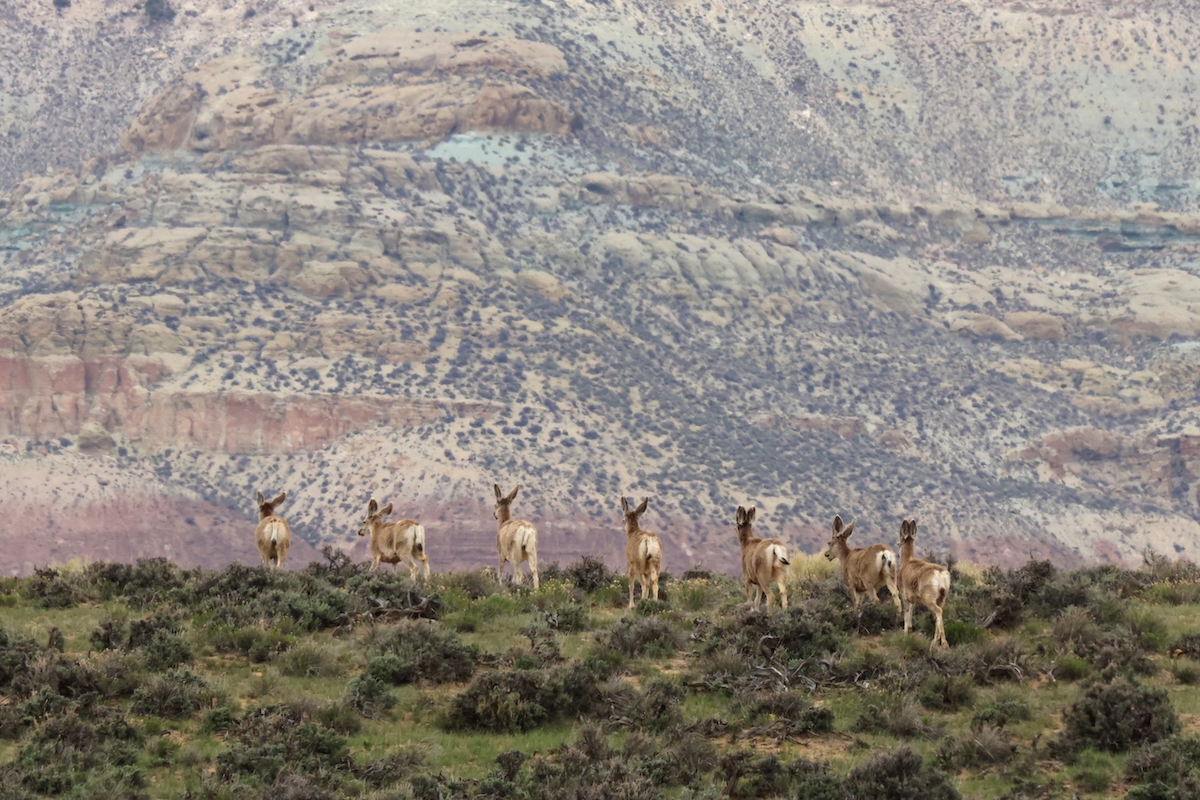
Department leadership attributes the forecasted fiscal downturn to fewer mule deer and antelope licenses in western Wyoming as the herds rebound from a harsh winter. Game and Fish is also anticipating impacts to revenue-generating hunting seasons caused by wildfires in northeast Wyoming.
Amid the cuts, the department will be able to keep its operations up and running, but won’t be able to invest in additional projects, Director Bruce told lawmakers at a Joint Appropriations Committee meeting in January.
The bill is one of the Wyoming Wildlife Federation’s top legislative priorities of the session, said Jess Johnson, the sportsmen advocacy organization’s government affairs director, in committee.
“The work that this department does, it’s not only high caliber, but it’s high caliber and comes at a cost,” Johnson said. “And it comes at a cost that continues to grow each year with a budget that does not.”
The Wyoming Outdoor Council, the Greater Yellowstone Coalition and the Theodore Roosevelt Conservation Partnership also backed the bill.
County concerns
But some county officials from across Wyoming had concerns, specifically about Bruce’s suggestion that game warden residences could be exempted. Those residences also include offices that are open to the public, leaving them in a gray area, Bruce said.
Dixie Huxtable, the Converse County assessor, disagreed with Bruce’s suggestion.
“They may use a portion of that house as an office, but just like anybody that has an office in their home, we don’t designate a part of their home as commercial versus residential,” she said.
Jerimiah Rieman, executive director of the Wyoming County Commissioners Association, was also concerned about game warden housing exemptions.
“It’s not about Game and Fish, necessarily, it’s about the next agency that’s going to come to you,” Rieman said.
He said he would “back off” as long as the question was up to the discretion of county assessors.

Richard Garrett, government affairs advisor for the Greater Yellowstone Coalition, supported the bill. Without some financial relief, he said, the department would have to raise the price of licenses, which would affect Wyoming families that rely on game for food.
Other budget measure
The Wyoming Wildlife Federation is also advocating for a budget provision that would have the state pay the department for discounted and donated licenses, which are mandated by the Legislature and cost the department $2 million per year.
The state used to pay the department for the lost revenue, but the department waived the expense during the COVID-19 pandemic when the budget was tight, said Johnson, the Wildlife Federation’s government affairs director.
“Wildlife is iconic to this state, and we better step up and behave like it is when we’re asked to fund some of the budget work that they do,” Johnson said.
The Joint Appropriations Committee cut the provision from the budget before the session began, Johnson said.
The provision is in limbo. The Senate incorporated it into its budget bill through an amendment, but it is not a part of the House budget bill. The two bodies will need to reconcile the difference before adopting the final budget.
Clarification: This story has been updated to clarify the status of the $2 million in license recoupment funds. -Eds.


Makes no sense to me why the State of Wyoming has to pay taxes to itself.
I would support this on its entirety if the Department uses it for their habitat efforts.
Game and Fish could boost it’s revenue with the allocation of Grizzly tags that would attract BIG money, as well as more wolf tags in the GYE.
Both are desperately needed to protect the collapsing elk numbers in the GYE.
collapsing elk numbers? care to share what data you are referring to?
All elk hunting areas in the GYE have elk tag allocations a small fraction of what they were 20-30 years ago.
Area 75-79 20+ years ago 1000-1500 tags, last year 20 tags in area 75 and area 79 closed 10 years ago.
The others are similar.
can you share your source? Because the areas you mentioned are heavily restricted small hunt areas with limited tags, and have been that way for a long time.
Most of our hunt areas have unlimited tags, and tag numbers are not elk population numbers
Wy Game and Fish and the fact I’ve hunted those units since 1989.
The story is the same in Sunlight Crandall which I have also hunted, and essentially every other GYE elk unit spreading currently into the Windriver range which was a semi-protected peninsula of elk habitat but wolves now are decimating that as well.
The elk numbers are just fine. You just need to get your boots dirty to hunt them instead of being glued to your truck seat. They behave like wild animals now instead of cattle.
Here’s some more financial relief for the WY G and F: fire about half your workforce. G and F have dropped the ball on mule deer so, don’t need so many green pickups driving all over hell. Since the quality and low numbers of game and fish available for sportsmen/women, due to G and F mismanagement, fire about half your wardens, the redshirts driving all over hell. Get rid of Angi Bruce, she’s impotent as well as those directly down from her on the food chain. Come back with new dynamic leadership and try to build G and F back up