


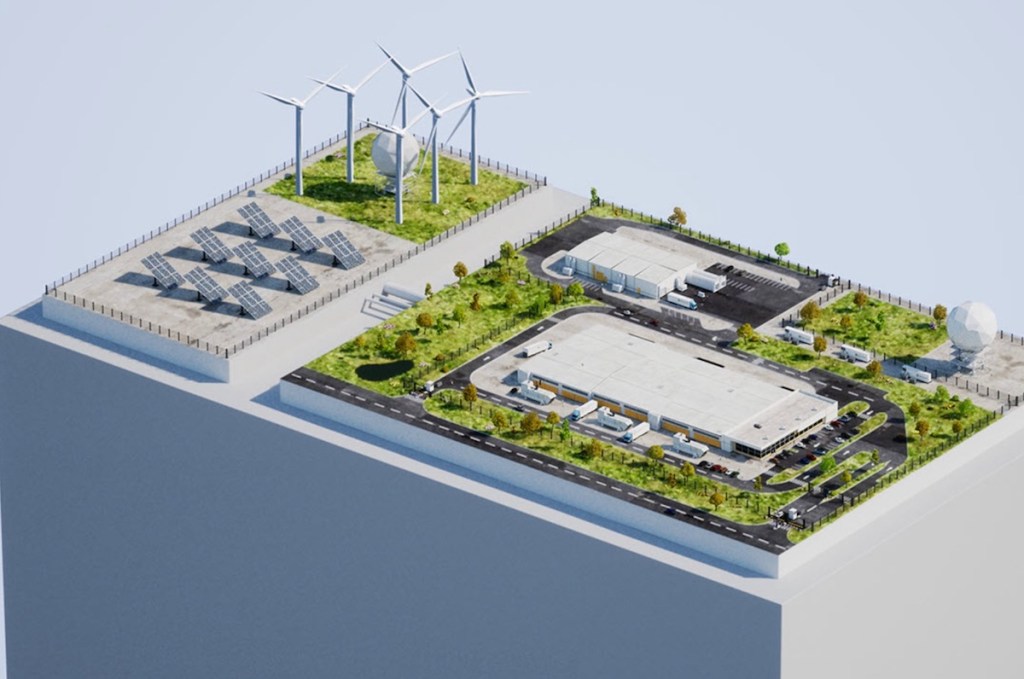
State air quality regulators are seeking public comment on Microsoft’s proposal to install a battery of 128 diesel-fired electric generators associated with new data and computing facilities it plans to construct five miles southeast of Cheyenne.
Microsoft, which already operates a handful of data centers in and around Cheyenne, has a contract with local electric provider Black Hills Energy. The diesel generators are likely only for backup power, Cheyenne Mayor Patrick Collins told WyoFile, “in case power is interrupted for whatever reason.”
The company must obtain an emissions permit from the Wyoming Department of Environmental Quality’s air quality division, as well as approval from the agency for a series of associated storage tanks that would hold up to 1.8 million gallons of diesel fuel, according to state documents.
The DEQ issued a notification in April saying it proposes to approve the permit, but will first consider public comments, which are being accepted through May 21. Unless an “aggrieved party” requests one, the DEQ does not intend to hold a public hearing on the permit application, according to the agency.
The permit would allow certain levels of emissions that include pollutants such as nitrogen oxides (NOx), sulfur oxides (SOx) and volatile organic compounds (VOCs), which are sometimes associated with ozone or haze, according to filings with the state.
Microsoft proposes to build four more facilities in the area, according to Collins. The company’s data centers in Wyoming now employ 85 people, according to a Microsoft fact sheet. It expects to employ 335 full-time workers by the end of 2026. The company has pledged to become carbon-negative by 2030.


To review details about Microsoft’s permit application, go to this Wyoming DEQ website, type in ID code F032074 and permit number P0039454.
Written comments should be directed to Nancy Vehr, Administrator, Division of Air Quality, Department of Environmental Quality, 200 West 17th St., Cheyenne, Wyoming 82002. Reference A0017195 in your comment.
Comments may also be submitted electronically via this website.
The permit indicates that there will be 132 diesel belly tanks associated with these generators but no size for the tanks are provided. The site is pretty close to Crow Creek, which may or may not be a navigable water way, and that may require a plan to address the potential release of 13,200 gallons of diesel if the tanks are 100 hundred gallons to 132,000 gallons if they are 1000 gallon tanks.
While the permit is based on running the units 8760 per year, that figure is unlikely as they will be used for standby power and all of them will be operated at a minimum of 15 minutes per month in order to test the units.
Wow, this just keeps getting better,…. not.
Nothing a good coal plant wouldn’t fix…
The Easter Bunny, Tooth Fairy and good clean coal. All parts of the American fairy tale.
One needs to read some literature about new coal plants. Real literature, not the garbage from inside climate news…
Horse power rating and where made for diesel generators?