

On a 7-6 vote, a legislative panel advanced a bill that declares corner crossing is not an act of criminal trespass or violation of game and fish laws.
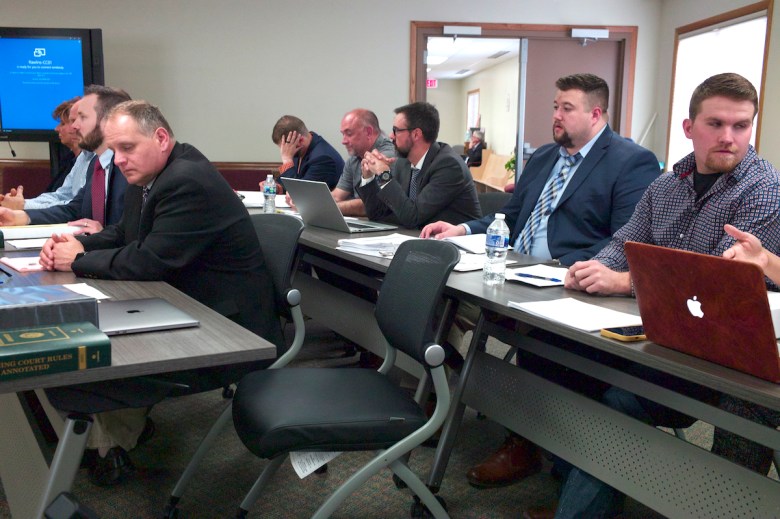
The Joint Travel, Recreation, Wildlife and Cultural Resources Interim Committee passed the draft “Corner crossing clarification” for further consideration and potential amendments in November.
The close vote reflects uncertainty about whether the U.S. Supreme Court might consider a lower-court ruling that corner crossing is not trespassing and what effect that might have on a new Wyoming law.
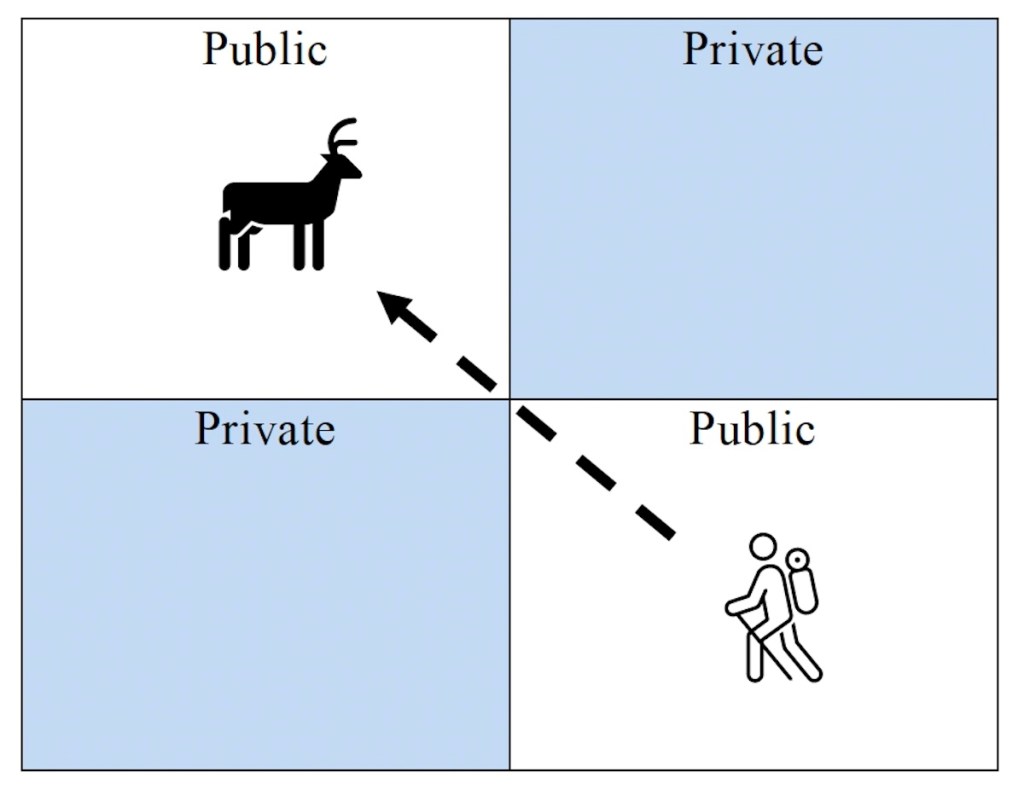
Corner crossing is the act of stepping from one piece of public land to another where they meet with two pieces of private property. Corner crossers do not set foot on private land,but they pass through the airspace above it.
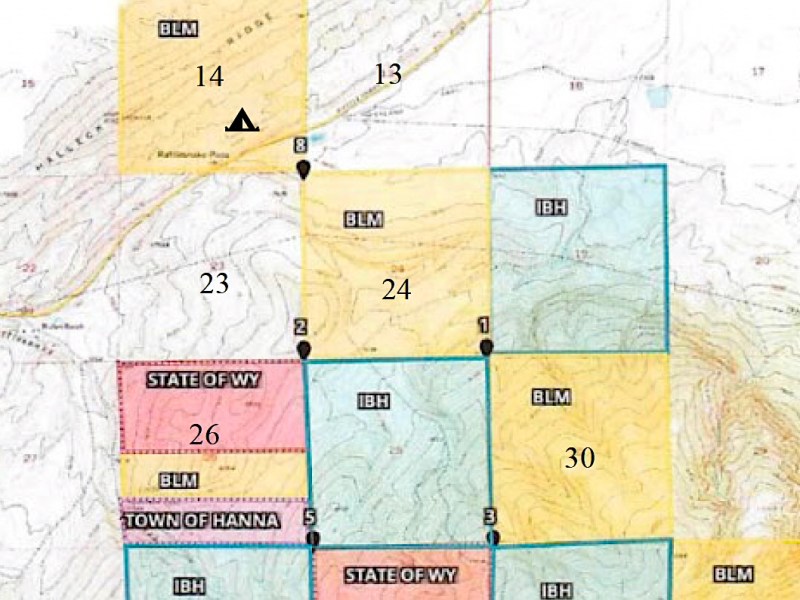
Elk Mountain Ranch owner Fred Eshelman sued four Missouri hunters claiming they trespassed while corner crossing to hunt on public land surrounded by his 20,000-acre wildlife-rich ranch in Carbon County. The hunters did not set foot on his property, and the U.S. 10th Circuit Court of appeals sided with them.
“We know that corner crossing right now is legal.”
Karlee Provenza
“We know that corner crossing right now is legal,” Rep. Karlee Provenza, D-Laramie, told the committee. “This is putting in statute that that is the case.”
The Supreme Court could receive the case as early as Sept. 17, the attorney representing the hunters told the committee Tuesday in Casper. Ryan Semerad also said it’s possible the file could be distributed to the justices later, on Oct. 1.
The court could decide on Oct. 10 or Oct. 17 whether to hear the appeal, he said. If justices want the U.S. solicitor general to weigh in and outline his views, that would delay action by a couple of months, Semerad said.
If justices ultimately decide they do want to hear the case, it would be scheduled for the first months of 2026, he said. Inviting the solicitor general’s views could push the case into the summer of next year.
Privatization of public land?
The 10th Circuit decision earlier this year clarifies that corner crossing allows legal public access to public land in the checkerboard area of land ownership in southern Wyoming. Some 2.4 million acres in the state are considered “corner locked” if corner crossing is illegal. The decision also applies to Colorado, Utah, New Mexico, Oklahoma and Kansas.
A Carbon County deputy in 2021 cited the Missouri hunters for criminal trespass, but a jury found them not guilty. Corner-crossing supporters say prosecuting corner crossers allows private landowners like Eshelman to exclusively enjoy the benefits of public land that his ranch surrounds.
The slim majority of the legislative committee agreed to keep the bill on the table.
“The reason that I’m willing to send it on [is] so that we keep it on the radar screen,” Sen Bill Landen, R-Casper, said, “so that the rest of our legislative friends can get a look at this issue and know that it’s not going away.”
Semerad explained the measure as one that would remove law enforcement from relatively insignificant trespass claims that might arise out of corner crossing. Landowners could still sue trespassers — not necessarily corner crossers — in civil court.
“I don’t think there is a person who believes that someone should be taken off the public lands in handcuffs because they stepped on the wrong blade of grass,” he said.
He won agreement from Casper Republican Rep. Elissa Campbell. “I think it will reduce the burden on law enforcement, whether it’s our sheriffs or our wardens, … and adds some clarity,” she said. “Clarity is a good thing and needs to be in place, regardless of how this court case shakes out.”
Rep. Andy Byron, R-Jackson, voted to move the bill forward. “This is something that was brought up to us,” he said of grassroots support. “We voted on it as … a priority. People have spoken.”
Provenza made a larger case.
“There were 500 people that showed up at the capitol to tell our federal delegation that their public lands aren’t for sale,” she said, recalling a rally earlier this year. “They did it because they enjoy them, because they want access, because they want to be able to get to those public lands.”
“So this issue isn’t complicated to me,” she said. “Do we want to protect the Wyoming people from unnecessary prosecution for accessing their land?
“My answer is ‘yes.’”
Some skepticism
Six legislators were skeptical. “I don’t know how this gets resolved without it going to the Supreme Court,” Rep. Bob Wharff, R-Evanston, said.
Others raised worries about whether corners are well monumented by surveys, whether cell phone apps that use GPS data are accurate, and the prospect of people using e-bikes and deer carriers while crossing corners, something the 10th Circuit did not condone.
Semerad offered more information regarding the Supreme Court, his outlook and the court’s history.

“We certainly don’t think the Supreme Court needs to take this case at all,” he said. “We think the 10th Circuit got it right.”
If the court does hear the case, the hunters are ready to defend their position, he said.
This law on which the hunters won — the Unlawful Inclosures Act of 1885 — has only been addressed by the Supreme Court four times, Semerad said: in 1890, 1897, 1922 and 1979.
“It is quite literally a once-in-a-generation type issue,” he said.
“It is quite possible that they take it,”

If the public needs an easement to corner cross then does not the private landowner need an easement to corner cross? I’m pretty sure this issue cuts both ways if the landowners really want to play hard ball.
All the legislators need to do is apply eminent domain law to provide access for citizens to their land by having an access corridor as required. This will also save millions of dollars of taxpayers money.
I don’t think its right for only neighboring private land owners should have rights to public land and deny others from access. I believe in private property rights and don’t want to hurt anybodies feelings but its public property being controlled by a few ranchers and getting all the benefits of that land.
The corner crossing case is important. Corner crossing can be critical to opening public access to certain tracts of public land. But I don’t think it is nearly as critical or as significant opener of access as it has been made out to be. For several reasons. I live in New Mexico. Since the WY corner crossing case kicked off I have been pouring over maps looking for corners to cross in my state, New Mexico. I’m not finding any that open reasonable access. Then there is the geometry. The mile long zigging and zagging that is required to get from point a to point b can be crazy. Diagonal crossing of sections is obviously longer. Add to this inconvenient topography and few people are going to make the trek.
There is a much larger and potentially much larger access destroying initiative than corner crossing winding through the WY legislative process right now. It is transferable (sellable) private landowner elk tags. Where I live, New Mexico, 36% of all elk tags are handed to landowners free to sell to whoever has the most money. It is hard to overstate the magnitude of land access blocking private tags cause. The incentive for landowners to block public land access to protect their elk from public access on even public land is enormous.
If WY had gone down the New Mexico’s path of privatization of game animals through private tags 50 years ago there wouldn’t even be a corner crossing case in WY. Because the Missouri 4 would not have had their elk tags. Instead. Eshelman would have been handed the tags and he would have sold them to some really rich hunters that would have had exclusive pay-to-play access to Fred’s checkerboard.
Wyomingites and the rest of the western state residents need to fight transferable elk tags with double the vigor that they have put into corner crossing. Transferable elk tags in WY and elsewhere would cause a massive decline in public hunting. As we have learned the hard way in NM, all the public land in the world isn’t worth a plugged nickel to a would be public big game hunter that doesn’t have a big game tag because a landowner sold it to some rich dude. No tag – no reason to cross a corner.
Just another case where the wealthy gets multiple chances to win while the regular folks don’t. Ironic that it’s 4 guys from MO, the Show Me state, that has to carry the burden.