

Lawmakers reversed course Tuesday on the prospect of cutting ties with two national, non-partisan, non-profit organizations that have long provided research and training to members and staff of the Wyoming Legislature.
Wyoming pays biennial dues to the Council of State Governments West and the National Conference of State Legislatures that cost approximately $271,300 and $293,500 respectively. Each is included in the Legislature’s two-year operating budget lawmakers approve in even-numbered years.
The value of those memberships, however, came into question during a Management Council meeting in April. As such, lawmakers invited both national groups to attend Tuesday’s meeting to make their case. Ultimately, their pitches worked.
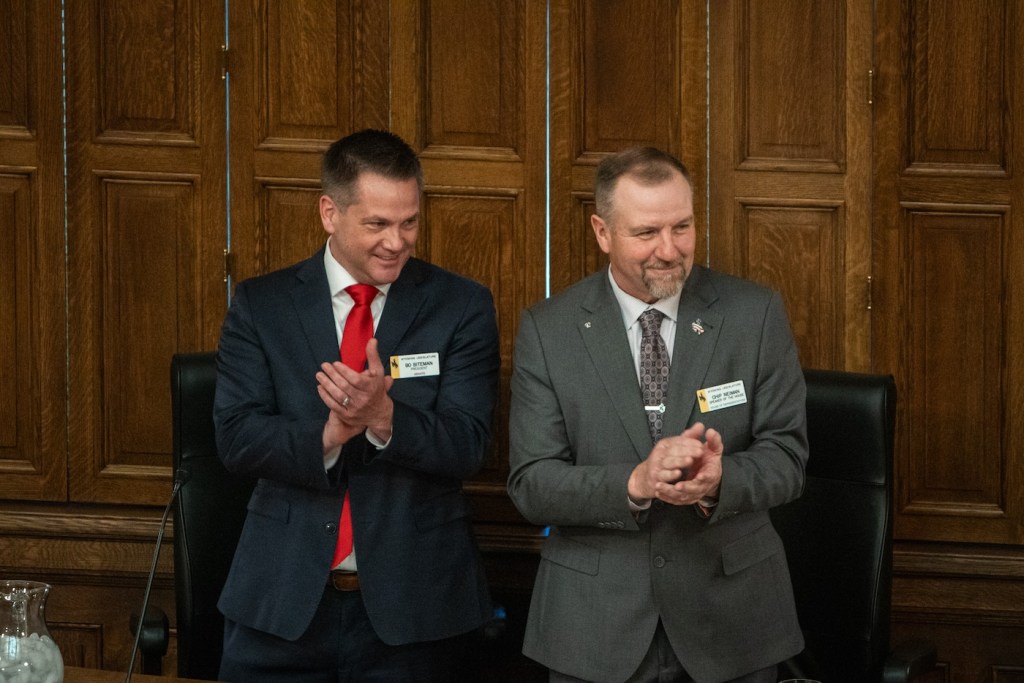
“If the good [Senate] President and I had not asked those questions, we wouldn’t have learned all this information we’ve had today,” Speaker of the House Chip Neiman, R-Hulett, said at the meeting. “I will tell you right up front, I had no idea how much our Legislative Service Office utilizes NCSL and the amount of value that it evidently brings to our offices, and to those folks here that we’re counting on to help us with all our duties, and obligations, responsibilities,” he said.
Senate President Bo Biteman, R-Ranchester, said he agreed with Neiman, and also thanked Montana State Sen. Barry Usher, NCSL’s president-elect, who testified at the meeting and met with the two Wyoming lawmakers ahead of the meeting.
“It was a very enlightening and great conversation, and I appreciate you challenging us to step out and step up and get out of our echo chambers, and not being afraid to defend our ideas,” Biteman said.
The council voted unanimously to sponsor the budget bill with the dues intact.
How we got here
Concern over membership dues grew out of a discussion by the Management Council in April over whether to update its reimbursement policy for out-of-state travel.
The policy covers two meetings per lawmaker during the legislative off-season of “a national or regional organization in which the Legislature participates,” such as NCSL or CSG West. All other out-of-state travel must be specifically approved in advance by the Management Council.
In April, the council changed the policy to include travel expenses for lawmakers who attend American Legislative Exchange Council meetings. Also known as ALEC, the group is a national organization funded by corporate and conservative donors known for pushing model bills out to state legislatures. The argument to include ALEC in the policy partly originated with how lawmakers perceived the other groups already included in the policy.
“I’m not going to throw one of [those] organizations under the bus,” Biteman said at the April meeting. “But I went to one of them and wasn’t impressed. It just wasn’t — it did have kind of a liberal bent to it. I didn’t enjoy any of the programming.”
Tuesday meeting
Edgar Ruiz, director of CSG West, defended his organization Tuesday to the Management Council.
“We’re not a federal program. We’re not a think tank. We’re not a lobbying group. And we’re not an association that is separate from the states that we serve,” Ruiz said. “Rather, CSG West is a member-driven, member-led organization that services you.”
Ruiz also explained how the organization supports all three branches of state government and how it protects its “political balance.”
“Our four officers rotate among a Republican and a Democrat. Each of our policy committees are co-led by a Republican and Democrat,” he said. “And our executive committee, which is our governing board, is comprised of legislative leaders of the 13 western states that we serve.”
Ruiz also detailed the key regional issues CSG West brings lawmakers to examine together, including water, agriculture, energy and public safety.
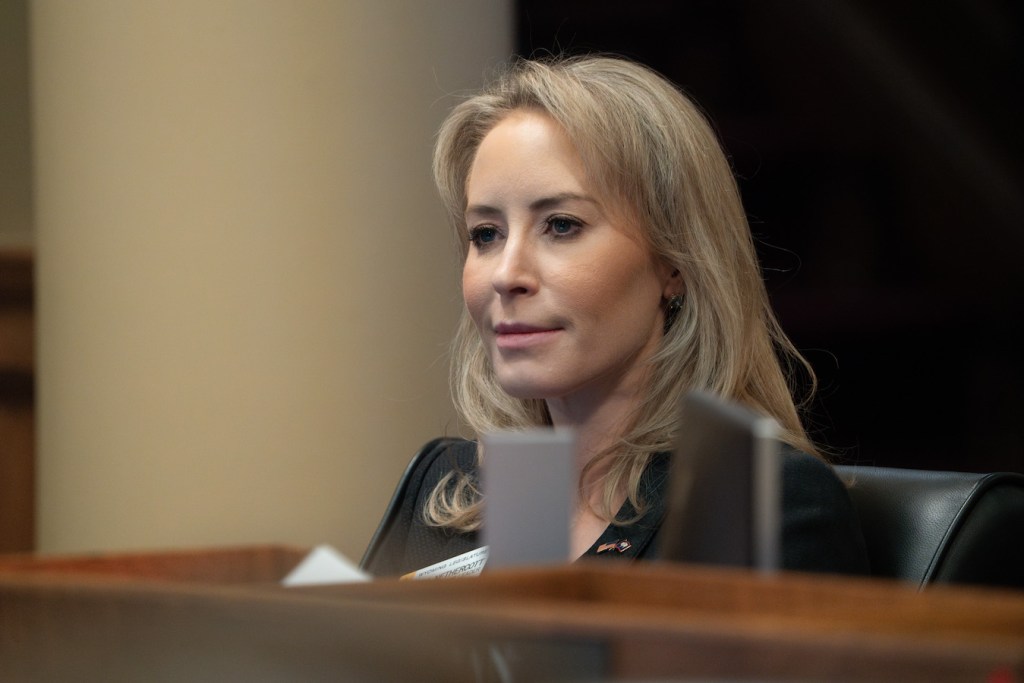
In 2018, in particular, the organization worked with Wyoming legislators to sort out “what was causing our Department of Corrections’ budget to continually go up,” Sen. Tara Nethercott, R-Cheyenne, said.
It wasn’t clear at the time whether the cause was Wyoming judges sentencing too harshly, law enforcement overresponding, or something in state statute, Nethercott said.
But CSG West, in partnership with Pew Charitable Trusts and federal agencies, worked to identify the problem — probation revocations — saving the state $18 million in contract bed costs.
Rather than merely pointing to what other states were doing, Nethercott said CSG helped lawmakers craft solutions by providing “necessary information to make real, sound policy decisions that was based on Wyoming data.”
Montana Sen. Usher, meanwhile, spoke on behalf of NCSL.
“NCSL is the only bipartisan organization dedicated solely to America’s state legislatures,” Usher said. “Whether you’re a deep conservative member like myself, or a liberal member, NCSL is the place where we can come together, compare notes, and share what we are working on in our states.”
Usher said one of his leadership goals for the organization “is to change the perception that NCSL is a liberal organization. I can assure you it is not. The conversations lean whatever way those in attendance take it.”
Usher also noted that his home state and Wyoming have some of the lowest staff per legislator rates, making NCSL that much more valuable.
That benefit was reiterated by Legislative Service Office Director Matt Obrecht.
“About 10 years ago, I had a unique ethics question that I was working on a memo for the Senate Rules Committee, and I was just absolutely hitting a dead end with my own research on that,” Obrecht told the council. “No court cases on it. It’s a legislative ethics question. I couldn’t find anything online. So I called NCSL.”
The organization gave him the help he wouldn’t have found otherwise, Obrecht said.
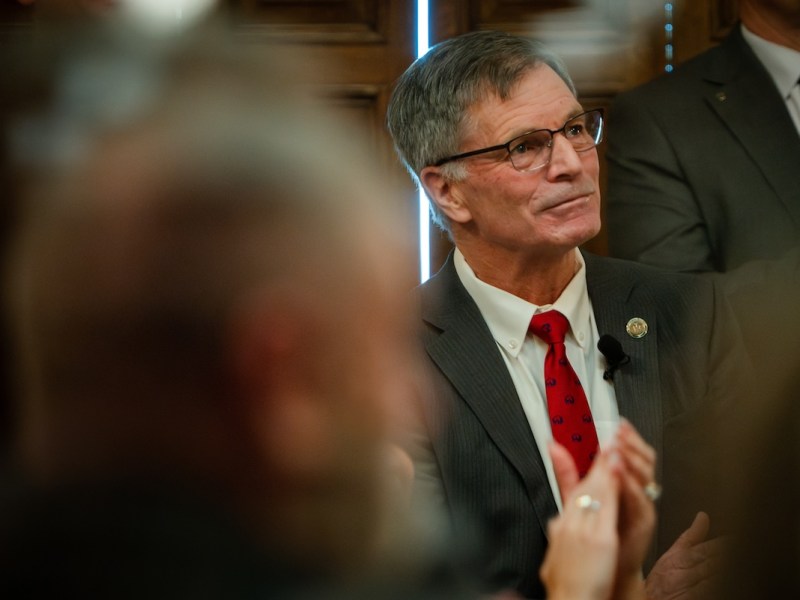
“What I’m hearing you say is you feel that the value is there,” Sen. Mike Gierau, D-Jackson, said. “I’m asking you directly the value, the cost of these two organizations from a staff standpoint. I’m not talking about legislators and what we get out of it. But from a staff standpoint, do you feel that the money we spend on these organizations is worth it?”
“What we pay in dues to NCSL and CSG is an absolute bargain for what we get in return,” Obrecht said, adding that the organizations also rely on LSO for fiscal and budget information as well as responses to surveys and questionnaires.
Later in the meeting, Nethercott pointed to the “’Colorado River situation’ as one of the great challenges facing us.”
“The ability to have a non-partisan entity providing a structure for us to participate and build a network of relationships within the region to help tackle this fundamental issue — I think we are not fully appreciating the significance of that,” she said.
The legislative budget will still need to be approved by the full Legislature, which convenes for the 2026 budget session in February.

Wyoming’s participation in both the NCSL and CSG provide the state’s lawmakers with additional resources in examining and crafting policies that look the issues from all perspectives rather than operating from the single echo chamber of the so-call ‘Freedom’ Caucus. Just be sure that leadership is not using these organizations for travelling at taxpayer expense.
ALEC is always mentioned as “a national organization funded by corporate and conservative donors known for pushing model bills out to state legislatures.” Last I looked, NCSL had no less that 187 corporate donors. It should surprise no one that many of those donors also support CSG and ALEC.
It’s ALEC that should not be funded by state money. It has ample corporate funding, lobbies for corporate interests, and bribes legislators by giving them junkets to luxurious resorts in exchange for passing laws that favor its corporate sponsors. “ALEC bills,” which are not in our state’s interests, should be dead on arrival in our legislature.
Even a blind sow finds an acorn once in awhile.
It’s wonderful these guys finally discovered what previous leadership knew and helped build.
I have to laugh at the fear these goofballs have of liberals. What does the public get? More goofball policy from ALEC.