


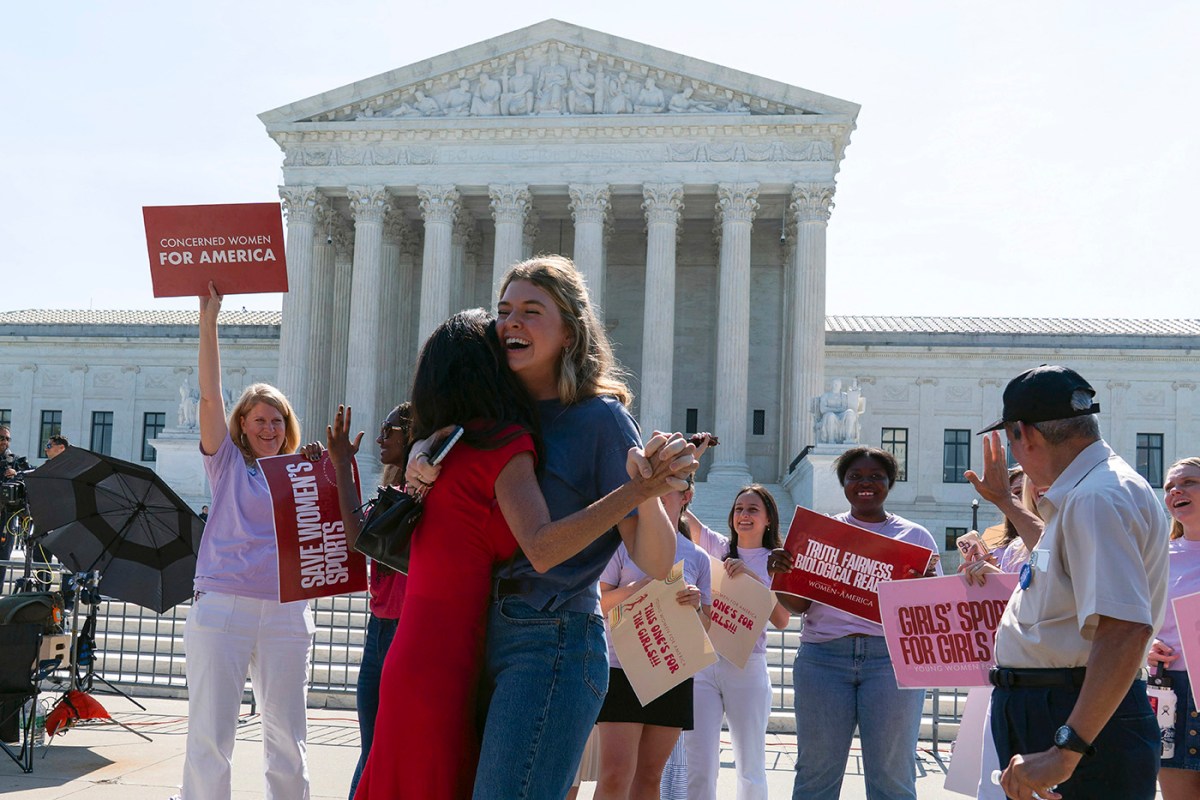
WASHINGTON—The Supreme Court on Tuesday upheld state laws barring transgender girls and women from playing on school athletic teams, in another setback for transgender people.
In Wyoming, where such bans have been in place since 2023, the ruling drew praise from Gov. Mark Gordon and some lawmakers.
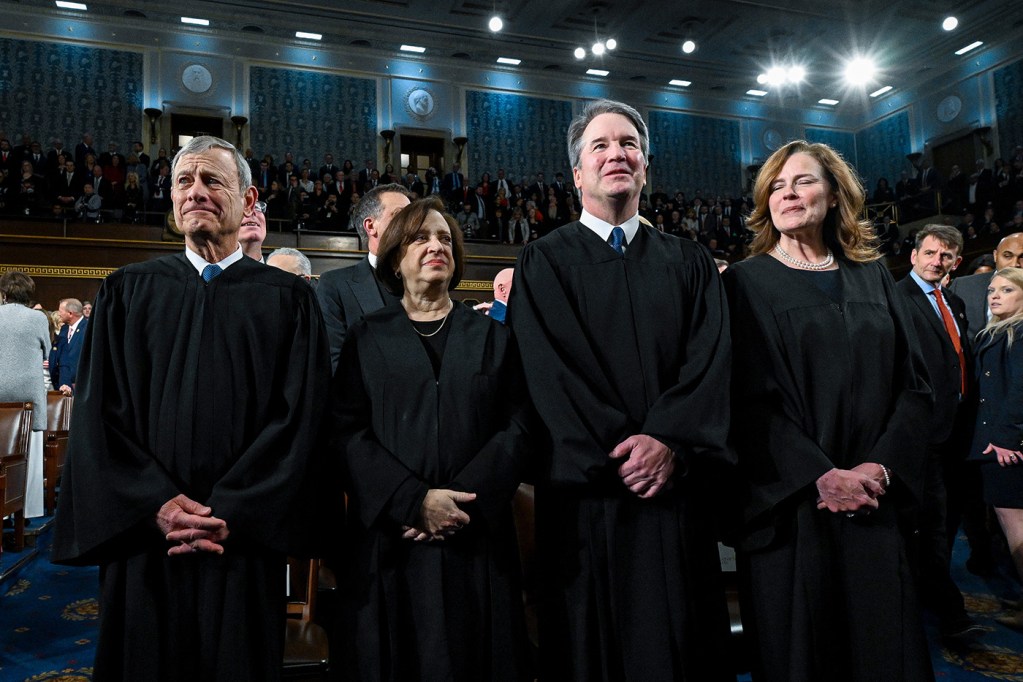
The court’s six-justice conservative majority, which has repeatedly ruled against transgender Americans in the past year, ruled that state bans in Idaho and West Virginia don’t violate the Constitution. The court unanimously agreed that barring transgender girls and women also doesn’t run afoul of the federal law known as Title IX, which prohibits sex discrimination in education.
Justice Brett Kavanaugh wrote for the court that, “states may maintain women’s and girls’ sports for biological females” to address safety and competitive fairness concerns. “The Constitution and Title IX do not require an overhaul of women’s and girls’ sports throughout America.”
More than two dozen other Republican-led states have adopted bans on female transgender athletes, and the decision seems certain to extend to them as well.
A 2023 Wyoming law that prohibits transgender girls from participating in middle and high school sports was widely anticipated to be challenged in court, but no plaintiff filed suit. State lawmakers followed that in 2025 with a similar ban in collegiate athletics.
Sen. Wendy Schuler, R-Evanston, sponsored both pieces of legislation. The long-time coach and former college athlete touted the bills as measures to ensure safety of women and equality in sports.
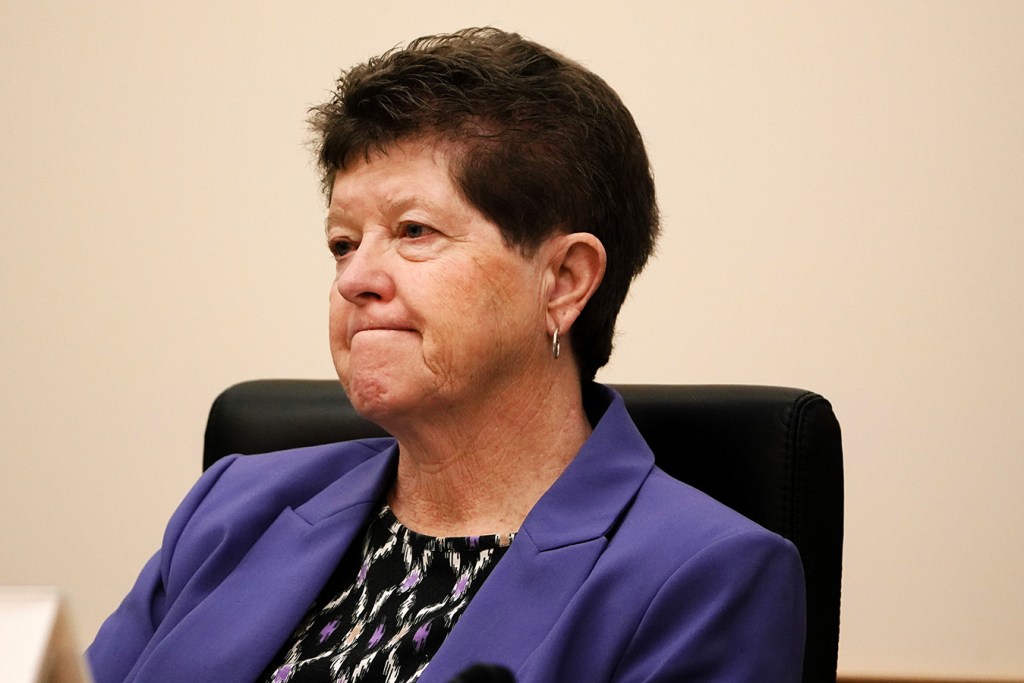
“As the prime sponsor of both the Fairness in Women’s Sports bills in the Wyoming Legislature I am pleased that our biological girls will be protected in Wyoming,” she wrote on Facebook shortly after Tuesday’s ruling. “We are one of 27 states who have passed bills to ensure that Title IX rights for our female athletes will remain in place and will allow a level playing field for Wyoming girls and women.”
Gordon on Tuesday also lauded the ruling. As a father of girls who competed in high school sports, Gordon believes “sports brings real value to young women’s lives and they deserve to be protected in that space,” he said in a statement. “This decision does just that.”
The hard-line Wyoming Freedom Caucus, which has been critical of lawmakers who did not support prohibitions against transgender athletes, celebrated the Supreme Court’s decision while noting that Gordon allowed Wyoming’s 2023 bill to become law without his signature.
“After fighting for years in the Wyoming Legislature to protect cowgirl sports from K-college, the Supreme Court ruling is a breath of fresh air for sanity and truth,” the group wrote in a statement. “What has been cast as ‘anti-LGBTQ’ by the press and as ‘draconian’ by Wyoming’s own Governor Gordon is in fact simply standing up for reality.”
Wyoming Equality, an LGBTQ+ advocacy group, explored challenging Wyoming’s ban, but with only three known transgender students competing in high school athletics at the time, no family was in a position to put a child through the process of a legal fight, the group said in a statement.

“It’s a sad day when our children are kept from the joy and camaraderie that comes from teamwork,” Wyoming Equality Executive Director Sara Burlingame said. “Behind every legal headline are real Wyoming kids who are already being told there’s no space for them. Wyoming Equality remains committed to standing with these young people and their families, and to building a Wyoming where everyone can fully participate in public life – on the field and off it.”
Left unresolved by Tuesday’s outcome are lawsuits challenging state laws and regulations in Connecticut, California and elsewhere that permit transgender athletes to compete consistent with their gender identity.
Justice Sonia Sotomayor dissented, saying from the bench that the majority opinion was wrong to reject an equal-protection claim from 16-year-old Becky Pepper-Jackson.
With the science still evolving, transgender students shouldn’t automatically be shut out of team sports, she said. “We just simply do not know scientifically that transgender students pose dangers,” she said, reading from a dissent joined by her liberal colleagues.
Pepper-Jackson, a high school sophomore in Bridgeport, West Virginia, has been taking puberty-blocking medication, has publicly identified as a girl since age 8 and has been issued a West Virginia birth certificate recognizing her as female. She is the only transgender person who has sought to compete in girls sports in West Virginia.
Pepper-Jackson has progressed from a back-of-the-pack cross-country runner in middle school to statewide champion in the shot put. She beat the second-place finisher by two feet in last month’s West Virginia championship meet.
In the Idaho case, Lindsay Hecox sued over the state’s first-in-the-nation ban for the chance to try out for the women’s track and cross-country teams at Boise State University in Idaho. She didn’t make either squad because “she was too slow,” her lawyer, Kathleen Hartnett, told the court during arguments in January, but she competed in club-level soccer and running.
Prominent women in sports have weighed in on both sides. Tennis champion Martina Navratilova, swimmers Summer Sanders and Donna de Varona and beach volleyball player Kerri Walsh Jennings are supporting the state bans. Soccer stars Megan Rapinoe and Becky Sauerbrunn and basketball players Sue Bird and Breanna Stewart back the transgender athletes.
Kavanaugh, who has coached girls’ basketball, underlined the importance of women’s sports and athletes’ dedication. “No student-athlete on either side of the issue, whether a biological female or transgender, deserves to be ostracized or vilified,” he wrote.
In 2020, the Supreme Court ruled LGBTQ people are protected by a landmark federal civil rights law that prohibits sex discrimination in the workplace, finding that “sex plays an unmistakable role” in employers’ decisions to punish transgender people for traits and behavior they otherwise tolerate.
But last year, the six conservative justices on the nine-member court declined to apply the same sort of analysis when they upheld state bans on gender-affirming care for transgender minors.
The states supporting the prohibitions on transgender athletes argued there is no reason to extend the ruling barring workplace discrimination to Title IX.
Idaho’s law, state Solicitor General Alan Hurst said, is “necessary for fair competition because, where sports are concerned, men and women are obviously not the same.”
Republican President Donald Trump applauded Tuesday’s decision, calling it a “BIG WIN” in a social-media post.
Lawyers for Pepper-Jackson argued that such distinctions generally make sense but that their client has none of those advantages because of the unique circumstances of her early transition. In Hecox’s case, her lawyers wanted the court to dismiss the case because she had forsworn trying to play on women’s teams.
NCAA president Charlie Baker told Congress in 2024 that he was aware of only 10 transgender athletes out of more than half a million students on college teams. But despite the small numbers, the issue has taken on outsize importance.
Baker’s NCAA and the U.S. Olympic and Paralympic Committees banned transgender women from women’s sports after President Trump, a Republican, signed an executive order aimed at barring their participation.
The public generally is supportive of the limits. An Associated Press-NORC Center for Public Affairs Research poll conducted in October 2025 found that about 6 in 10 U.S. adults “strongly” or “somewhat” favored requiring transgender children and teenagers to compete only on sports teams that match the sex they were assigned at birth, not the gender they identify with, while about 2 in 10 were “strongly” or “somewhat” opposed and about one-quarter did not have an opinion.
About 2.1 million adults, or 0.8%, and 724,000 people ages 13 to 17, or 3.3%, identify as transgender in the U.S., according to the Williams Institute at the UCLA School of Law.


Thank you, SCOTUS, for recognizing objective truth trumps Leftist fantasy.
Wyoming’s most pressing issue.
Its one step forward for WOMAN’S rights!
“in another setback for transgender people. ”
OR
Another victory for Female athletes.
What a wonderful celebration for our girls in athletics! Wyoming strong.