


Legislation seeking to curb lawsuits intended to deter public critique and scrutiny died for the second year in a row, with lawmakers citing concerns that the bill was drafted by an out-of-state attorney and “imbalanced.”
House Bill 103, “Wyoming First Amendment Protection Act,” would act as a quick dismissal function for frivolous or meritless legal actions, which are often used to silence those whose speech offends powerful interests. Wyoming is one of 10 states without legislation to prevent “strategic lawsuits against public participation,” also known as an anti-SLAPP statute.
These laws are seen as tools to protect not only journalists, but private citizens who face retaliatory litigation for questioning those in public office or other powerful positions. While many legislators agree Wyoming would benefit from such a law, the Senate Judiciary Committee ultimately decided on March 2 the measure before them wasn’t the one for the job.
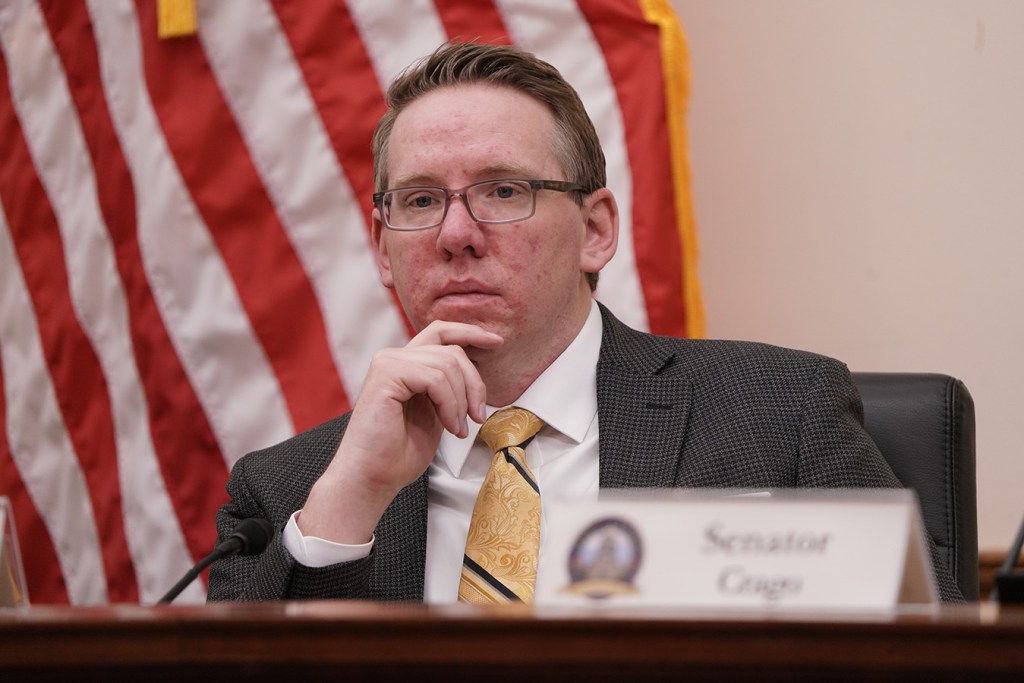
“I definitely see the need for this type of legislation in Wyoming,” said Sen. Jared Olsen, R-Cheyenne, the committee’s chair. “But as I talked to various stakeholders, if you will, that are involved in our court system, there’s pretty much unanimous consent that this bill was not the vehicle to do it.”
The bill had multiple holes, committee members said, from concerns about the law’s applicability to pending cases to an imbalanced approach to attorneys’ fees.
A bill “that would allow one side to have more rights than the other side in an action, I mean, I think that’s bad policy,” said committee member Sen. John Kolb, R-Rock Springs. “It’s not that it’s not trying to solve a problem, it is, but the solution, frankly, could be worse than the problem it’s trying to solve.”
Olsen proposed further study of the issue during the upcoming legislative offseason to craft Wyoming-specific legislation. “I’d rather write our own laws than an attorney from Nevada write our laws,” Olsen said, referring to attorney Marc Randazza, who drafted the bill sponsored by Rep. Pepper Ottman, R-Riverton.
Increased visibility
Forty states, Washington, D.C. and Guam have statutes of varying quality, with some state laws receiving higher grades than others from the Institute for Free Speech, a nonprofit organization, which grades state anti-SLAPP laws.
But a growing interest from state legislatures in passing anti-SLAPP laws has increased the visibility of such lawsuits.
There were 500 alleged SLAPPs decided in 2024, according to research from The SLAPP Back Initiative, a first-of-its-kind database created by New York University’s First Amendment Watch. The Initiative found that nearly half of the cases filed in states with anti-SLAPP laws were dismissed.
The first anti-SLAPP decision recorded in Reuters’ Westlaw was filed in the state of Washington in 1994. SLAPP Back’s preliminary data findings show more than 10,000 cases since then.
In Wyoming, without an anti-SLAPP statute, it’s hard to know how many people have faced these suits. One person testified to lawmakers during the 2026 budget session about fighting a strategic lawsuit against public participation. However, based on data from other states, it’s unlikely she’s the only one.
Kari Cochran, a mother from Rock Springs, told the committee about how losing her teenage son to suicide motivated her to speak out about her school district’s “failures to address bullying and mental health.”
Cochran believes her activism at public meetings and on social media is why two school district workers filed restraining orders against her.
“I was stunned and overwhelmed,” Cochran told the committee. “I didn’t have an attorney and I was expected to be in court in less than two weeks. All because I dared to speak out against a district that failed my son.”
The orders would have limited her ability to attend school meetings and go on school grounds, Cochran told the committee, which was concerning because she still had a child in the district.
She found legal representation and “thankfully, the two judges assigned to my case both recognized the stalking allegations brought against me were improper and targeted my constitutionally protected speech.” While grateful the orders were overturned, Cochran told the committee that with an anti-SLAPP law, “my cases could have been resolved more quickly or might not have even been filed in the first place.”
Model legislation?
Of the states with anti-SLAPP laws, 16 have adopted UPEPA, or the Uniform Public Expression Protection Act, a model anti-SLAPP law created by the Uniform Law Commission, a nonprofit organization comprised of state-based commissioners who work to craft laws that offer consistency across state lines.
South Dakota Gov. Larry Rhoden signed anti-SLAPP legislation on Monday. When the law takes effect on July 1, South Dakota will officially be the 16th state to enact UPEPA.
Randazza, the Nevada attorney, told the Judiciary Committee that UPEPA is “not a good bill” because of limitations to its applicability in federal court, among other things.
There is no federal anti-SLAPP law and federal courts are divided on applying state-based anti-SLAPP laws. Randazza contends that his version of the bill is “substantive” compared to UPEPA’s “procedural” framework.
According to Laura Prather, an American Bar Association advisor to the Uniform Law Commission’s Model Anti-SLAPP Committee and advisor to The SLAPP Back Initiative, substantive state laws can be applied in federal court, while state laws that conflict with federal procedures will not be applied.
Substantive laws focus on the “what,” such as under what law someone can be sued, versus procedural laws, which focus on the “how,” like motions to dismiss such lawsuits. For anti-SLAPP laws, “substantive” is used to describe laws that focus on “immunity” from suit, for example, while “procedural” is used to describe laws that focus on quickly dismissing weak cases.
“When UPEPA was being drafted, these issues were taken into consideration so that UPEPA mirrors, rather than conflicts, with the federal rules under Federal Rule of Civil Procedure 12 and 56,” Prather said. (Rule 12 refers to motions to dismiss and 56 to summary judgments.) “In that way, the goal was to give UPEPA the strongest likelihood of being applied in federal court.”
The proposed Wyoming bill included an immunity provision, which granted “immunity from suit” for “any action of any kind” arising from protected activity, which aims to “protect against the burdens of litigation itself, not merely against ultimate liability.”
This legislation differs from other successfully enacted anti-SLAPP laws, including UPEPA, as this immunity provision contrasts with other laws’ quick-dismissal procedural frameworks.
“I think that the immunity provision could be problematic since other states have found similar provisions unconstitutional,” Prather said. “I would also be concerned that there were no guardrails in the bill to ensure active case management by the judiciary at the outset of the case to ensure that constitutional rights are being protected.” This means the legislation lacks strict timelines and deadlines for filing, allowing a case to sit on a docket rather than being resolved quickly.
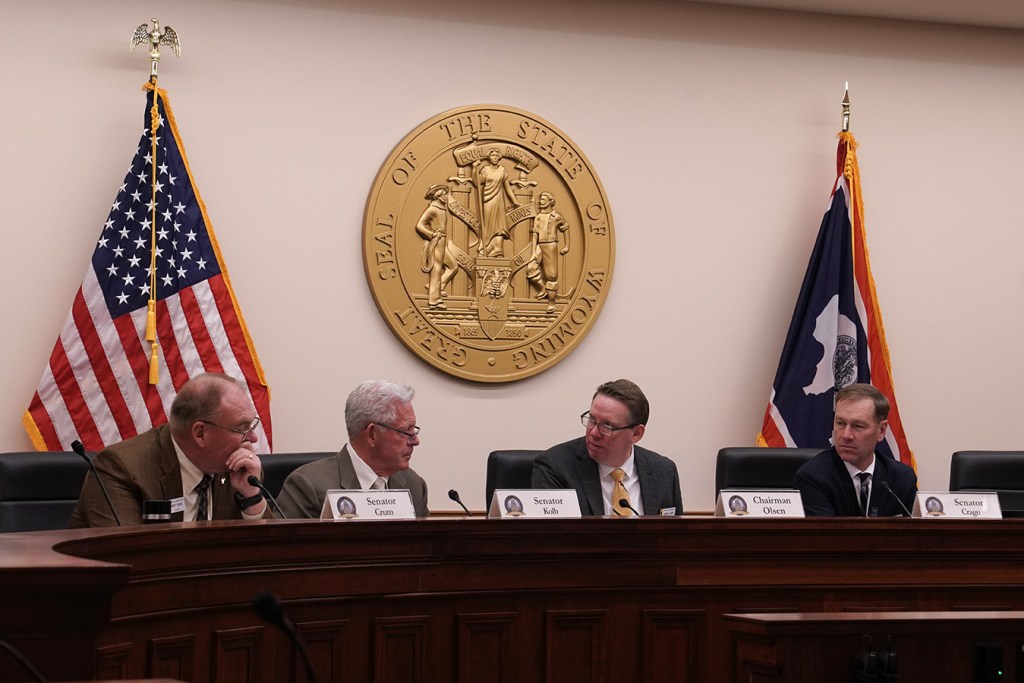
The Judiciary Committee agreed that the bill needed work and had “too many holes.”
“I’ve always been prescribed to the philosophy that we don’t kill the good in pursuit of the perfect,” said committee member Sen. Larry Hicks, R-Baggs. “But I would also concur that in my time, sometimes to get as close to the perfect as possible, it takes years of work on, study on, these issues. And I think if we’re serious and we’re going to take this up as an interim and try to aspire for the perfect, then I’m more than comfortable with that direction.”
And while committee members voiced concerns about having legislation drafted by outside attorneys, Prather doesn’t think their reluctance to pass this particular bill will adversely affect any future adoption potential of UPEPA.
“One of the amazing things about the Uniform Law Commission Process is that they engage practitioners, judges, and lawmakers from all 50 states to first, decide what areas of the law would benefit from uniformity, next evaluate what is working and not working in the states that already have legislation in that area when drafting the model law, and finally, present and debate the drafted model before the entire [conference] of ULC Commissioners from all over the country,” she said. “That process alone ensures that every uniform law can be embraced as a collaborative approach to best practices, and UPEPA is a perfect example of that.”
The Joint Judiciary Committee — composed of five senators and nine representatives — identified anti-SLAPP as its No. 2 offseason priority, Olsen, who co-chairs the committee, told WyoFile. Management Council, the legislature’s administrative arm, will review and approve interim topics on April 1.
For more legislative coverage, click here.
How duplicitous . ( quote ) : “lawmakers citing concerns that the bill was drafted by an out-of-state attorney and “imbalanced.”
That clause right there pretty much describes every piece of legislation introduced by the Wyoming Freedom Caucus. Follow the paper trail.
Besides, the WFC yeomans aren’t smart enough to draft their own bills.
Silence free speech? Right up the FreeDum Caucus’es alley
When you watch the national dialogue regarding free speech today, many of the same voices saying free speech is being attacked are the same voices screaming for “hate speech” laws.
Hypocrites all.