


Ever wonder what the weather holds in store? Or how much snow might pile in Wyoming’s mountain ranges, or when spring melt might begin?
Much of that vital information, including Wyoming-specific water and drought modeling, comes from the National Center for Atmospheric Research in Boulder, Colorado, and its Wyoming Supercomputing Center in Cheyenne.
Now the fate of the institution — as well as the vital information it provides for the state’s agriculture, tourism and energy industries — is uncertain.
Last week, a Trump administration official announced that NCAR would be dismantled. In a social media post Tuesday, Office of Management and Budget Director Russell Vought described NCAR as “one of the largest sources of climate alarmism in the country,” and said the administration “will be breaking up” the institution.
“A comprehensive review is underway & any vital activities such as weather research will be moved to another entity or location,” Vought added.
Days later, however, Colorado Sens. Michael Bennet and John Hickenlooper — both Democrats — stalled the Senate’s budget process in protest of the move to dismantle NCAR.

If the Trump administration overcomes such efforts, it’s unclear what will happen to NCAR and its Wyoming Supercomputing Center. The Cheyenne facility, established in 2012, may be offloaded to “an appropriate operator,” according to an NCAR statement Thursday.
“The [U.S. National Science Foundation] will publish a Dear Colleague Letter that will inform the agency’s follow-on actions,” NCAR said. “Specifically, NSF will explore options to transfer stewardship of the NCAR-Wyoming Supercomputer to an appropriate operator; divest of or transfer the two NSF aircraft that NCAR manages and operates; and redefine the scope of modeling and forecasting research and operations to concentrate on needs such as seasonal weather prediction, severe storms, and space weather.”
Renowned climate scientist Katharine Hayhoe, a professor at Texas Tech University who serves as the Nature Conservancy’s chief scientist, referred to NCAR as “quite literally our global mothership.
“The National Center for Atmospheric Research,” Hayhoe continued in a social media post, “supports the scientists who fly into hurricanes, the meteorologists who develop new radar technology, the physicists who envision and code new weather models, and yes — the largest community climate model in the world. That too. Dismantling NCAR is like taking a sledgehammer to the keystone holding up our scientific understanding of the planet.”

Closer to home, University of Wyoming Geology and Geophysics Professor J.J. Shinker, who relies on both NCAR in Colorado and the Wyoming supercomputer, said, “Dismantling NCAR has implications for Wyoming, for our students, for our research and for Wyoming’s future well-being.”
NCAR and Wyoming
NCAR’s supercomputing center has maintained a close relationship with the state and the University of Wyoming since its inception, logging hundreds of “core hours” for “Wyoming-led projects in the atmospheric, earth system, geological and other areas of science of interest to Wyoming,” according to the university.
Shinker, her university colleagues and her students, rely on both the supercomputer and NCAR’s Colorado headquarters.
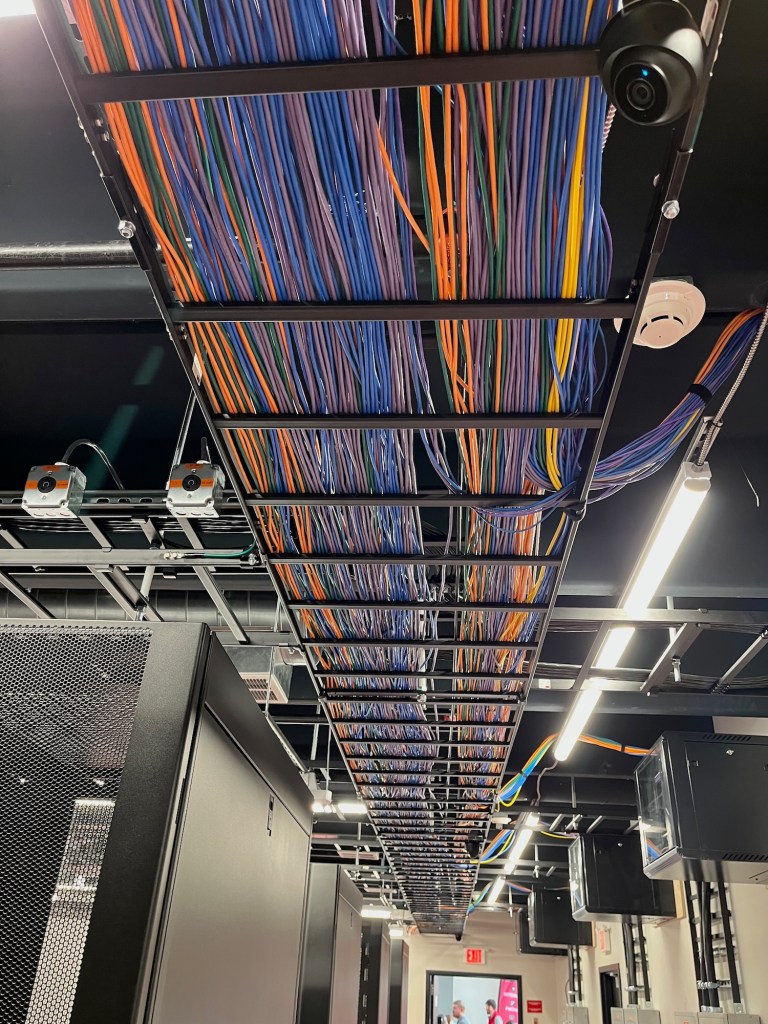
“I use NCAR data from that supercomputer for a class that I teach in the spring semester, and I’m really hoping that it’s not impacted,” Shinker told WyoFile. “NCAR and its resources — the data and the people — are integral to Wyoming’s economy.”
That’s particularly the case for drought monitoring — “a big issue in our state,” Shinker said. “Our agricultural industry, our ag suppliers — they require updated, real-time, quality-controlled data, and that is one of the things that NCAR provides with that supercomputer and with their personnel resources. Dismantling that would put Wyoming’s economy at risk.”
Even before statehood, Wyoming’s evolving economy has always been built around the “pulse” of its climate, Shinker explained. That’s particularly the case when it comes to the pulse of precipitation, winter snowpack and spring runoff. Understanding weather outlook modeling and larger precipitation, temperature and drought trends are vital to those who rely on water for everything from outdoor recreation to wildfire vulnerability and when to plant certain crops.
“What’s crazy is, that supercomputer receives satellite data and data from buoys in the ocean that tell us about things like El Niño and La Niña, which I do research on,” Shinker said. “We’re not doing subversive research. We’re doing research that is in support of the well-being of the state of Wyoming, because most of the research that my students and I work on is about drought.”

In a more direct economic sense, NCAR’s Wyoming supercomputer helped launch Cheyenne’s growing tech and data center industry, Cheyenne Mayor Patrick Collins told WyoFile. Microsoft was among the first major tech companies to set up shop in Cheyenne, which Collins attributes, in large part, to the supercomputer. Today, Microsoft plans to expand its computing presence there. Meta, as well as a joint venture between Crusoe and Tallgrass, have also announced plans to build data centers in the area, mostly driven by demand for artificial intelligence computing.
The growing industry provides “super high-quality jobs,” Collins told WyoFile, adding “these are philanthropic companies, so they’re giving a lot back to the community.” It would be a “huge loss” for the University of Wyoming and Cheyenne if the supercomputer was no longer an entity.


“Just the reputation of having NCAR and having Microsoft, having Meta — all the different [tech] companies that have chosen to be here really helps us in our reputation to bring other businesses here,” Collins said.
Beyond Cheyenne’s and Wyoming’s stake in the tech industry, Collins said the loss of NCAR’s work in atmospheric sciences would be a major hit.
“I see a lot of value in those kinds of things — the early warnings we get, which gives us the ability to protect our populations, and the academics and the stuff that comes from that, really does help our communities.”
This supercomputer was one of the great economic diversification efforts by the state in the first decade of this century. It succeeded, too.
I’m curious to hear what Sen. Barrasso and US Senate candidate Harriet Hagman think of the administration’s decision to take a wrecking ball to NCAR and the loss of its essential data.
No doubt they will assure us that all will be fine. They should explain their thinking in detail. There is too much at stake here for Wyoming for us to put up with pablum.
A vast majority of WY voters voted for the Orange One. You are reaping what you have sown.
If it even sounds like it might be connected to climate change … this administration will trash it.
What has “science” ever done for the AMERICAN peaple?!!!
Well, for one thing Science was pretty good at teaching peOple to spell well…
Taught them spelling?
You might wish to learn the basics of the science before judging it.
Compared to only 20 years ago, we are far better at modeling the weather. It is literally one of the most complex processes on earth. Respect science and your eyes will open to the actual silence of our world and universe.
Keep them shut, and suffering, death, and destruction will simply continue affecting everyone on this planet in ways you can’t even perceive today.
When was the last time the climate model was so wrong? I guess we could all go back and use the old farmers almanac
Typical fascist dealings. If you don’t like the message, eliminate the messenger. Maybe Trump can change it up and call it Trumps weather service. OH, give him a big black marking pen so he can teach the MAGA goofs about the weather.
We’re going to have a lot to clean up when we rid ourselves of MAGA.
One has to wonder if the wrecking ball of the current regime will ever be stopped. What do you all think. Will our Wyoming delegation in Washington do anything to stop this? They have all told me they are All for Wyoming All the Time. I’m having a hard time seeing it.
When was the last time a climate model was right?
Today.
Oh yeah, let’s just stop collecting and analyzing weather and climate data. That will solve everything.
Except that “data” those new data centers collect data on the Chinese-made crap we buy on Amazon – THAT’s a real benefit to the world, uh huh.
All the models are free to download. Please by all means, explain where and how the models are wrong. Otherwise, you shouldn’t make claims you cannot back.
Any model you can simply download will be garbage
Yep, “supercomputers” told us a generation ago that florida would be under water along with every coastal city by now.
Computers spit back what they are programmed to.
Source?
But….sea levels are rising. Just ask Florida.