

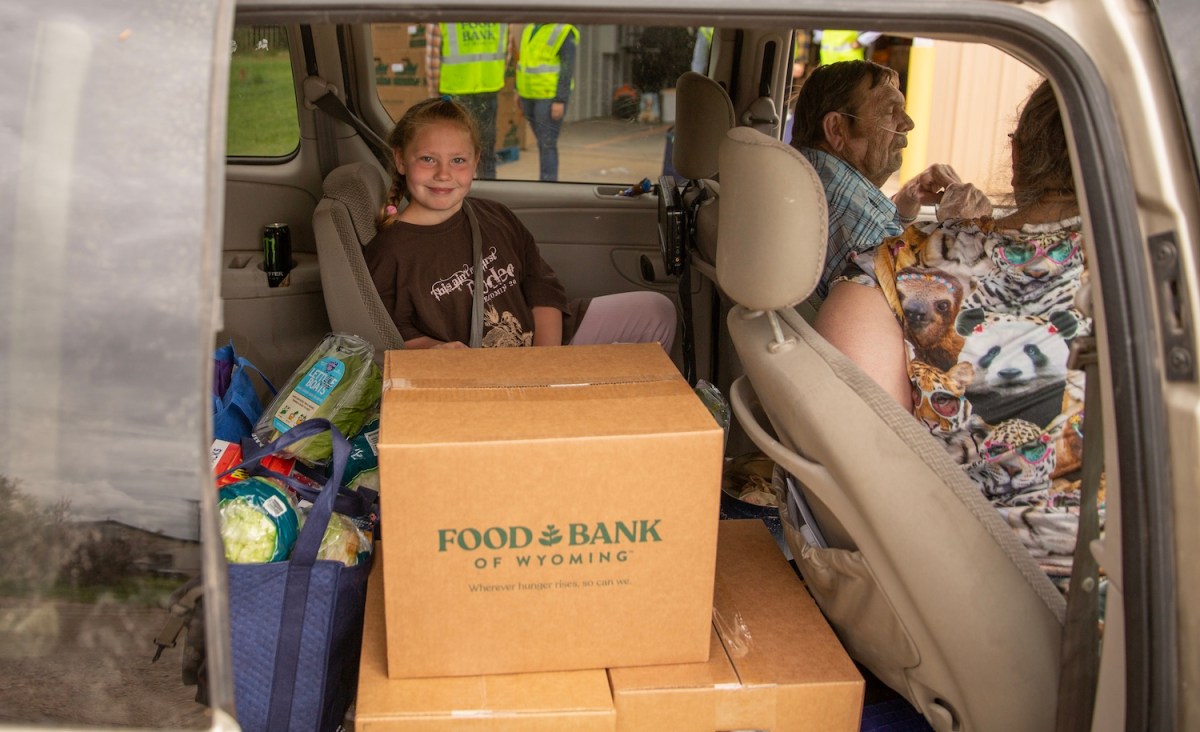

Wyoming spent $2.4 million to supplement hunger relief efforts in the state when the government shutdown left an estimated 26,000 state residents without federal SNAP assistance this fall.
The money, which Gov. Mark Gordon released after declaring a public welfare emergency, was distributed to 81 mobile pantries, food pantries and the Food Bank of Wyoming. Distribution amounts ranged from $1,814 to the LaBarge Food Bank to $216,280 to Needs Inc. in Cheyenne.
With the increased purchasing power, Wyoming’s network of food relief partners were able to distribute approximately 140,000 more meals statewide compared to the same period last year, according to a Department of Family Services report.
That number underscores what food relief personnel describe as a level of food insecurity they’ve never experienced before.
It’s hard to say something like “all-time high” because there are holes in historic data, Food Bank of Wyoming Executive Director Danica Sveda said. But that’s what it feels like. “We are experiencing food insecurity on a much higher scale than I think anyone anticipated,” she said.
The need for nutritious food had already increased to notable levels by summertime. The trend ramped up during the holidays, Sveda said.
Gov. Gordon touted the SNAP-related hunger relief efforts in a recent press release.
“This effort reflects Wyoming at its best,” Gordon said. “State agencies, nonprofits, churches, and volunteers worked together to take care of our neighbors.”
He added a caveat, however.
“I’m proud of that work but I want to reiterate that this need has not ended with the restart of SNAP,” Gordon said.
Hunger insecurity and SNAP
An estimated 90,000 people in Wyoming lack reliable access to nutritious, affordable food, according to the 2025 Map the Meal Gap from Feeding America. Additionally, 26,260 children live in food-insecure homes, the report shows, a 39% increase since 2019.
As to what’s fueling growing needs, Sveda said, “it’s largely due to inflation. Grocery store prices are incredible right now, even for people who don’t face food insecurity.”
For families whose wages haven’t risen, she said, “the cost of food is really making families make hard choices.” Most other costs of living like utilities, rent and gas are inflexible, she said, so it’s the food budget that often takes the hit.
The federal Supplemental Nutrition Assistance Program, known as SNAP, provides food benefits to low-income families to supplement their grocery budget.
Around 29,000 people in 13,000 households receive SNAP benefits in Wyoming, according to the USDA. The average monthly benefit is around $386 per household. Children and seniors received the majority of the roughly $62 million in 2024 benefits.
The Wyoming Department of Family Services distributes SNAP benefits on a monthly basis via reloadable EBT cards, which function like a debit card, for buying eligible food items.
As October’s government shutdown stretched toward November, the USDA announced plans to stop SNAP payments due to lack of funding. On the eve of the Nov. 1 SNAP lapse, Gordon declared a public welfare emergency, releasing state funds to prop up food assistance.
Wyoming was unable to transfer state funds to SNAP recipients’ EBT debit cards. Instead, the executive order enabled the governor’s office to send discretionary emergency funds to charitable organizations and churches to provide food through food banks and pantries.
A recent Department of Family Services report outlined how funds were disbursed and used during the period between Nov. 1 and Nov. 19, when Gordon’s order was rescinded.
“The funding allowed pantries to purchase a greater quantity and variety of items, especially high-demand proteins and fresh produce,” the report said.
Hunger relief programs served 74,000 individuals in November, a big jump from 53,000 in October, the report shows — “highlighting the increase in usage in November, which occurred during the federal government shutdown.”
Rising needs
In the report, the Food Bank of Wyoming compared the November food spending of its partners to the same period last year.
“Due to this increased purchasing power, partners were able to distribute approximately 140,000 more meals statewide compared to the same period last year,” the report said. “This dramatic increase underscores how essential this funding has been in stabilizing food access during a period of heightened need.”

The report also includes other data that indicate mounting food insecurity in the state. From September through November, calls to Wyoming’s 211 helpline related to food needs nearly doubled, the report states.
Sveda, who spoke to WyoFile days after the Christmas holiday season ended, said that even with the buffer of emergency funds, pantries ran out of food, didn’t have enough volunteers to operate more than a few hours per week and experienced increasing numbers of people showing up for food assistance.
SNAP benefits have resumed. Still, Food Bank of Wyoming and others are bracing for high demand to continue in 2026, she said.
“We want to make sure that no one has to go to bed hungry, and that no one is malnourished because they couldn’t afford produce,” Sveda said. “And so looking ahead, we’re going to continue to work really hard to cultivate relationships with producers, farmers, ranchers and donors to make sure that we can keep doing this valuable work and make sure that we’re getting enough food out into the community.”
Hmm…2.4 million because our GOP refused to believe that Americans need to have affordable medical insurance.