

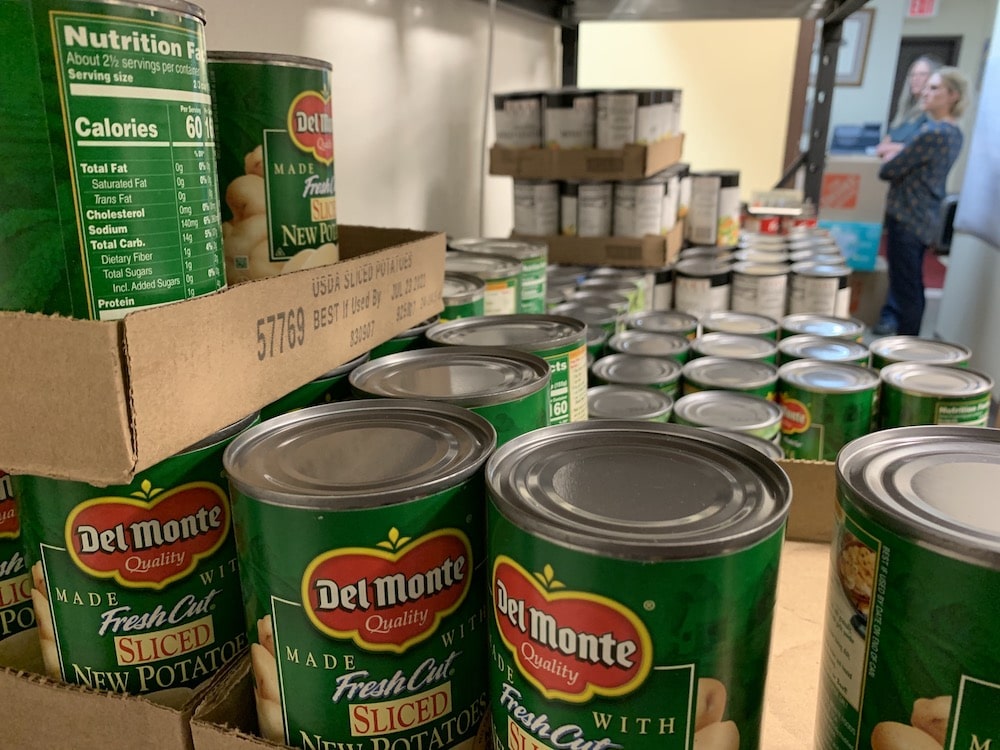
A caller who recently reached out to the Wyoming 211 help line had a stark message for the person on the other end of the line: If I pay my utility bill to avoid a disconnect, I’ll have to eat cat food this month.
Others in a desperate situation aren’t hiding their frustration about needing help at all — a cultural shame in Wyoming — or their stress navigating a perplexing, ever-changing and shrinking network of social services.
“Our call center has had — I don’t think I would use the word aggressive, but — more unpleasant interactions in the last month, really since probably July, than we have had in a long time,” Wyoming 211 Executive Director Ann Clement told WyoFile. The desperation, she added, “is palpable. It’s absolutely unbelievable.”
Wyoming’s most vulnerable, along with those who have been teetering on the edge, are feeling a culmination of pressures, from the high cost of living to cuts to the social-service safety net. Some cutbacks, like the suspension of Supplemental Nutrition Assistance Program benefits and low-income heating assistance due to the government shutdown, are presumably temporary.
Those pains are exacerbated by federal employee layoffs and furloughs, deep spending cuts, rising electric utility rates and increasingly inaccessible health care and rising health insurance costs, according to several front-line social-service workers who spoke to WyoFile.
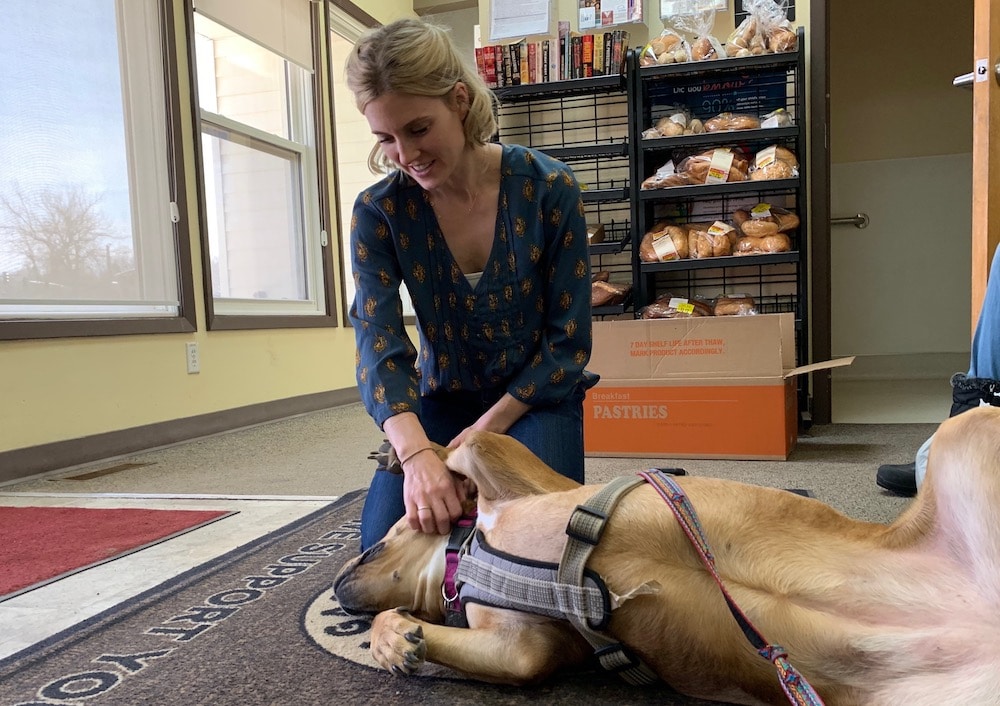
The compounding hardships are happening as local nonprofits scramble to do more with less.
“It sucks so bad,” Gillette’s Council of Community Services Executive Director Mikel Scott said. The council’s own employees, as they scramble to meet a surge in needs, face skyrocketing health insurance premiums and the prospect of not having health insurance at all, she added. “You don’t know what’s going to happen next. You don’t know what money they’re going to take from you next. And it was never enough to begin with.”
Some federal programs that people have relied on for decades don’t seem to be functioning well, Scott added. The council was in line for a $177,000 Housing and Urban Development grant to provide rental assistance to those seeking refuge from domestic violence, but the agency reneged on the money, Scott said. She alleges the grant was denied based on changes to the council’s application that were edited by HUD itself.
“We lost $177,000 for our community that would have gone to help victims of domestic violence,” Scott said.
Both Scott and Clement noted that when families are stressed for basic needs, there’s typically an increase in abuse.
“That’s what starts to bubble over into other spaces that people don’t necessarily think about, when there’s a stressor at home,” Clement said.
Scrambling to help
Gov. Mark Gordon recently declared a public welfare emergency that will allow him to spend up to $10 million to help cover suspended SNAP benefits, while lawmakers have applied for $800 million in federal money to stabilize hospitals, bolster preventative health and grow the workforce.
Churches, neighbors and local businesses are stepping up to help, Clement and Scott say, but those efforts simply can’t match the level of federal government dollars and social service infrastructure necessary to meet even typical needs in rural Wyoming, let alone the surge in hardships Wyomingites are facing today and might face in coming months.
“We’re already pretty used to having to tell people ‘no’ or ‘we ran out’ or ‘we can’t help with that,'” Scott said. “It’s going to be worse when tons of people get kicked off of health insurance. I mean, forget actually lifting anyone out of poverty. At this point, the goal feels like trying to keep someone from becoming homeless, to keep them fed, trying to keep them from freezing to death in their home because they can’t pay their utilities.”
In addition to providing meals, there’s an emphasis among both government and nonprofits to keep people from losing their homes or apartments. Tenants can get evicted for not paying utilities, so help like rental assistance and the Low Income Energy Assistance Program go a long way to prevent homelessness, which is extremely unsafe and one of the most costly public health-and-safety challenges for any community to address, according to Scott.
“They’re either going into shelters or they’re going onto the street,” she said. “Either way, it’s costing a lot more money than if we just helped supplement a utility payment.”
LIEAP also helps qualified applicants weatherize their homes and fix heating units, which not only saves money but avoids dangerous attempts to stay warm.
“Our crews have seen very dangerous situations,” Scott said, “like people heating their home with a barbecue grill or just opening a gas oven.”
Food assistance
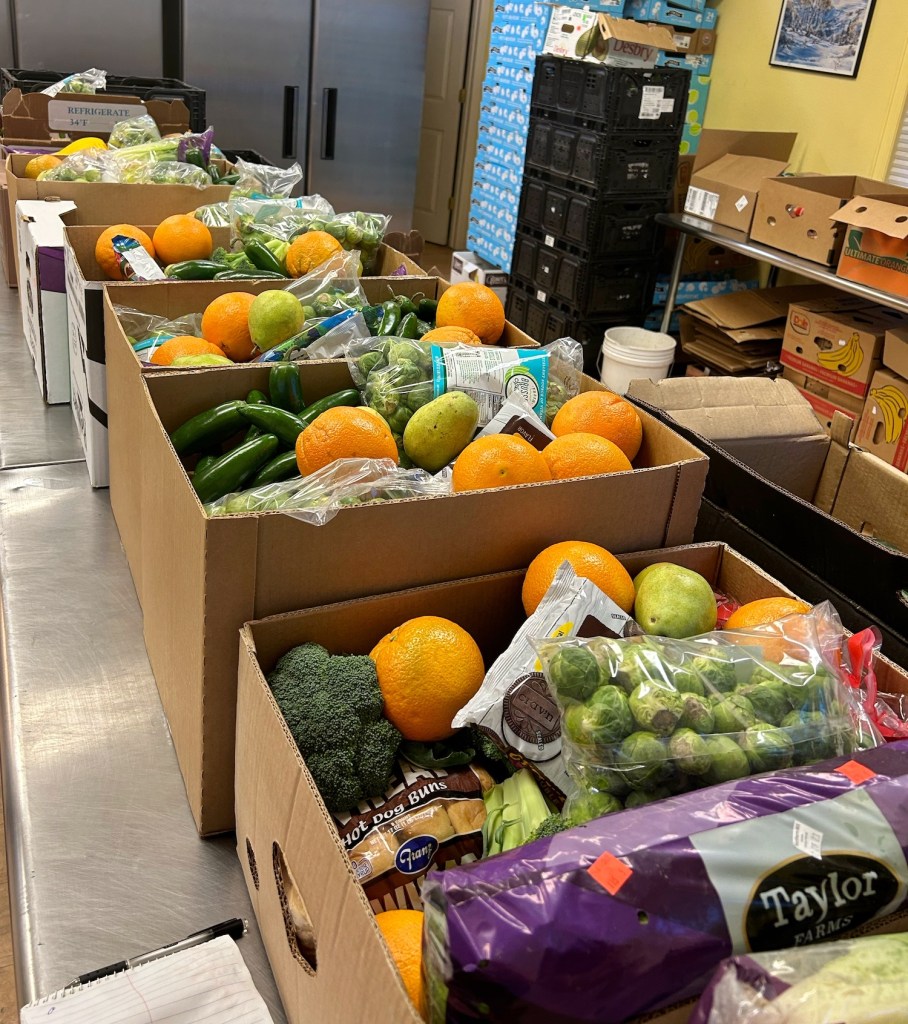
SNAP was suspended Nov. 1 due to the federal government shutdown, putting at risk more than 28,000 Wyomingites who rely on the program, according to Food Bank of Wyoming. Of those, 44% are children and 13% are people over age 65.
Food Bank of Wyoming has been working overtime to distribute the governor’s $10 million emergency aid while determining how to get the money to food pantries and those in need without using the federal SNAP infrastructure. The organization is “directing the funding in the form of credits to order food for free from Food Bank of Wyoming and in direct payments to keep money circulating in the local economy by allowing partners to purchase food from grocers in their community,” according to a Friday email update from Executive Director Danica Sveda.
Despite an efficient statewide network to collect and distribute food, there are challenges, including trying to replicate the scale of the federal SNAP program in Wyoming. SNAP, via direct distribution to individual recipients, injects about $5 million into Wyoming’s economy each month, according to Sveda.
“For every meal that a food bank can provide, SNAP provides nine,” Sveda wrote. “Even if SNAP benefits are reinstated this month, there is a chance people will not receive a full back-payment for November. This disruption in SNAP benefits is and will continue to be devastating for our neighbors facing hunger.”
The increase in demand at food centers and mobile food pantries is significant, Sveda told WyoFile in a Friday phone interview.
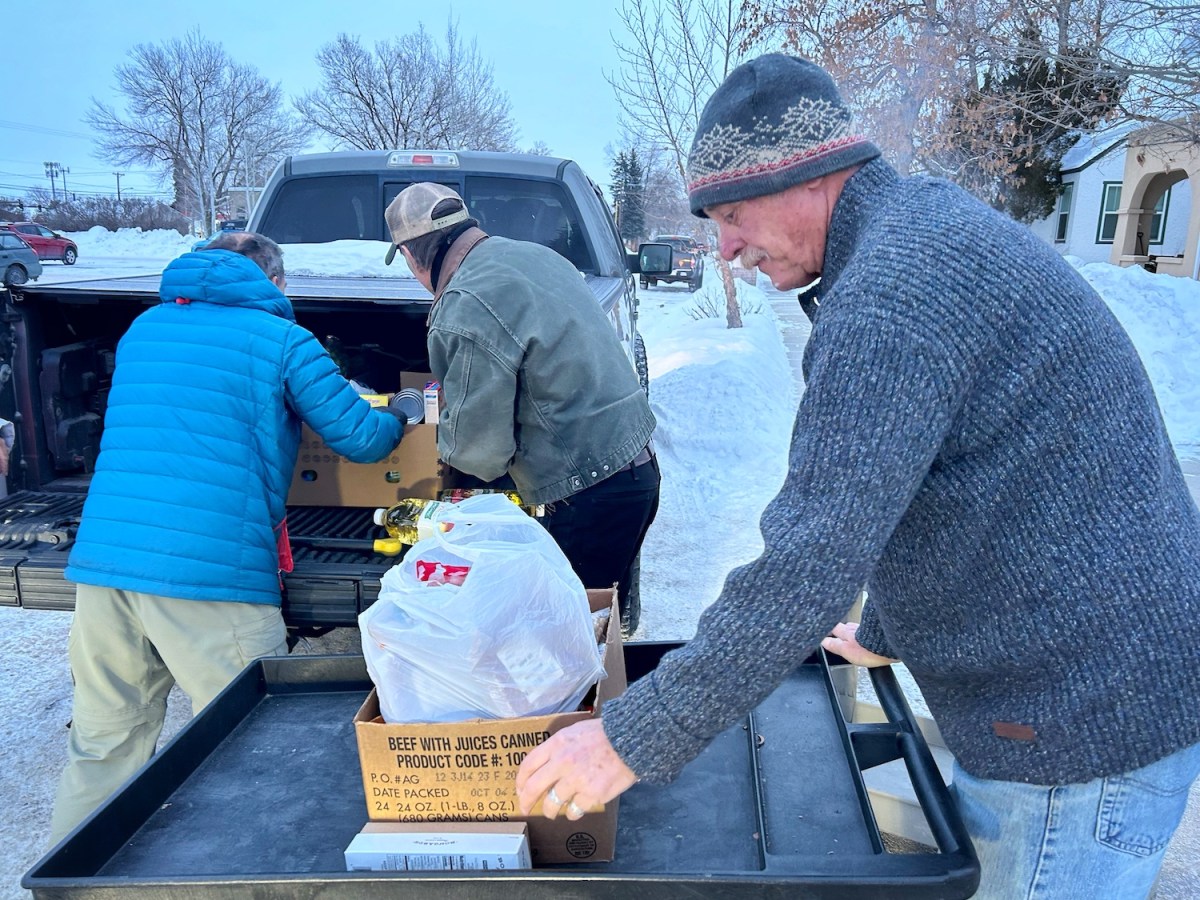
“What I’m hearing from all of our pantries is that they are seeing a lot of people that they have never seen before,” Sveda said. That’s because SNAP recipients typically take their SNAP debit card to the grocery store, she added. “So now they’re having to go to a food pantry for the first time.”
Sveda suspects that there are also a lot of federal workers who have been laid off and are relying on food pantries for the first time. “So we’ve been increasing the amount of food that we normally send out to our mobile pantries.”
Even when the SNAP program is restored, it’s unclear whether Congress will fully fund the program. Congress, in the Big Beautiful Bill, made several changes to the program, including expanded work-reporting requirements for young adults and requiring states to match a portion of the cost to manage the program.
To find a local food bank near you, go to the Food Bank of Wyoming website. Go to the same website to learn how to help.
Because there are so many different social service organizations in each Wyoming town, one of the best ways to find help or to learn how to help is to visit the Wyoming 211 website or dial 2-1-1. The call center can connect you to services and organizations in your community.


Mamdani will be hiring social workers to replace the NYPD he wants to get rid of. Maybe NYC and Wyoming can work out a trade.
One of the hallmarks of Western history is the gradual assumption of responsibility of the common welfare by ever larger units of government. Where during medieval times, before the industrial revolution, there was a town council that deemed who was worthy of help, and the Church with a capital “C” who took care of local residents – widows, orphans, the insane.
With the industrial revolution local commerce was replaced with city based industry. In order to survive men, often heads of household, headed to the cities to find work. they would work for a couple months and then be released to wander the countryside. They were deemed the “unworthy poor.”
The 1601 English Poor Laws were an historical marker that shifted a qualitative change in how the poor were viewed. If a man was deemed unworthy of alms, he was left on his own to survive. this created a class of unemployed romanticized in the Robinhood and his Merry men myth.
The distinction between the worthy poor – widows, mentally ill, orphans, physically disabled, and unworthy poor – able bodied men and women and children, continues today.
In America the poorhouse was where both the worthy and unworthy poor were sent. Along with widows and orphans, the mentally ill and physically disabled, murderers and rapists, pedophiles and the criminally insane shared housing. Reform movements in the early 1800s got counties to create orphanages. Mental asylums emerged that were begrudgingly funded by the State. Prisons were created as well. The generic “poor” was slowly differentiated into social groups of persons each having different needs. Part of the reason public education emerged in the late 1800s was the need of factory owners to have docile workers. Train kids to sit in desks, in rows, to line up when told to, to be prompt and on time – this created the “working class.”
It’s ironic, but the second greatest threat to America after the civil war, stemmed from the working and living conditions of working people from 1870 to around 1900 and the emergence of what we call the progressive era. The wealthy greatly feared what they saw as the “dangerous classes” and did as little as they could, including killing Americans, to stem the rising tide of revolution.
With the 1930s depression and 25% unemployment need of America’s working classes become so great that the federal government had to step in to create a safety net so people wouldn’t die. This was the New Deal. The federal government had finally assumed responsibility for the physical and social welfare of America’s workers.
What we are experiencing now are the effects of the federal government’s retreat from this responsibility. What adds to just how sad this is, is how Wyoming and its legislature is addressing the federal abdication of responsibility. Rather than leaping into the breach, it is silent, or hems and haws about costs, and dithers – and people die.
This is what happens in Russia, Venezuela, in Afghanistan, in every country where the federal government seeks to consolidate power rather than to serve the people that elected them.
Bleizeffer’s article lays out the effects of the federal abdication of responsibility for it’s worse off citizens. It’s real, no spin required.
LIEAP, SNAP, and welfare in general should have always been state programs. Having a whole division of the USDA that does nothing but manage housing in New York City is ridiculous. These programs have little to no oversight at the local level where they are supposed to do the most good. This notion that any branch or caucus can hold folks hostage is seriously flawed. Democrats blame Trump. Republicans blame Democrats and rightfully so. The clean CR was there. Instead one caucus decided to hold underprivileged people hostage over money that was supposed to sunset anyway. But as we all know, taxpayer money never sunsets in DC.
These necessary programs should not be used as political hostages by either party. Any serious student of history could see this coming at the beginning.
The other day the wife and I took a load of food down to the Salvation Army, and I don’t remember seeing one politician or fervent supporter of either side down there donating.
I wonder how many of the howling far right or far left have the LIEAP box checked on their energy bill?
Well my rant is over, all those with TDS may now take their cheap shots.
I don’t think anyone is going to take your bait on the Trump derangement syndrome part Richard.
Amazing how our three representatives are remaining so quiet about this. You would think that since Trump’s “golden age” has finally arrived in Wyoming they would all be ecstatic about it. Usually Barrasso, Lummis, and Hageman will take every media opportunity available to continue convincing the public how good we’ve got it under this administration compared to the terrible times under Biden.
Personally, I’m glad to be one of the few RINOs in Wyoming that voted for Harris. At least a couple of us were smart enough to see the con being perpetrated on the American people by this guy and refused to be a part of it for a second time.
They’re too busy licking Trumps boots.
It is estimated that the Trump family has made $3.4 billion dollars during his presidency. How much did you make?
And hiow much of the Trump’s money and time has been given to charity? How often do recipients of the money and time show their appreciation by cleaning, doing yard work etc for elderly or very busy folks who do donate????A two way street is usually better than one way.
And how do you know how much money trump gave to charity? Trump and family are serious grifters and you can’t trust a single thing they say. Frankly your argument is odd.
King tRUMP thinks Domestic Violence is not a Crime (9/8/25 ~ Guardian)! “Not a big surprise seeing the way he treats our Nation!”
Guardian… LOL