


Wyoming State Parks has reached an agreement with Star Plunge owner Roland Luehne that signals an end to two years of litigation and the long-term closure of the popular Thermopolis aquatic facility.
The tentative settlement still needs final approval from the Wyoming attorney general’s office. If approved, it will conclude all litigation and stipulate that the state reimburse Luehne’s company $1.8 million, which is the appraised value of the concessionaire’s capital investment and ongoing concern in the Hot Springs State Park business minus the value of the state-owned land.
The agreement would effectively end a saga that began with the state’s 2024 decision to select a new operator for the Star Plunge, which the Luehne family had managed for 50 years. That decision sparked controversy. On one side, proponents argued that a new operator could spruce up the park’s aging facilities and breathe fresh life into the hot springs destination. Opponents said it would Disney-fy the park, price patrons out and leave a local family in the lurch.
“It’s been a long road, and we’re looking forward to the next steps,” Deputy Director for Wyoming State Parks Nick Neylon said. “It’s exciting.”
The agreement would also result in reopening the Star Plunge, which closed in January 2025 after Luehne’s short-term management agreement with the state expired. The timeline details aren’t yet concrete as the state needs to ensure facility safety, Neylon said, but he hopes it can reopen within months.
The spring-fed mineral waters of Star Plunge and Hot Springs State Park have been a destination for residents and visitors for centuries. Native Americans visited the waters, which they prized for their healing qualities, long before white settlers. The original 1-square-mile park land was established through a treaty.

The land was later ceded to the state on the stipulation that there always be free public access to the therapeutic waters. What began as a reserve became the state park in 1929. With its midcentury drive-in motif and water slides, the Star Plunge has been a favorite of families since at least 1950.
Lawsuit and closure
Hot Springs State Park, which sits on the banks of the Bighorn River, features playgrounds, a boardwalk over mineral terraces, multi-use trails and aquatic facilities.
As landlord, Wyoming holds concessionaire agreements with park operators. That includes the Star Plunge and Teepee aquatic facilities and two hotels. All four were built decades ago and are in various stages of aging. Wyoming also operates a state bathhouse, which is free and open to the public per the treaty language.
The dispute between Wyoming State Parks and Luehne is most simply understood as a landlord-tenant disagreement.
The Luehne family had operated the Star Plunge since 1975, when Wolfgang and Christine Luehne bought it and took over a 50-year concessionaire lease. Their son, Roland, bought it from them in 2012.
Guided by a vision for an updated park laid out in a 2016 master plan, Wyoming State Parks in 2024 selected Wyoming Hot Springs LLC as the next leaseé through its request-for-proposal process. Wyoming Hot Springs LLC’s primary representative, Mark Begich, a former U.S. senator from Alaska, also purchased in late 2023 the Tepee Pools. Hot Springs LLC’s application laid out plans for significant upgrades and renovations.
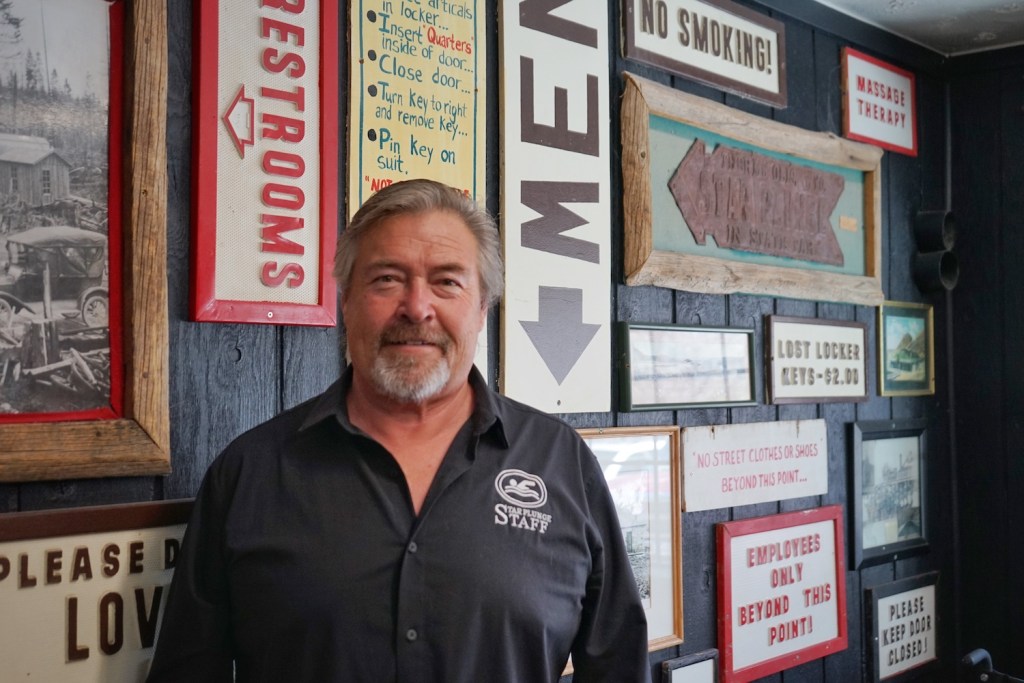
The state’s selection promised to effectively evict the Luehne family from Star Plunge. Luehne had been operating on a string of short-term management agreements since 2008.
Luehne contested the process in a pair of lawsuits filed by his company, C&W Enterprises. They accused Wyoming State Parks of exceeding its authority and violating regulations. Luehne argued the state was attempting to dislodge him without fairly compensating him for the improvements.
The state, meanwhile, defended its process in court filings and statements. The court dismissed Luehne’s first lawsuit, and the second one, over compensation, was set for an October trial.
Budget note
The Wyoming Legislature’s 2026 budget earmarked $3 million for “concessionaire remedies” at Hot Springs State Park. Lawmakers amended the language to mandate that the state undertake a full appraisal of the capital investment and ongoing concern of the business.
That legislation is what allowed the state to offer Luehne the reimbursement in the settlement, Neylon said.


State Parks has long been anxious to reopen the facility, according to representatives, and this will allow the new concessionaire a clear path to make significant investments in the facilities.
“We are excited to partner on the long-term enhancement and modernization of these facilities, to ensure a safe, exceptional, and affordable experience for Wyoming residents and visitors,” Dave Glenn, director of the Wyoming Department of State Parks and Cultural Resources, said in a press release.

Seriously, what was gained by the decision to accept the proposal of Wyoming Hot Springs LLC. An ex-Alaskan Senator, who already in 2023 bought the Tepee Pools facility, indeed it kinda sounds to me that Hot Springs wanted to get the Star Plunge facility for nothing. Come on, you can’t operate a facility for 50 years without making improvements. Those improvements contributed to “added value” of the property. Does Wyoming really believe that the Luehne family should just walk away with empty pockets. That’s not how you treat people. Shame on Wyoming State Parks!
It would be a new huge asset if the State of Wyoming invested in this amazing natural resource. It would help out the small communities, by bringing more tourism and the health benefits are huge! It’s really a no brainer! I hope they can make it happen!
I think the state just needs to stop its basically all boiled down to just MONEY… us land owners are Helpless when it comes to court and the state wants something especially both land rights and mineral rights, if they wanna take it again like it said broken treaty for it… they need to pay both land and mineral rights which for all that and a historical landmark it needs to be over a 100 million which I think the government and state could pay since they tax everything and everyone like crazy.
Im curious as to who it was that started this issue with the luehne family. Is that any info OK that?