

A legislative task force studying health insurance affordability in Wyoming has declined to advance a proposal to create a state-run catastrophic health insurance plan, citing the unlikelihood that it would move the needle on premium costs.
Following further study, it “doesn’t really appear to be a good cost driver, or to bring costs down, as premiums would probably actually have to be fairly high to cover everybody in the pool,” Legislative Service Office Attorney Anna Johnson said Tuesday. “So at the end of the day, I don’t think it would be as much of a cost saver as originally hoped.”
The task force came to a similar conclusion for a concept to create a state-administered division to negotiate, purchase and distribute medical devices to participating healthcare facilities in an effort to reduce acquisition costs through coordinated purchasing.
With those off the table, the Health Insurance Affordability Task Force continued Tuesday to explore alternative models and strategies used by other states to help allay costs. Those included a public service commission that could regulate some hospital costs and a utility model for paying for core hospital services.
At the end of the meeting, task force members agreed they would like to continue the conversation, voting to ask the Legislature’s Management Council, which serves as the Legislature’s leadership, to continue the group’s work into a second year.
Even when the ideas don’t gain traction, said Co-chair Sen. Tara Nethercott, R-Cheyenne, the discussion is worthwhile.
The process has forced lawmakers and industry leaders “to think outside the box, which is what we need you to do, and to think more collectively as a state to provide and deliver these services to the people of Wyoming in a way that’s never been done before,” Nethercott said. “Because trying to overcome the increasing costs of healthcare is going to require something different. This is the start of being challenged, and it will continue.”
Costs of care
When the Management Council convened the task force, it brought together lawmakers with representatives from hospitals, medical associations, insurance companies and the health department to understand the high costs of medical insurance in Wyoming and explore ways to allay them.
The issue is top of mind for many residents; a statewide survey of registered voters earlier this year found that 81% say the cost of healthcare is an extremely or very serious problem.
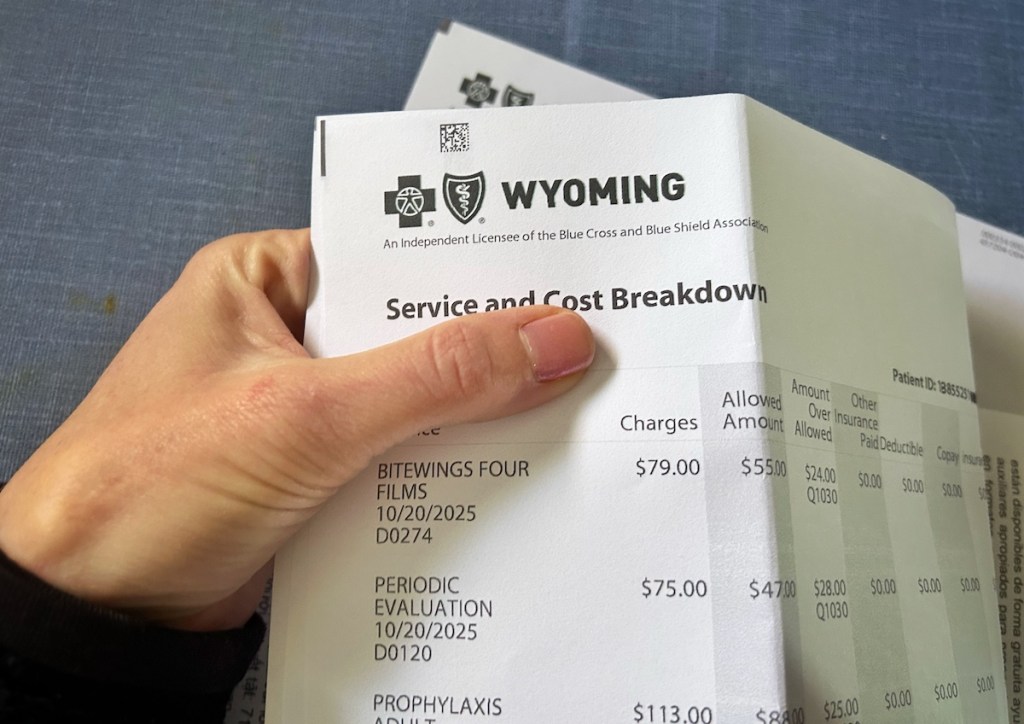
Wyoming residents experienced the highest price jumps in Affordable Care Act premiums in the country after the expiration of Enhanced Premium Tax Credits at the end of 2025. The demographic most impacted includes working families that earn more than 400% of the federal poverty level.
According to a Wyoming health department presentation, ACA enrollment in Wyoming fell from 46,643 in 2025 to 37,643 in 2026, a drop of 9,000.
But the Affordable Care Act is only one factor driving healthcare costs in Wyoming. During its meetings this summer, the task force spent hours exploring factors ranging from how medical devices are priced, how costly hospital billing mistakes can be and the impacts of malpractice insurance.
Also discussed was the state-operated public health insurance plan. The Wyoming Health Department first brought the plan into public consideration when it applied for federal Rural Health Transformation Program funds last year. The idea was to protect residents from financial ruin by covering healthcare emergencies like a car accident or a bear attack.
Further study this summer prompted the task force to abandon that idea, however. Instead, the task force Tuesday explored several novel models related to the way patients pay doctors and how costs are regulated.
Out of the box
Department of Health Director Stefan Johansson stressed that the ideas presented to the task force were exploratory.
“The whole point here with looking at the different types of models or concepts … is a difficult one because there’s no easy answers,” he said. “This is pretty outside-of-the-box thinking.”
One concept would entail paying for certain, core hospital services under a
public utility framework. The concept would categorize those core services as essential, akin to infrastructure like water, electricity and roads that people pay utility bills for. That would uncouple essential services from ones that are more elective, and thus shoppable on the free market.
“We’re kind of at this precipice where the consumer or the patient is being priced out of healthcare. That’s what we’re trying to correct.”
Rep. Lloyd Larsen, R-Lander
The task force also learned about healthcare sharing ministries, which are not technically insurance. Instead, the way these nonprofit, faith-based organizations function is through members contributing monthly funds to help pay for each other’s medical expenses.
“For our members, it’s more than a way to just address healthcare costs, it’s an expression of their faith in action,” Lindsey Swindle, director of government and policy affairs at Christian Care Ministry, told the task force.
Another novel model discussed was direct primary care, in which patients pay a membership fee directly to a doctor or clinic, bypassing traditional insurance. The model has shown positive results as doctors are able to spend more time with a smaller pool of patients, but it can also have drawbacks, task force members said.
Ultimately, the members agreed that there’s more work to be done around the issues of healthcare costs, leading to a vote to ask the Management Council to continue the effort. It’s too important not to, said Co-chair Rep. Lloyd Larsen, R-Lander.
“We’re kind of at this precipice where the consumer or the patient is being priced out of healthcare,” Larsen said. “That’s what we’re trying to correct.”
Without “something significant happening,” Larsen added, medical costs and insurance claims will continue to rise at a rate consumers can’t keep pace with.


I think it’s long overdue to look at the appalling low cash payments both Medicare and Medicaid, in all 50 states, actually pay to healthcare providers, clinics and hospitals. Leadership needs to learn what Inpatient Diagnosis Groups are (payment types) and the outpatient fee schedules. The difference between was is billed and the “contractual adjustments” (a Medicare and Medicaid mandated write off amount) for those providers and facilities to participate in receiving Medicare and Medicaid funding. The payments are abysmal and force other persons and payers to absorb the costs. Some providers, even in Wyoming, elect not to accept Medicare and Medicaid patients because they cannot maintain all the regulatory environments and the quality of care that patients deserve. The federal and state payments do not cover the costs of doing business. The cost of doing business is shifted to patients and insurance companies.
And the health care insurance companies aren’t in the business of putting the patients first, they’re in the business to make operational and shareholder profits, short and long term.
Look at what insurance companies are taking (raking) in, what they’re investing in, their administrative operating and capital expenses (salaries, benefits, stock options, etc.) and you’ll discover why individuals and groups are taking the financial hits.
Socialized medicine isn’t the answer either. In countries that provide socialized medicine you’ll find that the patients receiving quality care are paying for it in cash. They always have and they always will.
If you want affordable health care you need healthy people .
In 2024 my health care premium was $76 per month. In 2026 it went to $406 per month. In 2027 it went to $2276 per month. I am uninsured after 55 years in the work force and running a non-profit that serves young children. When will “something significant happen”? Yet, we want to finance trips to Mars???
Maybe it’s time to join the civilized world and provide medical care for all citizens. Take the “cap” off of FICA. Everybody pays in and everybody receives the care they need.
Without “something significant happening,” Larsen added, medical costs and insurance claims will continue to rise at a rate consumers can’t keep pace with.
Something significant will happen. It’s called Medicare for All or National Health Care. It’s just a matter of time.
The death of quality Healthcare.
Canada’s system is so bad now that killing yourself is a treatment option.