


Emily Bertram’s 9-year-old daughter has attended Lights On! Lander since kindergarten. The free program offers supervised academic and enrichment programs between the last school bell and 5:30 p.m., when many guardians get off work.
Bertram’s older son also attended Lights On!, and she can’t really fathom how her family would have managed without it, she said. It’s reliable, safe and even offers care during the summer months and holidays when there is no school.
“It’s been invaluable,” she said.
So when she heard in July that federal funding for Lights On! had been frozen, she said, she felt dread.
“It would be such a loss to our community,” Bertram said. “There are a lot of people who rely on it.”
The families of 225 children, to be precise. And that’s just in Lander. Programs funded by the federal 21st Century Community Learning Center grants offer free and consistent after-school programming to more than 6,000 Wyoming kids across 79 sites. Grantees range from the Boys & Girls Club in Douglas to the PRACTICE in Torrington. Along with the students who participate during the school year, grantees also served roughly 3,000 students with summer programs, according to data compiled by the Wyoming Enrichment Network.
The 21st CCLC funds, as they are commonly known, were part of a block of federal education funding withheld while the Office of Budget Management reviewed the recipients. In Wyoming, $6.5 million was in limbo for after-school and summer-enrichment programs — just one piece of the $24.5 million earmarked for the state that had been frozen.

News of after-school funding in jeopardy incited quick mobilization, and advocates nationwide sprang to its defense, flooding lawmaker mailboxes and trumpeting the message that after-school programs result in better student achievement, behavior and safety outcomes. Twenty-four states and Washington, D.C., sued the Trump administration. The freeze was ultimately short-lived, with the U.S. Department of Education notifying states July 18 that after-school funds would be restored with some new conditions.
The news brought relief to parents like Bertram — along with program directors and their staff. “We’re very grateful that it turned out OK,” said Ceatriss Wall, who directs Lights On! Lander.
The scuffle over after-school care has thrust the programs into the spotlight for closer inspection — and perhaps appreciation — than in the past. When the U.S. Senate Appropriations Committee released its 2026 bill last week, it maintained dedicated 21st CCLC funding, which had been omitted in an earlier draft. For now, it is secure.
That momentum gives hope to advocates. In Wyoming, after all, there’s still a significant population of kids who don’t have after-school options, said Wyoming Enrichment Network Director Michelle Sullivan. Sullivan’s organization, formerly called the Wyoming Afterschool Alliance, is part of the 50-State Afterschool Network funded by the Mott Foundation.
For every child in an after-school program, three more would participate if a program were available, Sullivan said.
“My real hope as we go forward is that we can really raise awareness about how critical it is to continue to grow the opportunities that do exist for kids,” she said. “If we just look at the population of school age kids from, say, ages 12 down, that’s a significant amount of kids that are not being served.”
Nonpartisan backing
The 21st CCLC program is authorized under Title IV of the Every Student Succeeds Act. The state-administered federal grant program funds projects to establish or expand high quality after-school and summer learning programs that serve students pre-K through high school.
Currently, there are 23 CCLC-funded programs operating across 19 of Wyoming’s 23 counties. Programs range from the Boost Program, which serves five communities in the Big Horn Basin, to After School for Kids Cheyenne and the Teton Literacy Center in Jackson. Many programs partner directly with school districts to plan and operate.
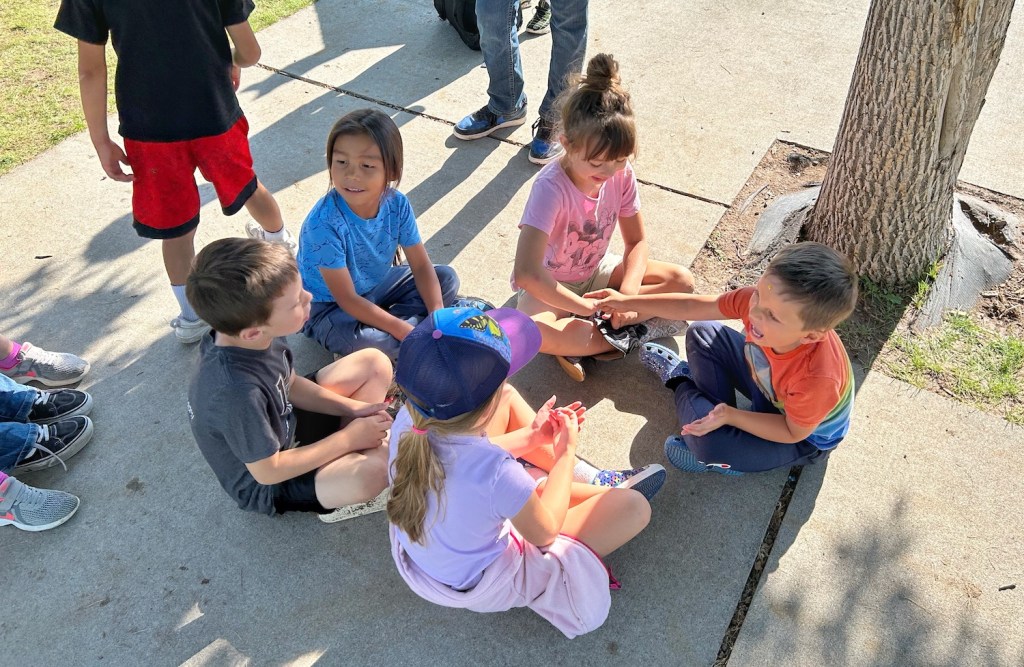
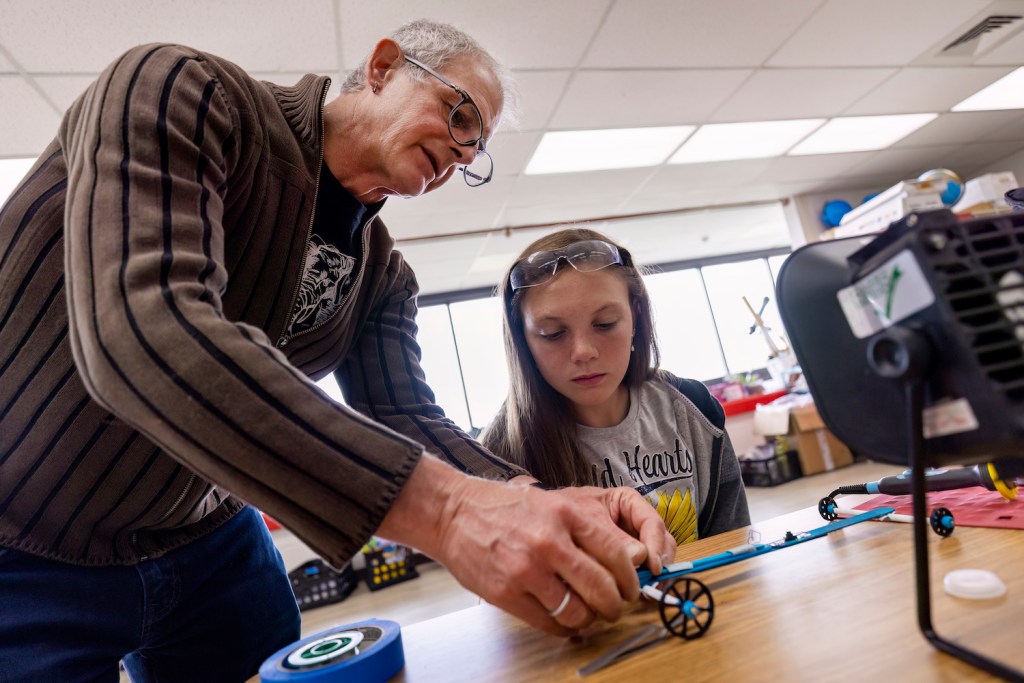
“Part of the thing that’s really fantastic about the federally funded programs is they are required to meet a certain set of standards,” Sullivan said. “So there’s enrichment in STEM, literacy, those kinds of things.” Because of that, she said, they are among the more vibrant and robust programs in the state.
Research on after-school programs shows a wide array of benefits to students, including better grades and lower chance of dropping out of high school. A 2023 Department of Education annual performance report looking specifically at 21st CCLCs found that the majority of regular Wyoming program participants saw gains in math, reading and attendance, and decreases in suspensions.
Through the programs, Wyoming kids grow gardens, make stop-motion videos and learn outdoor survival skills. They discover different countries’ cultural practices, study topics like the ocean, receive reading help and participate in activities like swimming.
The federal funds, advocates say, allow certain programs to operate, and others to operate at an enhanced level.
“We would be a glorified daycare without the funding,” Youth Clubs of Park County Executive Director Tiffany Wutzke said in a Wyoming Enrichment Network press release. Youth Clubs of Park County received $120,000 in 21st CCLC funding in 2024, and while the program would continue without the federal dollars, she said, it would be greatly diminished.
After-school programs support working parents, regardless of demographics or political stripes, Sullivan said. “So it’s never been a partisan issue.”
Instead, it’s a workforce concern.
“School-age child care is so critical to working families,” she said. “A lot of these 21st CCLC programs are the only school-aged child care that exists in those communities.”
Lights off?
Lights On! Lander has been running for 25 years hand in hand with the school district. The program is open to K-6 students based on a first-come, first-served system. About 225 kids participate every school day.
“Most years we have a small waiting list, but we try to accommodate as many kids as possible,” said Director Wall.
The program receives roughly $460,000 a year in 21st CCLC dollars, she said. Along with after-school programming, it offers monthlong full-day camps during the summer and sessions to help prepare preschool kids for kindergarten. Lights On! also stays open during many holidays and in-service days, and offers an Early Bird drop-off option for kids whose parents have to get to work early.
The federal grant mandates certain objectives, so Lights On! implements an academic component, offers enrichment and engages with families, Wall said. The program works with school teachers to understand the math and reading standards they are teaching, and designs its academic component based on skills students need to practice. But Lights On! is not just a second version of school, Wall said.
“We don’t make it look like the regular school day,” she said. “We really try to stay away from worksheets and Chromebooks, to make it more hands-on, fun, engaging.”
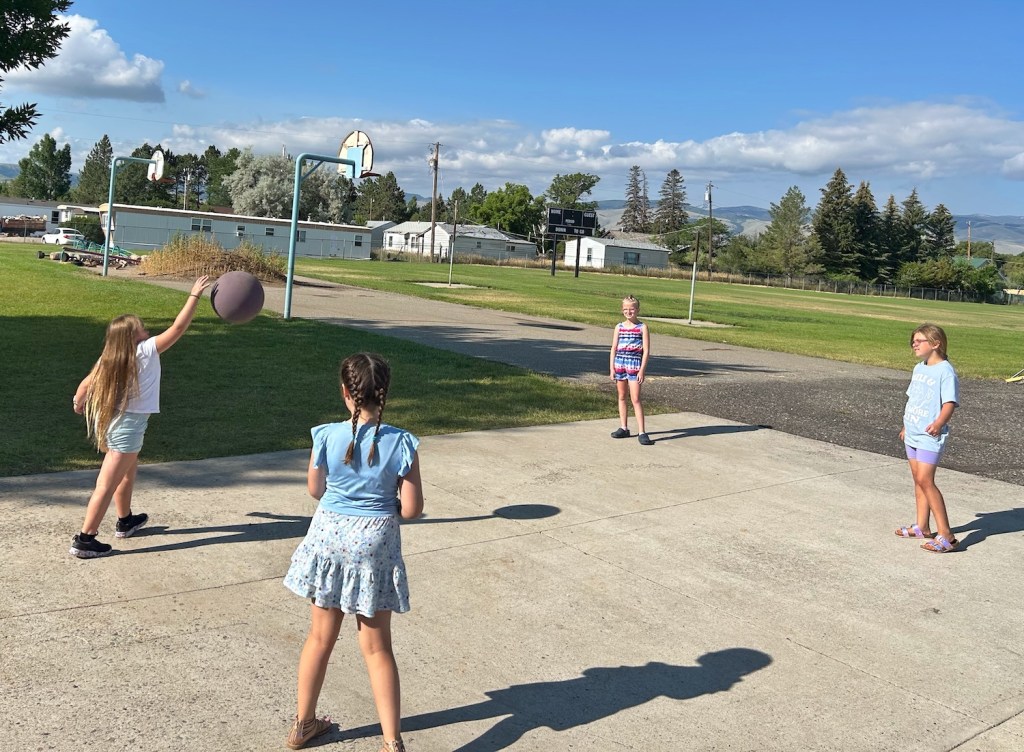
For enrichment, kids tend a nearby garden and learn how to cook. They do crafts, dance and listen to guest speakers. They take field trips to parks or pumpkin patches.
Many of its roughly 30 staff members also work in the district as paraprofessionals. This creates continuity for the students, Wall said, and helps employees earn much-needed extra money.
Funding threats aren’t new, but the July freeze was a surprise, she said. That’s because the nearly $7 billion for 21st CCLCs was already committed in the fiscal year 2025 bill President Dondald Trump signed in March.
“So it was in the federal budget, and then we got news that they just weren’t releasing the funds,” Wall said. “Here we are sitting in July, planning for our school year with this money that we’re supposed to be getting, and then they’re saying, ‘no, sorry, you don’t get it.’”
What followed was a couple weeks of deep uncertainty, she said.
Staffers worried that they wouldn’t have a job. Parents worried they would have to figure out a substitute for the free child care on very short notice.
“We had a lot [of parents] come up to us saying, ‘we’re willing to pay, we need your program to keep going,’” said Vivian Brown, Lights On! coordinator. “It was like, ‘We don’t know what we’re gonna do if you guys don’t continue.’”
Her colleague Nicki Kramer echoed that. “They were majorly stressed,” she said.
When the funds were released, Wall said, it elicited a collective sigh of relief.
Mixing bowl
A big argument for after-school programs is they provide secure places for kids to hang out during a crucial time of day.
“We know risky behaviors happen between the hours of 3-9, when kids aren’t supervised,” Wall said. “And so we’re giving kids a safe place.”
At Lights On!, kids are fed, given engaging activities, offered help with academics. “So it’s all of those pieces [of safety] — social, emotional, academic, physical.”
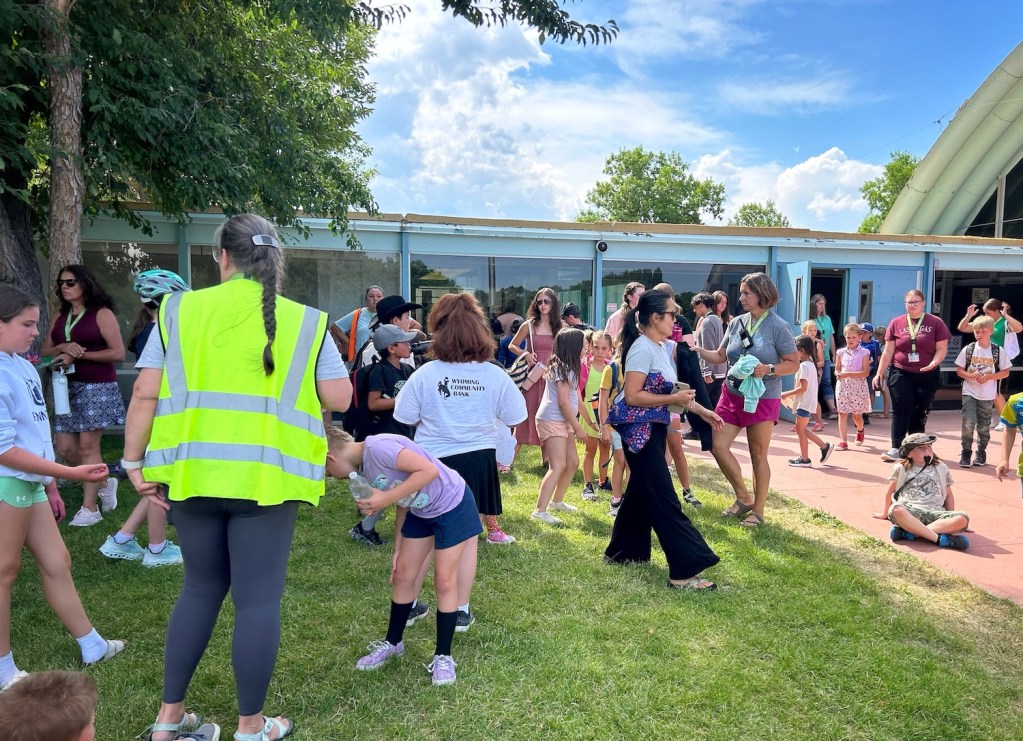
Another plus, Wall said, is that it puts kids in a great big mixing bowl.
“We have all socioeconomic status kids, we have kids on IEPs, not on IEPs. There’s a very good mixture of kids that’s not divided in any way,” Wall said. “And so, let’s just teach them to be nice humans to each other. This is another place where they get that practice, and our staff are excellent at modeling it.”
The kind of impacts that 21st CCLC grants require reports on are tangible. But Karen Bierhaus, who manages the Wyoming Department of Education’s 21st CCLC grants, said there are also intangible benefits.
“The program offers so much to children in terms of relationships with caring adults and opportunities to make friends and feel like they belong,” Bierhaus said in a statement to Wyofile. “While that is often harder to measure, I think that is the greatest success of our programs.”
DISCLOSURE: Education reporter Katie Klingsporn’s child attends Lights On! Lander.

Wyoming voted more for Trump than any other state. Shouldn’t they be cheering the cuts to after-school programs? Some of these educators being threatened by Trump probably voted for him! Here’s your “wasteful government spending” folks: It’s your childrens’ futures!
I am sooo happy the after school program survived the budget test. These programs are enriching for our kids. My boys loved the after school programs and did many fun things — built things, made a movie, many games (they learned to play chess), sports things, arts and crafts, and more. They also made great friends. Even thought my kids are grown I will always support and be willing to pay into after school programs — it’s a great investment in our kids.