A controversial gravel mining operation proposed on state land at the base of Casper Mountain remains in legal limbo after Wyoming’s top court heard oral arguments Wednesday regarding one of two cases before it.
Attorneys representing the State Board of Land Commissioners and Casper-based Prism Logistics defended their opposing positions and fielded dozens of questions during the roughly hour-long proceeding. Both parties are under intense public criticism for their roles in the matter — the state board for blindsiding neighboring homeowners and Natrona County officials by approving, without public notice or directly reviewing the applications, the mining leases, and Prism for doggedly pursuing the project in the face of fierce public opposition.
Under public pressure, the state board — composed of Gov. Mark Gordon, Superintendent of Public Instruction Megan Degenfelder, Secretary of State Chuck Gray, Treasurer Curt Meier and Auditor Kristi Racines — attempted to undo the panel’s initial lease approval by denying Prism when several leases came up for renewal last year.
That spawned a lawsuit by Prism and a subsequent Natrona County District Court ruling in January siding with the gravel miner. The state appealed to the Wyoming Supreme Court.
Though Prism met at least one of four qualifying terms for a statutory “exclusive right” to renew, the state board was not legally bound to oblige, Wyoming Assistant Attorney General Kate Gamble told the five justices Wednesday. Instead, the board was operating within its constitutional and statutorial authority to decide renewing the leases was “inappropriate and inconsistent with the board’s land management goals,” which can evolve.
“The state is not advocating that the board have unbridled discretion,” Gamble said. “But what the state is suggesting is that under the Constitution and under [state statute] Title 36, the board clearly has a fiduciary duty to manage state lands for the trust beneficiary’s best interest.”
Cheyenne-based attorney Deborah Roden, representing Prism, countered that a broad level of discretion clearly applies when the state board first considers whether to approve a lease application but not when it comes to renewals.
“In order to deny a lease renewal application, the board would have to find that none of the four conditions have been met,” Roden said. Despite parallel legal wrangling with the Natrona County Board of Commissioners that helped create a “regulatory deadlock,” Roden added, “Prism was proceeding in good faith to develop the lands.”
What are state trust lands?
Upon granting statehood in 1890, the federal government bestowed some 4.2 million acres of “state trust lands” to Wyoming, and it now manages about 3.4 million acres of trust land. The Wyoming Constitution prescribes that the primary use of those lands, which are scattered throughout the state in a checkerboard pattern, is to generate revenue to support public schools.
The Office of State Lands and Investments commonly leases those lands — often referred to as “school sections” — for grazing and industrial development such as mining and oil and gas drilling.
The court will issue a written opinion at a later date, Chief Justice Lynne Boomgaarden said.
The controversy
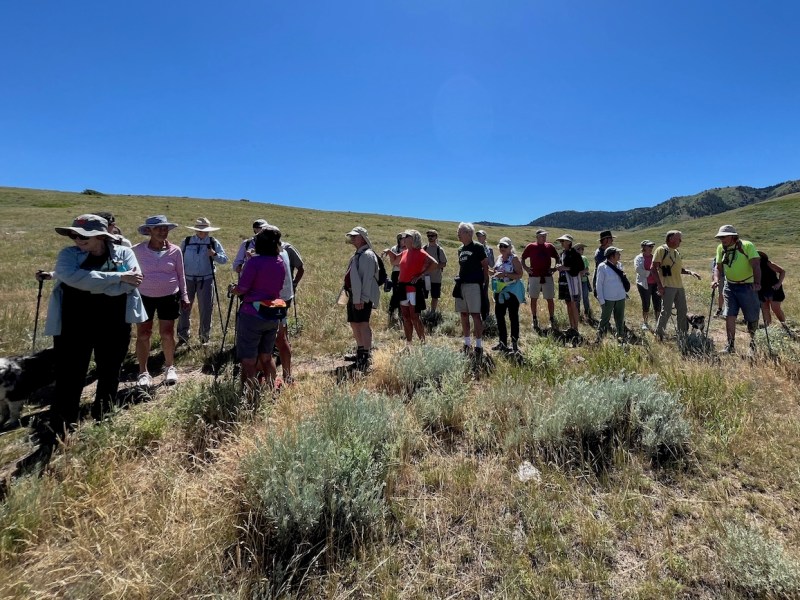
Nearby homeowners object to the mine’s industrial traffic through the rural neighborhood, along with potential impacts to shallow aquifers and residential water wells, as well as the likely loss of public recreation on the state lands where the mine will operate. They formed the Casper Mountain Preservation Alliance and gathered more than 20,000 signatures from residents throughout the county in opposition. Casper Mountain and the surrounding lands are a popular recreation spot.

Despite the public outcry, Prism Logistics Manager Kyle True said he believes the actual impacts will be far less than predicted.
“As long as we are diligent and lawful about our development procedures, which of course we plan to be — and we will be well regulated by the [Wyoming Department of Environmental Quality] — we look forward to responsibly mining that resource close to town,” True told WyoFile after Wednesday’s oral arguments. “It’s my hope that we will bring down the cost of gravel and gravel-related products in the Casper area over time, because construction and housing have become real problems for many Americans.”
Though one neighbor believes the high court’s review should result in a legal affirmation of the state’s decision to not renew the leases, the situation highlights how state laws, county zoning authority and the reality of evolving public land values sometimes don’t align to meet the will of the people, said Carolyn Griffith, who lives near the proposed mine and chairs the Casper Mountain Preservation Alliance that opposes the project.

“I think we, as citizens, all expect our government officials — whether that be legislators to local leaders to employees — we expect them all to do their due diligence,” Griffith told WyoFile. “When pieces of that fail, it affects all of us. And this issue here is big right now in Casper, but it could happen anywhere in this state.”
Meanwhile, the high court postponed oral arguments until October in a related case regarding the proposed gravel mine.
Prism filed a petition for judicial review in October 2024 regarding an action by the Natrona County Board of Commissioners. After the state issued leases to Prism, and after public outcry, the county rezoned the area to a previous designation that would prohibit the mining activity — an action that the State Board of Land Commissioners mentioned in deciding whether to renew Prism’s leases.
The lawsuit resulted in another Natrona County District Court ruling in January that state land leases are not subject to county land use regulations.