


For the first time in Wyoming history, earnings from the state’s investment portfolio produced the most revenue, marking a new chapter in an economy that has long relied on the mineral industry.
That’s according to a report from the Consensus Revenue Estimating Group presented Thursday to the Wyoming Legislature’s Joint Appropriations Committee.
Known as CREG, the group makes revenue projections each October to coincide with the governor’s budget preparations and then revises those numbers closer to the session to reflect the latest data.
“The standout revenue performance, and the driver of a majority of the actual revenue in excess of the January 2025 CREG forecast was investment earnings,” according to the report. “Total realized investment earnings, including interest, dividends, and realized capital gains, generated an all-time record for the state.”
In total, the state treasurer’s office realized $1.86 billion in investment earnings. That’s 25% more than Wyoming’s severance taxes and federal mineral royalties combined, CREG Co-Chair Don Richards told the committee.
“I can’t overemphasize the amount of money that was generated from the savings of the state for this,” Richards said. “I’m not advocating or endorsing any of those policies, but I would acknowledge the prior action of the Legislature in terms of their investment policy, the savings in those funds, the increases to money management, the authorization to invest in alternatives, increasing the reserve amounts, all of this is contributing to these outsized gains.”
For years, Wyoming’s investment strategy for its large permanent funds was more cautious. Then the state — via legislation and the treasurer’s office — began to transition to a more aggressive approach.
“This didn’t happen by accident. The work and staff I started as state Treasurer and Treasurer Meier has continued has shown its worth,” Gov. Mark Gordon wrote in a statement to WyoFile. “Wyoming made tough disciplined decisions to save rather than spend and today those decisions are real returns. Investment income becoming our top revenue source is proof that fiscal conservatism isn’t just a philosophy, it’s a strategy that works for Wyoming taxpayers.”
The transition appears to be paying off, at least for now. But Richards cautioned the committee that the results may be difficult to replicate.
“We know just as of yesterday, short-term interest rates are declining,” Richards said. “That means our cash that is invested will earn less money. Our yields will be declining.”
Richards also noted that investments are inherently volatile.
“There is caution inherent in the achievement of this revenue source,” the report states. “That is, investment earnings, especially from realized capital gains, are extremely volatile.”
Furthermore, Wyoming’s state revenue streams as a whole are volatile. That’s something past CREG reports have pointed to. More specifically, as the state has diversified its revenue streams, it has grown more reliant on its investment portfolio as well as oil and gas production — all of which come with higher volatility than coal, which has served as a key revenue driver in the past but has seen production slow in recent years.
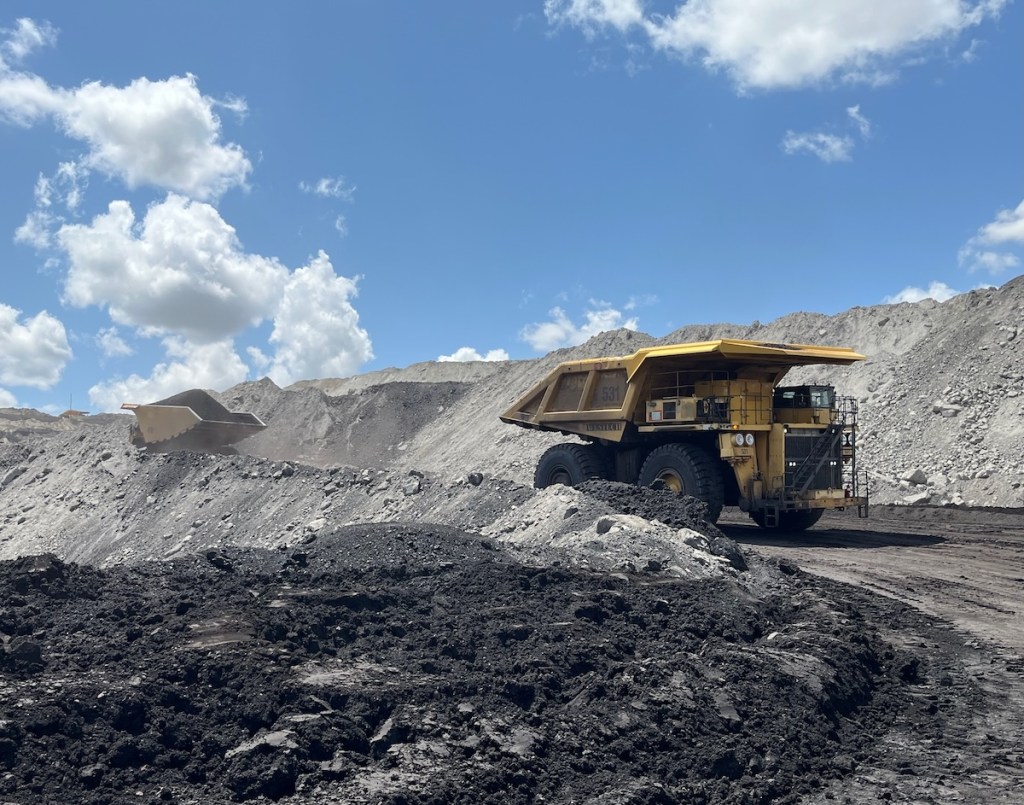
“This characteristic, given reliance on energy and financial markets, is unlikely to abate,” according to the most recent report. “External factors, including, but not limited to, geopolitical events, changes in energy markets and demand preferences, weather, available infrastructure, infrastructure outages, and world financial markets continue to dramatically influence fluctuations in Wyoming’s revenue.”
Other findings
While investment earnings are up, a few of the state’s prominent revenue sources fell short.
“Specifically, sales and use taxes deposited into the General Fund,” which acts as one of the state’s primary checking accounts, “and state royalties deposited into the Public School Foundation Program Account both lagged CREG’s January 2025 forecast,” the report states.
But taken together, revenue streams from the extractive industries exceeded January’s estimates, with severance taxes bringing in $22.2 million more than expected and federal mineral royalties, also known as FMRs, an additional $19.6 million.
Earlier this year, the two chairmen of the Joint Appropriations Committee — Rep. John Bear, R-Gillette, and Sen. Tim Salazar, R-Riverton — urged Wyoming’s federal delegation to give the state a larger share of coal royalties after the Big Beautiful Bill slashed the rates.
The delegation told state lawmakers, Bear said at the meeting, that “the administration anticipates the long-term outcome to be increased production.”
Bear asked Richards if the report took that into account and if he “anticipates more mining based on these lower FMRs and better business atmosphere.”
“Absolutely,” Richards said, adding that it will take a “considerable amount of time” to fully accommodate the reduced royalty rate.


The report also highlighted increases in other revenue streams, including franchise taxes and corporate filing fees, and an improved credit rating for Wyoming by S&P Global Ratings.
Last month, the agency boosted the state’s rating from AA to AA+, noting in its upgrade that “the rating action reflects our view of Wyoming’s demonstrated active budget monitoring, conservative revenue forecasting, and timely expenditure adjustments that we believe will continue to support structurally balanced financial performance, and the state’s maintenance of very high reserves that provide near term budgetary flexibility to mitigate potential revenue volatility from fluctuating energy markets or economic downturns.”
What now?
The governor will now use the CREG report to help craft his budget proposal to the Legislature, which ultimately holds the purse strings.
Gordon is expected to present his proposal in December, when the committee will begin its budget hearings on the first of the month in Cheyenne. The entire Legislature will convene in February to craft the next budget.
I always thought it mistaken to count capital gains as income. That money should be invested back into the fund corpus to inflation prove the various funds, especially the constitutional funds such as the Permanent Mineral Trust Fund. To spend the capital gains is short sighted and unsustainable.
But……the stock market will go down.
Amazing accomplishment by our state investment group! Especially considering the volatility of the stock market this year caused by all the ridiculous tariffs!