
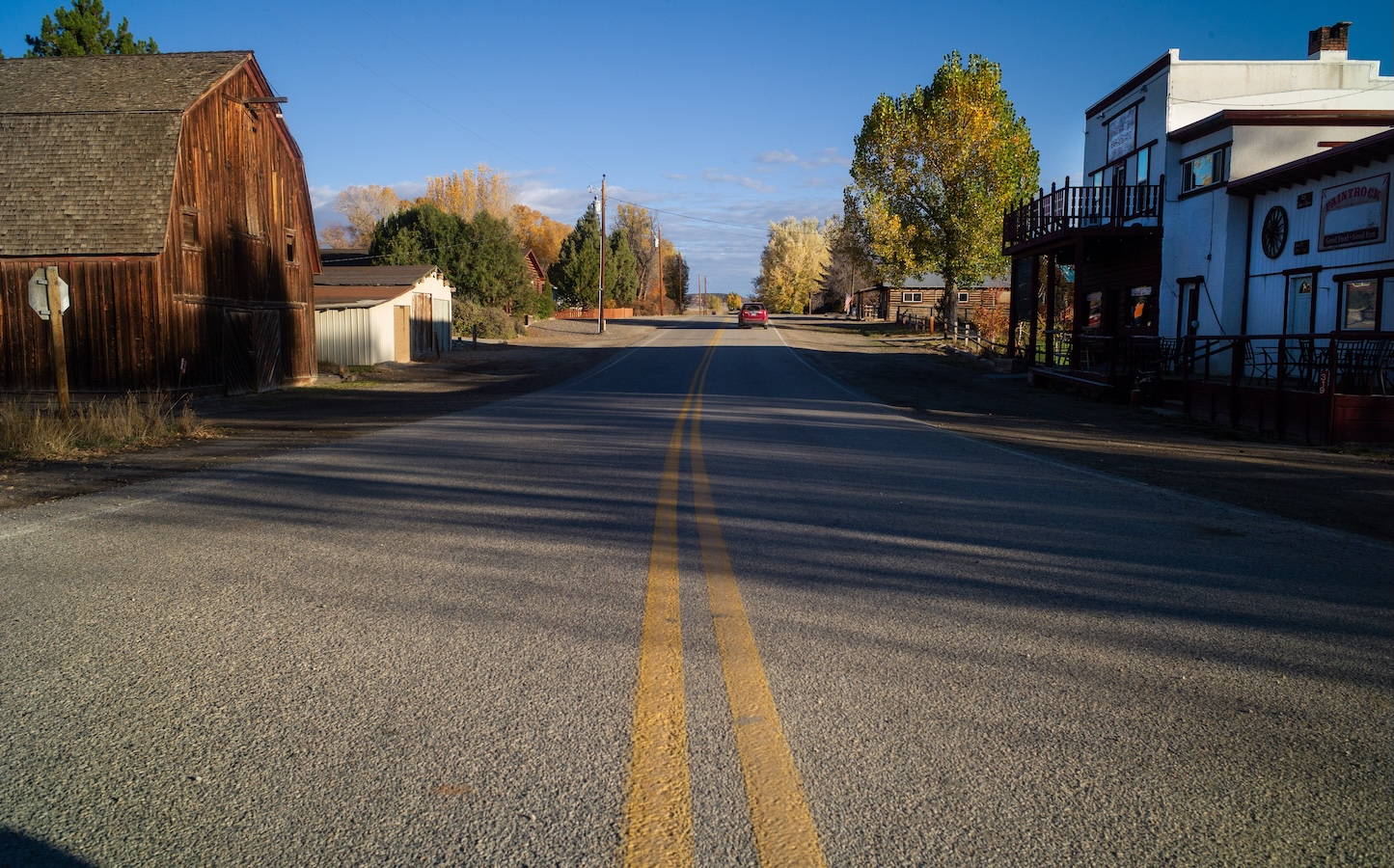

HYATTVILLE—At the end of Highway 31 in Big Horn County, this small, rural, agricultural community has been the definition of close-knit.
The sign at the edge of town boasts a population of 79, but locals say that’s only if you count the cats and dogs. Hyattville is tucked against the western slope of the Bighorn Mountains, an environment rich with wildlife and fields of corn, alfalfa, grass and other crops.
But Wyoming’s twin sacred cows — water and private property rights — are butting heads in these fecund fields. The conflict affects a landscape whipsawed by climate change and demographic shifts, changes seen across the West.
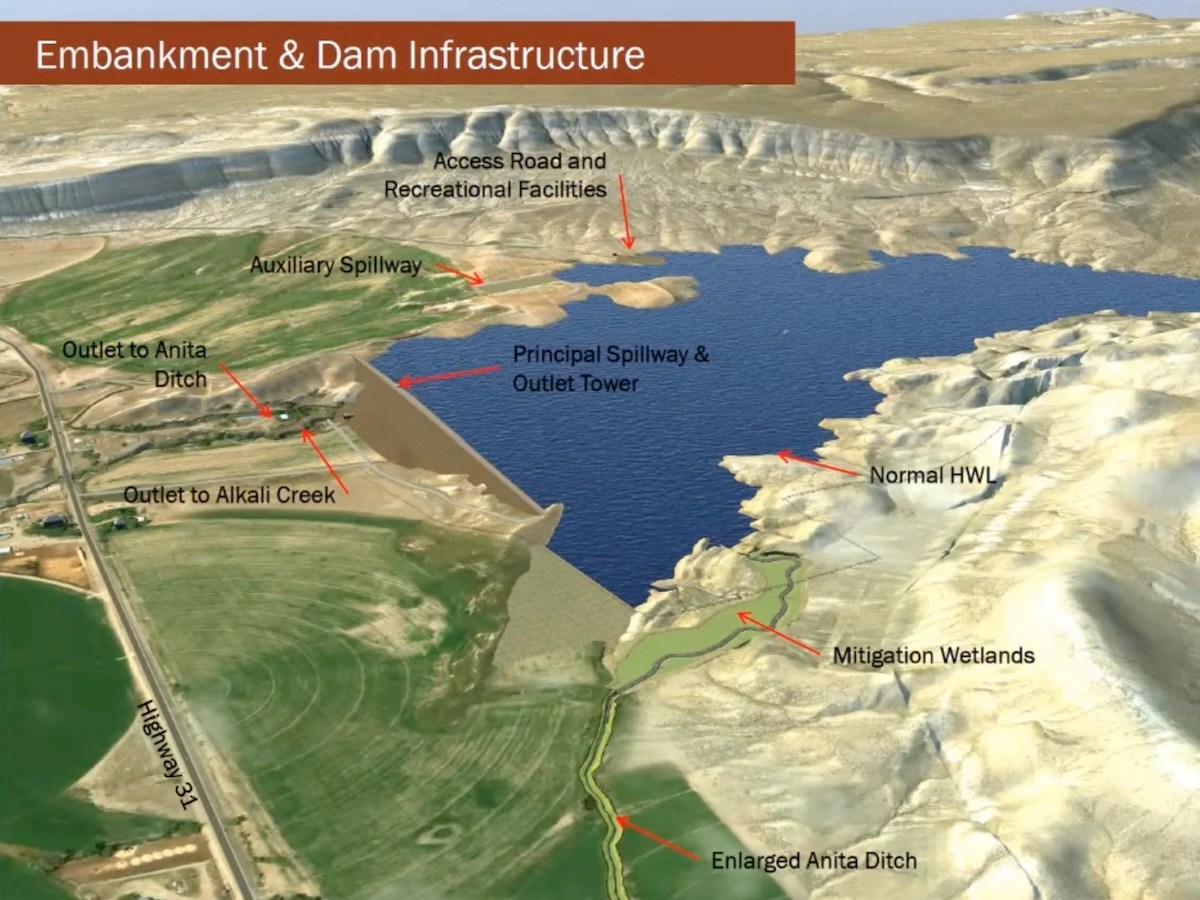
Wyoming could spend between $77 million and $113 million on the Alkali Creek dam and reservoir, which is proposed here to impound 8,000 acre feet of Big Horn mountain runoff, to save the water for late-season irrigation. That general idea won 79% of the vote when landowners formed the Nowood Watershed Improvement District in 2015.
“Everybody got along until this reservoir came along. Instead of a nice little community, you’ve got a war zone. It’s crazy.”
Tom Shirran
“The state has spent upwards of $6 million to get us to this point,” Nowood Watershed Improvement District board member Martin Mercer said. Now a board of five area resident must finish the job, and that involves an unpopular action — the condemnation of private property.
That prospect has pitted neighbor against neighbor, sister against brother, maybe even cat against dog.
Condemnation and eminent domain, “them are cusswords,” said Tom Shirran, a self-described “lifelong Hyattville rancher,” one of three candidates challenging the sitting Nowood water district board members in Tuesday’s water district election. His slate seeks to win a board majority, potentially ending the condemnation threat.
“I just want the proposals to be balanced,” he said. “Make it fair to these people getting eminent domain on them.”
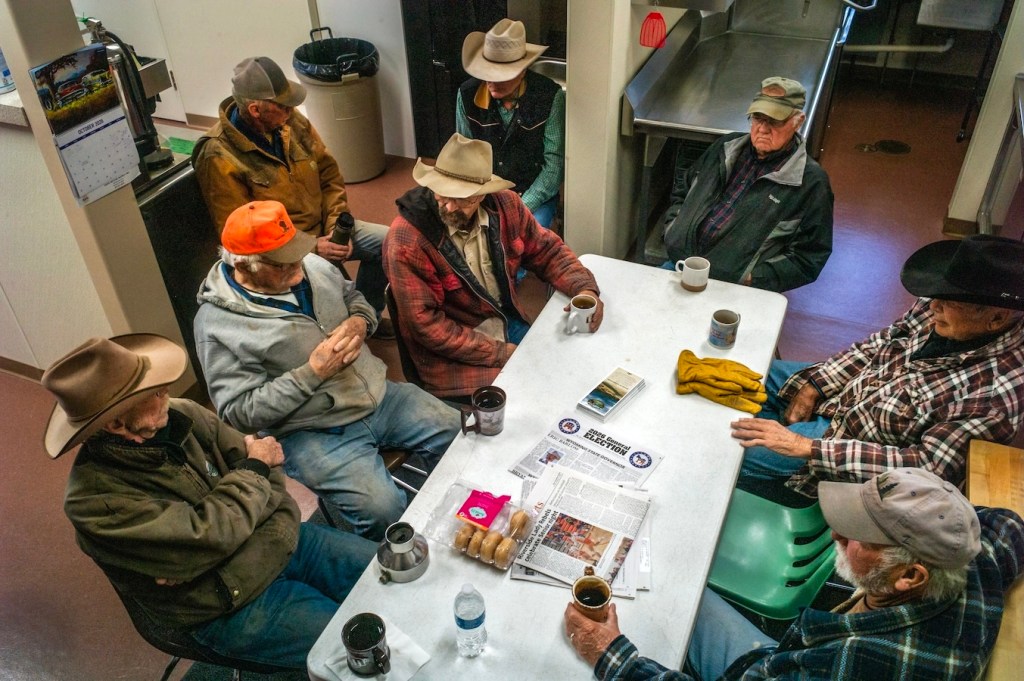
The first mention of condemnation a few years ago, “was enough to set people off,” Shirran said. “You don’t do that in this day and age, especially to your neighbors.
“Everybody got along until this reservoir came along,” he said. “Instead of a nice little community, you’ve got a war zone. It’s crazy.”
Once estimated at $34M
The ruckus began after state water developers estimated in 2017 the project would cost $32 million in state grants and $2.1 million in loans. Since then, estimates have increased to as much as $113 million and potential beneficiaries are not being asked to pay more.
Lawmakers and state officials appropriated enough to the Nowood water district to buy 260 acres of water board member Mercer’s land. The district paid him $1.6 million.
“To me it’s a big conflict of interest — terrible,” board candidate Shirran said. While not against the idea of water storage itself, Shirran said, “I’m against the way they’re doing it.”

The state doled out funds and the reservoir land was sold and bought before the district obtained necessary easements to complete the project.
Now, the district has offered five landowners a total of $97,342 for right-of-way easements on 35 acres, to be adjusted according to appraisals, as described in documents WyoFile obtained through a records request. If the landowners don’t accept the “final offer” letters, the district “reluctantly will initiate eminent domain proceedings,” the correspondence reads.
If sacred cows are locking horns, the cart is also before the horse, Shirran said. “You don’t start a project without getting the easements first.”
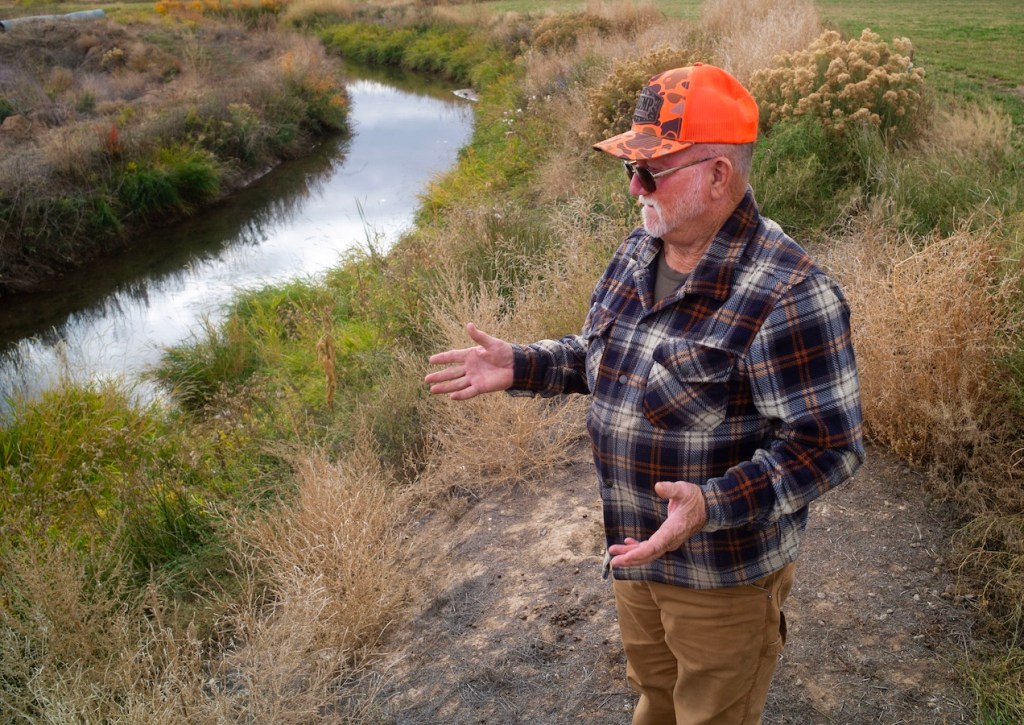
The offers leverage water district power by offering a sweeter deal if landowners go along with it. If the landowners accept the deal, the district would spend extra money to bury the Anita Ditch — feeder to the reservoir — in a pipeline. If the district condemns the property, the ditch would be enlarged and left open, taking up more pasture and crop land.
The clock is ticking. The Legislature set a Jan. 1 deadline to use state money for condemnation. If the easements aren’t secured, with or without condemnation, by June 30, 2027, the $60 million allocated for the project will revert to other accounts.
“We’re running out of time,” water board Director Mitch Vigil said. Mediation with the affected landowners didn’t work.
Ticking clock
“I don’t know how you can make them say ‘yes,’” Vigil said. “We’re forced into eminent domain.”
Sitting directors reject criticism like that from board candidate Todd Jones who said the board didn’t listen to the five landowners, give them options or treat them well. “There’s no way to talk to them most of the time,” Jones said of the board.
Mercer disagreed.
“The state and district made a welcoming process for anybody we needed an easement [from],” he said. “We could never get anything out of those folks.”
The dam would be large — an earth embankment 100 feet high and half a mile long. The resulting reservoir would be 312 acres when full, providing late-season irrigation in eight out of 10 years. It would always have at least a 132-acre pool for recreation. Backers say the project would benefit fisheries in the rivers and creeks.
The disgruntled ranchers targeted for condemnation, however, live upstream of the proposed dam’s outlet. Water doesn’t flow uphill, they observe.
Medicine Lodge Creek in Hyattville. (Angus M. Thuermer Jr./WyoFile)
But those in the condemnation crosshairs will benefit from a paper exchange of water rights, Nowood directors say. Extra water downstream would help keep upstream headgates open later into the fall.
“They would be huge beneficiaries,” Mercer said of the upstream irrigators who face condemnation. “We would not pull water out of their headgate. You cannot argue you’re not benefitting from that.”
Whether the paper transfer would work is uncertain.
“When it comes to fall, they’re not going to have enough water,” Shirran said of the exchange. “It don’t work if there’s no water in the crick.”

Shirran didn’t agree with the $16,000 offer — a 2001 appraisal that would be updated — the district made for an easement on his land. Others on the eminent domain list had similar complaints. But the district can’t spend more, Mercer said. “You can only offer appraised value.”
Building the dam would be the best outcome, Mercer said, with far more benefits than drawbacks. The state calculates the project will create $122 million in benefits, including $10 million from recreation, at the lower $77 million price tag.
New face in town
About six years ago, when a couple of locals sauntered into the Paint Rock Inn, they espied something unusual. Sitting at his computer was an Idaho businessman from the posh ski town of Sun Valley, Idaho, clad in anything other than the area’s customary Wranglers or Carhartts. He wore salmon colored shorts — the locals called it pink — and a polo shirt.
Who changed the dress code, the locals asked.
Tim Gardiner had just bought 440 acres and named his new holding the Twisted Tippet Ranch. He ties his own files, casts them from Orvis reels and hunts upland birds with his stocky black lab, Ghillie.
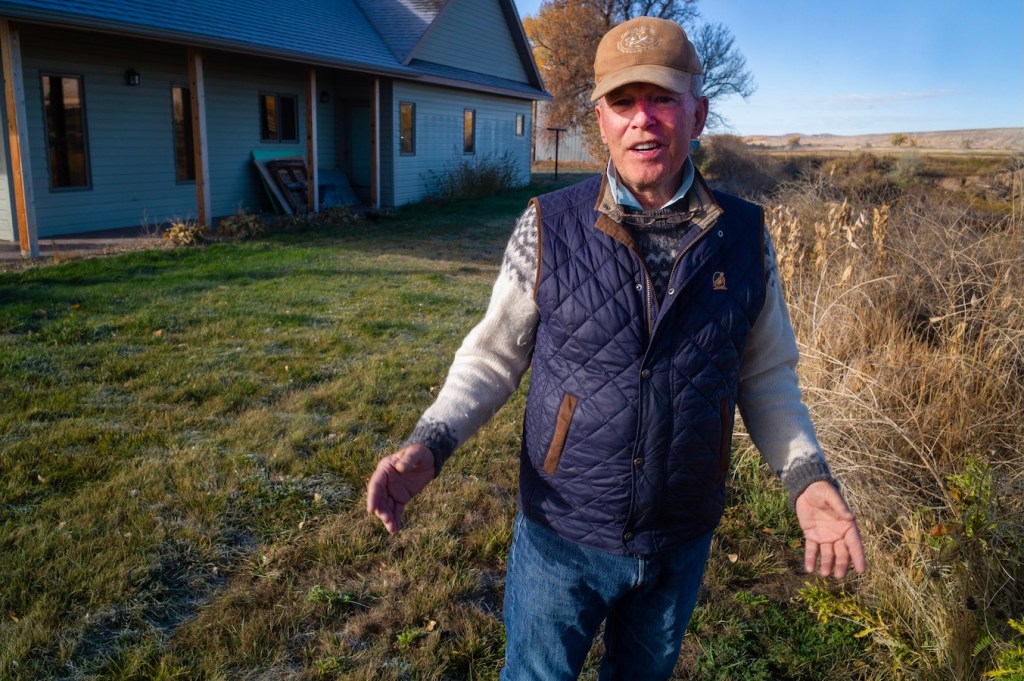
Gardiner ran a multi-state commercial real estate company from Idaho that included apartment rentals. He built a house on the Twisted Tippet next to the bank of Alkali Creek. He’s a cast or two from the prized fishery in Nowood Creek. Just outside his house a cock pheasant, the proud patriarch of his brood, steals grain from the horse corral.
Gardiner treasures the history and art of the American West. In some ways, he contrasts sharply with some of that history and with Mercer, whose family’s area holdings go back generations.
Mercer is the great grandson of Asa Mercer, a newspaper publisher who railed against stockmen during the Johnson County Cattle Wars and published the seminal “The Banditti of the Plains.”
The elder Mercer stood against the entrenched forces of the Wyoming Stock Growers Association in Cheyenne and defended the little man, the settler. This generation of Mercers has Cheyenne on its side.
“Their intent was to turn this whole desert green.”
Martin Mercer
Gardiner has slammed the state for unprofessional business practices — doling out good money before securing necessary easements. He wants insurance for his house and ranch that’s just below the proposed dam’s outlet.
The dam would be a high hazard structure and engineers face a challenge plugging an identified porous geologic formation, Gardiner said, drawing on state documents. Failure is more than an option, he believes.
“I’m in the line of fire,” Gardiner said on the bank of Alkali Creek. “I’m just trying to be indemnified for loss.”
Mercer said the opposite is true, that the dam “could be the only thing that saves [Gardiner’s] house” from a heavy rain on the hardpan covering the Alkali Creek drainage.
The project would subsidize as few as 33 irrigators at a cost of more than $3.4 million in taxpayer funds each, Gardiner said. His criticism ranges further. “The State should determine whether prior decisions require reconsideration by disinterested decision makers,” he states in 20 pages of criticism he’s assembled for those who would read or listen.
Board members reject conflict allegations. All board actions have been undertaken “the way the statutes read,” Mercer said.
Fellow board member Vigil said it is typical for rural water districts to have interested parties running the operation. “They all have the farmers, water users on their boards,” he said.
Cheap investment
Water storage is “an inexpensive investment” for the benefits it brings to sportsmen, families and others, Mercer said. The reservoir also would be an asset to firefighting.
Selling property for a reservoir was a family challenge, Mercer said.
“We spent a lot of hours deciding what is right,” he said. “I challenge anybody to sell 300 acres in the heart of their operation.”

Wyoming historically has granted water rights to irrigators and others regardless of whether there was enough to go around, Mercer said. “Across Wyoming, water’s always been over adjudicated.”
The belief was that dams and reservoirs would resolve shortages. “Their intent was to get it all gathered up for the state,” he said of the water-storage vision. “Their intent was to turn this whole desert green.”
Conservation districts in Big Horn and Washakie counties have mailed a total of 453 ballots listing water board candidates to eligible voters, district managers told WyoFile. Each registered voter in the district gets one vote and the owner of each taxable parcel in the district gets one vote per parcel. A petition at Change.org claims 289 signatures against eminent domain.
Whoever wins the three open water board seats on Nov. 3 will assume office at the beginning of the year, Ashley Coenen, South Big Horn Conservation District manager, wrote in an email.
Kris Robertson, who sells raw milk and other products from her and husband Gene’s ranch at Hyattville, dislikes that the family’s Diamond S Ranch is a condemnation target.

“Property rights should mean something to all native Wyoming people,” she said. “We didn’t ever dream they would be fighting over water this way.”
If the project goes through, she said, “I guess we’ll suck it up.”
Vigil finds his family divided. “My sister’s on the other side,” he said.
That won’t stop him from Wyoming’s good Samaritan ethos. “If they called me today,” he said of his sister’s family, “I’d go help them.”
The election outcome may not satisfy the critics of eminent domain, even if their slate of three candidates wins. The sitting board would have almost two months to act before new members are seated.
If all three critics get voted in, “I don’t know how things are going to go,” Mercer said.
Vigil views the election as a blessing. “It’s going to come to an end,” he said of the conflict, “one way or another.” Then, “the healing can start.”
For Mercer, the dam would resolve the animosity. “The extra water will heal a lot of that,” he said. If it is not built, “there will be hard feelings for some time.”

