

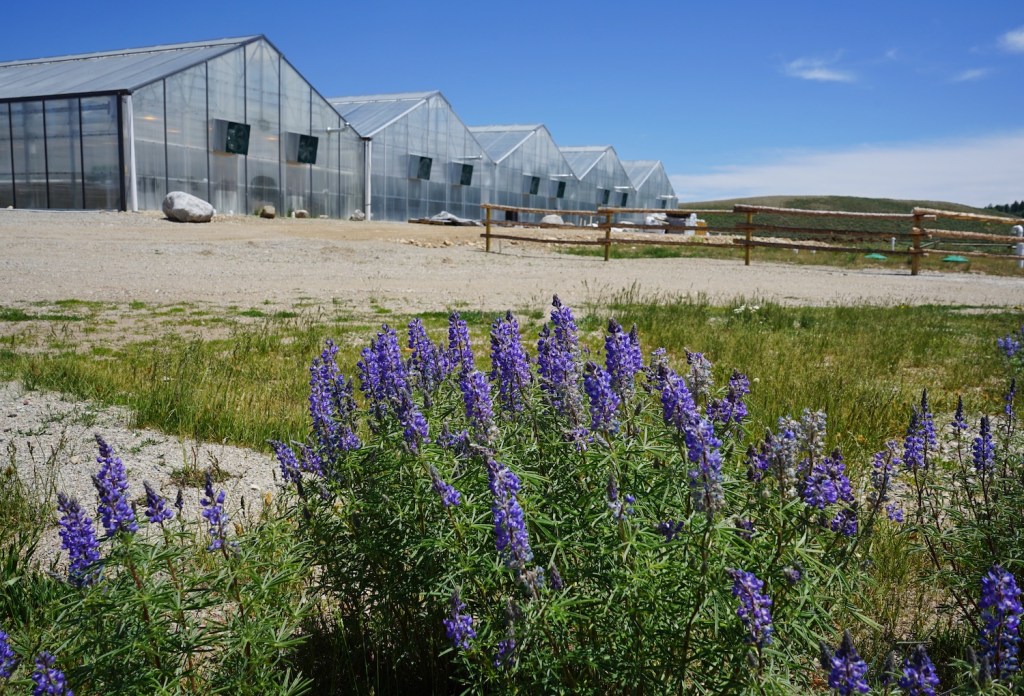
SUBLETTE COUNTY—None of the traditional trappings of farm life greet visitors to this windy rim north of Pinedale.
No crops waving in field rows, no sounds of cows lowing, no odors of animal manure lacing the air, no mud to wipe off your boots.
That’s because this operation is far from traditional. Silver Stream Farm is located entirely within five large grow houses tucked off Highway 191. Inside the buildings, the farm utilizes 25,000 square feet of space rigged with high-tech sensors, overhead misters, climate controls and nutrient pumps to grow an abundance of produce unexpected for this harsh corner of Wyoming.
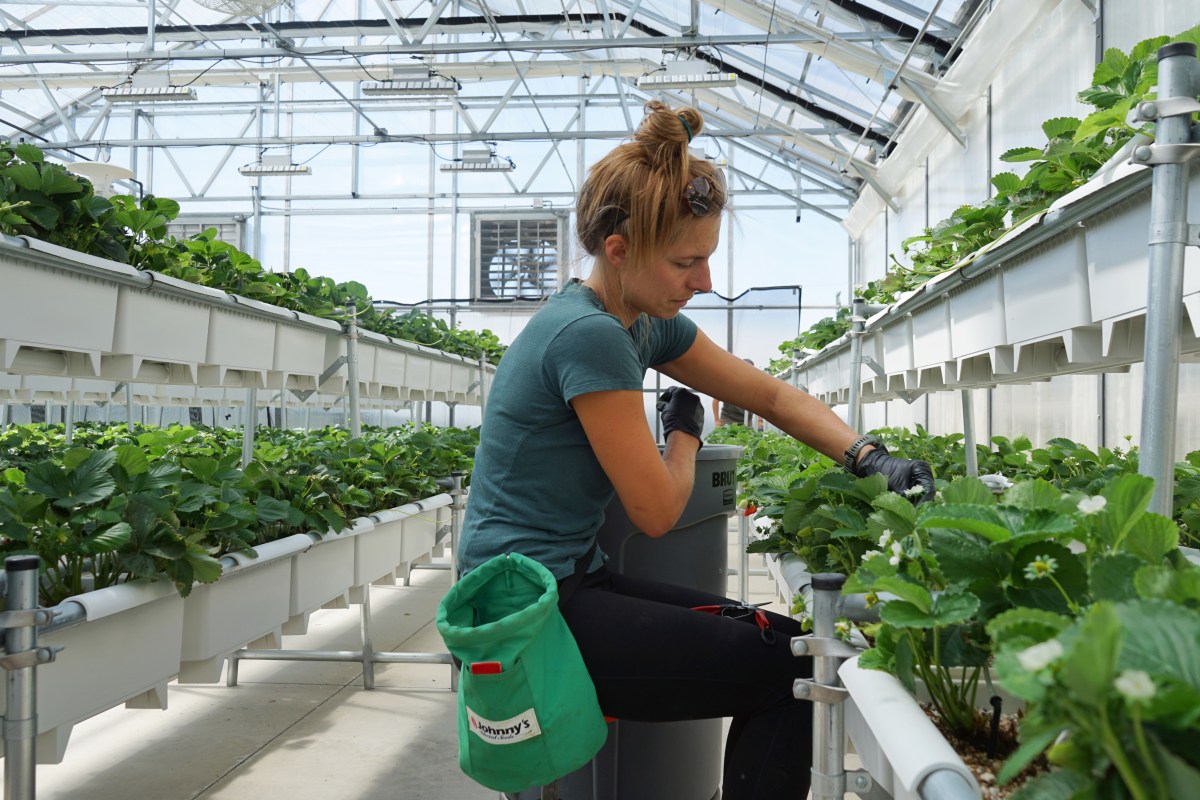
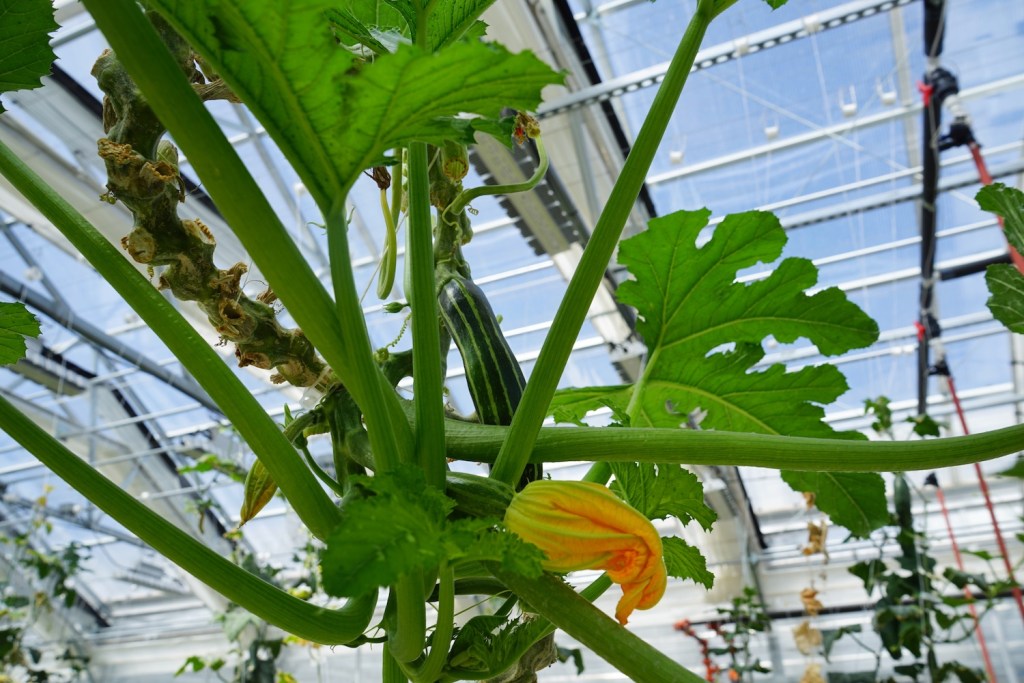
Zucchini plants dangle from the ceiling and dark-green basil grows in hydroponic pods. Kale leaves unfurl in dense patches, arugula seedlings sprout in trays and an entire 5,000-square-foot grow house is dedicated to strawberries. In there, rows and rows of the fragaria plants produce the distinctive white flowers and red berries.
And because they are protected from harsh temperatures and fed by grow lights, the berries, lettuce, cucumbers, tomatoes and other crops are in rotation year-round.
Silver Stream Farm, which rebranded this spring following a fivefold expansion, aims to supplement local production for communities in a corner of the state where most food is trucked in from long distances.

“The goal is to create just a really robust local food system,” said Chief Operating Officer Nicci Hammerel, by touching “as many households as we can.”
The farm may not have the capacity to feed the entire region. But what it does possess is exemplified by what Hammerel offers next. “Try one,” she said, holding out a container of cherry tomatoes, ripe and ready to eat on an early summer day when many outdoor tomato plants in Wyoming have yet to even produce flowers.
High-tech agriculture
Farms aren’t known for their cleanliness. They rely on dirt, after all, and dirt is, well, dirty. But there’s also a quality of unruliness inherent to many small farms, with encroaching weeds and plants gone to seed, chickens pecking around a yard or green matter shoveled into compost piles.
Inside the grow houses of Silver Stream Farm, however, plants grow in orderly rows, floors are spotless and equipment is almost clinically clean.
“I want to be able to eat off the floor,” farm manager LeeAnn Shelton joked. She had just taken a break from pruning strawberries — methodically trimming off smaller buds to encourage the plants to grow fewer, bigger berries.
The tidiness is something she and her husband, Cooper Shelton, have been dialing in since the project launched four years ago.
Shelton grew up in a farming family in North Carolina. She and Cooper, who is also from North Carolina, moved to the Jackson area for the outdoor amenities in 2018. They both worked in hospitality, though they missed the gardening traditions they had grown up with.
They became involved with Silver Stream around 2021 when the farm’s original owner, entrepreneur and philanthropist Dakin Sloss, asked if they were interested in a garden project. Sloss wanted to do something about the local food desert in northern Sublette County.
The project started with a single grow house and a much longer name — Satchitananda Farm. In the early days, LeeAnn mostly tended the plants while Cooper, who attended college for engineering, focused on dialing in the technologies.
“We were plant people, and we became systems people,” she said, noting that several years in, it’s become “a heck of a garden project.”
They sold vegetables to their first customers in 2022, and have been refining their methods since.

A computerized system monitors and pampers the crops. Sensors gauge the hydroponic plants, and pump the right mix of nutrients and fertilizer into the irrigation water to feed them. Water recirculates from misters above to drains beneath the plants. Climate-controlled buildings meet the temperature and humidity preferences of the crops in them. The well water is even brought to room temperature so as not to shock the plants.
“It’s pretty advanced,” Hammerel said.
The operation isn’t entirely divorced from nature; employees introduce insects like ladybugs and wasps to help with pests and pollination.
Until this spring, however, the husband-and-wife team operated out of a single greenhouse. Growing a variety of crops all in the same climate zone comes with challenges. Melons, for example, thrive in different conditions than kale.
The expansion
These types of indoor agriculture projects are typically done on a larger scale and in friendlier climates, Shelton said. The original Pinedale operation was unique in its size and surrounding conditions.
“We’ve seen it be negative 45 [degrees], and we’ve seen it be 95 [degrees],” she said. “We’ve kind of just tried to baby this building along.”
By experimenting and perfecting, the Sheltons established a proof of concept, Hammerel said. So this spring, the farm added four new grow houses. It was a huge investment that quintupled the farm’s capacity and allowed the growers to divide their crops into five distinct zones. The farm also hired five new employees to work alongside the Sheltons.
The growth has allowed them to improve even more, Shelton said, by setting each climate to match the plants it grows. “It’s really been awesome to just see everything booming.”
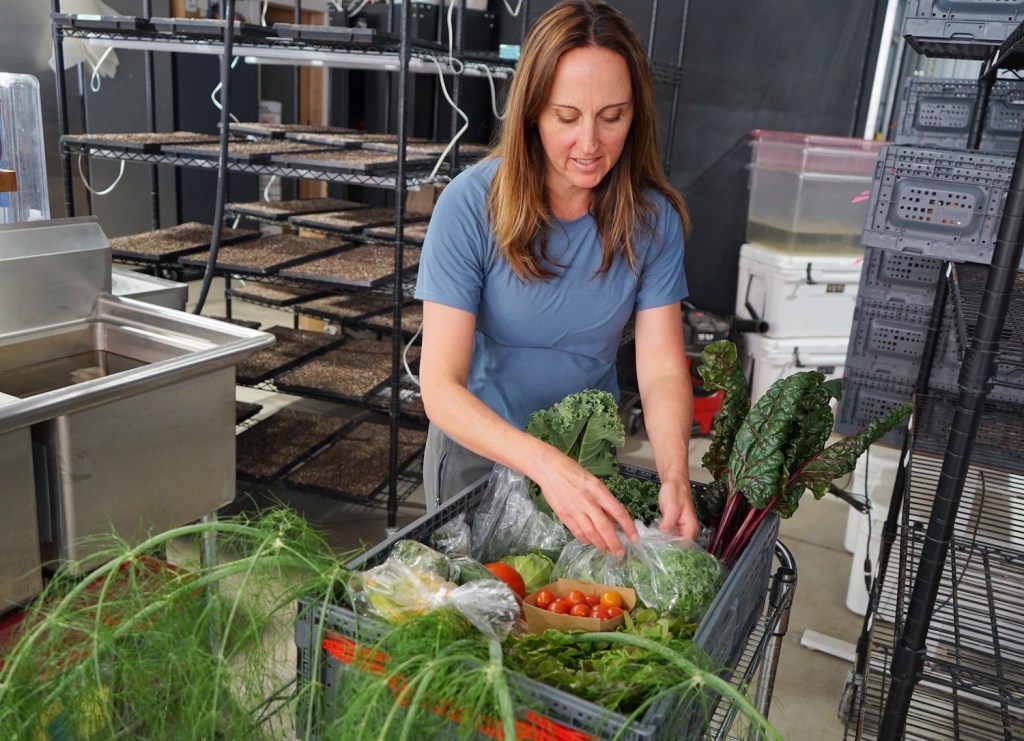
Crops range from traditional market produce like lettuce, fennel, cabbage, broccoli, squash, herbs, melons, edible flowers and carrots. The farm also experiments with more exotic varieties, like ginger and mangos.
On the business side, the newly rebranded farm is focused on recalibrating based on its new capacity, Hammerel and Shelton said.
“Our client base is expanding and expanding and changing, so learning from them what they like, what they want,” Shelton said.
The overarching goal is to get fresh, local food into as many households as possible. Food retains both flavor and nutrition better when it doesn’t need to be shipped thousands of miles, Hammerel said.
Silver Stream has more than 70 subscribers to its Community Supported Agriculture service — a model where customers pay in advance for weekly boxes of produce. The farm also sells at farmers markets in Jackson and Bondurant, Hungry Jack’s General Store in Wilson and a few restaurants. Customers can order produce online and pick it up in regional locations.
Silver Stream was one of two Wyoming farms to win a 2025 pilot grant from Wyoming’s Department of Family Services and Food Works Group aimed at strengthening food production and access. The $39,000 grant subsidizes the cost of the fresh produce Silver Stream grows for regional food banks.
The farm also intended to participate in the Wyoming Farm to School program — but the program will not continue past its current cycle due to federal cuts.
House grown
Back in the main house, staffers fill boxes for CSA orders and plant seeds for the next cycle of microgreens. Around noon, they break for lunch — one of the regular potluck-style meals they share.
On the menu today: burgers made with beef from a neighboring ranch alongside a cucumber and tomato salad. Topping the burgers are thickly sliced heirloom tomatoes, lettuce and sweet pickles one of the employees made.
All the veggies are, of course, courtesy of the grow houses.


Do you ship out of state AZ.???
I work at the greenhouse! It is a privilege and a pleasure to provide my community with healthy food. Thank you for a well written piece.
Good morning,
Hmmmmmmm 🤔 no illegals required… Some States have “legal pot for a PRICE” Wyoming has “food stuffs, what is going to be the PRICE”? H2O is the “leverage” right or is these United States of America being manipulated/maneuvered for self-sanititization and what would that really look like? How many sides of the “Life Triangle” has to be sanitized for control/destruction of of “controlled life sanitization? I’ve seen people’s enjoy a game of Dominoes but no one wants or enjoys being a part of a Domino affect? WYOFILE thank you for thinkin of us and providing this insight to “We the people” for consumption and digestion… Most importantly exercising our FIRST AMENDMENT and let’s hope the FIRST AMENDMENT never gets sanitized.
Inspirational to what I am working on here in Dodge City. All the same reasons. Was just planning about strawberries this past winter.
One of the unfortunate outcomes of this unusual garden project is the shocking brightness of glowing greenhouses at night in what was a contemplative dark stretch of highway and landscape. The complex must use massive amounts of electricity and I wonder- what is the source? It seems counterproductive, counterintuitive, unless it’s a renewable energy source.
I ask myself this question every time I drive by. What veggies do we need that justify using/ needing so much power to grow them🤔?
Joy, why don’t you stop in and ask about the power that is used? Don’t remember you ever complaining about all the rigs lighting up the night skies in the gas patch.