

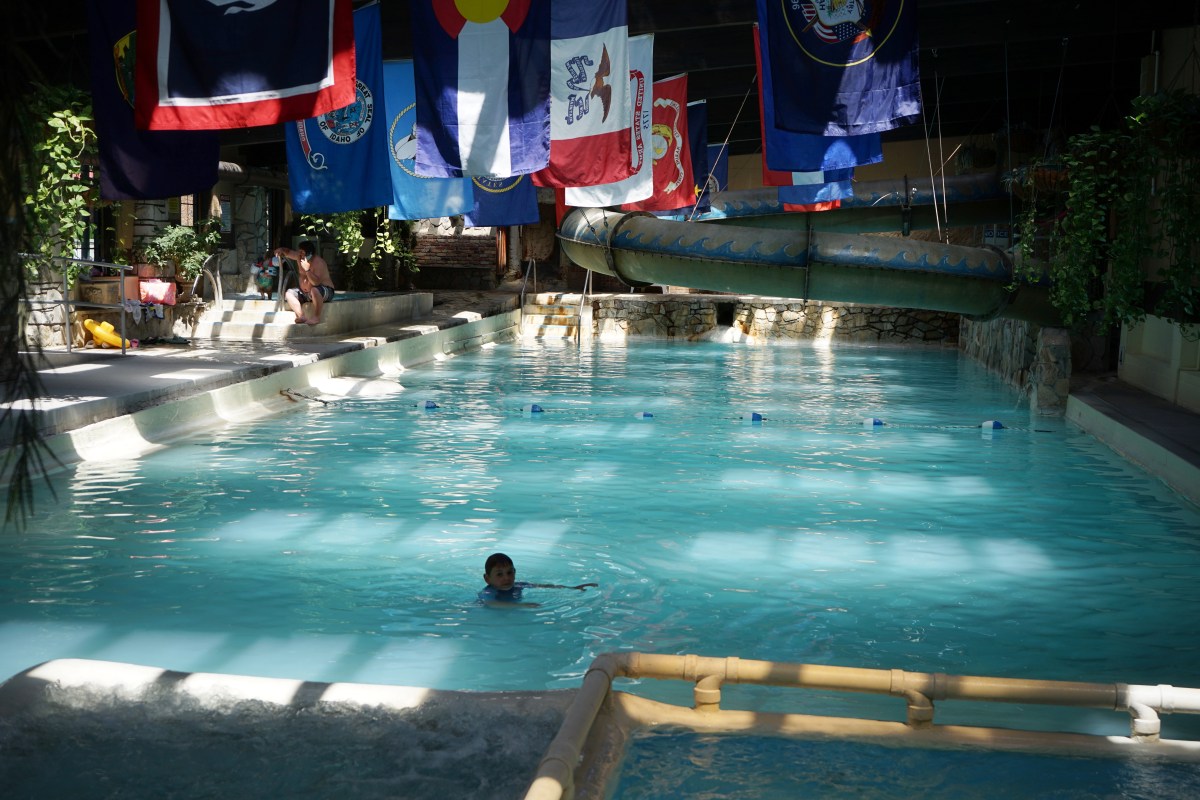
HOT SPRINGS STATE PARK—Though it’s been closed for more than a year, the Star Plunge aquatic facility in Wyoming’s most popular state park appeared ready for swimmers on a windy morning in late March. Classic rock blasted from outdoor speakers, white lounge chairs ringed the outdoor pool and sun glinted off the sulfur-rich water.
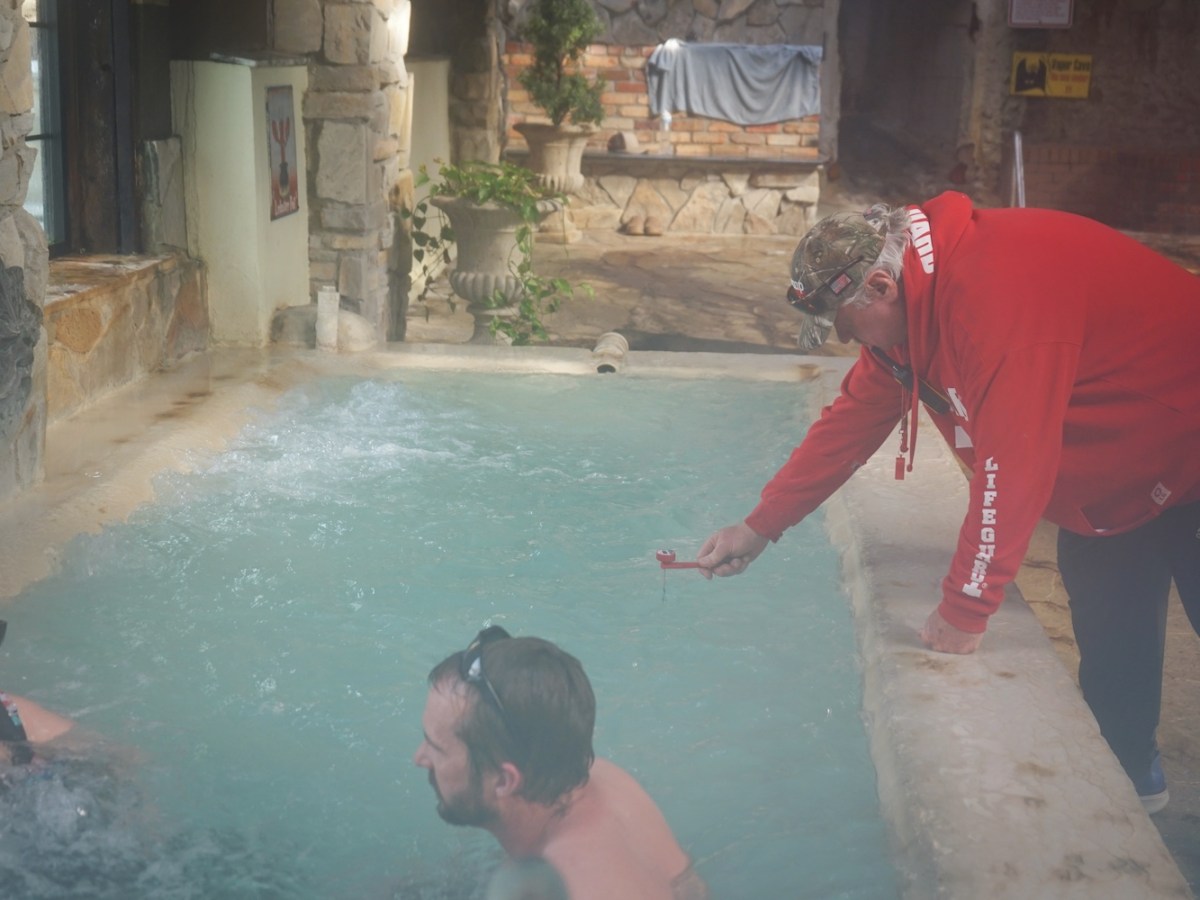
The person responsible for its condition was inside. Owner Roland Luehne said there’s a reason that he keeps the Star Plunge primed for swimmers.
“I am hoping that we’re going to get it open — or that someone will get it open,” he said.
Luehne’s family operated the pool for 50 years before the state selected a new operator in 2024. Luehne challenged that decision in a pair of lawsuits, and the facility shuttered in January 2025 after his short-term management agreement with the state expired. The court matters are ongoing.
As he talked about the dispute while sitting next to an indoor pool on that March day, Luehne’s frustrations surfaced. The state wronged him, his family and the countless swimmers who haven’t been able to enjoy the Star Plunge all these months, he said.
A new development, however, could hasten an end to the multiyear dispute over the Star Plunge — one of three hot springs facilities inside this 1,100-acre park. The Wyoming Legislature’s recently passed budget earmarked $3 million for “concessionaire remedies” at Hot Springs State Park. Lawmakers amended the language to mandate that the state undertake a full appraisal of the capital investment and ongoing concern of the business.
That could lead to a settlement on Star Plunge — as well one of the park’s hotels, Hot Springs Hotel — that could resolve the matter faster than a trial scheduled for October.
“We’re hopeful that we can use this legislatively mandated process to move things along and come to some sort of an agreement prior to [the trial],” Wyoming State Parks Deputy Director Nick Neylon said. The state would like to transfer management of the aging hotel and water facilities to a new operator so that long-needed improvements can proceed, he said.
Luehne also sees hope in the legislative option.
“Whether it is us or another operator, what matters is that the people of Wyoming regain access now while legal matters continue separately,” Luehne wrote in a follow-up email in which he struck a more conciliatory tone. “We are grateful to the Wyoming Legislature for recognizing two key truths: The Star Plunge should be open, and property owners deserve to be paid fairly.”
While the Plunge has been closed, the state and other concessionaires have completed updates elsewhere in the park, including installing a new boat ramp, fixing paved roads and reinforcing a hanging bridge over the Bighorn River. A faded blue outdoor waterslide at Hellie’s Tepee Pools was recently dismantled, and crews are scheduled to replace the wooden boardwalks on the mineral terraces this summer.
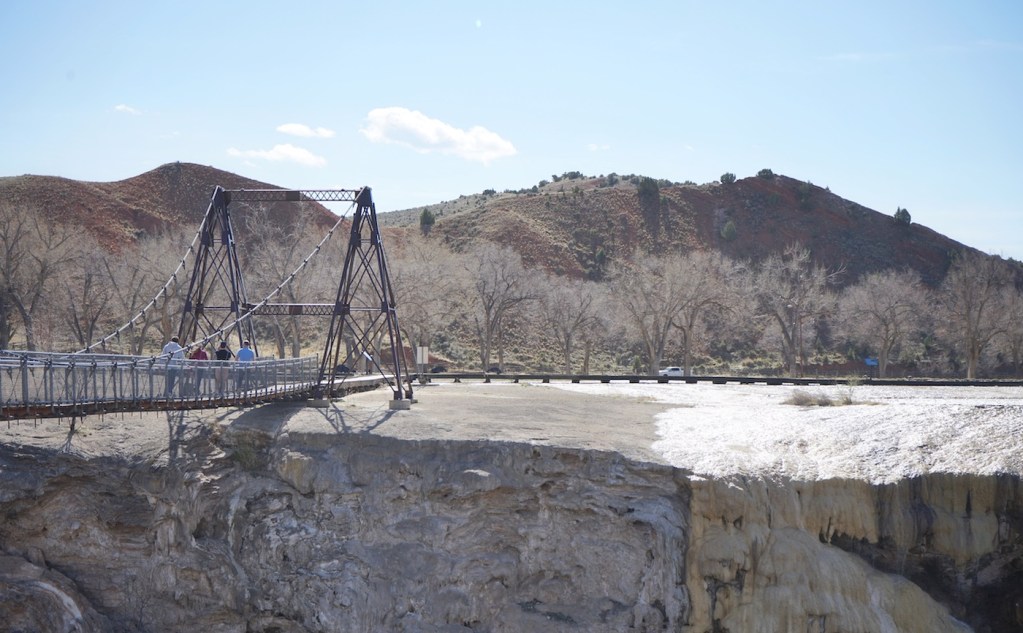
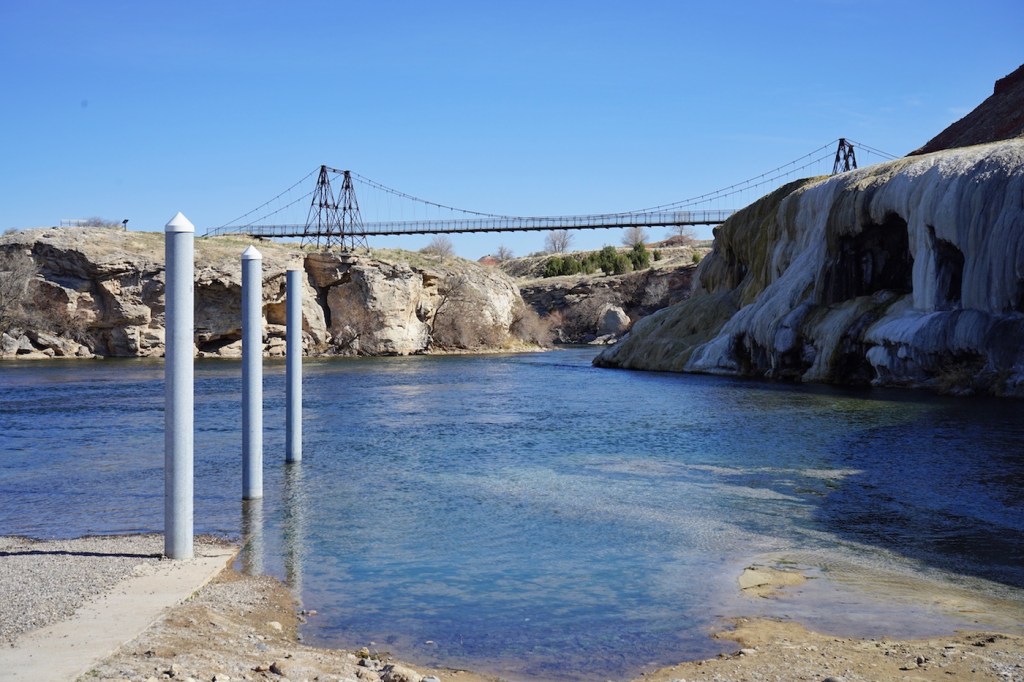
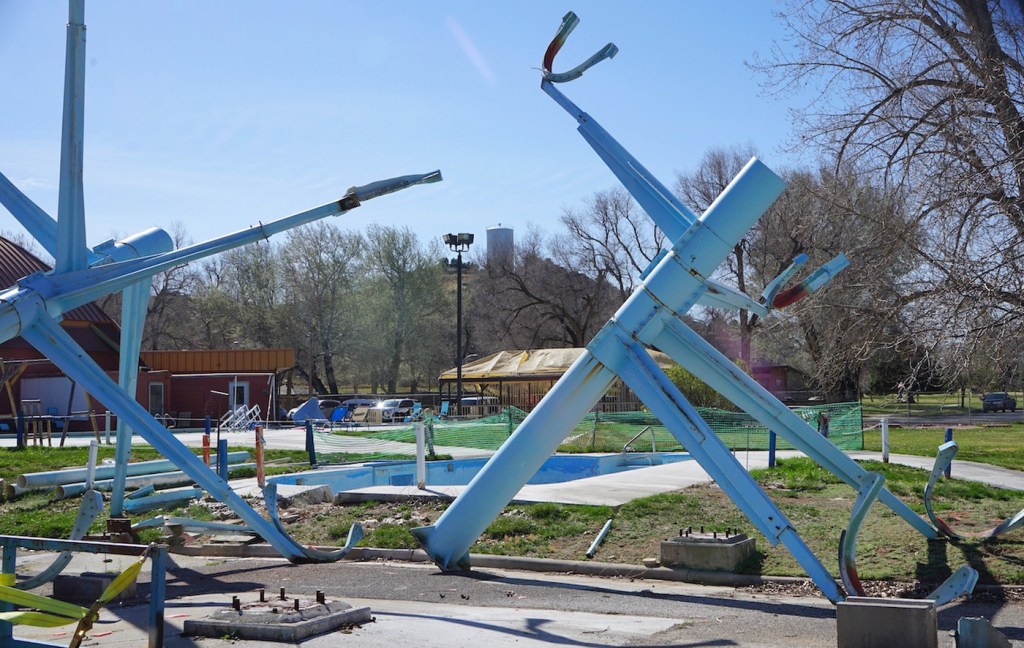
These smaller projects advance a larger goal of bringing the park into the modern era and creating a more cohesive experience, said State Parks District Manager Brooks Jordan. While priority remains on rehabilitating the aquatic facilities and hotel, he said, the state is chipping away at other improvements.
“We’re extremely anxious to get going with [the concessions], but in the meantime, we continue to tackle projects that have been needed and just improve the experience,” Jordan said while sitting at a picnic table in the park. Not far from him, the mineral waters that have drawn visitors to this place for centuries burbled out of a deep spring, flowed over mineral terraces, fed the pools and trickled into the river.
Court-issued closure
Unlike state parks that offer wilderness experiences, Hot Springs’ eponymous springs were long ago developed into indoor and outdoor pools with steam rooms and slides, while parking lots and paved roads encircle the grounds. It also hosts an assortment of built infrastructure, including a hospital, hotels, county library, fairgrounds and schools.
The park tallies around 1 million annual visits, more than any other in Wyoming’s system. And in a state with no permanent amusement parks, Hot Springs’ two aquatic facilities — Star Plunge and Tepee — have long drawn families with kids.
As landlord, Wyoming holds concessionaire agreements with park operators. That includes the aquatic facilities and two hotels. All four were built decades ago and are in various stages of senescence. Wyoming also operates a state bathhouse, which is free and open to the public.
The dispute between Wyoming State Parks and Luehne is most simply understood as a landlord-tenant disagreement.
The Luehne family had operated the Star Plunge since 1975, when Wolfgang and Christine Luehne bought it and took over a 50-year concessionaire lease. Their son, Roland, bought it from them in 2012.
Guided by a vision for an updated park laid out in a 2016 master plan, Wyoming State Parks in 2024 selected Wyoming Hot Springs LLC as the next leaseé through its request-for-proposal process. Wyoming Hot Springs LLC’s primary representative, Mark Begich, a former U.S. senator from Alaska, also purchased in late 2023 the Tepee Pools. Hot Springs LLC’s RPF application laid out plans for significant upgrades and renovations.
The state’s selection promised to effectively evict the Luehne family from Star Plunge. Luehne has been operating on a string of short-term management agreements since 2008.

Luehne contested the process in a pair of lawsuits filed by his company, C&W Enterprises. They accused Wyoming State Parks of exceeding its authority and violating regulations. Luehne argued the state is attempting to dislodge him without fairly compensating him for the improvements. Hot Springs Hotel’s owner, Big Springs Spa, attempted to join the suit but was denied.
The state, meanwhile, has defended its process in court filings and statements.
The Star Plunge closed to the public after Luehne’s latest management agreement expired. That was just weeks after the court granted a preliminary injunction that prohibited State Parks from requiring Luehne to tear down the existing buildings and barred the agency from entering into a new concession agreement with the prevailing proposer until the matter is resolved.
In the year-plus since then, the court dismissed one of Luehne’s lawsuits. The second one, in which Luehne argues the state did not properly compensate him, is now set for an October trial. The state pursued an option to have a third party operate the pool in the meantime, Neylon said, but those negotiations failed.
Economic engine?
In the nearby town of Thermopolis, where the economy relies in part on tourism generated by the park’s therapeutic hot springs, reactions have been mixed. Some see the new operator as a good opportunity to spruce up the park’s facilities and boost the community’s profile. Others believe it will Disney-fy the beloved park and ratchet up prices.
Critics have also worried about the mounting economic impacts its closure would have on hotels, restaurants and other businesses.
But after a year, it doesn’t appear the closure brought significant harm. At 1.2 million, visitation to Hot Springs State Park rose 20% in 2025, while county tax collection related to leisure and hospitality dipped slightly.
“Talking with a host of our restaurants and retail folks here, last summer was one of the best summers they had ever had,” said Thermopolis Mayor Adam Estenson. Much of that can be credited to the efforts and ingenuity of businesses to drum up tourism with special events, he said. A local outdoor recreation advocacy group has also advanced trail initiatives, he said, and the appeal of Thermopolis’s fishing opportunities just continues to grow.
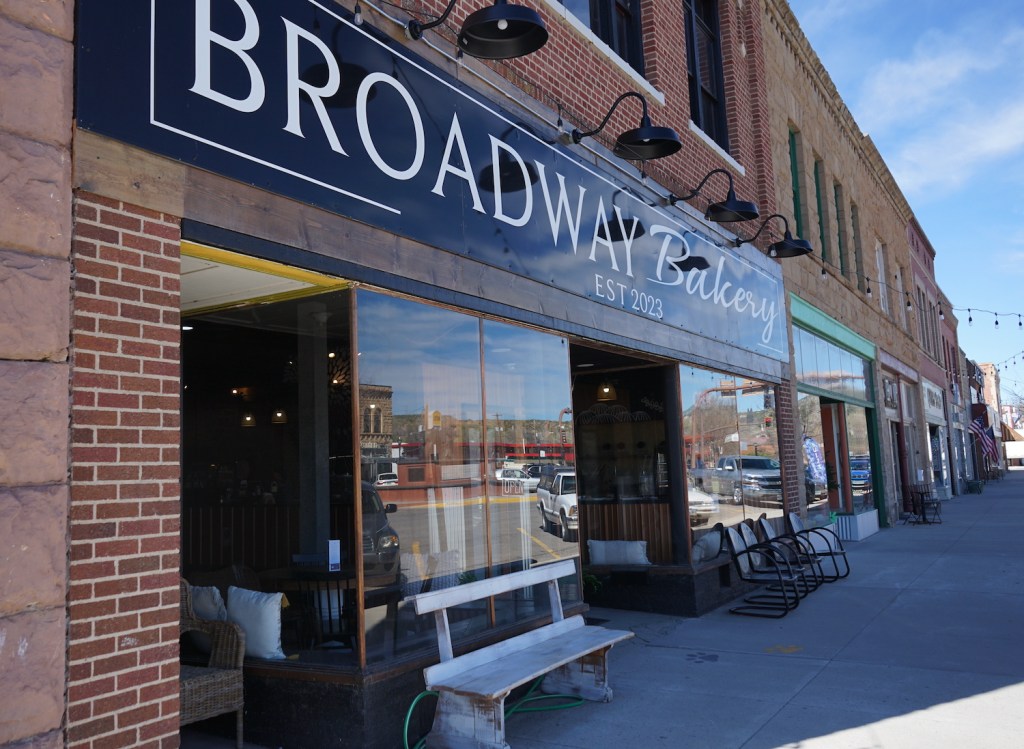
Owners of several businesses in the town’s small downtown area confirmed that 2025 was a steady or good year. It seemed like national issues related to tariffs and travel had more impact than the Star Plunge closure, they said.
“We’ve had our ups and downs, but I don’t think it was because of what was going on in the park,” said Ellen Reed, who owns the bookstore and coffee shop Storyteller.
There has been a pervasive impression among the public that Hot Springs State Park is closed, Estenson said, which local business representatives report as the biggest challenge.
“One business in the state park is closed, but the Tepee pool is open, the bathhouse is open, the hotels are open, and there’s still a lot to do here,” he said.
Wyoming State Parks launched an aggressive marketing campaign in 2025 to push that message, Neylon said, and he thinks visitations show it paid off.
Open the pool
Regardless of views on court claims, lease contracts or future impacts to Thermopolis, everyone involved is on the same page on one major aspect: the desire to see the facility reopen to the public.
“It needs to reopen,” bookstore owner Reed said, echoing a common refrain.
The Thermopolis Town Council unanimously voted this week to allow Mayor Estenson to sign a letter urging a “timely, agreeable” resolution to the dispute.
“The prospect of an agreed-upon appraisal process and buyout represents a practical and forward-looking opportunity to bring closure to what has been a lengthy and complex dispute,” the letter states. “More importantly it creates a pathway to reinvest in and revitalize these important community assets.”

In testimony to the Legislature’s Joint Appropriation Committee in January, Luehne’s attorney Matthew Michelini said there’s no good reason for the Star Plunge to be closed.
“The only thing we’ve asked for is fair compensation,” he said.
State Parks is proceeding with the appraisal, Neylon said, with the hope to land on numbers “equitable both for the state and what the concessionaires believe they are owed.”
The water park and hotel, Neylon assured, “are not going away. They’re going to get better. They’ll be improved, revitalized and updated.”

I understand both Mr. Brooks, and the State of Wyoming, desire to bring the most visited site of all the State’s parks into the modern area; in particular, at the taxpayer’s expense, but, of all the current and future improvements being implemented, what is being done about the lack of water rolling over the natural Terraces?
After all, the big push is for large commercially operated resort style amenities, which will require alot of the naturally fed spring water, but what about preserving the very essence of what makes the park so unique to visit in the first place.
Given the fact that the sacred waters were to be made free and available to all men, no matter their respective color, per a Federally signed Treaty, what is really being proposed to preserve this beautiful resource, or is this a guise for profit, as has always been the case of the American West?
Why are the Terraces dry? I have photos of those same spots from a few years ago with water flowing in mass quantities over those now dry locations – has the water already been sanctioned to profit a future monopoly of three of the main venues according to this plan, despite the promise of the splendor of Hot Springs State Park to be preserved, and available to generations?