


Three years ago, unending, relentless snow blanketed much of western Wyoming. Warm temperatures melted the top layer and then froze, forming a crust that proved deadly for Wyoming’s mule deer and pronghorn, wiping out tens of thousands of animals.
For many biologists, it was the worst winter they could remember.
Fast forward to today, when much of the state just experienced the driest and warmest winter in recorded history. For many herds still recovering from the 2022-2023 winter, the relative warmth and lack of snow brought good news. They didn’t have to scrape through crusted tops to find critical calories or wander long distances looking for bare ground to rest their weary legs. Unfortunately, if a landscape stays this dry, the upcoming summer, fall and winter could prove just as deadly.
“We could see long-term decline in body condition that leads to worse overwinter survival, fewer fawns on the landscape and poorer reproduction,” said Troy Fieseler, a Wyoming Game and Fish Department terrestrial habitat biologist out of Pinedale. “Cascading problems are a real concern.”
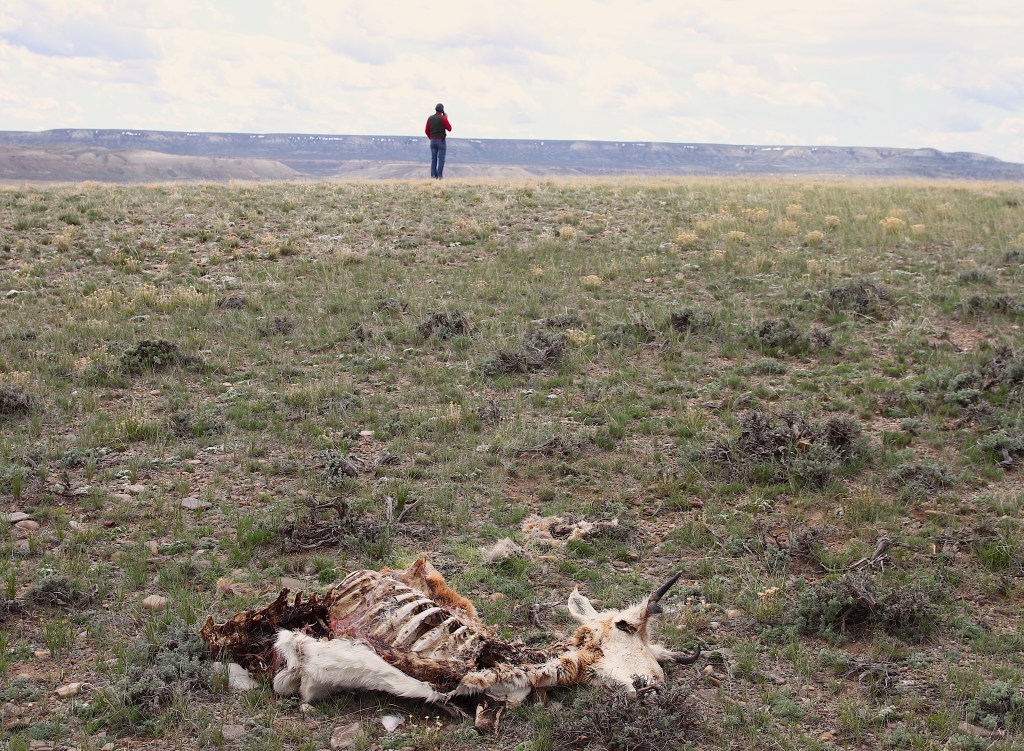
While the outlook right now feels bleak, no one has yet raised alarms. Wildlife managers like Game and Fish’s Daryl Lutz remain hopeful the state will receive a couple of those million-dollar rainstorms that can restore the prairie and foothills to what they should be. But he and many others — including anyone who experienced freak dust storms and cherry trees blooming in March — are worried.
“Certainly for mule deer it won’t be good. Antelope are a desert species and have more ability to adapt,” Lutz said. If the state receives rain, he said, “we might be OK, but I just don’t know.”
No water, no plants
There’s no doubt mild winters benefit many wildlife species. Even moderate winters can take their toll on wildlife as animals struggle to find dried bits of food to munch and burn extra calories trudging through snow. Extremely mild winters like the one much of the West just experienced, created few of those impediments, said Justin Binfet, the state’s deputy chief of wildlife.
Fawns and calves born last year will likely survive at greater numbers than normal. Pregnant does will also fare better.
But if those drought conditions continue, those same critters who benefited could soon lose.
Little snowpack and limited spring rains in lower elevation basins and foothills translates into smaller, less nutrient rich plants and wildflowers that so many big game depend on for survival. It also means less growth on important shrubs like bitterbrush and sagebrush, Binfet said. Deer and antelope require those shrubs for forage throughout the year, and particularly in critical winter months.
Years of research with the Wyoming Range herd has shown how mule deer, particularly, respond to changes in food availability.
Deer will likely deliver plenty of fawns this year, especially after the mild winter, but if those same mothers can’t find enough to eat, they will produce less milk for their young, said University of Wyoming professor and longtime mule deer researcher Kevin Monteith. Less milk leads to weaker, smaller bodied fawns that will struggle to survive an upcoming winter. If the drought becomes severe enough, even adults may not live.
“If it’s another relatively mild winter, then they can access what food is there and will be less reliant on fat reserves to persist through winter,” Monteith said. “But [a] moderate winter they are not equipped for, from a fat perspective, can come as a hit.”
Connectivity helps
While the forecast feels dire, biologists also emphasize that Wyoming’s big game like elk, deer and pronghorn evolved in an arid landscape prone to extremes. And each species has developed its own strategies for dealing with literal feast and famine.
“One thing if anything this winter tells us, which we struggle to accept, given the nature of the people we are, is that in many respects, we’re not in control here,” Monteith said.
There are, however, ways to help buffer herds from the worst of the inevitable swings, he added. And one of those is understanding and conserving all of the ways big game move around a landscape.
The easier species like mule deer and pronghorn can move in search of more nutritious food, the better chance they have to access valuable nutrition. Migration corridors provide species with paths to protein-packed munchies in the mountains and foothills and take pressure off lower elevation summer ranges.
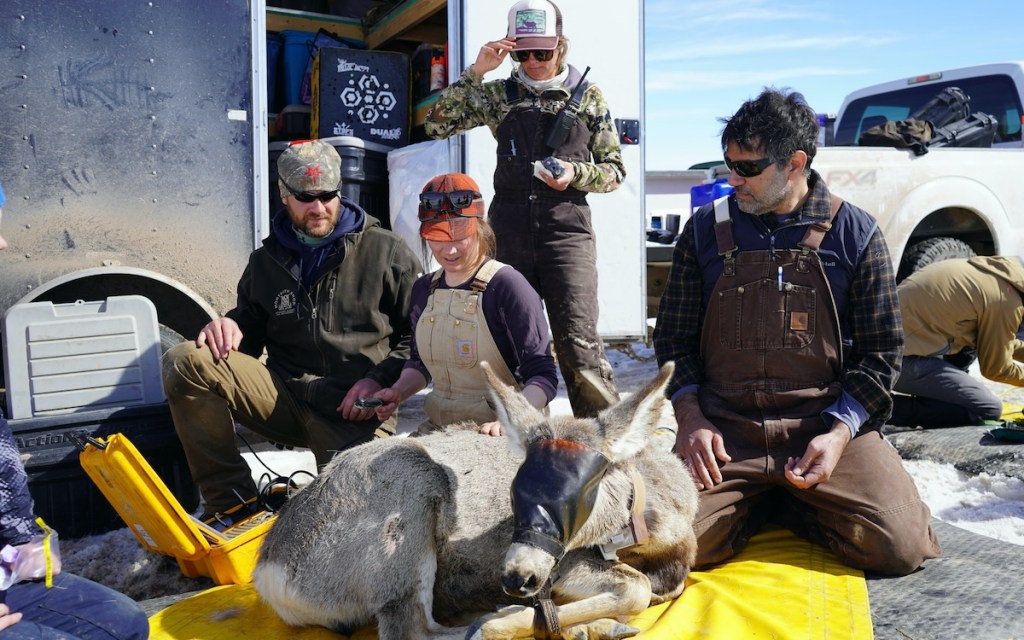
Recent research published in the journal Current Biology by lead author Anna Ortega outlines how mule deer that migrate over long distances return to winter range each year fatter and with more fawns than their short-term migrant or resident counterparts. The study shows the importance of keeping landscapes connected, she said, especially during tough years.
That’s why biologists and researchers stress the importance of wildlife friendly fencing, or removing fencing altogether. People replaced more than 30 miles of fences in the Pinedale region alone last year, Fieseler said. Each of those miles offer more opportunities for movement.
“We can moderate those enormous fluctuations or extremes,” said Monteith, through managing habitat, populations and invasive species.
And in the meantime, biologists hope it will rain.

Great article. Thanks Christine. I think you meant winter ranges in the following paragraph, not summer ranges… “…corridors provide species with paths to protein-packed munchies in the mountains and foothills and take pressure off lower elevation summer ranges.”
Thank you for a well written and very timely article. While the importance of the climate and the potential for a tough summer are the acute issues facing the wildlife, I appreciate you and the biologists who follow them for years, pointing out once again the greater value of having uncluttered migration corridors available every year and every season. If you value wildlife that’s not too much to ask.
meanwhile, the ground pounding of public lands grazing will go on. A lot of damage was done to the habitat in 2025 and with a very high chance of no subtantial regrowth, along with the BLM and USFS allowing the welfare ranchers to continously dump cattle and sheep on public land…the future does not bode well for wildlife
great article, this is very concerning.