


This story is part of an ongoing series between WyoFile and The Water Desk exploring water issues in Wyoming. —Ed.
State officials, under the direction of Gov. Mark Gordon, have clawed back $6.2 million in state-administered American Rescue Plant Act funds from some towns and redistributed the funds to others where sewer and municipal water improvement projects were on track to meet a looming federal deadline at the end of the year.
It was either that, or see the money return to the federal government, according to the state.
“The State of Wyoming knew that there was a very large amount of granted [ARPA] funds that had the possibility of being relinquished [back to the federal government] due to the contingency outlined within the grant agreements,” State Budget Department Grants Management Administrator Christine Emminger told WyoFile.
Small towns such as Lingle, Wamsutter and Big Piney with limited resources to navigate arduous federal compliance requirements also faced a tight schedule to complete economic and engineering studies in time to get contracts signed and projects “shovel-ready” by the first of the year, according to the state. Local officials found themselves competing with other Wyoming towns for a limited pool of engineering and construction firms to commit to the work.

(Click here to see where ARPA sewer and municipal water improvement grants were relinquished, and click here to see where the funds were redistributed.)
“We anticipated this,” Gordon told reporters at a press conference in October, noting that the state notified ARPA grantees earlier in the year. State officials set their own deadline of Oct. 1 for grantees to either complete the federal compliance work or potentially see their grants revert back to the state. The $6.2 million in relinquished funds were redistributed among the remaining ARPA grantees to use as part of their match requirement, according to the state.
The $350 billion program — part of the $1.9 trillion ARPA effort — represents “dollars that are borrowed from future generations,” Gordon said. “So I wanted to make sure that those future generations — our kids, our grandkids — get the benefit. We’ve really tried to make sure those dollars have been deployed into lasting assets.”
ARPA dollars in Wyoming
The 2021 American Rescue Plan Act appropriated $350 billion to help the nation recover from the COVID-19 pandemic and to address climate impacts, prioritizing water and sewer system upgrades as one of six main efforts to be funded. Although the ARPA program provides grant awards directly to communities and other entities, it also includes appropriations for each state to administer.
State officials in Wyoming were given the opportunity to distribute more than $1 billion. Of that, the Wyoming Legislature set aside about $144 million for water and sewer improvements.
All told, dozens of towns and water districts will receive a combined $143.2 million in state-administered ARPA grants for improvements such as a sewer project in Laramie and water tank repairs in Shoshoni, according to the state. Communities forced to give up their grants are left to scour other federal and state programs to cobble together enough money to complete much-needed water system improvements.
“It’s a hard thing — the federal government puts you in a use-it-or-lose-it situation with this program,” Wyoming Association of Municipalities Deputy Director Justin Schilling said. “But you can’t let the clock hit midnight and watch that money just disappear back to Washington D.C. [Wyoming officials] had to make hard decisions to move it around so that those dollars stay in the state.”
In fact, the state scrambled in recent months to redeploy a total $76.7 million in state-administered ARPA grants for various pandemic-related relief efforts at risk of reverting to the federal government, including for healthcare facilities, Gordon’s office announced on Wednesday. “Not surprisingly, there were a number of communities and organizations who were unable to completely obligate the ARPA funds within federally mandated time frames,” according to a statement from Gordon’s office.
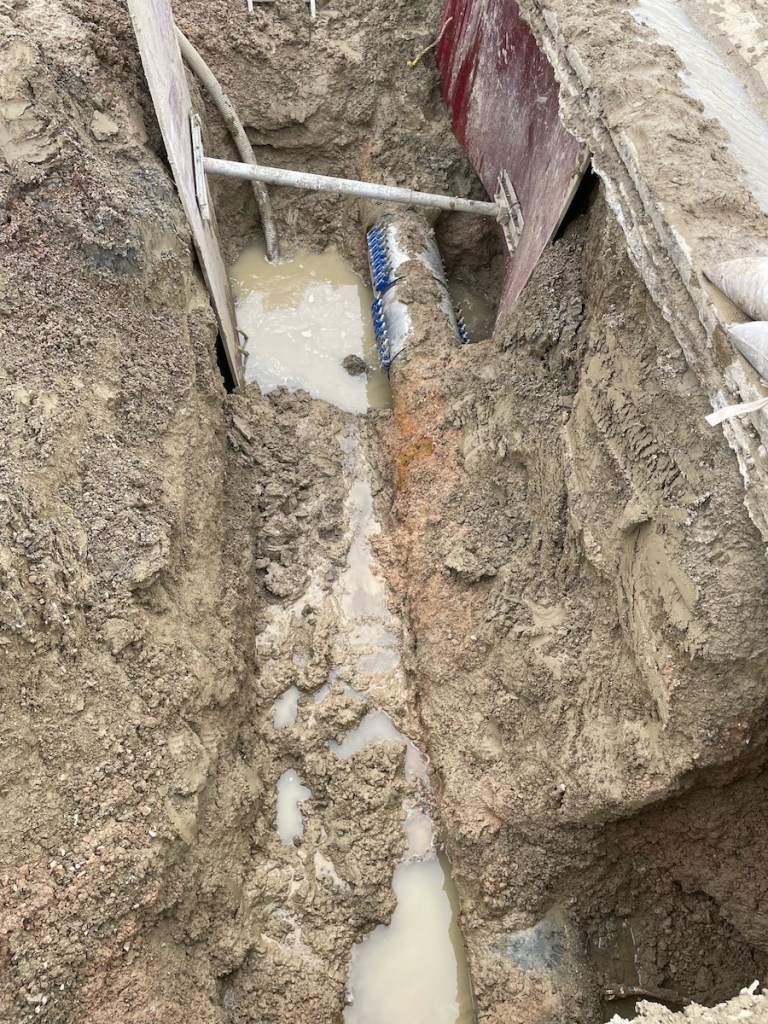
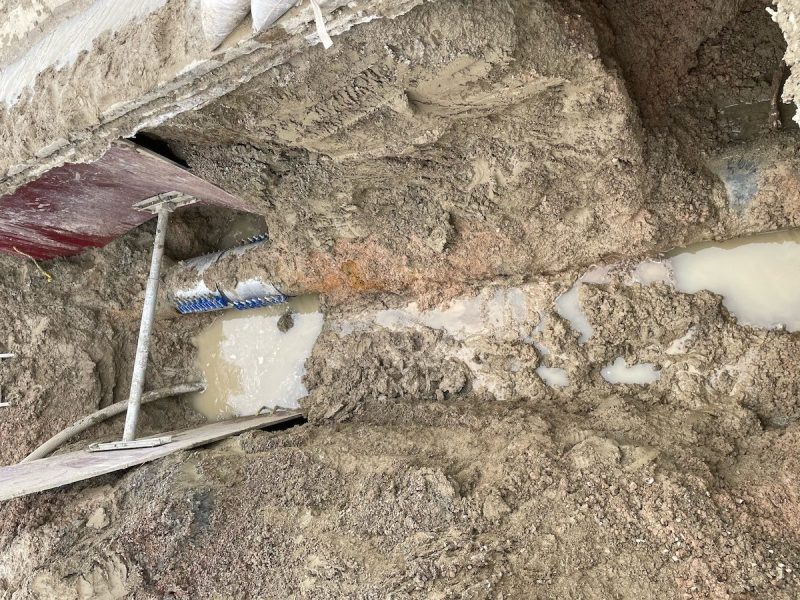
There’s a growing need among Wyoming communities for sewer and water upgrades due to aging infrastructure — compounded by new demands — and a tendency to delay expensive projects, Schilling said. Borrowing the money, many small towns say, would bust their budgets. Rawlins, for example, where the water district is replacing 100-plus-year-old wood water pipes, needs about $60 million for necessary water system upgrades, according to town officials.
The neighboring towns of Midwest and Edgerton in the middle of the historic Salt Creek oilfield are relying on ARPA dollars to help cover an estimated $5 million cost to replace 7 miles of potable water pipeline at risk of corrosion due to acidic soils in the oilfield. Their ARPA grants, along with a series of state appropriations, were spared from the clawback effort.
“Without that [pipeline upgrade] we have no water out here,” Salt Creek Joint Powers Board Clerk Cindy Aars told WyoFile. “That is our only source of potable water. So it’s a godsend for us.”
For others, funding delays leave the lingering projects prone to inflation, Schilling added, while towns must compete for contractors who are already stretched to fulfill thousands of federal infrastructure projects launched under the Biden administration. Even towns that have secured funding will continue to struggle with Wyoming’s limited pool of contractors, he said.
“These [federal] dollars went out all over the United States, so it’s not like you can borrow big industrial contractors from other states to come in,” Schilling said.
Refilling the state’s pot
Towns with yet-to-be-funded sewer and water improvement projects will again compete for state dollars in the Mineral Royalty Grant program, which has been used, in part, as an emergency account to help bring water systems into compliance with minimum federal standards. About half of federal mineral royalties paid by coal, oil and natural gas producers are returned to the states where production occurs — a dwindling stream of revenue for Wyoming due to the declining coal industry.
Gordon’s supplemental budget proposal includes adding $20 million to the Mineral Royalty Grant program “to help the State Loan and Investment Board address emergency situations that pose a direct threat to health, safety, or welfare, as well as support essential public services,” the governor’s office said.
Lawmakers previously reduced Gordon’s funding requests for the program. If approved this time around, his $20 million supplemental request will increase the pot to $47.5 million for the 2025-26 budget cycle, according to officials.
“I’m going to be eager to see our Legislature make sure that they appropriate [my request] for the [Mineral Royalty Grant program] because it’s an incredibly valuable tool for our communities,” Gordon said in October. “A lot of the design work has been done and, but for the fact that the contractors weren’t able to meet the ARPA deadlines, we can complete some of those very, very important projects.”

Make the most of this funding Wyoming, because the man you elected as president is going to do absolutely nothing for you. He’s in it for himself.
Dan Greve – that is a very bold statement without providing one shred of evidence to back it up.
ARPA funding is entirely due to the Biden administration. Trump will do nothing for small communities, the environment, or Wyoming in general. You might think people would vote in their best interest, but you would be wrong.
The evidence will be obvious over the next four years.
Smart move by Christine Emminger and the governor. Still very sad that our legislature cannot help communities that need help with planning and execution these projects. That infrastructure act money is already appropriated and will be spent somewhere. No sense in losing it. As far as Wyoming (and other states) accepting federal money to benefit citizens, it simply hinges on your theory of the purpose of government.
Too bad the Gov gave that $6 million to that oil company.
Interesting how Wyoming isn’t shy about sucking on the federal tit as long as it is in line with their needs and political bent. God forbid other states get their share in the areas they need help. Never seen so much whiling about regulation and accountability. Those regulations are in place to make sure hard fought taxpayer dollars are spent wisely. Wyoming and other “taker” states live off federal welfare. Whole towns survive off of federal monies to BLM, USFS and the like. I’m fully supportive of the federal government and good paying government jobs but the hypocrisy in Wyoming is truly epic
…“dollars that are borrowed from future generations,”
So basically, our government ‘representatives’ seen to have no problem financially enslaving children.
Please let that fact sink in before blindly supporting more big government ‘solutions’.
Maybe president Musk will take it all back, and pad his bank account at the same time.
Gordon. You mean like Nancy Pelosi/Liz Chaney/joe Biden/and other politicians have padded their bank accounts? All at our expense. Musk at least worked for his and was creative.
So what. Nobody voted for Musk.
Musk also padded his pocket with – wait for it- public money.
Gordon. You best cast a big net if you cast that subsidy money net. It includes every cable company in USA/car manufacturers both EV and ICE/banks/software companies/farmers ranchers. Round them all up Gordon. Don’t stop at just 1 person.
Larry. I don’t have a problem with subsidies. I have a problem with subsidy takers that don’t want money to go to anyone but them. Get it?
Why wouldn’t the state offer help to these small towns. They have staffing and expertise to do so.