

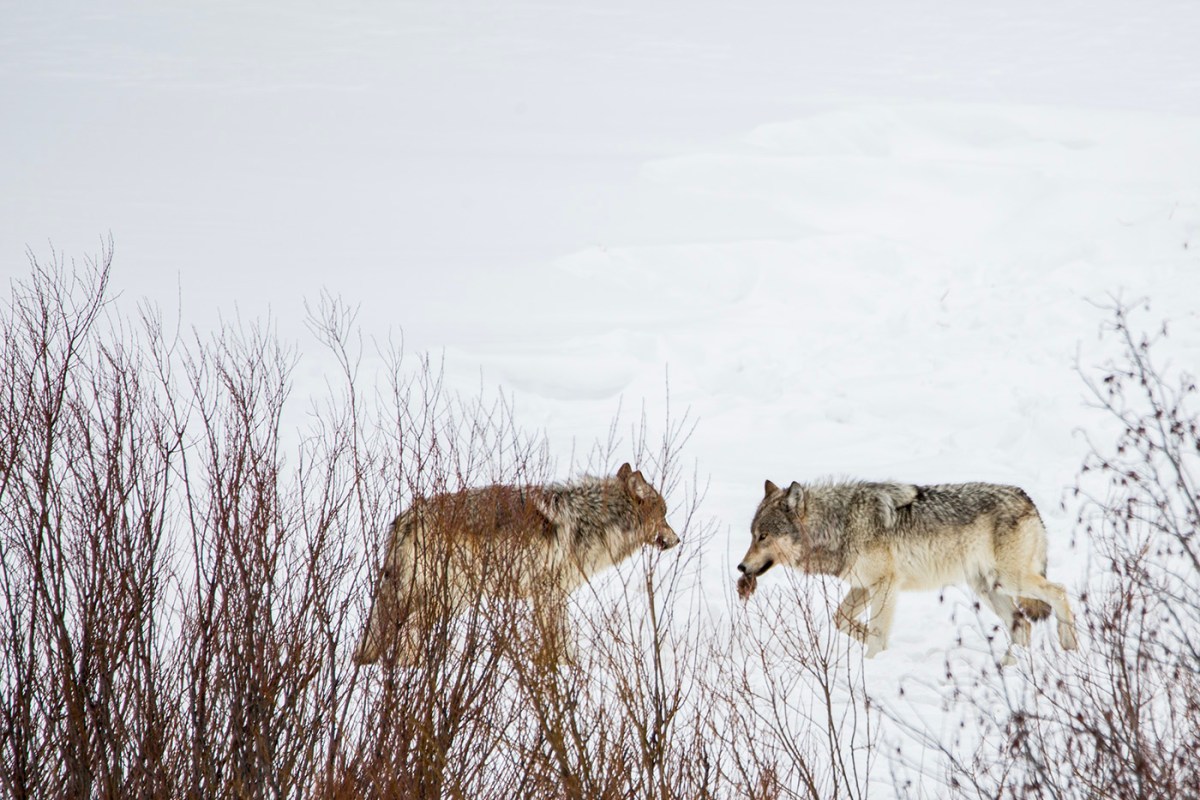
Wyoming wildlife managers plan to reduce how many wolves can be hunted by 50% following a canine distemper outbreak that has cut the state’s wolf numbers to the lowest level in two decades.
A 22-wolf cap is the fewest number of wolves available to licensed Wyoming hunters since the state began allowing wolf hunting after Endangered Species Act protections were lifted in 2012. The limit also marks a significant decrease from last fall’s wolf hunting season.
“As far as the overall mortality limit, it’s exactly half,” Wyoming Game and Fish Department wolf biologist Ken Mills told WyoFile.
Last year, hunters could target a maximum of 44 wolves in the area around the Greater Yellowstone Ecosystem, where Wyoming classifies wolves as trophy game during the Sept. 15-Dec. 31 season. Hunters bound to Wyoming’s relatively tight regulations in that zone managed to kill 31 wolves.

It wasn’t hunting, however, that resulted in the lowest population since wolves were still being established after the 1995-96 Yellowstone National Park reintroduction. Biologists say a canine distemper outbreak is the primary culprit in the decline. The measles-like disease is especially deadly for puppies, and it was detected in 64% of the animals that Wyoming biologists handled during routine capture work last year.
As the calendar turned to 2026, Mills and federal biologists tallied 253 wolves and 14 breeding pairs statewide. Those are decreases, respectively, of 23% and 42% from the 330 wolves and 24 breeding pairs estimated at the end of 2024.
Wyoming’s proposed hunt for 2026 is designed to increase the wolf population in the trophy game area, located in the state’s mountainous northwest corner. The population in that zone decreased 19% to 132 wolves in 2025 — a figure that’s well below the state’s 160-animal objective.
“We want to grow the population by 28 wolves,” Mills said.
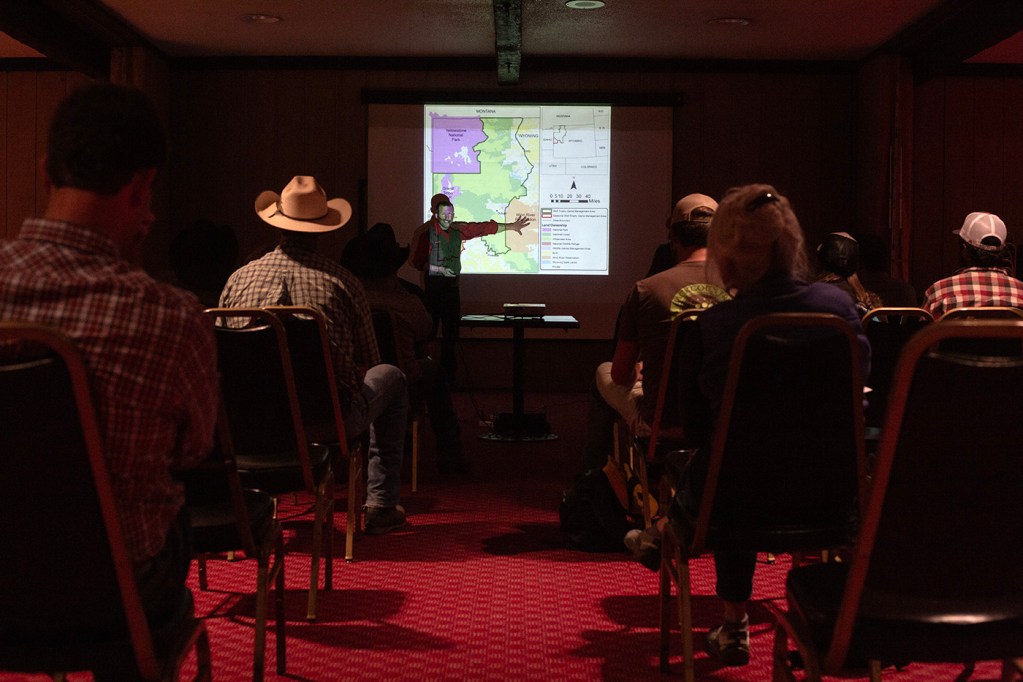
Driving Wyoming’s desire to increase numbers of the controversial native canine is the 160-wolf objective designed to ensure that the state meets its obligations with the U.S. Fish and Wildlife Service. When the state first gained jurisdiction over wolves 14 years ago, Wyoming’s delisting agreement called for maintaining at least 10 breeding pairs in the trophy game area. In 2025, there were exactly 10 breeding pairs, which shows that the margin for error is thin at the current lower population.
The reductions to Wyoming’s wolf hunting quotas aren’t uniform.
“The wolf numbers in the Cody, Lander and Pinedale regions were relatively stable in 2025,” Mills said. “The largest reduction was in the Jackson region.”
As a result, Game and Fish is proposing to reduce the limit, from 19 to six, for wolves that can be killed in four conjoined hunt areas (units 8, 9, 10 and 11) spanning from Jackson Hole into the Green River basin. The state’s draft regulations also call for relaxing the limit on wolves that can be hunted along the west slope of the Tetons and in the Teton Wilderness (units 6 and 7) from five animals to no more than two.
There are major differences in how the three northern Rocky Mountain states hunt wolves, and it’s unclear if Montana and Idaho will follow suit and decrease hunting pressure near Yellowstone National Park. Wyoming’s distemper outbreak was regionwide and also hit Yellowstone packs, which only managed to produce 17 surviving pups — the lowest count in 30 years of careful monitoring.
In Montana, where hunters and trappers can kill 15 wolves apiece, wildlife managers do use a quota system near the Yellowstone boundary to ease impacts on wolves that leave the park. Idaho, meanwhile, allows largely unfettered wolf hunting on the western side of the ecosystem.
Wyoming manages wolves similarly, with few regulations, on the outskirts of the Yellowstone region. Where the species is classified as a “predator” — in 85% of the state — wolves can be killed by almost any means and there are no hunting limits to be altered as a result of the population decline.
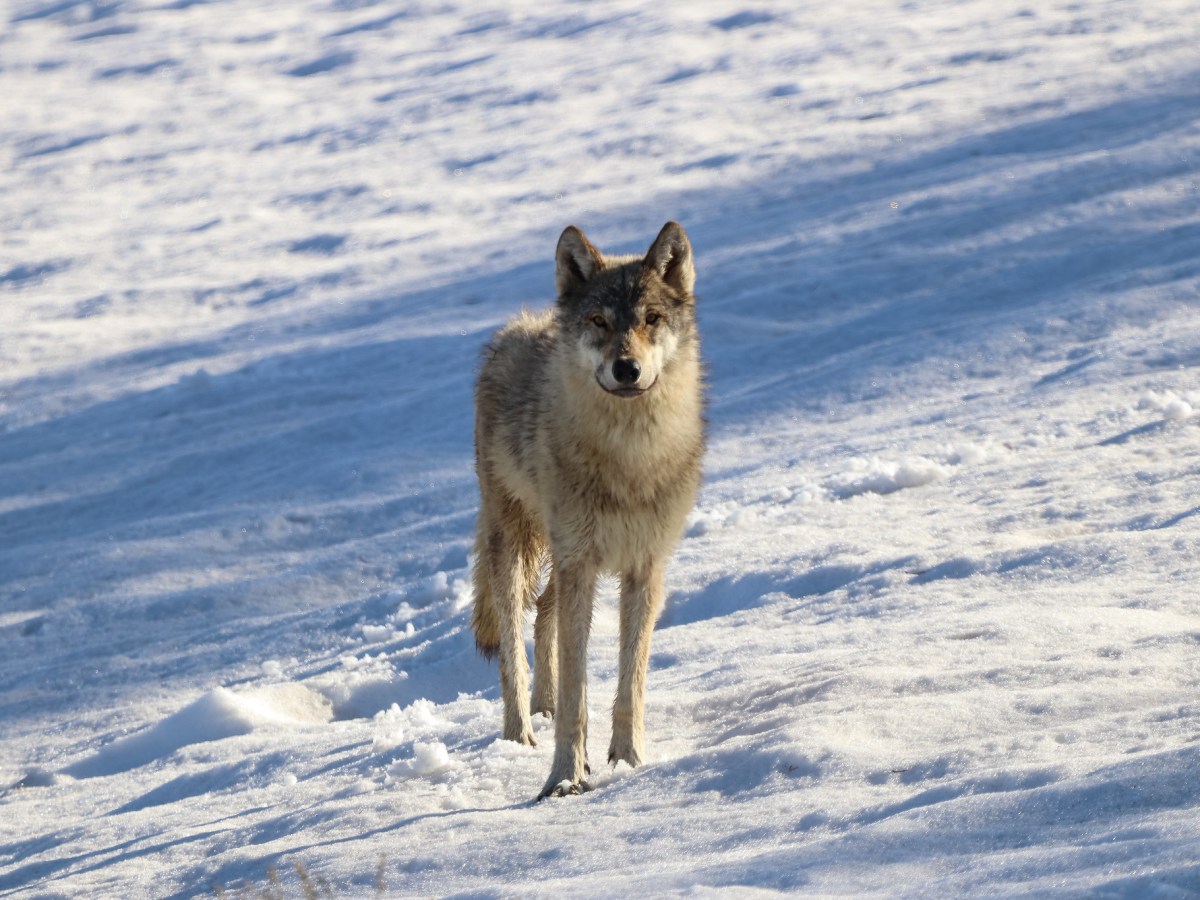
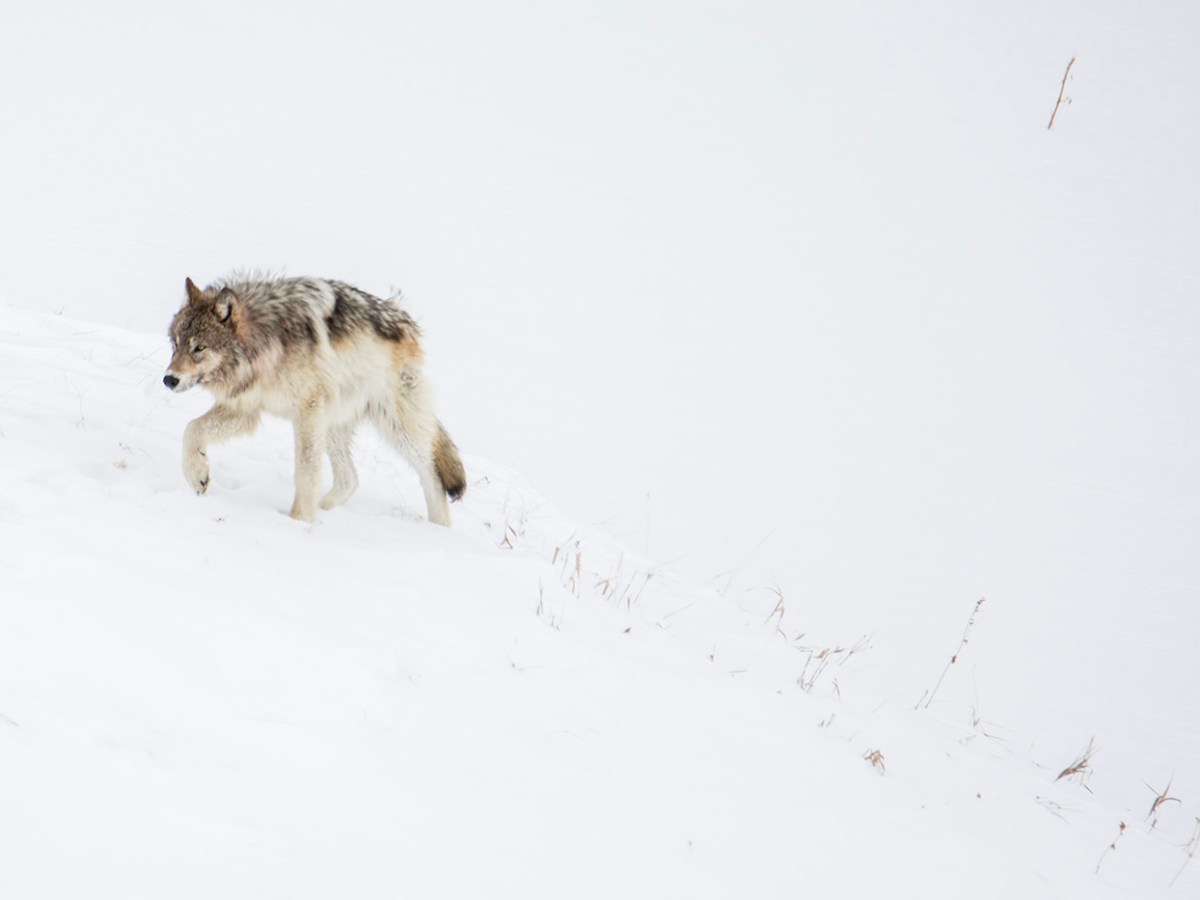
Game and Fish will host several northwestern Wyoming public meetings about its wolf hunting proposals. They’ll take place at 6 p.m. May 26 in Jackson; 6 p.m. May 28 in Cody; 6 p.m. June 2 in Pinedale; and 6 p.m. June 3 in Lander.
Public comments can be submitted at WGFD.wyo.gov/get-involved/public-input through June 10.
The state agency’s commission must also OK the draft hunting regulations. Commissioners plan to take up the issue at their July 14-15 meeting in Sheridan.
Mills anticipates hearing from detractors on both sides of the wolf hunting issue.
“There will be people frustrated that the mortality limit is lower,” he said, “and members of the public that probably think we shouldn’t hunt wolves at all.”

One thing to point out in this article stating that this was once a “native species” to the area. This sub species of wolf was not at all native to this area. Not even close. One might wonder why introducing a species to an area that it has never been in, why it would develop this distemper? I am not an expert but it does seem to follow science.
On all counts, you are not an expert.
Chancy- I presume you do not claim to be a taxonomist. Neither do I , but I’ve been active in Grey Wolf reintroduction in the Yellowstone region since 1972.
You are mistaken if you believe the Grey Wolves reintroduced to GYE from Canada in 1995 is not native to the region. Canis lupus irremotus was fully native. Also known as the Northern Rockies Timber wolf , revered by Native Americans, it was extirpated in 1924 in the GYE for seventy years and is now in managed restoration in its former home range.
Maybe this will help: depending on who you are talking to, the global Wolf list shows 23 and 38 subspecies of Canis lupus past and present. What is not disputed by any taxonomist is that each and every domestic Dog is one of those subspecies. Every Dog you have ever seen is a wolf— from Chihuahua yappers and Dachsund weiner dogs to massive Newfoundland Mastifs and St. Bernards , and every dog in between. All the same Genus species as the Grey Wolf. Of course they are… they can interbreed. They also share all the diseases.
What we call the Grey Wolf has every right to be here. It’s a birthright , for starters.
Flat out dishonest Dewey.
Canis Lupus Occidentalis was NEVER native to the lower 48. For you to say it doesnt matter or is the same would be the same as saying it is OK to bring in ursus arctos middendorffi to the GYE to help with genetics.
You people are about as dishonest in trying to twist science to fit your agenda as anyone can get.
Also calling it a “reintroduction” is disingenuous as well, as canis lupus occidentalis never existed in the GYE.
Deception keeps the much public thinking that these wolves are natural.
In the world of taxonomists, there’s lumpers and splitters. A wolf is a wolf. Subspecies are VERY closely related to other subspecies. By the way, distemper is common in all, if not most Canids.
Proof that WGF is in on the joke.
Now is not the time to cut back but to actually make a meaningful dent in the wolf population. The wolves are not going to disappear. Taking their numbers down considerably could help GYE elk herds recover calf to cow ratios into the healthy range again.
A few years of 30+ calves per 100 cows would replenish the devastated herds from the wolf/griz induced, UNHEALTHY ratio in the teens that has gone on for years.
Chad- as usual you do not know what you are writing about. Landscape scale ecology is complicated and still in its academic learning years. The GYE is a fabulous outdoor living laboratory that is teaching much , and we have much to learn . What I know is trying to educate becomes a futility if the learnee is not willing to un-learn his hopelessly flawed dogma.
“Laboratory”, like Frankenstein.
In 1995, the U.S. Fish and Wildlife Service introduced gray wolves to the Greater Yellowstone Ecosystem (GYE) as a “nonessential experimental” population under Section 10(j) of the Endangered Species Act.
When elk calf/cow ratios are at unsustainable levels year after year causing herd collapse, the experiment failed horrifically Dewey.