

The Wyoming Supreme Court on Thursday cleared the way for the state to begin distributing money for its expansive and controversial universal school voucher program, concluding a district judge erred when he blocked the release of public funds nearly a year ago.
In a unanimous ruling, the justices found that a group of parents challenging the case “failed to clearly show they might be irreparably and personally injured” if the state began funding education savings accounts under a law passed last year by the Wyoming Legislature. Such a finding is necessary for a preliminary injunction, which Laramie County District Court Judge Peter Froelicher imposed in June.
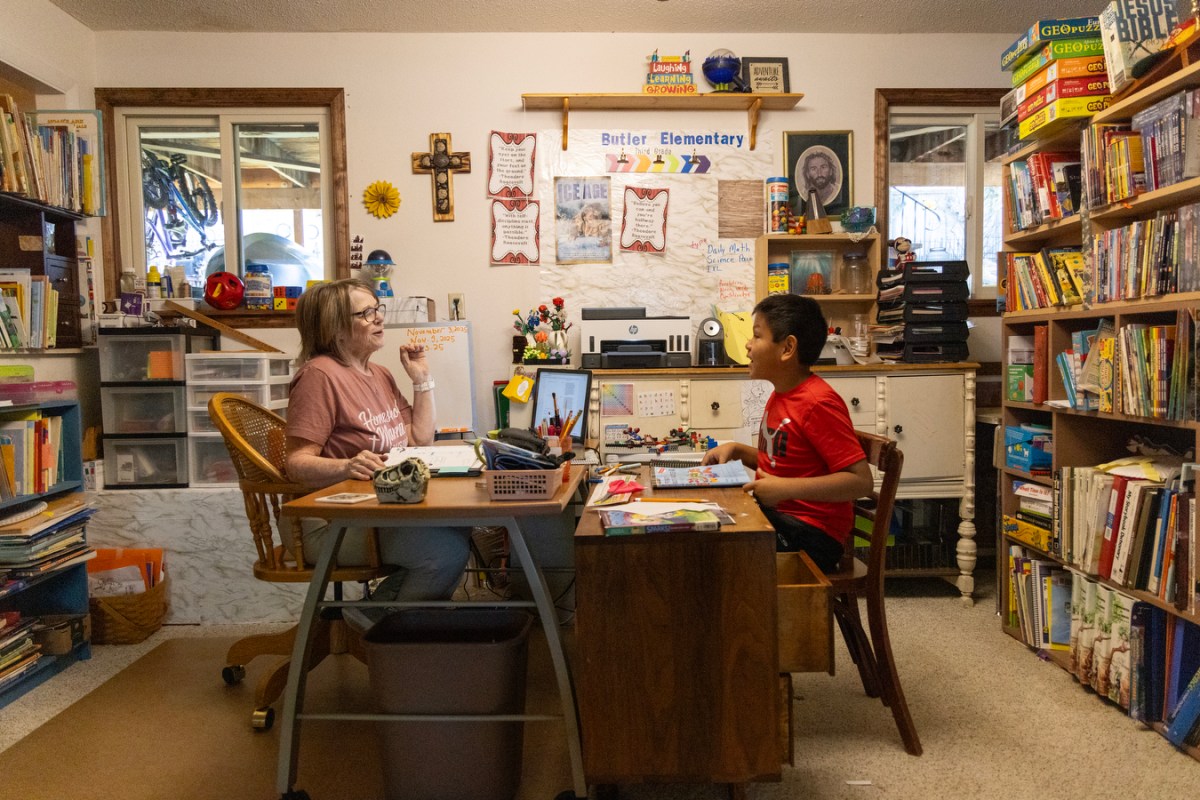
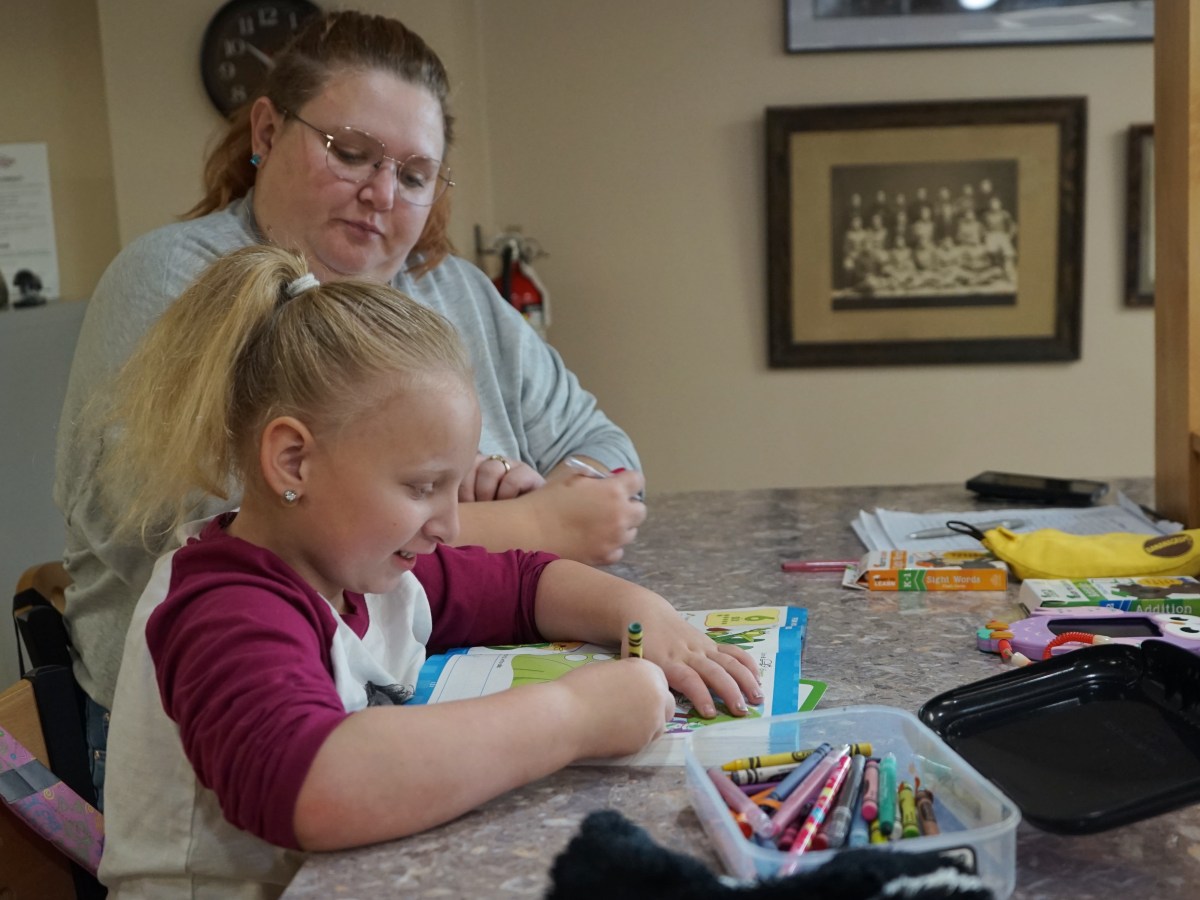
Thursday’s ruling reversed that injunction, which had barred Superintendent of Public Instruction Megan Degenfelder and other state officials from distributing money for the program. At the time, roughly 4,000 Wyoming families had applied for the Steamboat Legacy Scholarship, which provides $7,000 per child in public money for private education costs, including tuition and tutoring. There is no income limit to receive public dollars.
The justices sent the case back to the lower court for “further proceedings consistent with this opinion.”
“This is a big win because the Wyoming Supreme Court made clear what we have known all along—this is not a school finance case,” Degenfelder said in an emailed statement. “This supports our case in district court, which we will continue to diligently pursue. This is also a big win for Wyoming families and students who will enjoy expanded academic freedom and school choice as the ultimate decision on the case is made.”
The Wyoming Department of Education will immediately begin reopening the voucher program, and parents will see a call for applications soon for the next school year, she told WyoFile.
The Wyoming Education Association, which represents the state’s teachers and other educators but is not a formal union, is among the plaintiffs challenging the voucher program. In a statement released Thursday afternoon, the group said the new ruling will allow, at least for now, “public taxpayer funds to be spent on private schools – in conflict with the Wyoming Constitution – and not spent on the more than 95 percent of Wyoming students who attend public schools.
“And our state’s public schools continue to be the ones who suffer,” the statement continued. “Right now, they are being told there is not enough money for student activities, athletics, music and arts programs, or nutrition services. These are programs that help students succeed academically, stay engaged in school, and remain connected to their communities.”
A question of harm
The plaintiffs in the case also include a group of parents whose children attend Wyoming public schools. Several of the children receive accommodations for disabilities.. Their parents contend their children would be harmed because private schools that receive public money through the program can refuse admission to children with disabilities and are not required to provide special education services.
Other parents involved in the lawsuit have children who identify as queer, non-binary or transgender. Those parents argued private schools would refuse to admit their children.
But in an opinion authored by Chief Justice Lynne Boomgaarden, the high court noted that the plaintiffs in the case did not intend to use the education savings account program at issue.
“The individual plaintiffs have not removed their children from the public school system and do not intend to do so,” Boomgaarden wrote. “There is no indication in the record that they would remove their children from public school but have not done so because of the admissions policies of certain private schools. Their claim of possible irreparable injury rests on the existence of policies they have not and do not intend to encounter.”
The high court also examined whether the Wyoming Education Association, along with the parents suing the state, would be collectively injured if the education savings account dollars were distributed now.
The lower-court judge had noted the Wyoming Constitution includes an expansive right to education that benefits all citizens. Judge Froelicher relied on a 2003 case that found the education association and a separate group of parents could challenge the sale of state school lands without a public auction, according to the Supreme Court ruling.
This matter is different, Boomgaarden wrote, because the dollars for education savings accounts come from the state’s “general fund and do not affect the school funding model or the permanent school fund.”
Constitutional concerns
The courts must still decide the broader legal challenge against education savings accounts. The Supreme Court ruling only affected an injunction blocking the allocation of funds amid legal proceedings.
The lawsuit alleges that the universal voucher program violates the Wyoming Constitution by “funding private education that is not uniform and that meets none of the required constitutional standards for education.” Additionally, the plaintiffs maintain the program is unconstitutional because it allows the state to spend public money on private entities beyond the necessary support of the poor.
In Thursday’s ruling, the Wyoming Supreme Court noted it has not formed a final opinion on the merits of those constitutional claims. Still, the justices did raise questions about Judge Froelicher’s legal analysis so far in the case.
First, the high court noted that “the Plaintiffs have failed to allege, and the district court failed to explain, how the [Steamboat Legacy Scholarship Act] infringes on their right to education.”
Second, the justices raised questions about Froelicher’s conclusion that the plaintiffs would likely be able to show the law runs afoul of a constitutional prohibition against spending public money for “charitable, industrial, educational or benevolent purposes to any person, corporation or community not under the absolute control of the state.”
“Without demonstrating how this language is ambiguous, and absent any
dispute that the Act appropriates money to the steamboat legacy scholarship program account controlled by the Superintendent, we question the court’s authority to venture beyond [that section of the constitution’s] plain language,” the Supreme Court ruled.

“COINCIDENCE or TACTIC”
“The ENDS JUSTIFY THE MEANS” and Wyoming is going to be the PRECEDENT for the Nation as the WHOLE…
We must never forget history because we’ll be doomed to “REPEAT IT”, what IS going to be real interesting is no matter “LEFT or RIGHT” going to remember this day and date across all “class(es)”…
I happen to Love chez and crackers with whine… Soon the whine will be across the class(es) of what “government” are we COLLECTIVELY?
I HAVE always never to be so EDUCATED/WISE I could not chew gum and walk at the same time… SOON the CLASS(ES) will get a chance to see how this applies because there is/was a saying that went something like this give a homosapien enough rope it will “hang itself” metaphorically but I believe you get the/it’s meaning…
YES it is INCREDIBLE how much whine there is and I can not afford enough chez and crackers to enjoy it but maybe I/we should BREAK OUT the POPCORN… THE MEANS JUSTIFY THE ENDS… There are homosapiens enjoying us/we fighting for crumbs… SEMPER FI!
The following is a copy of WY Constitution’s salient section:
Text of Section 8:
Distribution of School Funds
Provision shall be made by general law for the equitable allocation of such income among all school districts in the state.� But no appropriation shall be made from said fund to any district for the year in which a school has not been maintained for at least three (3) months; nor shall any portion of any public school fund ever be used to support or assist any private school, or any school, academy, seminary, college or other institution of learning controlled by any church or sectarian organization or religious denomination whatsoever
WILL THE STATE MONITOR THE HOME SCHOOLERS Curriculum to ensure it follows the public curriculum exactly?
I still firmly believe this is 1)unconstitutional, and 2) deprives our public schools of critical revenues. But I guess the religious right prevailed and the Supreme Court agreed, so that’s that. In my opinion, if you want to educate your child in a private or “home” school, you should pay for it. Separation of church and state is and has been under attack for some time.
Is my understanding correct that the Wyoming Supreme Court has yet to rule on the Constitutionality of using public dollars to fund private schools?
Looks like Degenfelder is working for the Teton billies.
Though I have many complaints about public education in general in the past thirty years or so, I have always been under the impression that our tax dollars are to pay for PUBLIC EDUCATION. I must be confused. To be clear though, Im not willing to pay for individuals to use my tax dollars for their personal use.
Does anyone in wyoming read our constitution? So do people in wyoming think that our state has an endless supply of money? Are we really the Equality state?
We need to have real solutions for our state.
This is how democracy and democratic rights die… turning education over to the flat earthers, the book-banners, the anti-science, (and dare I say) the anti-DEI crowd. Why am I not surprised that Degenfelder is pleased?
Well this is one way to scam money from the state with out accountability these conservatives are becoming democrats
This is in direct violation of one of the most important points in the founding of the United States of America: Seperation of Church and State