

This story discusses suicide. If you or someone you know is having suicidal thoughts, call or text the Suicide and Crisis Lifeline at 988.
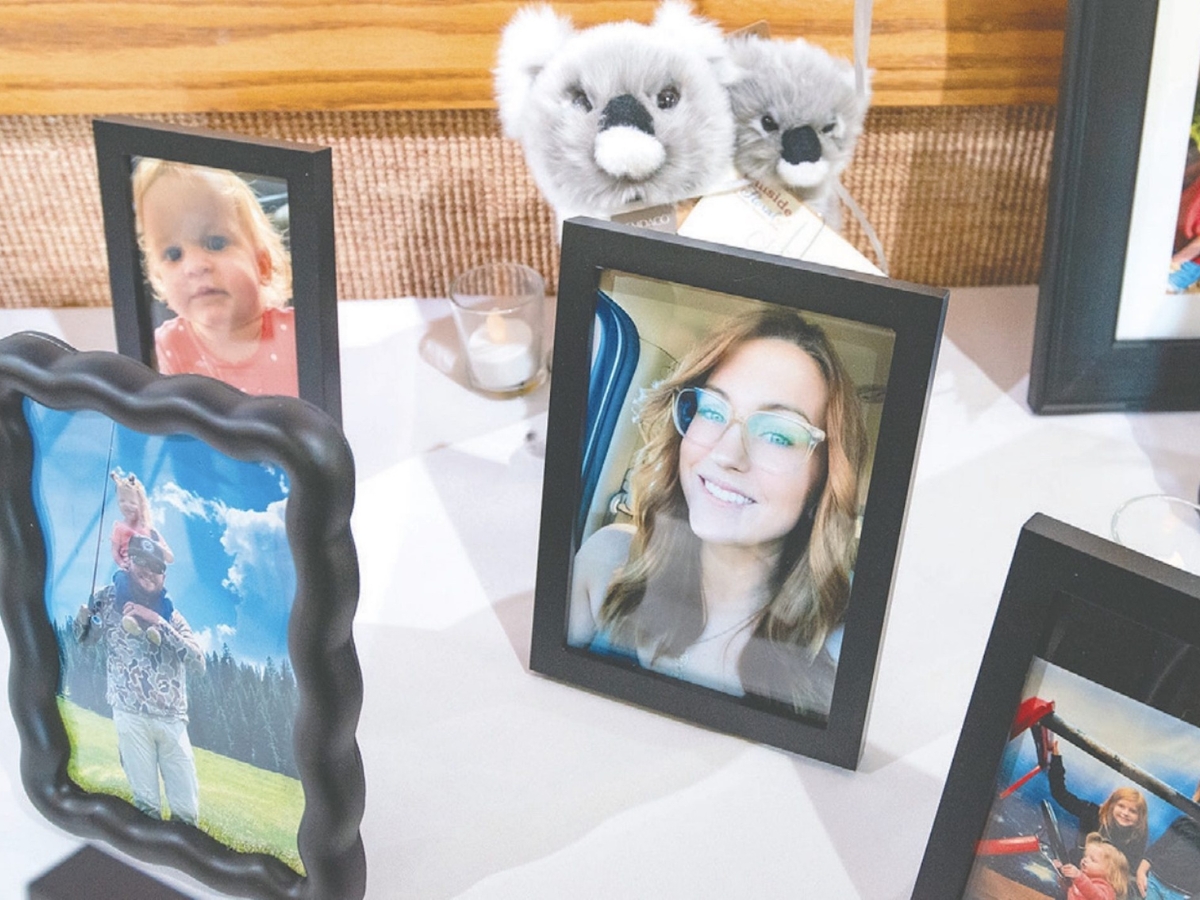
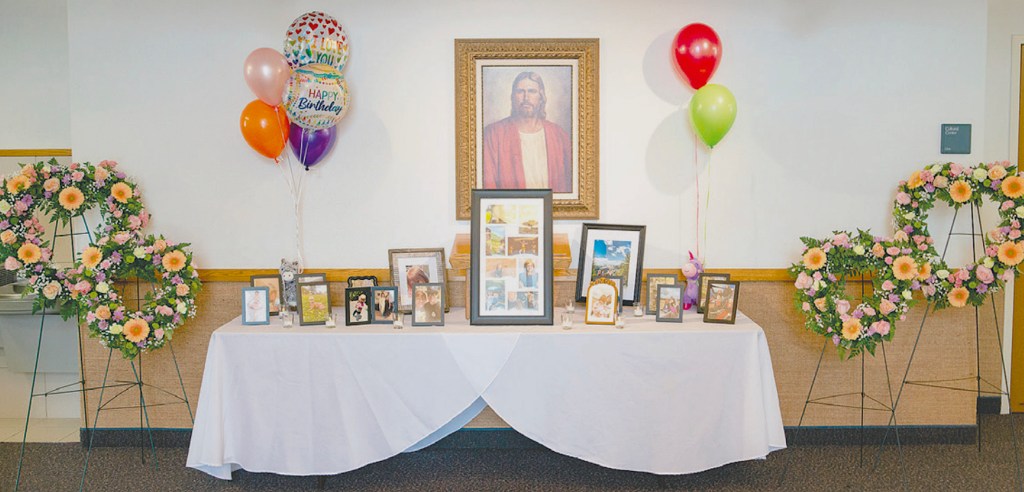
The mother of a Byron woman who killed her four children and then herself has sued a psychiatric clinic in Cody, alleging improper use of ketamine led her daughter to commit a murder-suicide that horrified Wyomingites this past winter.
The lawsuit, filed Monday, alleges that Sage Psychiatry Services allowed Tranyelle Harshman to take ketamine — a powerful anesthetic increasingly used to treat depression and post-traumatic stress disorder — at her home, against best practices for prescribing the drug.
The lawsuit dovetails with some conservative lawmakers’ growing interest in how psychiatric drugs are used in Wyoming, including more traditional anti-depressant and anti-anxiety medications. (Harshman was also taking an anti-anxiety drug at the time of her death, according to the coroner’s toxicology report.)
Harshman was in treatment for post-traumatic stress disorder and postpartum depression, according to the lawsuit.
After taking ketamine at home this February, the lawsuit alleges, Harshman shot her four children and herself “while in an altered or dissociative mental state.” The suit accuses the clinic of negligently assessing the young mother’s suitability for ketamine treatment and failing to monitor her use of the drug.
Lawmakers on the Joint Labor, Health and Social Services Committee held a hearing earlier this summer exploring whether psychiatric drugs play a role in Wyoming’s high suicide rate or in acts of extreme violence like Harshman’s murder of her children.

Health department officials, and practitioners, have in turn urged caution about drawing too sweeping a correlation between the use of certain drugs and tragic consequences.
“This is sad on so many levels, but I don’t want to scare people away from ketamine, ketamine is a great drug,” Tracy Richard, a southeast Wyoming-based nurse anesthetist who administers the drug in a clinical setting and opposes nearly all at-home use for psychiatric treatment, told WyoFile. “We don’t know what happened with this person and there’s just so much that goes into this.”
The attorney representing Harshman’s mother said the way ketamine was administered, and not the drug alone, drove the lawsuit.
“The purpose isn’t to demonize ketamine,” Sean Olson, the Colorado-based attorney leading the case, told WyoFile in a phone interview Wednesday. “The goal here is to make sure this kind of thing never happens again. Ketamine is a dangerous drug and obviously it’s becoming more common in terms of its medical uses … it’s important to follow the guidelines so that it’s used safely.”
Sage Psychiatry Services did not respond to a voicemail from WyoFile seeking comment Wednesday.
Ketamine was developed as an anesthetic, and its use as a therapeutic drug is a fairly unregulated area of practice, Shannon Hughes, an instructor at Colorado State University and therapist who advocates for psychedelics and drug policy reform, told WyoFile. There are a variety of ways people can get ketamine for at-home use, Hughes said, including through telehealth programs. But it is very much considered best practice to take it in a clinic and under supervision, she said.
“These drugs alter your behavior,” Hughes said. “That’s what they do. And that’s why you need close monitoring when you start any kind of medication.” All psychiatric drugs carry risks, Hughes said, and many of those risks include suicidal or violent thoughts.
On the other hand, she said, ketamine leads to lasting improvements for some people who otherwise would be tied to antidepressants indefinitely. Therapists who give ketamine to their clients during sessions can spur lasting breakthroughs in addressing the root causes of someone’s depression, she said.
“For some people ketamine is a real game changer,” Hughes said.
There’s also evidence that ketamine can have “a significant therapeutic effect” at depressing suicidal ideation, according to an analysis published in the peer-reviewed journal Nature.
Medical boards and other regulatory bodies may want to issue more uniform guidelines for the use of ketamine, Hughes said. “Until then, it’s kind of the wild west,” she said. Richard also described ketamine therapy as a “wild west,” and said the increasing ways to get ketamine for home use – a technique she strongly opposed for psychiatric treatment – worried her. But she questioned whether Wyoming lawmakers had enough information to take on the topic of psychiatric drugs.
In the weeks immediately after the murder suicide, Harshman’s husband raised his own concerns that his wife’s toxicology report would give the public the wrong impression. “This isn’t a chance to demonize different therapies,” Cliff Harshman told a reporter for Cowboy State Daily, “this works for a lot of different people.”
Rep. Paul Hoeft, a Republican whose Park County district includes Powell and abuts Byron, is bringing a draft bill to the committee’s October meeting that would require the state to better catalogue when suicide victims or perpetrators of severe violent crimes have psychiatric drugs in their systems.
Though that information is already often collected through coroner’s toxicology reports or law enforcement drug testing a criminal suspect, Hoeft seeks to create a centralized database to track correlations.
“There’s some concerning associations going on between psychotropic medications and violent outcomes which we’ve seen recently, and which has prompted this lawsuit,” Hoeft told WyoFile.
To his knowledge, lawmakers aren’t moving to regulate use of psychiatric drugs, Hoeft said, but instead want to gain more information about possible connections to violent deaths.
Hoeft’s bill came out of the committee’s June meeting in Casper, where lawmakers questioned county coroners and Wyoming Department of Health officials about whether psychiatric drugs were driving suicides or homicides. Two county coroners told the committee they conduct a toxicology report on every death, but that it’s beyond their ability or role to determine whether psychiatric drugs spurred someone to act.
“Neither one of the medications that she was on ended her life,” Fremont County Coroner Erin Ivie said at that meeting. “And so for our purposes the question is: What is the cause of death? The cause of death is a gunshot wound. What’s the manner of death? Suicide. She did this to herself. What’s the manner for the other people? [Harshman’s four children.] Homicide.”
Wyoming Health Department Director Stefan Johannson cautioned lawmakers seeking to draw correlations from Wyoming’s suicides or homicides alone. Even though the state has a high suicide rate for its population, the overall number of deaths produces a low sample size to look for the correlations described by Hoeft and other lawmakers, Johannson said.
“I would just caution that drawing lines of causation is very difficult when our numbers in Wyoming … are so low, and you try to draw connections or correlations between chemicals that might have been present,” he said.
This story has been updated to better describe Tracy Richard’s medical qualifications and clarify that she opposes at-home use of ketamine for psychiatric treatment, as opposed to in the case of a pain management program. -Ed.


The purpose of the suit is to compensate for loss but it SHOULD also be to demonize this horrible substance. “Ketamine” is a euphemistic name cooked up to mask that this IS dope as the other reader says. It was known as PCP or angel dust when I was a youth, and I watched it destroy people. “Ketamine therapy” is nonsense; it’s not a therapeutic drug. PCP was originally developed as an animal tranquilizer, and was not made for human use. Look what “ketamine therapy” did to Matthew Perry. Stop allowing the peddling of this dope; just stop now.
This is sad. The practice of handing out dope to deal with depression needs to stop. Counselors need to be active Counselors and admit people if they need it.