


Wyoming’s top environmental office has approved a “section 401” water quality certificate for Black Canyon Hydro’s controversial Seminoe pumped water storage hydroelectric project in Carbon County.
It’s the largest state-level permitting milestone for the project, which still awaits final approval from federal regulatory agencies, including the Federal Energy Regulatory Commission.
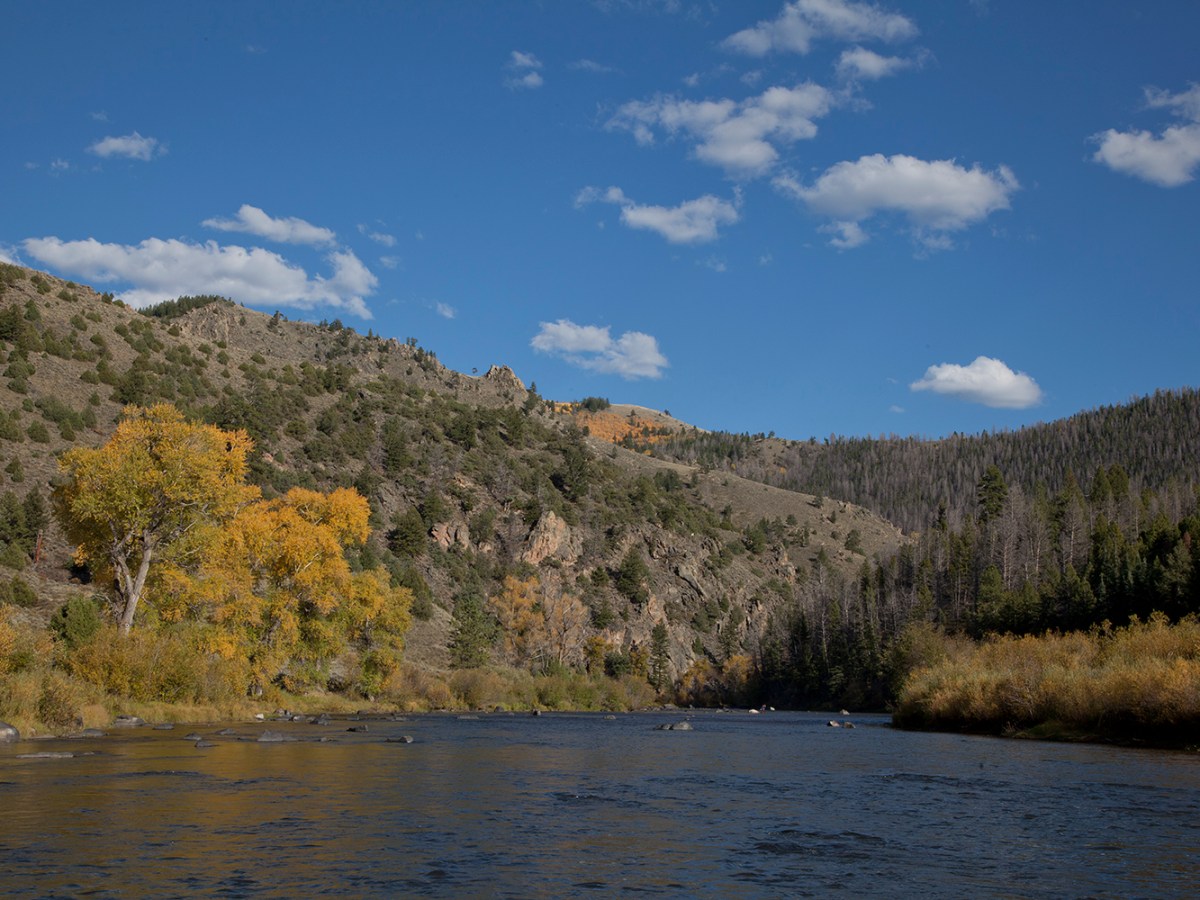
The Wyoming Department of Environmental Quality issued the certificate Thursday, underscoring its intent to, among other things, maintain the viability of the world-class Miracle Mile trout fishery. The cherished stretch of the North Platte River is immediately downstream of the Kortes and Seminoe Reservoir dams, and it’s designated as an Outstanding Resource Water.
That designation, according to DEQ, requires “no further degradation from human activity,” resulting in stringent thresholds and triggers that are “enforceable conditions of the certification” and could curb the facility’s operations if exceeded.
Though he was still reading through the 19-page certificate and 115-page “adaptive management plan,” Trout Unlimited’s Patrick Harrington said he’s generally pleased with the DEQ’s effort to solicit public comments and incorporate much of that feedback into its ongoing oversight of water quality related to the project.
“There were modest improvements, which is good,” Harrington told WyoFile on Friday. “There are still big picture things missing, like a full operational shutdown, which is something that we explicitly asked for.”
The primary water quality concerns, according to DEQ and many stakeholders involved in the process, are turbidity from daily water flushing operations and the potential to raise water temperatures — especially in the Miracle Mile. Trout are a cold-water species and particularly sensitive to warmer temperatures. Groups like Trout Unlimited and Friends of the North Platte have warned that even one day of higher-than-tolerable water temperatures could result in a devastating fish kill.
It appears the state will impose temporary operational shutdown triggers when the Miracle Mile is susceptible to high water temperatures, Harrington noted. The Miracle Mile — and nearly every river and stream in Wyoming — are particularly vulnerable to trout-killing temps when flows are low and atmospheric temperatures are higher than average.
But the state mostly relied on historic water temperature variability data from a decade ago, Harrington said, and the outlook for the Upper North Platte River system has changed significantly since then. Scientific analysis has flagged the region as particularly susceptible to a warming climate — and that’s playing out in real time this year.
Wyoming just experienced its warmest winter in modern history, and its snowpack has been beyond dismal, including for regions draining into the North Platte River and its tributaries, according to local meteorologists and water watchers. In fact, the Wyoming State Engineer’s Office in February issued a “priority administration” order restricting diversions from the North Platte River and its tributaries from Guernsey Reservoir all the way upstream beyond Pathfinder Reservoir.
The federal Bureau of Reclamation is monitoring a situation that will likely require prescribed reservoir releases this year to meet legal water delivery protocols downstream.
“Both the mountains and the lower elevations in the [North Platte River] basin have had a scarcity of precipitation,” Bureau of Reclamation spokesperson Elizabeth Smith told WyoFile on Friday. “Snowpack is well below average, and the Upper North Platte Basin is in severe drought.”
Though dire and sure to cause a lot of pain for agriculture, fishing-reliant tourism businesses and municipalities — which are first in line ordered to shut off their North Platte River spigots, the Engineer’s Office has noted — Harrington said it’s an opportunity for DEQ to collect fresh data to potentially redial some of its water quality triggers for the project.
“They do talk about recalibrating the water quality model,” he said. “If that monitoring starts sooner rather than later, maybe we will capture some of that [data] and we’ll have a little bit more confidence” in DEQ’s adaptive management plan.
The state’s certificate is proof that the project will not impose any significant environmental threats, company spokesperson Brad Carl told WyoFile.
“It confirms that the project will comply with all water quality standards and establishes robust regulatory protections to ensure that there will be no impacts to the Seminoe and Kortes reservoirs or the Miracle Mile,” Carl said.
Water battery
“Pumped water storage” involves pumping water uphill during daytime “off-peak demand” hours for electricity when wind and solar power are plentiful and wholesale electricity is cheapest. The water is released to generate hydroelectricity during higher-demand hours in the evening.
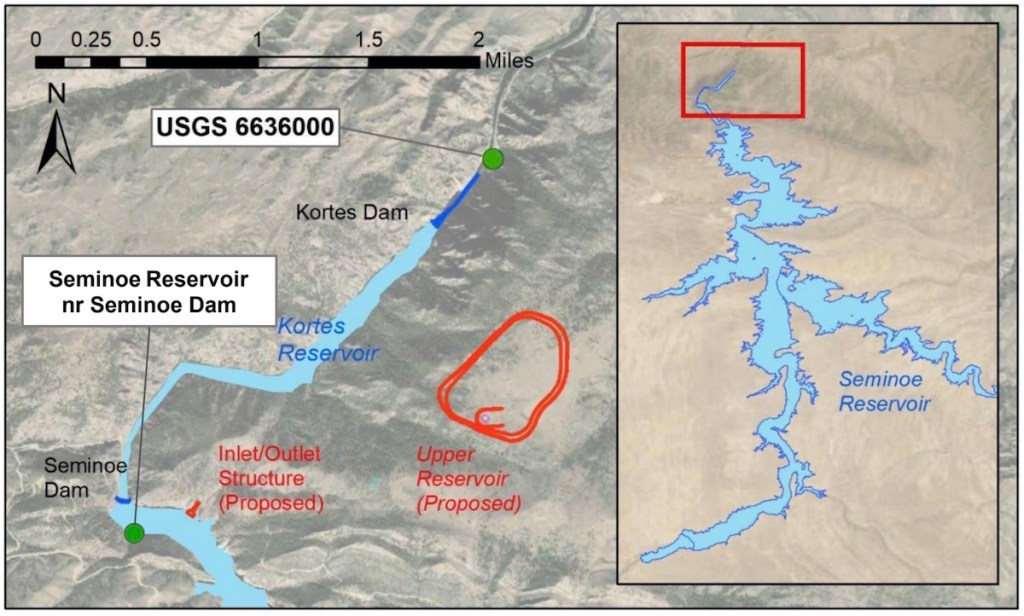
Black Canyon Hydro, a subsidiary of Utah-based rPlus Hydro, proposes building a 13,400-acre-foot reservoir in the Bennett Mountains overlooking Seminoe Reservoir near the dam — one of several reservoirs on the North Platte River.

The massive $3 billion to $5 billion project would serve as an “energy‑storage facility,” the company told WyoFile. “Think of it as a ‘water battery’ that stores energy generated when demand is low. When demand increases, water is released from the upper reservoir back into Seminoe, driving hydroelectric turbines to produce electricity.”
Wider concerns, and assurances
In addition to criticism from national and local outdoor recreation groups, the Casper City Council joined their Natrona and Carbon county colleagues in voicing concerns over the project. In addition to potential impacts to fisheries and aquatic life, they say it threatens important elk, mule deer and sage grouse habitat, as well as a vital bighorn sheep herd — all huge revenue draws to the region.
The estimated five-year construction timeline is a particular concern for the land-based resources because the company has asked federal regulatory officials for several exemptions to seasonal construction restrictions typically imposed to protect wildlife.
For its part, rPlus Hydro said it is committed to conforming both the construction and operation of the facility to minimize impacts.
“These [DEQ water quality] protections reflect our longstanding commitment to developing energy infrastructure in a manner that respects and preserves Wyoming’s natural resources while supporting the state’s economic future,” Carl, the rPlus spokesman, told WyoFile.
Click here to learn more about FERC’s review of the project.

“The state’s [Wyoming] economic future”? Why are out of state interests so interested in Wyoming’s economic future? Because they know that all government agencies in the state have their hands out for some kind of economic return, even if that return is highly unlikely to measure up to the supposed potential. It has been that way since the first, or maybe it was the second, oil strike at Midwest. Having read about this proposed “project” several months ago, I’m appalled that it has basically gotten the go ahead from Wyoming DEQ. Why is the only concern here for the Miracle Mile. Does no one care that this plant will probably suck Kortes reservoir dry, that pumping water uphill is like packing sand into a rathole, that the data DEQ used to give out this certificate is 10 YEARS OLD!! Hello? Mr Carl assures us that there will be “minimal impacts to the environment” that the 5-year build will be done in a manner that “respects and protects Wyoming’s natural resources” all the while DOING EXACTLY THE OPPOSITE. What kind of power lines are going to be strung across the area to send this “water battery” power out of state, because you know darn well it’s not being used for anywhere in Wyoming, just like all the wind and solar farms that are built for energy use by Utah, Arizona, California, Idaho, and who knows where else. And what kind of impact will it have on Seminoe Reservoir. In 2022 and 2023 the reservoir was so low, the boat ramps were 20-30 feet from their usual place. The water level could be even lower now since our historic driest winter since when, 1965? This plant should have never gotten past the glossy picture presentation stage. But since no outsiders seem to give a rat’s behind about what Wyoming spaces they can desecrate, why not also erect a data center next to it, since that’s the latest scam going around in the country. Anything about the environment: wildlife, air, plant, water, the people who LIVE here, lose out again. The impacts of this build will reach far past the Miracle Mile, the reservoirs and the myriad wildlife in the near area. I’ve been going to Seminoe since 2015. It’s an incredible off the beaten path place (a key description for outside agents looking to build something) with beautiful scenery. But as the water level has decreased dramatically, it’s a sad reality that water use is at a premium, and it’s not getting any better. But who cares, right? Let the hydroelectric plant go ahead and become the main subscriber to its water, what’s another 100 to 300 feet of surface loss. Trump’s agenda is for the U.S. to become “energy and technology independent” and so I guess since the elected reps in the state have grasped tightly to his coattails trying to fulfill that stance, even though he doesn’t cast a vote in this state, they should begin thinking twice about what the residents of the state really want before ruining every recreational site available. Hot Springs ring a bell? I agree with you, Luke, a lukewarm response is not what is required right now.
Kind of a lukewarm response by Wyoming Trout Unlimited…
Solar and batteries would be cheaper and you don’t need to foul any water.
“The state’s certificate is proof that the project will not impose any significant environmental threats, company spokesperson Brad Carl told WyoFile. “It confirms that the project will comply with all water quality standards and establishes robust regulatory protections to ensure that there will be no impacts to the Seminoe and Kortes reservoirs or the Miracle Mile,” Carl said.” After having spent 30 years with DEQ, I’m still laughing/crying at this statement. The “state certificate” proves that the numbers submitted by the company fall within the parameters of the water quality regulations, period. The quality of the numbers is suspect, as noted in the article, but WQD (staff) are limited by statute/regulation and pro-development management/government. I suspect the water quality and wildlife will pay the ultimate price in the long run. I saw no information regarding whether this is an energy positive system or project, I have my doubts, since past pump-back proposals I’ve seen could not met a net positive energy production. Wildlife exemptions speaks volumes about the company’s commitment to the environment and their future impacts on it. And finally, I saw no mention related to the significant increases in evaporation that will occur with the increased acreage of exposed surface water, not to mention the other points of water loss throughout a pumping system. This project is good for rPlus Hydro and horrible for Wyoming.
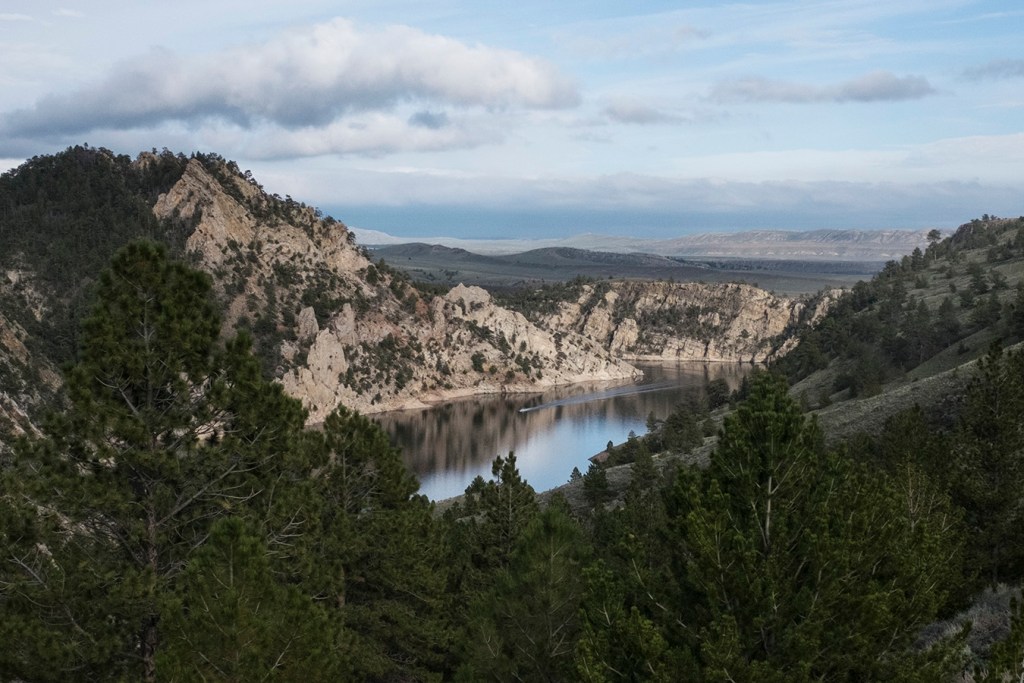
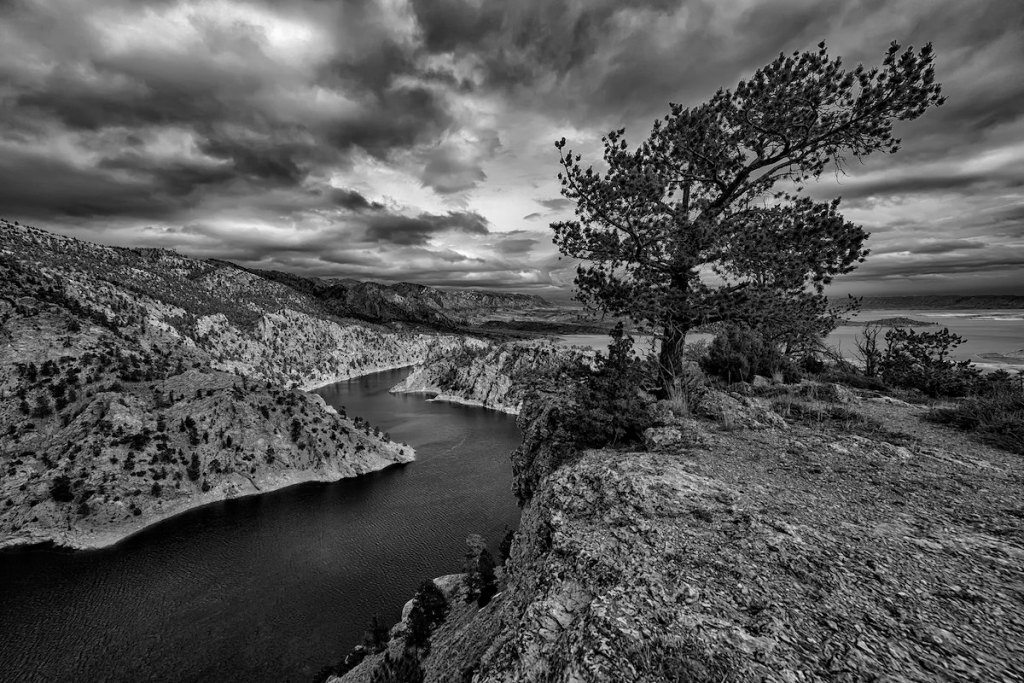
While a helpful article, it failed to point out the sole purpose for this project is to store Green energy from wind farms near Medicine Bow and use this “water battery” to return that electricity when the wind isn’t blowing. Also, a couple minor errors in your photo captions. The dam in Dorgan’s photos is Seminoe Dam, not Kortes, and Schroetlin’s photo also shows the same part of Seminoe Reservoir, not the Miracle Mile, which starts a few miles lower below Kortes Dam (see the DEQ map in the article). While water quality is a major issue, others include impacts on an important bighorn sheep herd, recreation, and also sage grouse (from the new powerlines needed to connect to the windfarms).
Good explanation, Dustin. Thank you.
Mr. Carl of rPlus Hydro, the developer, assures us that the company “…is committed to conforming both the construction and operation of the facility to minimize impacts.” But, at the same time, the company has asked federal regulators to exempt it from “…several exemptions to seasonal construction restrictions typically imposed to protect wildlife.” How is this not a contradiction? Perhaps Mr. Carl is unaware of his company’s request. If you get a chance, Dustin, would you please ask him about this?
One more thing: does Wyoming Game and Fish Department get to weigh in on this project?
Why even have a state DEQ? They’ve proved time and time again in the oil patch that water quality is not a priority.
I have to admit that my gut reaction to this project is “Don’t mess with the Miracle Mile”.
But beyond that, and please correct me if I’m wrong, I haven’t seen a compelling case made that the electricity that would be produced is actually needed, beyond the hand waving that more energy means more jobs, etc. Or if it is needed, that it can’t be provided by other means that would not risk damage to this unique fishery and ecosystem.
My takeaway is therefore that this is an unnecessary money-making project that many are opposed to. Why is it still being considered?
Evidently very little concern for the state’s healthiest Big Horn sheep population.