


Editor's note
This story is part of an ongoing collaboration between WyoFile and the Jackson Hole News&Guide.
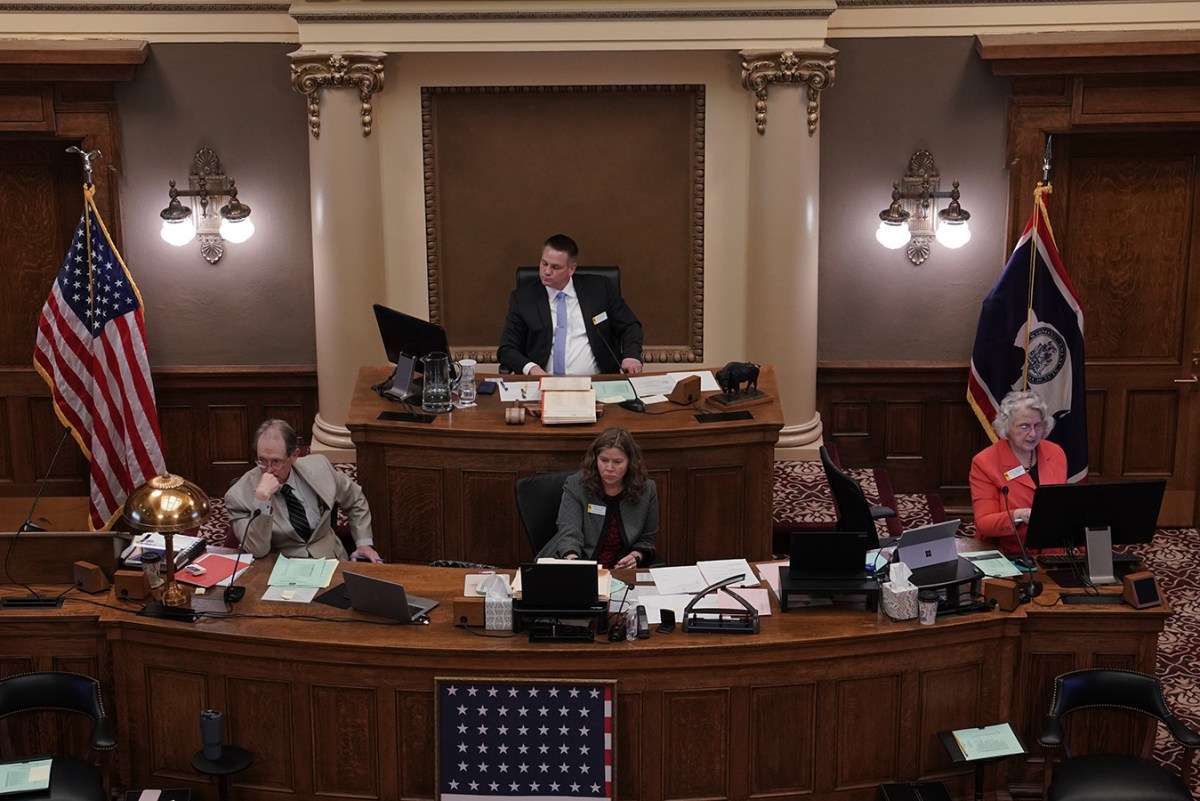
CHEYENNE—One after another, lawmakers in the Wyoming Senate on Monday said they support legislation that would prohibit housing mitigation fees in the state.
But one after another, those same lawmakers argued against enacting the measure this session because of the perceptions surrounding it and a controversy that’s come to dominate this year’s budget session.
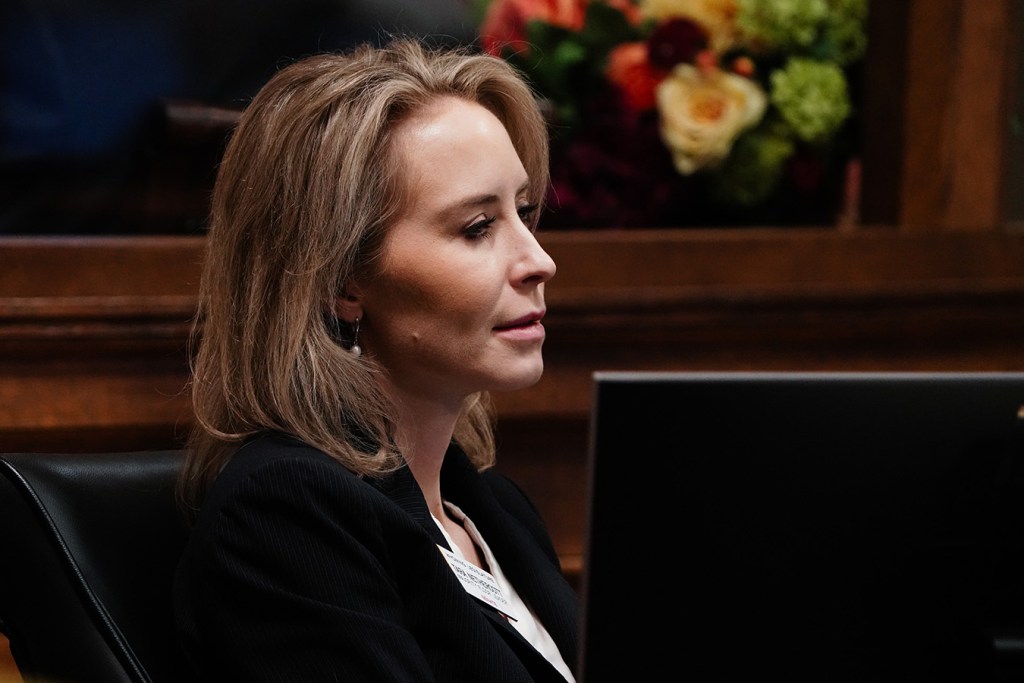
“It’s become something else entirely,” Senate Majority Floor Leader Tara Nethercott, a Cheyenne Republican, said during Monday’s debate.
Shortly after, the Senate voted 24-7 to block the bill from advancing any further this legislative session.
Sponsors of House Bill 141, “Fifth Amendment Protection Act,” have said the legislation is needed to protect private property rights by limiting local governments’ ability to charge mitigation fees that fund affordable housing programs. Teton County, the only local government in Wyoming that now charges such fees, has used those dollars to build more than 400 homes in the last 30 years.
House Bill 141, however, plunged into controversy after Rebecca Bextel — a Teton County GOP committeewoman who calls herself “the public face” of opposing such mitigation fees — handed out campaign checks from a Jackson donor on the House floor on the 2026 legislative session’s first day. Two days later, a Jackson democrat raised the check passing during a discussion of HB 141, arguing it made consideration of the bill improper.
The controversy spurred new rules in the Wyoming House and Senate, an executive order from the governor’s office, a House investigation and a yet-to-be-completed law enforcement inquiry into whether the checks amounted to bribery. Bextel and the lawmakers who took the checks maintain they’ve done nothing wrong, and no rules existed at the time that prohibited such behavior. The House members who took checks have said the donations did not influence their votes on HB 141 or any other legislation.
All 31 members of the Senate signed a letter condemning Bextel’s actions.
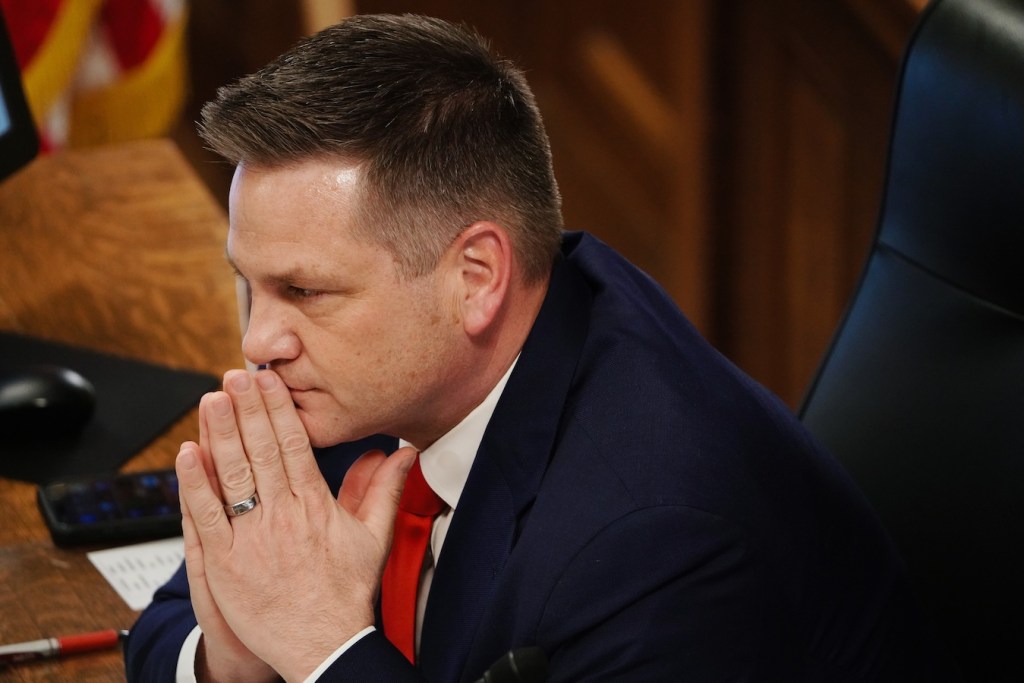
On Monday, Senate President Bo Biteman, R-Ranchester, said he had no choice but to ask the upper chamber to make a decision on the bill.
While Biteman said he supports banning mitigation fees, he said House Bill 141 had become “tainted by a cloud of suspicion and mistrust.”
“Our Senators are now put in a position to either have their integrity questioned by voting for a bill currently under investigation for potential bribery, or to vote against a bill they believe in because of the actions of political agitators who can’t get out of their own way,” Biteman said.
“I should have never let this bill out of my drawer,” he said.
Last week, after the House passed HB 141, Biteman assigned the legislation to the Senate Appropriations Committee. Monday marked the deadline for bills to be reported out of committee in the second chamber. As such, Biteman brought a motion to do several things, including to recall the bill to the Senate floor for a vote.
Biteman said the motion was not entirely his idea.
“This weekend, a group of senators, who do not live in the county in question, decided that despite this cloud of suspicion, it was critical that this vote happen,” he said.
Sen. Cheri Steinmetz, R-Torrington, seconded Biteman’s motion to recall the bill, which she sponsored.
“Let me say this plainly,” she said. “I will not cave to threats, whether whispered or shouted, that senators will be investigated for voting on legislation.”
“A Legislature that can be threatened into silence is no longer a Legislature,” Steinmetz said. “It becomes a rubber stamp.”
The real wrongdoing, Steinmetz said, “would be for us to refuse to vote on legislation designed to protect private property from being taken without just compensation.”
Steinmetz and six other Senators voted to move the bill forward in the legislative process. Twenty-four others voted against doing so, effectively killing HB 141.
How we got here
On Feb. 23, the House voted 35-17 with 10 lawmakers excused to send the bill to the Senate, but not before considering whether to first wait until the House committee charged with investigating the checks concluded its work.
In Teton County, where mitigation fees are intended to offset the impact of development by helping to fund affordable and workforce housing programs, developers get a choice. If they do not pay the fees, they can build housing instead. The program has been controversial. It’s faced legal challenges and past legislative attempts to squash it.
Rep. John Bear, R-Gillette, the main sponsor of HB 141 and a leader in the Wyoming Freedom Caucus, has said such fees and conditions violate the takings clause of the Fifth Amendment to the U.S. Constitution, which says “property shall not be taken or damaged for public or private use without just compensation.” Bear received a check from Bextel, but not on the House floor.

This session is not the first time Bear has taken interest in the issue. In May, Bear traveled to Jackson to watch commissioners consider development in Northern South Park. Joined by other Freedom Caucus members and allies, Bear also attempted to ban mitigation fees in an unrelated bill last year. That bill failed.
Bextel supported HB 141 and has long criticized the program, calling the fees unconstitutional.
This year, when the House debated introducing HB 141 on the session’s third day, Rep. Mike Yin, D-Jackson, brought up the checks on the floor, saying they’d been handed out by a “specific person in Teton County” who was backing the bill.
Based on that fact and the “optics,” Yin questioned whether the bill should advance any further.
While Bear and House leadership shut down the conversation at that moment, the Jackson Hole News&Guide and WyoFile later reported more details, including the name of the Teton County donor, Don Grasso, and the 10 individuals Grasso said he intended to support. Grasso also said he expected Bextel to mail the checks.
About a week and a half later, Yin urged the lower chamber to stop considering HB 141 until the House Special Investigative Committee finished its work. Many of his House colleagues were skeptical.
“It’s innocent until proven guilty,” Rep. Clarence Styvar, R-Cheyenne, said.
On Feb. 19, Yin’s motion to delay consideration of the bill failed 45-13, with four lawmakers excused. Throughout the rest of its time in the House, lawmakers debated housing policy as well as the constitutionality of mitigation fees.
In the Senate
Ahead of Monday’s vote, Senate leadership, including Nethercott, had already expressed reservations about the bill. Nethercott said she was uncertain whether the bill would survive the upper chamber.
“These are the unintended consequences of poor behavior,” Nethercott told a reporter on Feb. 18. “It’s probably best in the interest of transparency and the institution to not take up that bill and have anyone feel compelled to vote for it or not vote for it for the wrong reasons.”
As Senate Majority Floor Leader, Nethercott works with the Senate President to decide what order bills are heard in the Senate. In Monday’s debate, Nethercott reiterated her opposition to bringing the bill to the floor.
“I know you want this to be about private property rights, but that just isn’t the case,” Nethercott said.
“The bill is now about threats, and intimidation, and money. That is not how the Wyoming Legislature conducts its business. We have to resist these behaviors,” Nethercott added. “I have been threatened. I have been intimidated. And I have been coerced to vote on certain pieces of legislation, and that conduct has continued aggressively in the last few years. We must resist.”
Meanwhile, Baggs Republican Sen. Larry Hicks, a sponsor of HB 141, said lawmakers were dealing with two separate issues that needed to be separated.
One was a policy issue, Hicks said, while the other was the legal process.
“We should not conflate those two when in fact what we may be very well doing is called ‘guilt by accusation,’” he said.
Instead, Hicks said he hoped the Senate would look at its “constitutional obligations to protect private property rights.”

Another bill sponsor, Sen. John Kolb, R-Rock Springs, said he still “agreed with the intent of the bill,” but “there’s a bigger problem here.”
“It’s about what the public thinks. It’s not what I think. It’s not what we all know and hear as members of this body. We understand, probably, the ins and outs of this, and we have integrity. I understand that. I believe my fellow legislators have that,” he said.
It’s beyond that, though, Kolb said. “This has gotten blown up. It’s turned into public perception,” he said. “And public perception rules.”
This is a breaking news story and may be updated.



Glad to see this bill got defeated. I especially enjoy this moment knowing that those ten $1500 checks were designed to get the bill passed. Instead the $15,000 “investment ” killed it. No question that was a way to buy votes and SO grateful the moment was caught on camera.
I take Cheri Steinmetz’s assertion that « A Legislature that can be threatened into silence is no longer a Legislature,” “It becomes a rubber stamp.” holds true for our federal legislature, which is constantly under threat of being « primaried » by the Trump administration there by making them a « rubber stamp ».
Just a glimpse of the Freedom Caucus and their workings. I am thankful this all came out so people can see it!
I guess this way you at least you know who bought your senators.
Maybe it is time for transparency around the dark money that now so deeply influences Wyoming’s political process. Checkgate was a glimpse of how things work. Daylight killed HB 141.
One person, one vote. So much better than lotta bucks, lotta votes.
Kind of amazing that this rich donor may have single handedly killed the very bill she was trying to get passed. Hubris is dangerous