

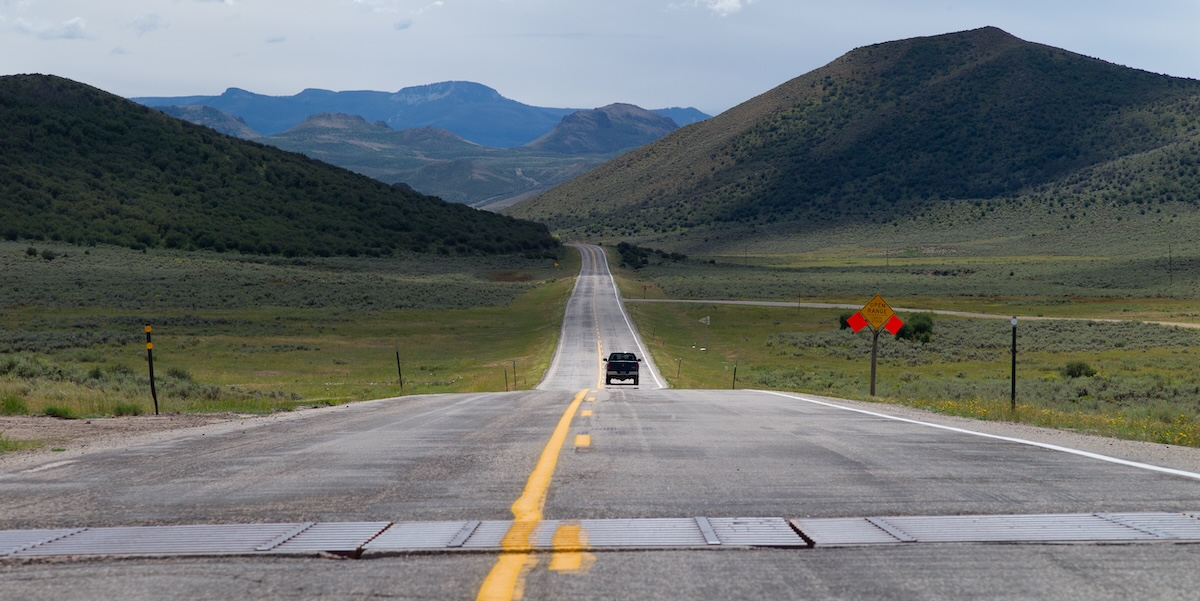
Be it sports teams traveling to tournaments, long-haul trucks traversing Interstate 80 or workers heading across the state for meetings, long drives are as much a part of life in Wyoming as the wind.
And yet, Wyoming faces a significant funding shortfall that poses steep challenges in maintaining and improving highways, bridges, overpasses and other infrastructure. Without the ability to make needed repairs now, the state will likely face larger and more costly reconstruction projects in the future.
That’s the conclusion of a new report released Wednesday by TRIP, a national transportation research nonprofit.
“Due to a lack of adequate funding, [Wyoming officials] are anticipating to see some deterioration of major roads and bridges,” said TRIP’s Director of Policy and Research Rocky Moretti.

The report also identified the top 25 projects that Wyoming needs to tackle to improve safety. “Unfortunately, the resources for the actual construction of those projects currently are lacking,” Moretti said Wednesday during a virtual press briefing.
Flat revenue streams coupled with inflation in construction costs have exacerbated the issue, Wyoming Department of Transportation Director Darin Westby said. The situation forced the department into a “preservation-only” mode years ago, Westby said, which inhibits planning, designing and implementing crucial projects.
That approach is unsustainable, he added.
“We can’t keep putting lipstick on that pig and thinking that it’s going to last forever,” Westby said.
Unfunded needs
Local, state and federal governments fund Wyoming’s transportation projects. Compared to the national average and relative to surrounding states, Wyoming is heavily reliant on federal funding.
State-level highway user fees, including fuel taxes, vehicle registrations and driver license fees, contribute to the funding streams. Wyoming’s state fuel taxes for gasoline and diesel are the lowest of the six surrounding states, the report states.
As of 2019, WYDOT’s unfunded needs were estimated at $400 million a year, Westby said during the Wednesday press event. Fast forward to today, he said, “we’re sitting at about $600 million.” Road needs comprise roughly half of that, he added, with the other half related to administrative duties.
TRIP continually monitors funding conditions across the country, Moretti said, and initiates research projects when it identifies significant funding gaps. That’s what led to the latest report.

“It was clear that the state was really challenged to move forward with a number of projects, and so we offered to prepare this report,” he said.
The report drills down on the state’s needs and challenges. Some of the takeaways include:
- In 2025, 33% of Wyoming’s state-maintained roads were in poor condition. WYDOT estimates that by 2028, that will grow to 37%, with nearly 250 additional miles of roadway falling into poor condition.
- WYDOT estimates that under current funding constraints, between 2024 and 2028, the number of state-owned bridges in poor condition is projected to increase by 54% (from 80 to 123).
- After spiking in 2022 and 2023, the state’s traffic fatality rate fell in 2024 to 1.12 fatalities for every 100 million miles traveled — lower than the national average of 1.2.
- Approximately 148,000 full-time jobs in Wyoming in industries like tourism, retail sales, agriculture and manufacturing are dependent on the state’s transportation network.
- With $61 billion of goods shipped annually to and from sites in Wyoming, the state’s economy depends heavily on the reliability of the transportation system.
Renny MacKay, director of the Wyoming Business Alliance, echoed transportation’s role in the state’s business landscape.
“It impacts all of our members,” MacKay said, “and they all know how important roads are to their business and to the safety of their employees, to the safety of their families and the safety of their customers.”
Top 25 list
The report lays out the 25 projects it deems as most important to improve safety, reliability and condition of Wyoming’s transportation system. Regular drivers in the state will no doubt recognize familiar bottlenecks, constraints or dangerous stretches in this list — from tight curves in Wind River Canyon to commuter traffic jams into Jackson.
No. 1 on the list is to reconstruct and redesign the interchange between I-80 and I-25 in Cheyenne, a $500 million project. No. 2 is widening U.S. Highway 287 from Laramie to the Colorado state line, a $59 million project. No. 3 entails improvements along 200 miles of I-80 — including truck climbing zones, variable speed limit zones, truck parking and chain-up areas. It is estimated to cost $270 million.
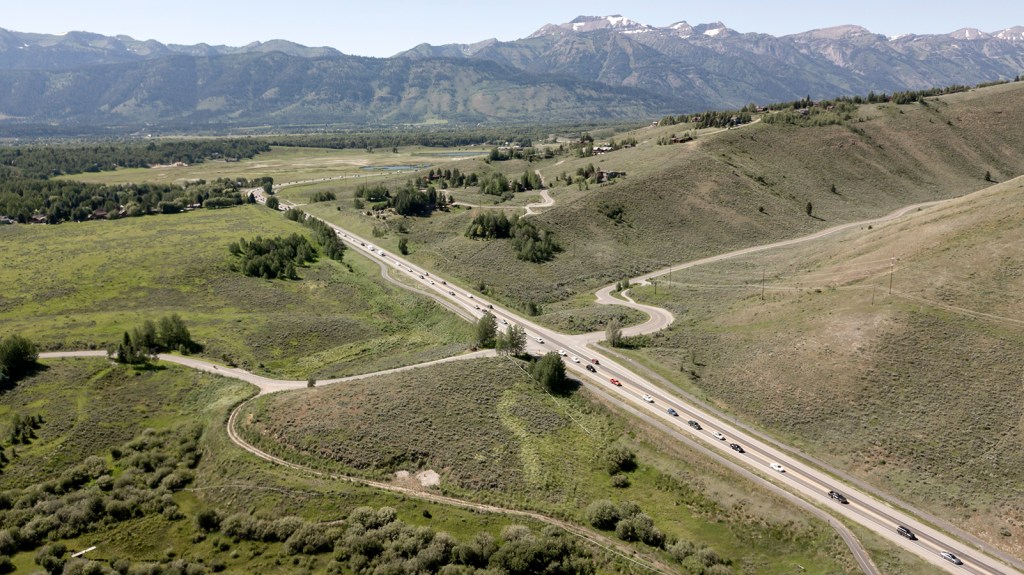
“I think that top 25 list … really does show us something else, and that is how much safer our roads could be with adequate funding,” MacKay said.
WYDOT has been working with the Legislature for several years to increase funding, Westby said. With the enormous price tag of many projects, the agency is also searching for other funding sources, such as federal grants. The TRIP report, he said, will continue to help lay out the case for finding transportation funding.
The Legislature’s Transportation, Highways and Military Affairs Committee will examine the issue over the legislative off-season. Its top interim priority entails a study of how WYDOT is funded and an exploration of ways to reduce the department’s budget shortfalls.
That committee meets May 4 in Cheyenne to discuss interim topics.

The sorry state of Wyoming roads is a concrete example of legislative priorities. Better to rebuild LaPrele Dam, or seek to build one on the Little Snake river that provide irrigation to 200 businesses total for both, growing mostly hay. Let infrastructure that a majority of Wyoming citizens use deteriorate until it becomes news – the new crisis du jour.
It never ends, this bad faith bullheadeness of a weak and ineffective Legislature.
Toll roads are a great idea. EZ-Pass works well. Florida, Virginia and Florida have had success. Gas tax has a problem of electric vehicles. Toll roads also focus funding on real needs and not pork projects. Put a toll road on I-80!
Only the top three was listed of the top twenty five. I would like to know the other twenty two. I believe the tight curves in Wind River Canyon add to the experience of the dive. It is one of the most scenic drives in Wyoming. It also helps keep the speed down and keeps it safer and a better time enjoying the natural beauty of the drive. Slow down and enjoy the drive.
They link the whole report and you can read through all 25.
I am by no means an engineer but I do like that there are priority areas. As I stated I am not an engineer but I can’t help wonder sometimes about the money spent. The stretch of highway that was done just north of Riverton on highway 26 last summer did NOT seem to be in need of any repairs. There did not “seem” to be any deterioration in the road yet it was redone. It would be interesting to know why this stretch was a priority over other highways where you could knock a vehicle out of alignment. I know of course the amount of traffic is taken into consideration. But as the old saying goes, “If it ain’t broke, don’t fix it”.