


A judge will take time to weigh arguments before ruling on whether to temporarily halt enforcement of Wyoming’s newest anti-abortion law, while a lawsuit against it proceeds. The measure, which took effect March 9, bans abortion in all but the earliest weeks of pregnancy.
Natrona County District Judge Dan Forgey listened Wednesday to more than 90 minutes of arguments from lawyers challenging the “heartbeat” law and from Wyoming Attorney General Keith Kautz, who is defending it. Forgey posed occasional questions to both parties, but did not indicate whether he was leaning in one direction or another.
Forgey did not say when he would issue a ruling. Until he does, abortion in Wyoming remains illegal beyond around the sixth week, when it’s first possible to detect fetal cardiac activity.
About 15 people watched from the courtroom benches, including vocal advocates on both sides of the issue and two candidates running for Wyoming House District 37 in southwest Casper: Republican Ross Schriftman and Democrat Betsy Erickson.

At issue is the Human Heartbeat Act, the Wyoming Legislature’s latest attempt to restrict abortion in the Equality State. The measure, signed into law last month, bans abortions, except in the case of a medical emergency, if the fetus has a detectable heartbeat. If abortion providers fail to check for a fetal heartbeat, they could face up to five years in prison and the loss of their medical license.
The plaintiffs, which include the few providers who perform abortions in Wyoming, maintain the law — like its predecessors — is unconstitutional both due to its vagueness and because it clashes with the state constitution’s protections of an individual’s rights to make their own health care decisions.
“The state has no way of showing … that something magical happens at six weeks when a heartbeat is detected that creates a compelling government interest,” said Peter Modlin, who argued the case on behalf of the plaintiffs.

Kautz, however, maintained the new law fit within the bounds of the Wyoming Constitution and a January decision by the state’s high court that blocked two abortion bans passed in 2023. He challenged the argument that the law was too ambiguous or that detection of a heartbeat was an arbitrary point to enforce restrictions.
“That’s when we know there is life to protect,” he said.
Cardiac activity can be detected around six weeks, but the attorneys differed on what that constitutes.
By about the sixth week of pregnancy, the cells that will eventually form a heart have developed into a tube that emits electrical impulses, but it’s unclear whether the new law refers to that or some other stage of development, the plaintiffs maintain. The fetal heartbeat develops between six and 10 weeks, Modlin said, but the law doesn’t indicate when in that month a fetal heartbeat begins.
Kautz, a former Wyoming Supreme Court justice, pushed back, saying there is a plainly understood definition of a heartbeat in the new law, namely, to quote the law, “cardiac activity or the steady and repetitive rhythmic contraction of the fetal heart within the gestational sac that is detectable using standard medical equipment.”
“There is nothing that is unconstitutionally vague with this statute,” he said.
Court fight spanning years
Wyoming’s latest attempt to curtail abortions came in the wake of January’s Wyoming Supreme Court decision that struck down two 2023 abortion bans on the grounds of their unconstitutionality. In the aftermath, Gov. Mark Gordon called for putting a constitutional amendment before voters to settle the matter once and for all. Instead, state lawmakers pursued the heartbeat bill.
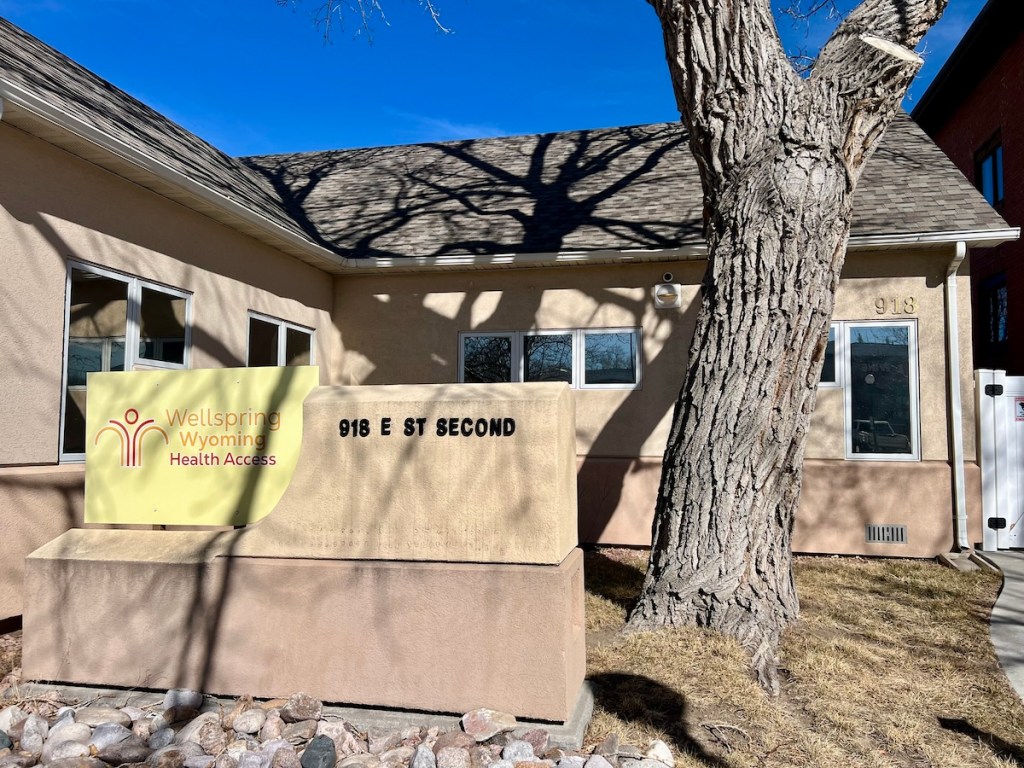
Soon after the law took effect, it cut in half the patient load at Wellspring Health Access in Casper, the state’s lone clinic providing procedural abortions, the facility’s president told WyoFile in March.
Wyoming abortion rights defenders challenging the Human Heartbeat Act argue that the new law runs afoul of the state constitution and shouldn’t be enforced.
The group initially attempted to add the new challenge to an ongoing Natrona County lawsuit against other anti-abortion laws. But a judge denied their request. They quickly refiled the challenge earlier this month as a new lawsuit, arguing that the law imposes “sectarian beliefs” on all Wyoming citizens.
The Wyoming Attorney General’s office maintains the state lawmakers who drafted the legislation avoided any constitutional concerns by following the Wyoming Supreme Court’s guidance in the ruling that dismissed the state’s two prior abortion bans.
The plaintiffs’ initial challenge to the Human Heartbeat Act came the day after Gordon signed the measure into law. In a letter to legislative leadership, the governor cautioned that the law would land the state in another legal fight.
This is a breaking story and has been updated.

fetuses are not people, and women have rights too.
Here’s a little help Paul. A zygote, an embryo, a fetus, a baby are all the same HUMAN BEING.
Merriam Webster
Fetus:
a developing human from usually two months after conception to birth
You caused me to think…. Since a fetus is a human and it’s illegal to intentionally kill a human being, why should it be legal to kill a fetus?
Thank you, Chad, for beginning by acknowledging fetuses have rights.
And yet, fetuses are still not people.
Paul, let’s look at the defintion
People: human beings as a group
Fetus’ are human beings, so yes they would also be people.
With all due respect!
Science has updated their views of the difference between and fetus and a human being. Even though you’d find arguments with this, fetuses aren’t considered human without a heart beat.
In reality, there’s no real way to ‘prove’ that theorized version of non-human or fetus from heart beat human. But what has been scientifically proven (and law enforcement uses today) is DNA.
When a pregnancy is abandoned to abortion, many aborted parts are sold to heal other people with their bodily needs. The reason, there is DNA from one body to another in all humans.
Therefore, the controversy doesn’t start with abortion, but with DNA and since there’s a heartbeat, we’re now talking about a person not yet born. Then the reverse controversy is, if its okay to abort a human being?
Then we should be hypocritical enough and jail people for up to life for taking someone else’s life. A double standard that most folks aren’t willing to discuss arises and prefer calling abortion “healthcare” when in reality there’s no healthcare using this method, but murder.
Face it! The people of Wyoming spoke and our 10th Amendment through its Legislature says “no, to murder in Wyoming”.
Amendment X
The powers not delegated to the United States by the Constitution, nor prohibited by it to the states, are reserved to the states respectively, or to the people.