


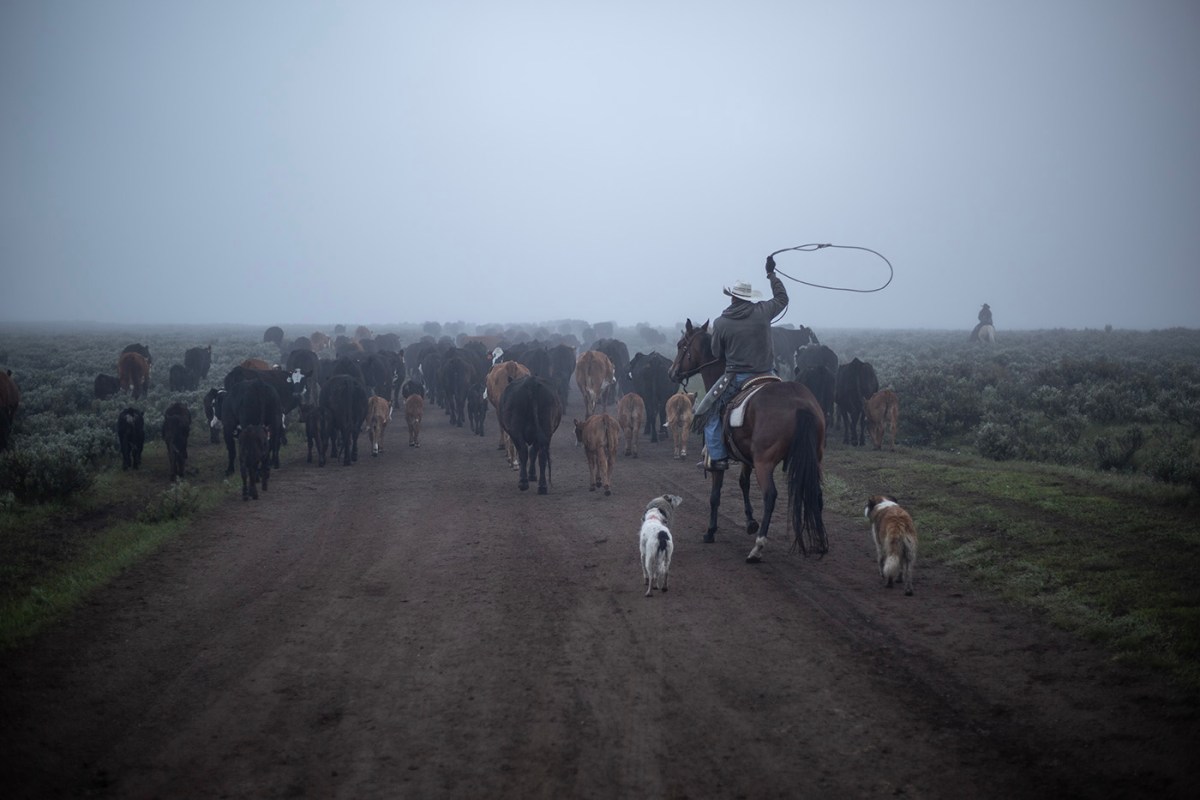
Producers who run livestock on 240 million acres of public land in the American West are largely welcoming a series of reforms to grazing regulations governing their cattle and sheep that have been proposed by the Trump administration.
Changes to the rules are being sought by both the U.S. Forest Service and Bureau of Land Management, which together administer roughly 23,000 grazing permits and leases. On Wednesday, Brenda Younkin, a Wyoming-based Trump appointee, told a webinar attended by livestock producers, landowners and interested members of the public that the purpose of the changes is to “modernize our grazing regulations.”
“We needed to work on the rules that have been in place since 1995,” said Younkin, the U.S. Department of Interior’s deputy assistant secretary for lands and minerals.
There are “four key themes” driving reforms at the BLM, Younkin said. Those are “flexibility,” “clarity,” “efficiency” and “compliance,” she said. In practice, the reforms would essentially give livestock producers more wiggle room about where and when they stock cattle and sheep on federal land. Some environmental safeguards would also be relaxed: Water quality requirements, for example, would be removed from BLM’s rangeland health standards and would instead be solely administered by the states.
Working lands-focused organizations are generally supportive of the changes. Western Landowners Alliance CEO Lesli Allison, whose employer organized the webinar, told attendees that to “sum it up,” the changes being pursued “are great.”
“At the end of the day, we hope to see a set of clear, effective and durable grazing regulations that promote the health and the continued multiple use of public lands well into the future,” Allison said. “All Americans have a vested stake in this conversation, and the passions do run high.”
Southwest Wyoming cattle rancher Marissa Taylor told attendees that she’s looking forward to changes that “streamline” and cut down on “red tape.”
“By and large, my agency staff already has the ability to do almost all of the things [in the proposed reforms],” Taylor said. “It’s just a process that’s quite burdensome.”
Nevada cattle rancher Duane Coombs spoke highly of federal allotments where he already has the “flexibility” of a “12-month permit” that lets him move cows where he’d like when conditions allow.
“That’s what we’re chasing here,” Coombs said. “The flexibility that we are hoping for with these new regs is key to continued improvement of public lands.”
The Trump administration’s vision is for more flexible grazing rules to transcend fencelines. In early June, U.S. Secretary of Agriculture Brooke Rollins issued a “grazing action plan” directive that “elevate[s] grazing as an administration” priority and would “expand livestock grazing on federal lands.” An accompanying MOU that Rollins signed with Interior Secretary Doug Burgum commits to “cooperative implementation” of the reforms on both national forests and BLM property.
Praise for the proposed grazing regulation reforms is far from unanimous. The day before the Western Landowners Alliance’s video call, two environmental groups, Western Watersheds Project and WildEarth Guardians, held a webinar of their own. Presenters pointed out that the changes reduce public input, extend grazing seasons and allow for more intensive grazing on land owned by all Americans without environmental review.
“These proposed regulations would further privatize public lands for the private livestock grazing industry,” said Lizzy Pennock, an attorney with WildEarth Guardians.
Western Watersheds Project staffer Josh Osher presented data that showed a large portion of public rangelands are being grazed too heavily. In Nevada, he said, over 60% of allotments are failing land-health standards
“The vast majority of BLM grazing allotments are not even getting any environmental review, and the permits are being rubber stamped,” Osher said. “Over 60% of the allotments and 74% of the AUMS [animal unit months] … are renewed without any environmental analysis at the same terms and conditions decade after decade after decade.”
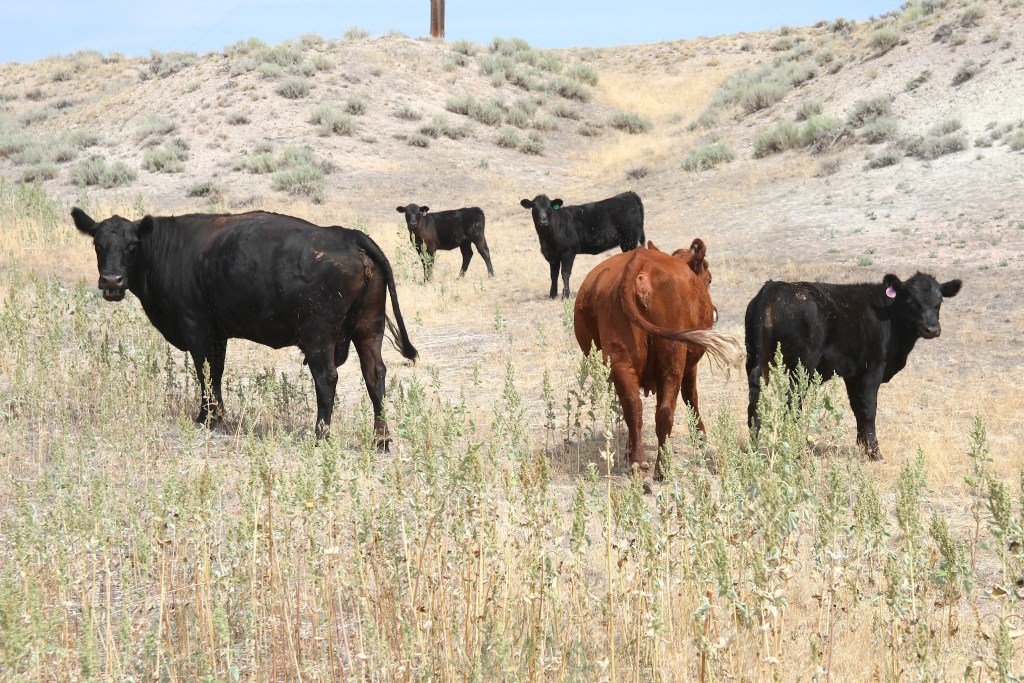
During the Western Landowners Alliance call, some attendees were open with the Trump administration officials about the sorry state of most federal grazing allotments. Liz Munn, who works at The Nature Conservancy, spoke to the decline of the sagebrush biome during the 11 years she’s lived in Nevada.
“It used to be 50% of the sagebrush biome here was in pretty good condition — intermediate or better,” Munn said. “Now it’s closer to 38%, maybe less. We’re losing ground.”
Munn also bemoaned the unrealistic workload that’s being asked of the BLM’s rangeland staff. The BLM-Nevada offices have some 600 employees statewide, she said, and they’re tasked with managing 48 million acres.
“That’s like one person for every 80,000 acres,” Munn said. “That is crazy. And it’s impossible. It’s just impossible for people to be successful when they have that much ground to cover.”
“Properly staffing these agencies is essential,” she added.
BLM-Wyoming’s rangeland staff have been hammered by federal workforce turmoil, too.
During an early June media tour of the Red Canyon Fire scar organized by Intermountain West Joint Venture, BLM rangeland specialist Alicia Hummel told journalists that her field office’s range staff was “at a third” of its normal capacity.
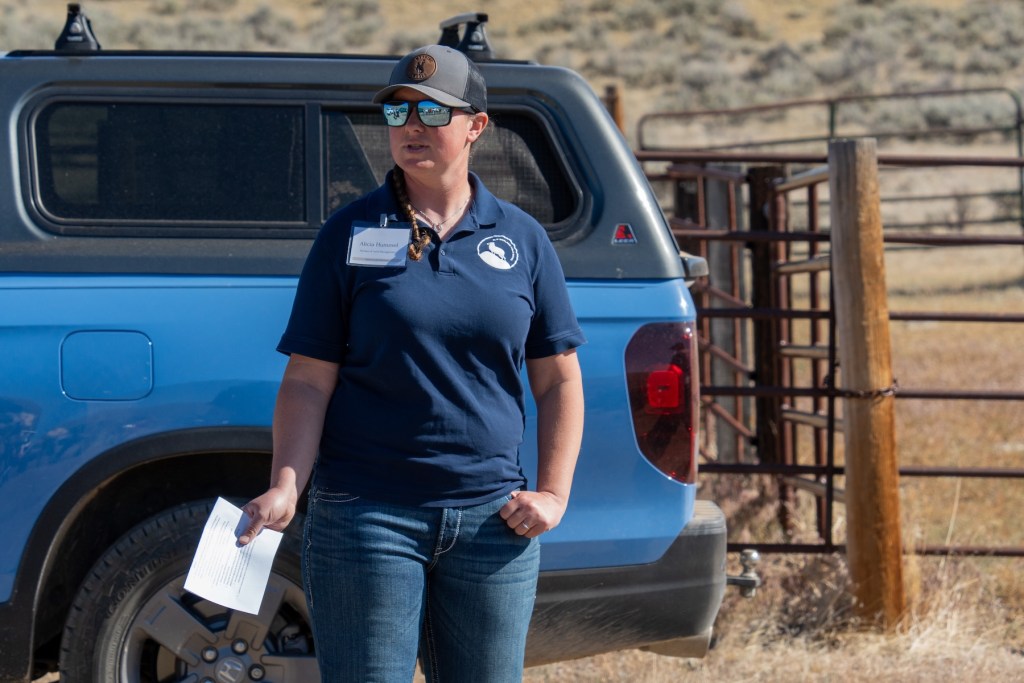
“So I actually have 98 different producers that I individually work with,” Hummel said during the tour.
Younkin, the Trump appointee at the Interior Department, touched on the need for more staff. BLM is bringing on 460 people, she said, adding that she’s “certainly aware of the challenges.”
“Part of it is restricted by budget,” Younkin said. “So reach out to your electeds and let them know, because there’s only so much we can do from inside.”
Younkin also encouraged attendees of the Western Landowners Alliance webinar to comment on the BLM’s proposed grazing rule. Those comments are due by July 13.


Absolutely amazing, with hamburger at 6.00$ a pound that people want to make it harder and more expensive for ranchers to get the people of this nation food on their tables.
Cut off your noses to spite you faces. GMAB
LOL I hope you don’t think this will drive down the price of beef. If you do, I have ocean front property in AZ to sell you.
Where are you finding hamburger for only $6.00 a pound Chad?
Also, do you advocate making long term management decisions based on current, shorter-term exigencies, like spikes in grocery prices? That would probably be a textbook example of populism.
This needs to happen, have some flexibility to use livestock as a tool to improve the range, what has happened in the past has not worked. The alternative is parking lots and subdivisions let them take care of it like their own deeded land and the range will improve.
It’s NOT their deeded land. It’s _our_ land. The alternative is not parking lots and subdivisions – federal public lands are held in trust for all citizens of this nation. It’s supposed to support wildlife, biodiversity, natural resources, and provide ecological services like water storage and purification and carbon sequestration, among others. It’s supposed to be availabe for multiple uses, and we’re supposed to be practicing conservation at various levels. If left even further to livestock producer whims it will continue to be raped and pillaged – our lands and wildlife that are a legacy for future generations. For your kids and grandkids.
Your exactly right however the lands that will be developed is their deeded land and that’s critical winter range for wildlife and this is what’s happening all over the west, we need the rancher on the land not developers.
Amen Todd.
More welfare for the ‘independent’ conservative ranchers. What a joke. No respect for public land and public land holders-US. This is typical trumpism. I wonder if retaliation for not being able to sell our lands to his billionaire buddies.
shameful as usual from this anti environment and public lands as a whold administration so sad
Although we have heard nothing from the Forest Service yet, the BLM has already announced in the Federal Register its intent to implement all the benefits mentioned in the MOU for the livestock industry.
(https://www.federalregister.gov/documents/2026/05/12/2026-09387/revision-of-regulations-for-grazing-administration-exclusive-of-alaska)
One thing that stands out in the proposed regs–aside from the complete lack of scientific justification–is the determination to use Categorical Exclusion to fast track the regulation.
To quote from the proposed regulation, “The BLM intends to apply the categorical exclusion (CE) identified in the Department’s NEPA regulations at 43 CFR 46.210(i) to comply with NEPA. This CE covers policies, directives, regulations, and guidelines that are of an administrative, financial, legal, technical, or procedural nature or whose environmental effects are too broad, speculative, or conjectural to lend themselves to meaningful analysis and will later be subject to the NEPA process, either collectively or case-by-case.”
I strongly question whether an environmental analysis at this stage is “too broad, speculative, or conjectural.” The impacts of grazing on the public lands at the landscape scale are too well established, in painful detail, to brush them off with a CE, claiming that the BLM will do the appropriate analysis later with individual grazing decisions. That won’t cut the mustard. This is a major policy change that affects the entire West and must be analyzed across the West. On top of that, I guess the BLM still hasn’t heard of climate change. We are witnessing major changes in grazing lands in real time as the West gets hotter and drier.
The real question is, can livestock grazing continue at all?
This new policy is clearly arbitrary and capricious, a giveaway to private industry. I also see conflicts with the Multiple Use Sustained Yield Act, the National Forest Management Act, the Federal Land Policy Management Act, the Wilderness Act, and the Endangered Species Act.
Let the lawsuits begin.
This destructive proposal will further degrade fragile western public lands and the plants and animals that rely on them for their survival. It will undoubtedly be challenged by respected grazing-reform organizations that need your financial support to do their valuable work: Western Watersheds Project and WildEarth Guardians.
More public land going under private control for longer periods of the year. Those of us who enjoy our public lands know first hand that many livestock producers are NOT good stewards of the land that they pay pennies on the acre to lease. Running cattle and sheep on our vast prairies comes at the expense of wildlife and the quality of the water and the land itself. Which, by the way, belongs to ALL Americans, not just livestock owners. Please comment to the BLM and Forest Service by July 13. It won’t make a bit of difference, but at least our opposition to this welfare program will go on record.
Insane!! Wildlife will pay the price for this move. Hunters ,Anglers, and Wildlife enthusiasts should be very alarmed by this action.
Were cattle and sheep public land grazing to pay fair market price for grazing on public lands you could afford land and wildlife managers.
… not …one …word…about…the … ridiculously low priced heavily subsidized free range Socialist welfare rancher giveaway …Grazing …Fee$
Public Land grazers are paying the same dollar for dollar $ 1.35- $1.69 per Cow-Calf Month (AUM) as they did 60 years ago. Don’t we all wish we still paid 1966 prices for essential government services supporting our livelihoods.
A Wyoming rancher pushes a Cow and her Calf up onto the good mountain grass for 120 days on the allotment , and pays the goverment about $ 7.00 total for all the grass they eat together in four months. Come autumn back down at the ranch those two cattle are a 1200 pounds heavier than they were in late Spring, thanks to that good cheap government graze. 1200 pounds of weight gain costing less than $8.00 paid out for the feed ?
How much did you pay for that pound of hamburger at the supermarket last week ? $8.00 for a single pound of it ???
Do the math . Follow the money. Make your own case.
The 1200 pounds gain you mentioned are total fabrication.
Maybe. I used the generally acceptable 2.0 to 2.5 pounds gained per day by both heifer and calf during grazing. That gain day number was constant across lots of sources, but you can see it at the BLM’s own site.
recalculating it yields a weight gain of ~ 600 lbs instead. Apologies. My math rusty.
BUT the point is still absolutely valid. The producer gets the weight put on his publicly grazed cows at well below cost and well below the grazing fee on other lands , State or Private. 100 to 1 cost benefit instead of 200 to 1.
Point being, the federal grazing fee is the most egregious of all the federal government subsidies to all industries and endeavours. QED
Do these absurdly low fees even cover the cost of the bureaucratic paperwork involved in “managing” the leases?
Is their any commodity in the US that has not gone up in price in the last 50 years except grazing fees on public land?
What is the cost of beef compared to 50 years ago?
Depends on the cut, but 50 years ago the average retail price for a pound of beef was approximately $1.78/lb to $1.89/lb.