

Wyoming will partner with the Trump administration on an initiative to streamline and expedite permitting for large energy and other industrial projects such as data centers, representatives from both groups announced Monday.
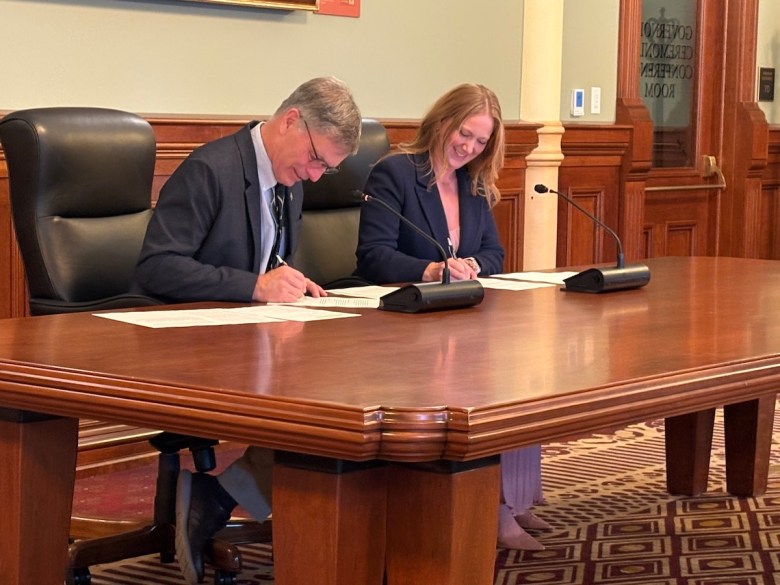
Gov. Mark Gordon joined Federal Permitting Improvement Steering Council Executive Director Emily Domenech during a press conference Monday afternoon to sign a memorandum of understanding “to prevent unnecessarily long reviews for critical infrastructure projects.” The agreement promises to align Wyoming with the administration’s expedited permitting efforts, which have included shortened environmental reviews and public commenting periods.
“I’m really excited because I think the relationship that we’re going to put together today will prove mutually beneficial, because it will help make sure that our environmental reviews [and] federal environmental reviews are done expeditiously,” Gordon said.
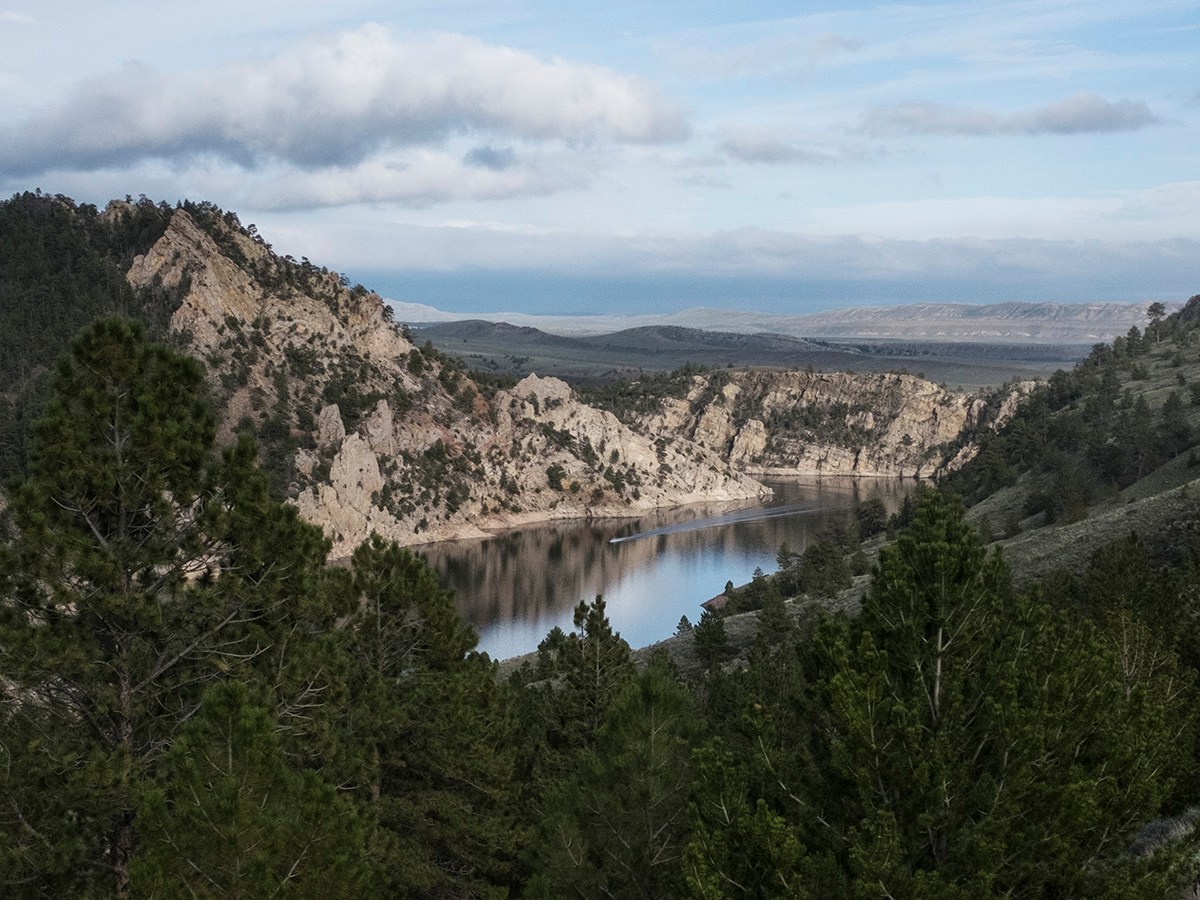
Some federally expedited environmental reviews in Wyoming, however, have already caused heartache among residents and local officials, like the Seminoe pumped water storage hydroelectric project that has raised concerns about a prized trout fishery downstream and a bighorn sheep herd.
But the governor noted that some large energy projects in the state have endured years — and more than a decade, in some cases — of permitting reviews before final approval. The process can take so long that markets often change the economic viability and scope of a project.

“If it takes us eight years just to get through scoping [the initial federal, state and public reviews], and things can change as dramatically as they have, then it really slows things down,” he said.
The Federal Permitting Improvement Steering Council, created in President Barack Obama’s second term, has been instrumental in implementing the Trump administration’s efforts to accelerate permitting reviews for energy and other large projects such as artificial intelligence computing centers. The agency, Domenech said, expedites permitting timelines while providing more transparency, including via its permitting dashboard — a tool that will now include information about Wyoming’s permitting agency actions on particular projects.
“We can help to make the environmental permitting process more transparent, more predictable and more accessible to developers who are trying to develop the incredible natural resources and grow the economies of the states across the country,” Domenech said. “This agreement we’re signing today is a cornerstone of what I think the president has really brought to every governor in the country, which is, ‘We want to help you grow your economy, create more jobs, bring more industry to your state.'”
The agency has helped the Trump administration reduce the average time it took the federal permitting review process from 1,500 days to 400, Domenech added.
“I want to stress we’ve done that by following the law,” she said. “We’re meeting every single standard that’s set in the law. We’re finishing reviews on time and we’re making sure projects can move forward faster.”
Permitting heartache
Prospective developers, including many Wyoming-based companies planning to serve them, are not the only ones with heartache over the permitting process.
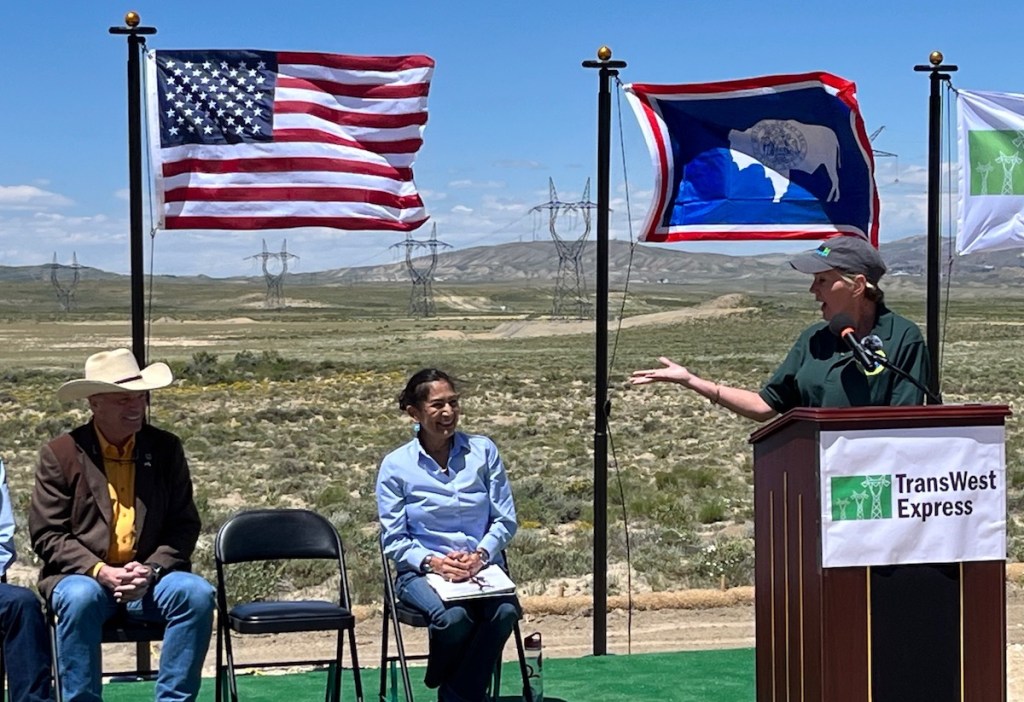
Many industrial projects in the state have raised the ire of local communities that say they either don’t have enough time to keep up with the permitting process or that their efforts to tailor fit a project gets a cold response.
The Seminoe pumped water storage hydroelectric project in Carbon County spurred residents and local officials alike to plead for more time and local input, for example. Residents in Crook County say they were caught off guard by the federally expedited Bear Lodge rare earth mining project. Both projects were granted FAST-41 status — an expedited federal permitting review.
Asked by WyoFile how Wyoming’s cooperation with the federal permitting council might address those concerns, Gordon said, “The MOU will allow for better coordination with the state to make sure that we really do give those communities an opportunity to participate in the process.
“Being a FAST-41 project doesn’t guarantee you get a permit,” Gordon added. “There’s nothing in the law that says you get it. You still have to do all of the things that are required in order to finish the permitting process. But what it does require is that we have a transparent forum for anyone in the community to go and see that work.”
Domenech has made rounds in the national media recently to bolster support for a bipartisan bill now before Congress. It would galvanize the Trump administration’s efforts to speed up permitting, in part, by limiting state authority and litigation powers over approved projects, she told Bloomberg this month.
“So how do we stop frivolous lawsuits from taking down projects and how do we reform the Clean Water Act so we don’t have a system where states can really veto any project?” Domenech told Bloomberg. “Those things have to stay in this bill in order for it to get to a place where it gets to the president’s desk and he’s ready to sign it.”
Is that in Wyoming’s best interest, WyoFile asked the governor.

“If all you want to do is stop stuff,” Gordon responded, “then [courts are a] really a great process. But on the other hand, you want to make sure things are done correctly, according to law and done in a timely fashion, we do need to have some permitting reform.”
Domenech said her agency, empowered by the Trump administration and the potential of further Congressional permitting reform, should provide a cleaner process to ensure projects don’t face court challenges.
“When we think about the best way for permitting to move forward, it’s more work on the front end to be more transparent and better coordinated across agencies so that you can have confidence in your permit going forward,” Domenech told WyoFile. “That’s the core of the permitting certainty argument, is you do your work right the first time and then it should be harder to sue that project.”


I am most concerned about the timing for and weight given to the public to analyze impacts of any large project and then comment. A multi $$$ company will have a big ready made proposal and should be prepared to spend time to explain and defend it.
We in promitive Wyoming mindlessly and selfishly continue to kick the dying horse named King Coal , expecting it to rise up on its feet once again to serve us.
I don’t think that’s gonna happen this time …
The only permits I want to see accelerated and red tape removed would be those that fast track solar and wind energy , battery storage, decentralization and less dependence massive Soviet-style communist -as-capitalist national power grids, balcony plug-in solar and rooftop solar net metering. Show me a small modular nuclear reactor that’s safer, more efficient, and cheaper than a natural gas thermal polluter. Does anyone in Uppity Wyoming know how to spell ” geothermal ” ? Hint, hint: 8,000 orphaned and abandoned wells that litter the landscape , already drilled ? Do we always need the gubbamint’s permission and Wall Street’s loansharking to do anything at all about energy at any level ?
Remember the damage fast-tracking did under the Bush administration? If you like to hunt, fish, hike, camp, or any other outdoor activity – kiss it goodbye.
Wyoming is really teaming with the oligarchs, the real rulers of our ‘country ‘.
Wyoming’s small population does not mean small planning challenges. Our local governments must evaluate large, complex industrial projects with limited staff and resources. Accelerated permitting could compress more work into less time without adding the people or expertise needed to review it thoroughly.
In southeastern Wyoming, wind projects, transmission lines, data centers and associated construction can place overlapping demands on water, roads, housing, wildlife and emergency services. Reviewing each application separately may miss the combined burden on rural communities.
Better coordination and transparency are welcome. But who will have the time, expertise and responsibility to evaluate cumulative impacts—and ensure protections are in place before construction begins?
Before accelerating permitting, Wyoming should explain what additional staffing, independent technical review and enforcement funding will accompany it. Meaningful public participation also requires enough time to understand proposals and raise concerns.
Faster permitting should be supported by stronger planning capacity. Otherwise, neighboring property owners, local governments and taxpayers could be left managing consequences that should have been addressed before approval.
Oh just great! Another Trump backed “memorandum of understand”. We’ll see how well this one works out. The last “memorandum of understand”, that attempted to seal a truce with Iran, didn’t turn out so hot for this feckless, corrupt administration.
Let this be a lesson to myself…never spout off using my cell phone. “memorandum of understandING”.