

Critics of a pumped-water storage hydroelectric project at Seminoe Reservoir are cheering news that the Federal Energy Regulatory Commission will delay its decision on whether to issue a license for the controversial proposal until another federal agency completes a closer look at potential impacts.
The Bureau of Land Management will conduct a supplemental environmental impact statement and amend its Rawlins Resource Management Plan, according to a federal filing this month. The actions trigger several more opportunities for public comment and input from local officials — an aspect that many say was severely lacking under FERC’s ongoing review.
“This feels like a small victory,” CiCi Oliver told WyoFile.
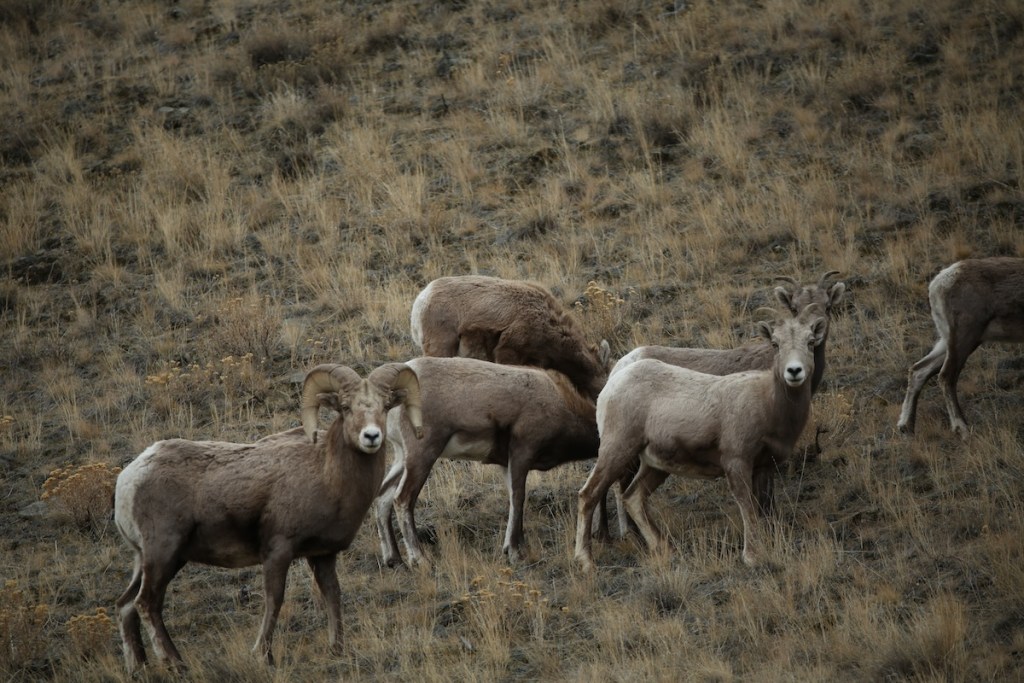
Oliver is manager of the Ugly Bug Fly Shop and Crazy Rainbow Fly Fishing in Casper, and serves on the board of Friends of the North Platte, a group formed to advocate for myriad recreational resources that many worry would be harmed by the project. There’s been public outcry, Oliver noted, regarding impacts to wildlife — including a biologically vital bighorn sheep herd — and fisheries, particularly the Miracle Mile blue-ribbon trout fishery along the North Platte River just below Seminoe Reservoir.
The FERC process, Oliver said, has so far failed to fully take into account those natural resource and recreational-economy concerns, while the BLM’s pending review appears to allow for more local and expert considerations.
How to comment
The Federal Energy Energy Regulatory Commission is accepting public “scoping” comments to “identify issues” that the Bureau of Land Management should consider in its pending supplemental environmental impact statement and potential amendments to its Rawlins Resource Management Plan. Comments must be received by the commission by 3 p.m. Mountain Time, Oct. 13.
Comments can be submitted via eComment. Be sure to reference project or docket number p-14787-004. New eFiling users must first create an account by clicking on “eRegister.”
Or via U.S. mail to:
Debbie-Anne A. Reese
Secretary, Federal Energy Regulatory Commission
888 First Street NE, Room 1A
Washington, DC 20426
“There seems to be some missing components, and I think, just in general, we’re hoping for a little bit of clarification,” Oliver said.
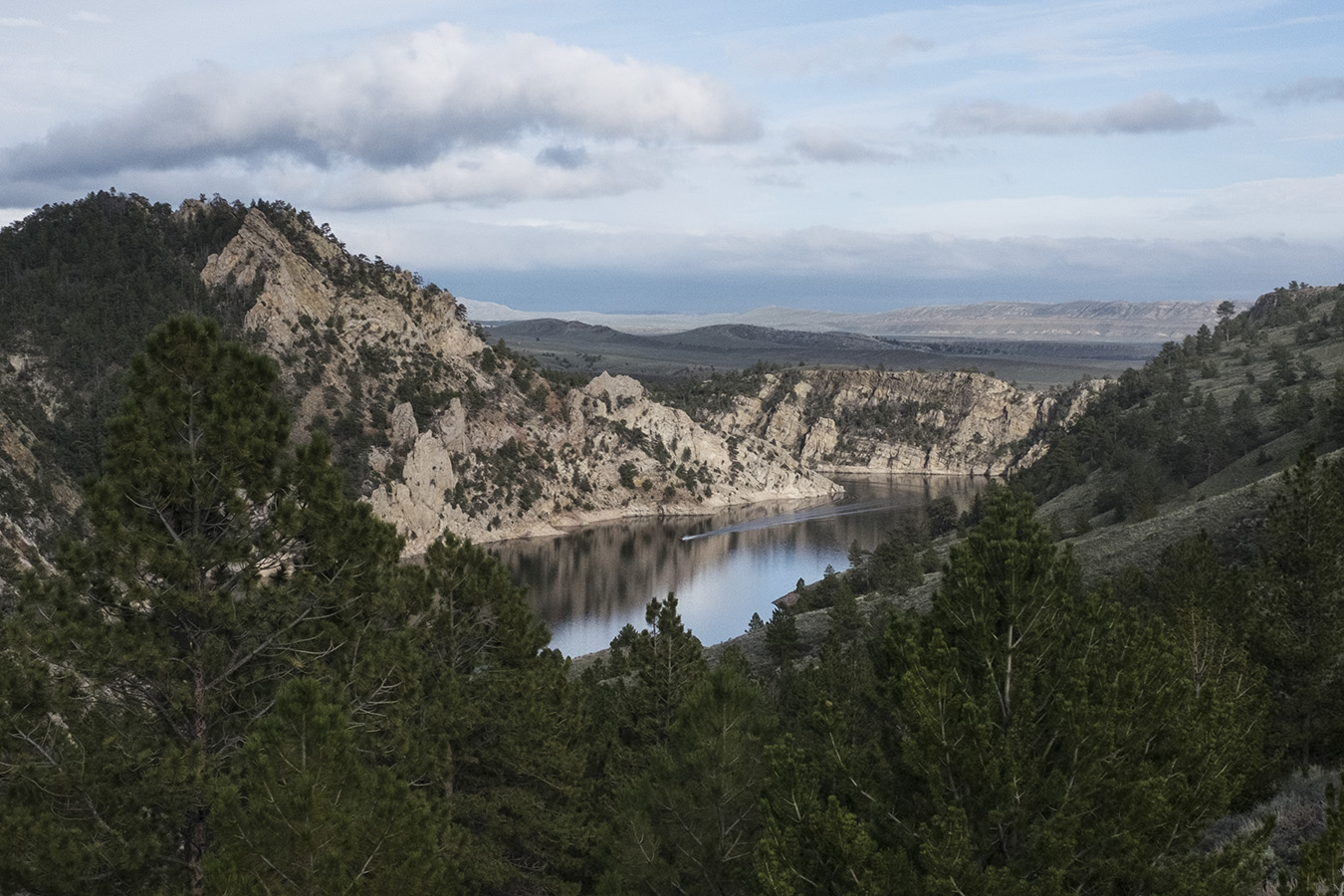
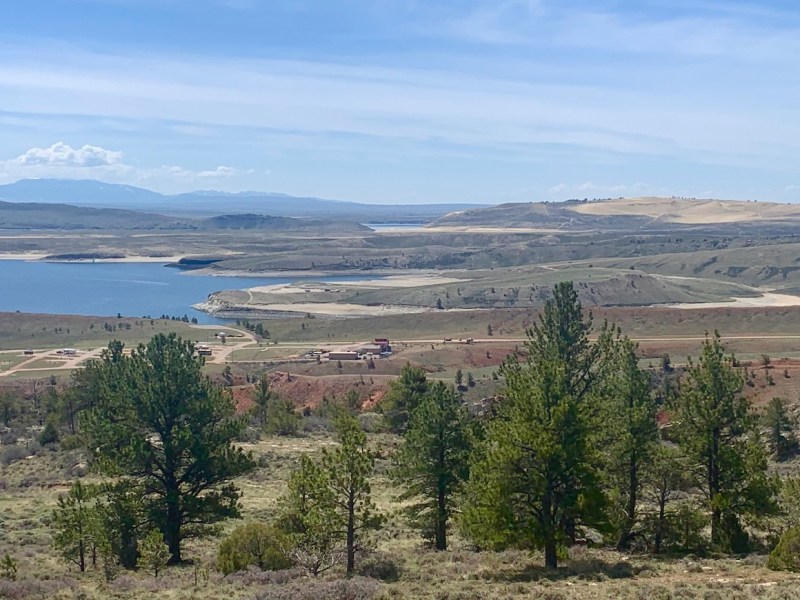
Utah-based rPlus Hydro proposes building a 13,400-acre-foot reservoir in the Bennett Mountains overlooking Seminoe Reservoir near the dam — one of several existing reservoirs on the North Platte River. The $4 billion facility would pump water uphill during daytime “off-peak demand” hours for electricity when wind and solar power are plentiful and wholesale electricity is cheapest, according to rPlus Hydro. Then it would release the water through hydroelectric turbines during peak demand in the evenings.
This image depicts the approximate area of Seminoe Reservoir
where rPlus Hydro proposes to build a pumped-water-storage
hydroelectric facility. (Patrick Harrington)
The company contends the project represents a $200 million annual savings to ratepayers. It acquired a “section 401” water quality certificate from the Wyoming Department of Environmental Quality earlier this year.
rPlus notes the facility would take five years to build, prompting it to ask for multiple variances to long-existing seasonal restrictions designed to protect wildlife and their habitats — among several sticking points for critics, as well as hesitation from the Wyoming Game and Fish Department.
The company declined to offer a comment regarding BLM’s pending review.
Federal actions
FERC is the lead federal agency to review and potentially approve the project for its primary reliance on the U.S. Bureau of Reclamation’s hydroelectric operations. Though the agency must adhere to the National Environmental Protection Act, it takes a more high-level administrative approach compared to the BLM or other federal agencies that typically include more public and local stakeholder input, according to people familiar with the agencies who spoke with WyoFile.
Nevertheless, the BLM is obligated to perform its own assessment of the project because portions of BLM-managed lands are involved in the Bennett Mountains where rPlus Hydro proposes to build a new reservoir. Primarily, there are several sections of BLM-managed lands along a 30-mile corridor where the company proposes to add new power lines to connect the electricity to the grid.
“We are conducting the [supplemental environmental impact statement and resource management plan amendment review] specifically to evaluate impacts of granting the right-of-way on BLM land,” Wyoming BLM told WyoFile via email. “The BLM’s [resource management plan] amendment will look at potential impacts from granting the right-of-way and the development that would follow, such as impacts to visual resources and wildlife migration corridors. We will continue to consider alternatives as needed based on our analyses, interagency coordination and public input.”
The FERC, which published its environmental impact statement in June, has operated under a federal FAST-41 coverage schedule to expedite its process, indicating it might make its licensing decision this fall and leave the BLM to complete its work afterward. Instead, according to those close to the matter, the FERC will withhold its licensing decision until the BLM completes its more in-depth review based on a broader scope of local input.
“It puts a couple of additional comment processes in front of us,” Trout Unlimited’s Wyoming Government Relations Director Patrick Harrington told WyoFile. “I do think that those are good opportunities for the public to get engaged.”
The first is a public scoping comment period with a deadline of Oct. 13 .
How influential is the BLM’s review?
Harrington said he and others closely tracking the process are asking questions and speculating about how the BLM’s actions might influence the parameters of the project and FERC’s ultimate decision. For now, though, Trout Unlimited, Friends of the North Platte and others are taking solace in the fact that the BLM will accept “some broader critiques” of the project, he said, noting that state government agencies — including the Wyoming Game and Fish Department — have an opportunity to help the BLM craft its analysis.
“We might be able to propose some sort of new [Resource Management Plan] amendment or new alternatives,” Harrington said.
There’s an outpouring of public interest and skepticism regarding the project, said Oliver, of Friends of the North Platte, and people with concerns about the project are eager to get an audience with BLM officials in Wyoming for local input that they’re unsure the FERC took to heart.

Chief among Oliver’s concerns are the multiple variances to Wyoming-implemented seasonal restrictions on industrial activity designed to protect wildlife, as well as what she considers unanswered questions about impacts to fisheries.
“If it fits in our landscape and it fits for Wyoming, like [rPlus Hydro says], it should fit for the existing [stipulations] that were created to protect our valuable resources,” Oliver said.
“If an out-of-state industry can come in and change our existing rules,” Oliver added, “I think that that is a dangerous precedent to set here in Wyoming where, absolutely, we are an energy stronghold. But we are also a natural-resource stronghold, and I think that that’s what makes Wyoming so special.”


I always wonder why the conservation group never think of making a deal and miss every opportunity.
Obviously the congressional delegation is involved although quietly and will support the project.
There are two things to make a deal including with the delegation. The project will get approved regardless. The question is what will the resources get in return for the plant.
1. Each time the pumping plant transports water up the mountain there should be an automatic release of some water for wildlife into a well lined pond to prevent leakage.
2. Insist that the Bennett Mountains and Ferris Mountains WSA are designated as formal wilderness.
Designating these areas as wilderness has no impact on anything.
If the powers want something then get something in return. Fight for it.
ConEd pump storage project was planned for Storm King Mountain, north of NYC along the west bank of the Hudson River some 70 years ago. It was designed to serve the city during peak demand periods. A strange alliance of first rich people across the river in Putnam and Westchester counties and then budding environmentalists ledby the Sierra Club eventually killed it. So ConEd built a nuke near Buchanan on the Hudson’s east bank, much closer to all those rich people who didn’t the pump storage project to disturb their view. The nuke went in without a peep from either the rich people or the environmentalists. A good argument could be made that had the pump storage project been built, the big NYC blackout of 1965 would not have occurred. You can read all about this in William Tucker’s “Progress and Privilege.”
Principals in this Wyoming fight ought to consider this history as they fight it out: the benefits, the drawbacks, the longterm consequences.
Pumped Hydro is in a word “dumb”. The only reason it is even a thing is because of the stupidity behind wind. The minute you take wind out of the energy mix, pumping water up hill just to dump it back down hill, is exposed for the waste it is. Build a stabe generator elsewhere. Some HELE coal or a nice nuke.
Pumped storage has been around and making perfectly good economic sense for decades before wind and solar were anything more than a dream. I remember visiting the Cabin Creek project above Georgetown CO back in the late 60’s or early 70’s. The value of having the extra generating capacity for peak load times is far greater than the net energy loss pumping to water back uphill during off peak hours. The controversy over the Seminoe project have nothing to do with the concept of pumped storage, and everything to do with the location and potential environmental damage of this particular pumped storage project.
No, it really doesn’t.
BuRec, BLM? Does it really matter? They’re both agencies under the leadership of Trump appointees. If in fact the construction will cause harm to the Bighorn herd, and the pumping will degrade the fishery, you know damn good and well it will be approved. The more environmental damage a project causes, the more anti-woke it is and therefore the more MAGA will love it, especially if a few years down the road climatic changes or lack of water resulting from long-term drought render it useless. The only thing better to a MAGA Trumplodyte than an ecological disaster, is an ecological disaster that costs a shit-ton of money and provides zero benefits to anyone.
Boondoggle from the get-go.