Sam Mihara conducted a discussion in Washington, D.C. Sunday on how a presidential order wreaked havoc for him and thousands of other people — making travel impossible, splitting up families, upending lives and bringing chaos to the careful plans and long-held dreams of a targeted group of people.
But it wasn’t President Trump’s Jan. 27 executive order that suspended travel from seven Muslim-majority countries that Mihara made the discussion topic. He and others who were confined at the Heart Mountain internment center during World War II discussed Executive Order 9066, signed 75 years ago by President Franklin Roosevelt on Feb. 19, 1942.
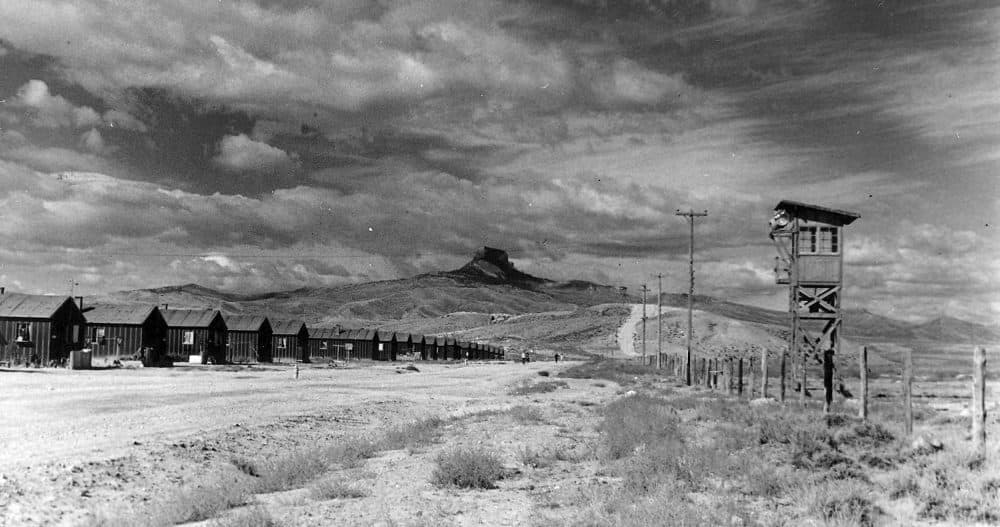
That order resulted in the imprisonment of more than 120,000 people of Japanese descent living along the West Coast, most of whom were American citizens, including Mihara. He lived with his family in a one-room shack from age 9-12 at a camp located between Cody and Powell, where a museum now commemorates that era.
“It’s an awful stain on the history of this country,” Mihara said in a telephone interview, before Sunday’s program at the Smithsonian National Museum of American History. The event was cosponsored by the Heart Mountain Wyoming Foundation.
“My family suffered some very difficult times,” said Mihara, 84, a retired Boeing Co. rocket scientist who now lives in Huntington Beach, California.

Mihara speaks frequently at public events about his experience at Heart Mountain. “It’s important for us to do whatever we can to make sure it never happens again to anyone else,” he said.
A 1944 U.S. Supreme Court decision upheld Roosevelt’s internment order, which never referenced a specific race or ethnicity, although only those of Japanese ancestry were imprisoned in such large numbers. A wide range of constitutional scholars, including the late Supreme Court Justice Antonin Scalia, have condemned the 1944 decision, which has never been formally overturned.
President Ronald Reagan signed the Civil Liberties Act of 1988, which provided an apology and modest restitution payments to internees.
Mihara said Roosevelt’s order was flawed because it “lacked any kind of proof that we were likely to become spies or conduct sabotage,” something he sees paralleled in Trump’s travel ban.
The Trump order was blocked by a federal judge, and later a three-person appeals court. The administration has defended the travel ban, saying it was based partly on terrorism risk criteria developed by the Obama administration. But the Justice Department announced Thursday that it will not further defend the travel ban in court, and Trump will instead release a new order tailored to comply with recent court rulings.
Mihara said he would oppose any such executive order if it primarily applies to a specific race or religion, or fails to provide hard evidence detailing specific threats.
Shirley Ann Higuchi, a Washington, D.C. attorney and chairwoman of the Heart Mountain Wyoming Foundation, said it might be logistically difficult to secure the borders without treading on civil rights, but it’s not impossible. George W. Bush managed to strike a reasonable balance in the days following 9/11, Higuchi said.
“The Bush administration took appropriate measures to safeguard us with a security system that screens everyone without discriminating against Muslims or Arabs or people that simply may ‘appear suspicious’” without probable cause, said Higuchi. Her mother and father first met when both were 11-year-old internees at Heart Mountain.
Higuchi pointed out that Norman Mineta was that same age while an internee at Heart Mountain, which housed more than 14,000 Japanese-Americans during its three years of operation.
Never miss a Know How — subscribe to WyoFile’s free weekly newsletter
Mineta served as Transportation Secretary under President George W. Bush, and recalled a cabinet meeting shortly after 9/11 for a 2006 interview with the San Jose Mercury News.
“We know what happened to Norm Mineta in the 1940s, and we’re not going to let that happen again,” Mineta recalled Bush saying during that meeting.
“What the president said that day had a tremendous impact on me. It gave me a great feeling,” he said.
If you go…
The Heart Mountain Interpretive Center at 1539 Road 19 between Cody and Powell has a permanent display covering Executive Order 9066. The Center is open Wed.-Sat., 10 a.m. – 5 p.m. Call 307-754-8000 or visit heartmountain.org for more information.
Contact Ruffin Prevost at 307-213-9818 or ruffin@yellowstonegate.com.