

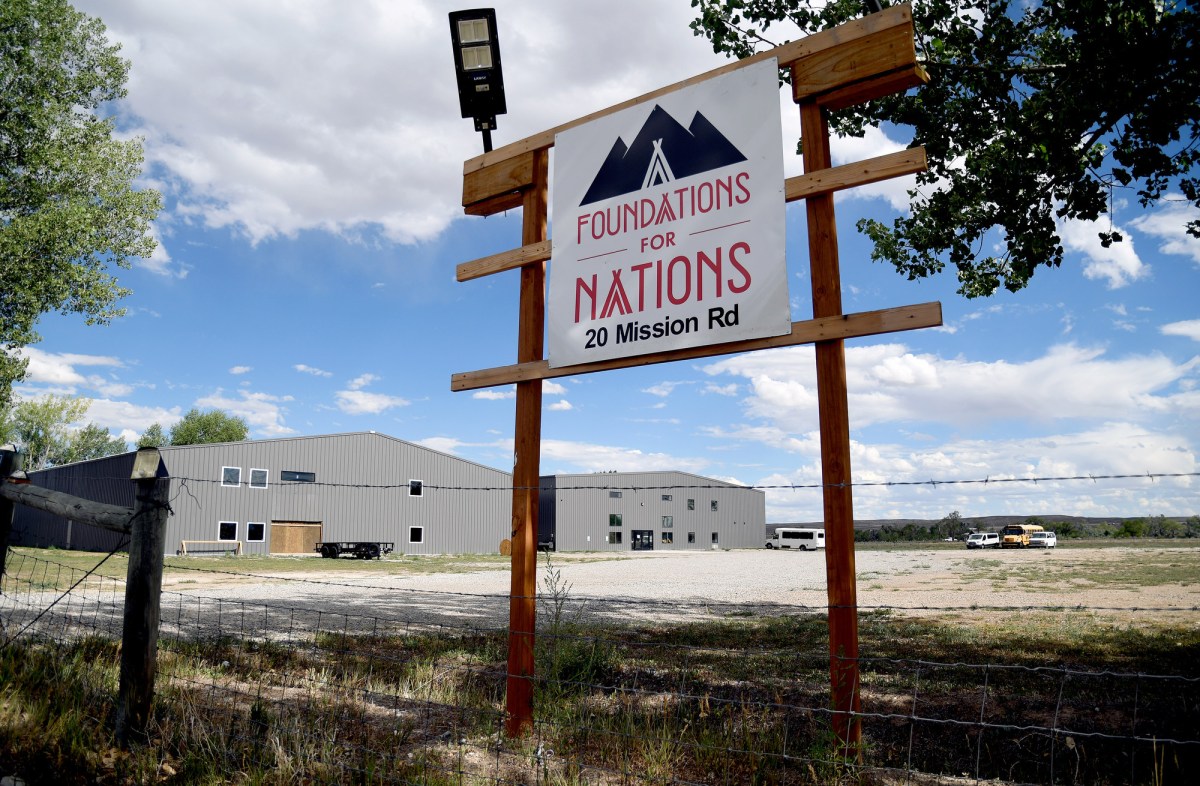
A church facing demands to leave the Wind River Indian Reservation after its pastor delivered a sermon urging Native congregants to renounce Northern Arapaho traditions has a formidable ally in its corner as tensions continue to simmer.
Last month, the Foundations for Nations church lodged a complaint with state and federal agencies against the Food Bank of Wyoming, alleging the organization unlawfully cut off its support on the basis of religious, political and racial discrimination. According to Foundations For Nations Pastor Sarah Lucas, Food Bank of Wyoming ended the partnership after her controversial sermon, telling her that it was in response to a call claiming her message was discriminatory, the Ranger reported.
Foundations for Nations church had the help of a legal group that has litigated cases across the nation involving religious belief. Liberty Counsel, a Florida-based Christian legal nonprofit, filed the complaint on the church’s behalf. The group was founded by conservative activist Mathew Staver, an attorney and former dean at Liberty University School of Law, and his wife, Anita. Before going to law school, Staver pastored several churches, according to his website bio.
“We focus on three primary areas of life, religious freedom and the family,” said Richard Mast, senior litigation counsel with Liberty Counsel.
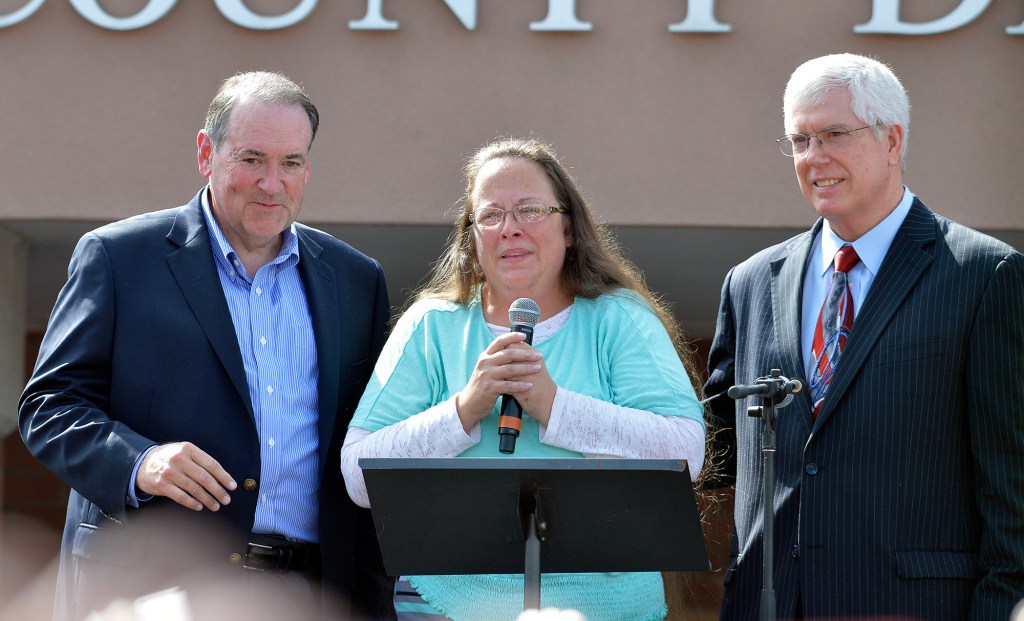
A network of Christians, attorneys and churches alerted the organization to Foundations for Nations’ situation, Mast told WyoFile. Liberty Counsel is providing legal services to the church for free. “I’m hopeful that this is close to being amicably resolved, and everyone will continue living their lives,” Mast said.
Liberty Counsel has taken on cases across the country in the name of religious freedom, including some that have landed before the U.S. Supreme Court. Many of these cases have dealt with abortion and LGBTQ matters.
In the 1994 case Madsen v. Women’s Health Center, Inc., for example, the organization successfully challenged parts of a city of Melbourne, Florida ordinance imposing 300-foot buffer zones around abortion clinics and requiring that demonstrators get permission to talk to people connected with such clinics. The U.S. Supreme Court struck down the buffer zones and a ban against images that could be seen from inside the clinic.
Liberty Counsel also successfully defended a Kentucky clerk from lawsuits filed against her after she refused to sign her name to marriage certificates following the U.S. Supreme Court’s legalization of same-sex marriage nationwide. Across the country, the group has also pushed back on “conversion therapy” bans, arguing that such bans violate free speech and religious freedom rights.
For Liberty Counsel, the Foundations for Nations’ conflict also ties to free speech and religious freedom concerns, Mast said. “Even though it might be offensive speech to some, we still have the right to say it, and people should not try to cancel others because of their faith,” he said of Lucas’ sermon and the resulting fallout from her message.

The organization has the help of “affiliated attorneys” who are on the ground in Wyoming. “When a matter arises in their local area, we reach out to them, offer them an opportunity to participate, and we are frequently taken up on that,” Mast said. “We appreciate our local counsel in Wyoming.”
Liberty Counsel has previously taken on other Wyoming cases, Mast said. “People have reached out to us from Wyoming. We’ve come to their assistance, and at least one of those cases I recall was successful,” he said. The Wyoming cases he has been involved with were “privately resolved without public fanfare.”
“I’m not at liberty to share what those cases are because of client privacy rights,” Mast said.
The group has also dealt with Native American law matters before, though this will be the first time the group has undertaken a matter involving the Northern Arapaho tribe, Mast said.


In addition to filing the discrimination complaint, Liberty Counsel sent a letter to Northern Arapaho Business Council Chairman Keenan Groesbeck in July after the council had adopted a resolution stating that outside organizations should consult with the council before initiating or expanding recurring organized activities on lands governed by the Northern Arapaho Tribe. While stating that the church believes it’s in compliance with the resolution, the letter asserted that the church “requires no authorization” from the Northern Arapaho Business Council “to conduct religious activities on its own private fee simple property,” and that the church “will not be leaving its property.”
Following Lucas’ sermon, the Northern Arapaho Business Council told church officials to leave the reservation, and some called on the Northern Arapaho and Eastern Shoshone tribes to use the “bad men” clause in their treaties with the U.S. government to oust the church from the reservation. But in an Aug. 31 resolution, the Northern Arapaho Business Council stated that it doesn’t regulate activities on the church’s private property, and that it hadn’t designated the church or any person as “bad men.”

Man will never be free until the last king is strangled with the entrails of the last priest.
The reaction to forbid this church reservation access, I believe is a right of the council. But, I also believe in free speech. If you don’t like what the church stands for…don’t attend. To deny access to the food bank is wrong. It may be that some of your friends and neighbors depend on the distribution of those goods
“Even though it may be offensive speech to some, we still have the right to say it, and people should not try to cancel others because of their faith.” UNLESS of course your thoughts
0 NOT AGREE with those of the Christian right. Then they have the right to tell you what you can read, who you can love, what you can do with your body, AND they use their religion to protect their “right” to govern your life. But you can’t challenge their religious beliefs because that’s “discrimination.” Hypocrisy at it’s best/worst.
I’ve never seen any group of people with greater spiritual awareness and presence than Native Americans. They do not need white folks telling them what they are doing wrong and what they need to believe to get on the right track. that is absurd. The community could learn so much from Native peoples if we could just humble ourselves and be teachable. For white folks to go onto a reservation and delegitimize Native beliefs and rituals and to force their brand of religion onto them is just wrong.
They didnt force anything on anyone.
We only have to look at the catholic church and priests to see some real discrimination to natives.
Always be suspicious of an organization with liberty in the title. It almost always means no liberty for you.
Mathew 10:14 King James
Religious bigots defending religious bigots