

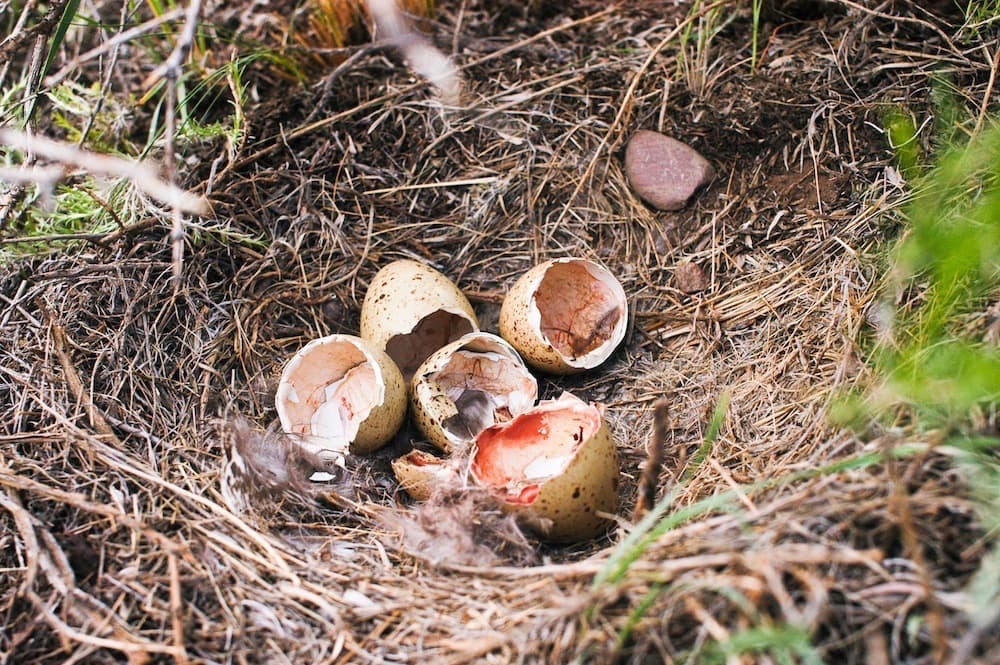
Gov. Matt Mead has “considerable reservations” regarding a bill allowing the collection of greater sage grouse eggs but nevertheless let it become law without his signature.
Egg collections would be undertaken for private captive-breeding programs under the new law. But Mead wants his Sage Grouse Implementation Team to weigh in on Game and Fish rules that would govern those activities.
“This diverse body contains many different viewpoints that must be considered for a responsible program to be developed,” the Governor said about the Sage Grouse Implementation Team. He made the remarks in a letter to Secretary of State Edward Murray on March 14.
Legislators passed the sage grouse game bird farm bill despite significant questions raised by ecologists. “The scientific community is not hopeful that Greater sage-grouse can be raised in a game farm setting,” Mead wrote. “Concerns have been expressed about disease control, genetic diversity, survivability of the released birds, and timing, location and method of egg collection,” the governor said.
Senators who supported the bill said it could help conservation and protect Wyoming’s oil and gas industries.
Never miss a story — subscribe to WyoFile’s free weekly newsletter
Wyoming’s sage grouse conservation efforts — led by the SGIT — helped keep the imperiled bird off the U.S. Fish and Wildlife Service’s threatened and endangered species list in 2015. Listing could have resulted in severe restrictions on grazing and energy development across the state’s vast sagebrush sea.
“Wyoming has worked hard on practical solutions for conserving the species…” Mead, a Republican, wrote. “I do not want to see that effort lost.”
Conservationists helped defeat an amendment to increase collection from 250 eggs per permittee per year to 1,000. Wyoming Outdoor Council staffer Steff Kessler called the failed 1,000-egg proposal “the most egregious part of the sage grouse bird farm bill,” in a recent newsletter to WOC members.
Some lawmakers didn’t like the bill. “No one thinks this is a good idea,” Sen. Cale Case (R, SD-25, Lander) said during debates. Scientists’ opposition to the bill was heavy.
“It is our considered opinion the determination to breed Greater sage-grouse in captivity for release to the wild contains far greater risk than it offers reward,” SGIT member Brian Rutledge wrote in an open letter to legislators. Among the worries are that egg collection would reduce nesting success, that birds raised in captivity would lack survival skills, and that game-farm birds may harbor and spread disease.
Habitat loss is the bottom line
The bottom line, said Rutledge, a conservation strategy and policy advisor for the Audubon Society, is that just the number of grouse is not the principal issue. “If the Legislature would like to invest in the conservation of Greater Sage-grouse, a greater effort such as habitat restoration and enhancement through established working groups, state agencies etc. would be much more effective than focusing efforts towards a captive breeding program.”
Similarly, Stacey Scott, chairman of the Bates Hole/Shirley Basin Sage Grouse Working Group, called the measure “ineffectual and quite possibly detrimental to the conservation of Wyoming’s sage-grouse populations.” The Casper Star Tribune published both opinions.
The paper also reported on a Senate committee meeting, saying the bill would allow a captive breeding program on a farm owned by Casper oilman and former Wyoming Senate President Diemer True. Most senators were unimpressed by the criticism during floor debate.
“This would complement the sage grouse management plan,” because it would “add another arrow” to the conservation quiver, Senate President Eli Bebout (R, SD-26, Riverton) said. In any given year, there would be 2.5 million eggs available, he said.

Sen. Curt Meier (R, SD-3, LaGrange) said grouse would lay a second clutch if their nests are raided, an assertion scientists say is problematical. “When you take them out of the nest the birds can lay more eggs,” Meier said.
Other senators said captive-bred birds could be transplanted to areas where they have disappeared. Sen. Charles Scott (R, SD-30, Casper) called the measure “a major potential protection for all the industries, including oil and gas.”
Captive-bred grouse also could be used on private hunting reserves, proponents of the bill said. Sen. John Hastert (D, SD-13, Green River) objected to that. “We have a legacy in Wyoming of not allowing wildlife being privatized,” he told the Senate.
If such was the case, then Wyoming should rethink its position on the possession of minnows as fishing bait, Sen. Larry Hicks (R, SD-11, Baggs) said.
One senator opposing the measure stated her opposition thusly; “This is only going to result in a lot of scrambled eggs.”

The precedent of transferring public ownership of wildlife to private interests has now been set. One of the next bills to come from under the Cheyenne Big Top may very well allow the collection of no more than 50 mule deer per permittee, for the purpose of breeding on properly fenced private land. You know, just in case we have another bad winter.
Too bad all the sperm of some of the legislators in favor of this stupid idea wasn’t collected and tossed out many years ago. Could’ve forced them to think with their brains, perhaps.
Yet another in a long list of bird-brained ideas from the Wyoming Legislature! This one could become a major detriment to Wyoming’s sage grouse as well as to Wyoming’s sagebrush wildlands.
Well said. The Wyoming Game and Fish Commission was created to take the politics out of fish and wildlife management, namely by the Legislature. Yet, more and more we see the Legislature interfering in Wyoming’s fish and wildlife management, usually to the detriment of our state’s wildlife heritage.
The sage grouse hatchery idea is beyond idiotic. it is simply the worst law the Legislature has come up with in a long line of stupid, poorly thought-out wildlife legislation. If the goofballs in Cheyenne who dreamed this one up actually think it will work, they are sorely mistaken.
Earth to legislators: let the G & F Commission handle wildlife matters.