


An obscure, largely transparent architectural feature has created an unlikely quandary for Yellowstone National Park officials.
On July 30, 1883, the National Hotel at Mammoth Hot Springs opened its doors to visitors. The turreted Queen Anne-style building drew visitors from around the world who came to see the world’s first national park.
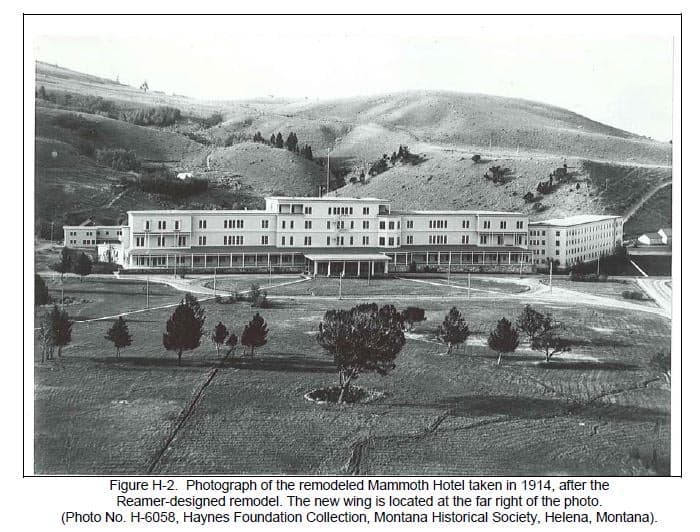
The hotel evolved over the years, as buildings do, receiving a new roof and losing its top floor. But one of the most significant changes came in 1913 when it gained a four-story guest wing.
The new wing was notable, both for its scale and for its new look, designed in a colonial revival style, said Tobin Roop, branch chief of cultural resources in Yellowstone.
The wing survived another remodel when the hotel was redone in 1936 in moderne style that deviated far from the rustic appearance of most of Yellowstone’s buildings.
Today the Mammoth Hotel is undergoing another renovation, this time to help the building withstand earthquakes and meet energy standards. But this renovation offered an unexpected challenge. The wing will remain, but 172 windows installed when it was built more than 100 years ago will have to go to bring the building up to current construction codes. And that puts the project at odds with historic preservation standards.
The National Park Service and the Wyoming Historic Preservation Office, which the federal agency consults on historic renovation projects, determined replacing the windows would have an “adverse effect” on the overall historic integrity of the building. The building is historically significant because of age and its place in the Mammoth Historic District, which includes the old Fort Yellowstone as well as other buildings and a campground. The different types of architecture represented in the building’s history also make it significant, Roop said.
In the hundreds of projects Roop’s worked on in Yellowstone, this is probably the fourth time one was deemed to have an “adverse effect,” he said. Usually the Park Service can avoid damaging the historical integrity of a building, but in some cases, like with the new windows, there isn’t a way to avoid it, only to offset it.
The hotel is run by Xanterra, but the Park Service owns and maintains the building. New windows will include frames that will help keep the building from collapsing during an earthquake and bring the building up to modern safety codes, Roop said. The hotel was open only during the summer when it was built, but now serves winter visitors as well. New windows will help the building meet the park’s energy and sustainability requirements, he said.
The park looked at ways to keep the single-pane wood windows. Staff considered adding storm windows, but they would have changed the entire look of the building and taken away from the historic architecture style of the time, a greater adverse effect than removing the windows, Roop said.
After evaluating several options and realizing none would make the building safe, energy efficient and keep the historical integrity intact, staff realized the windows had to go.
The new double-paned windows planned for installation look almost identical to the old ones.
“Still, that’s a lot of historical integrity we’re taking out of this wing,” Roop said.
To mitigate such a result, the Park Service often tries to improve another historic property. When the Park Service realized it couldn’t salvage the pub inside the Old Faithful Lodge, it rehabilitated the pub at the Lake hotel.
“We lost a pub and saved a pub,” Roop said.
The Park Service also tries to find ways to salvage historic components. It could, for example, keep the wood and glass from the historic windows and try to incorporate the materials into other projects in the park, Roop said. Or the park staff might create a new educational component, such as interpretive signs or exhibits explaining the park’s history. Options might include creating an exhibit that documents the evolution of lodging in the park, Roop said.
The new windows are a key component of a second phase of renovations on the Mammoth Hotel, which focuses on the guest wing. The Park Service has already invested about $8 million into renovations at the hotel, upgrading the heating and air conditioning and remodeling the main lobby, map room and guest cabins, among other improvements.
There is not yet a cost estimate for the second phase, since the project has not gone out to bid, said Morgan Warthin, a spokesperson with the park.
The park will pay for mitigation efforts to offset the window loss, Roop said.
Never miss a Peaks to Plains. Subscribe to our free weekly newsletter.
The second phase, which is dependent on Congress passing a budget that runs at least through Sept. 30, would begin in early summer. The hotel would remain open while work is done on the exterior and close in the fall for interior renovations. If the work stays on schedule, the hotel would reopen in July 2019. It will offer 79 rooms, all with private bathrooms, instead of the current 97, some of which share communal shower areas, Roop said.
The Park Service is taking public comments on ways to mitigate the impact of the window removal through today. As of Feb. 9, there were about six comments. They ranged from people asking to keep the windows in place to people who said they’d stayed in the hotel in the winter and hope the windows would be replaced for better insulation, Roop said.


Great news Ms Dayton I enjoy Western architecture, this was an insight to what the Park is doing.