

After the Wyoming Freedom Caucus did not accomplish many of its goals in the 2026 budget session, the group of hard-line House Republicans said the more moderate in comparison Senate and governor had stood in the way.
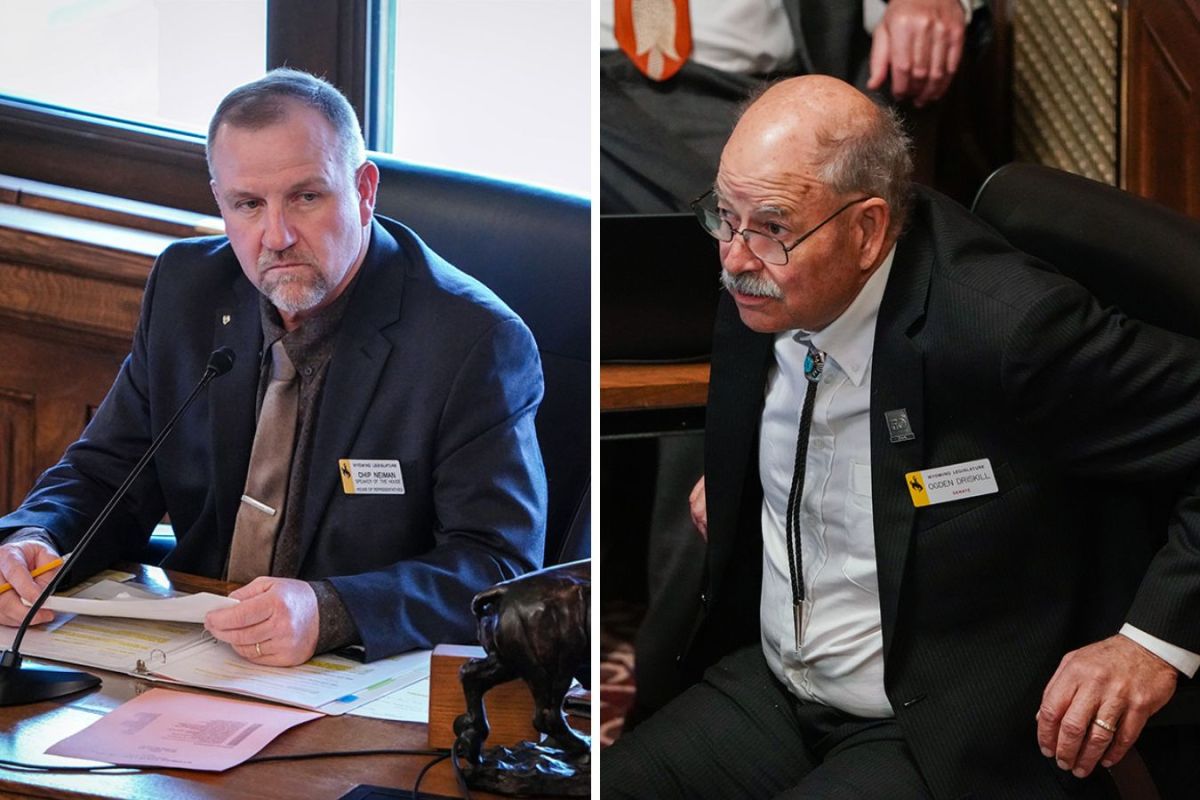
The caucus, which holds a majority in the House, is now setting its sights on the upper chamber, with several of its members and allies leaving the House to pursue Senate seats. Among those races, the marquee competition is likely Speaker of the House Chip Neiman, R-Hulett, versus the incumbent Sen. Ogden Driskill, R-Devils Tower.
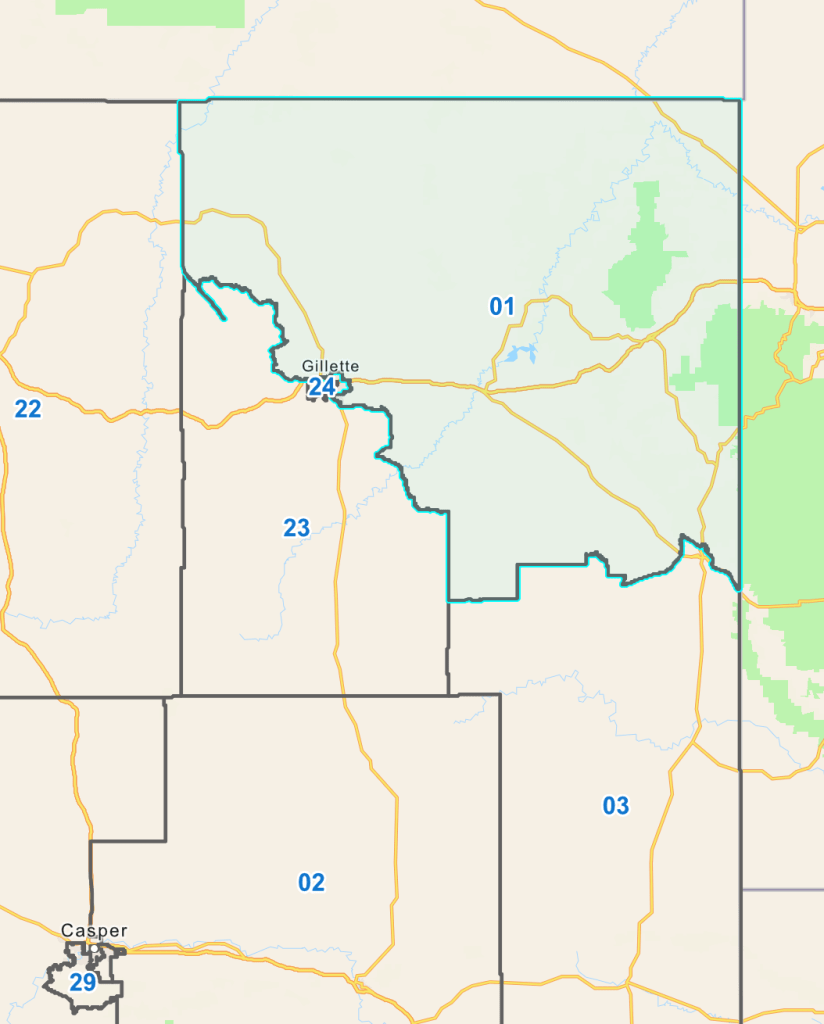
The two Republicans will square off in the primary election for Senate District 1, which encompasses the northeastern corner of the state, including all of Crook County and sections of Campbell and Weston counties.
Both men are lifelong ranchers with deep family ties to the area, and both have served in top legislative leadership positions during tumultuous times for their respective chambers. Each embodies the Republican split in the statehouse: Neiman, who is part of the Freedom Caucus and its allies, and Driskill, who represents the traditional wing of the Wyoming GOP.
Neiman did not respond to several requests for an interview before publication. On the last day of the 2026 session, which had been embroiled in controversy involving campaign checks handed out on the House floor, he announced his campaign plans.
“I’m going to run for Senate,” Neiman said. “I’m going to make my move, and I’m going to see if I can do any good over in that way, if the people of my district see fit to think that that might be somewhere where I can be useful. If they so see fit, that’s my plan.”
“And if the Lord says, ‘you’re better off staying home and feeding cows and cutting hay,’ I’m good with that, too,” Neiman told his colleagues.
Driskill, who has represented Senate District 1 since 2011, regularly spars with the Freedom Caucus, including on social media. The caucus has accused Driskill of not being conservative enough, while Driskill has accused the caucus of getting its marching orders from Washington.
With his fourth term coming to an end in January, Driskill did not intend to seek reelection. The 2026 session, however, changed his mind, he said.
“I’m not going to allow Speaker Neiman to walk in easily into the Senate,” Driskill said.
“I believe that this race is a referendum on: Do you want Freedom Caucus-style politics? Or do you want the style of politics that we work together with everybody and we come up with good policy for Wyoming?” he said.
In particular, Driskill pointed to the “Checkgate” controversy and the budget process as examples of the caucus’ character. The former involved a Teton County conservative handing out campaign checks to lawmakers on the House floor on the first day of the 2026 session and the legislation she advocated for. Both chambers voted to prohibit such behavior after WyoFile and the Jackson Hole News&Guide broke the story. The outlets also first reported that the donor, Don Grasso, said he had written 10 checks — all of which were intended for Republicans with ties to the Freedom Caucus — including Neiman.
After that report and after Neiman appointed members of a House Special Investigative Committee to examine the matter, he acknowledged that Bextel had given him one of the checks in question in the speaker’s office. Neiman denied wrongdoing, including in his remarks on the last day of the session.
“I’m gonna go home and I’m gonna try to explain some things to my people at home. I don’t think I really should have had to explain, but I’m gonna,” Neiman said, before offering his “full and complete forgiveness” to “anyone in this chamber.”
He had previously criticized the two Democratic lawmakers — Reps. Karlee Provenza and Mike Yin — for bringing the checks to the public’s attention.
A House Special Investigative Committee called the conduct “undesirable” but found that the exchange of checks on the floor did not violate the Wyoming Constitution nor did it amount to legislative misconduct. A Laramie County Sheriff’s Office criminal investigation is still underway.
Driskill said he didn’t expect law enforcement to find that any laws were broken, but the series of events was “unbelievable.”
“For people that claim to be transparent and take the high ground, this scandal is anything but,” Driskill said.
Ahead of the session, the caucus — which holds a majority on the Joint Appropriations Committee via members and allies — set out to shrink the size and scope of the state’s budget as its top priority.
Though it never provided a precise number for its desired spending reduction, the caucus made some targets clear through the process. Those included axing $40 million from the University of Wyoming’s block grant, defunding the Wyoming Business Council and halting state dollars from going to Wyoming Public Media. None of those proposals survived.
“Was it the budget that we wanted? Not exactly,” House Appropriations Chairman John Bear and former caucus chairman said at a post-session press conference.
“But we did something I think everybody should take note of, and that is that we held the reins back,” Bear said.
The Legislature approved a budget $53 million shy of Gov. Mark Gordon’s $11 billion in recommendations — meaning, the governor got more than 99% of what he asked for.
Driskill, alongside 16 other senators, sponsored an amendment to largely restore the budget bill to Gordon’s recommendations, pushing directly back on the Freedom Caucus. It was around that time, Driskill told WyoFile, that “people started calling me,” and saying “look, you cannot allow the Freedom Caucus to come over [to the Senate].”
The caucus’ four other top priorities, which included bills related to elections, library materials and the judicial branch, did not make it into law. But at a post-session press conference, the Freedom Caucus argued that those failures show the necessity of the group’s mission to see a state government that reflects the conservative leanings of the state’s voters.
“Regardless of where our priorities failed, it’s clear that we need reinforcements in Cheyenne,” Freedom Caucus Chairwoman Rachel Rodriguez-Williams said.
The Cody Republican is now running for secretary of state, while several other members and allies of the Freedom Caucus will run for Senate seats. Those lawmakers include Reps. Abby Angelos, R-Gillette, Paul Hoeft, R-Powell, Ken Pendergraft, R-Sheridan, and Daniel Singh, R-Cheyenne.
Chip Neiman
After voters first elected Neiman to House District 1 in 2020, the lawmaker had a meteoric rise through the lower chamber’s ranks.
In just his second term, Neiman’s Republican colleagues elected him House Majority Floor Leader. The position has traditionally gone to more senior lawmakers due, in part, to its powerful role in choosing the order of bills heard on the House floor, which, because of deadlines in the statehouse, can dictate which bills live and die. In 2024, after the Freedom Caucus won control of the House, Neiman was elected speaker in his third term.
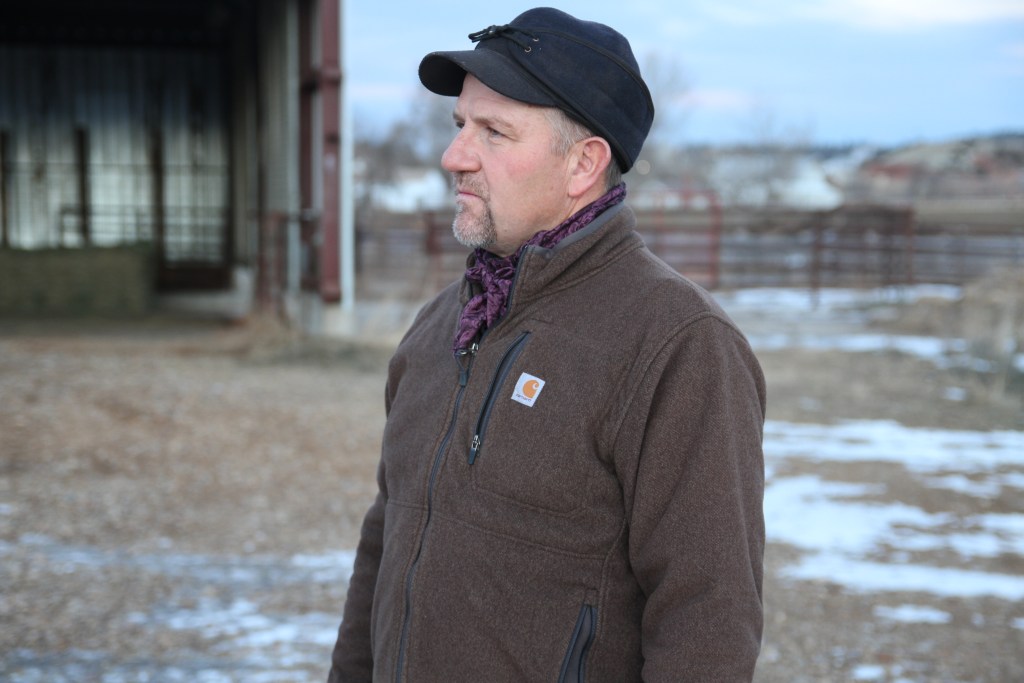
As a lawmaker, Neiman has largely focused on legislation to restrict or outright ban abortion in Wyoming. He was lead sponsor of the state’s newest anti-abortion law, which prohibits abortion in all but the earliest weeks of pregnancy, except in the case of a medical emergency. Under the law, if abortion providers fail to check for a fetal heartbeat, they could face up to five years in prison and the loss of their medical license.
It’s now being challenged in court on the same basis that two other abortion bans were ruled unconstitutional by the Wyoming Supreme Court in January. In that ruling, the high court determined both bans violated the state’s constitution, which protects an individual’s right to make their own health care decisions.
In 2022, 2023 and 2025, Neiman brought legislation to require runoff elections in certain races if a primary election winner receives less than 51% of the vote. None made it into law, but Neiman has said such legislation is needed to ensure candidates get a majority of support from voters before serving in public office.
Ogden Driskill
Early in his tenure in the Senate, Driskill focused on agricultural and water-use issues, first serving as a member on related committees.
In the last decade, he has chaired the Blockchain Task Force; the Senate Travel, Recreation, Wildlife and Cultural Resources Committee; the Select Natural Resources Funding Committee; the Senate Corporations, Elections and Political Subdivisions Committee; and the Air Transportation Liaison Committee.
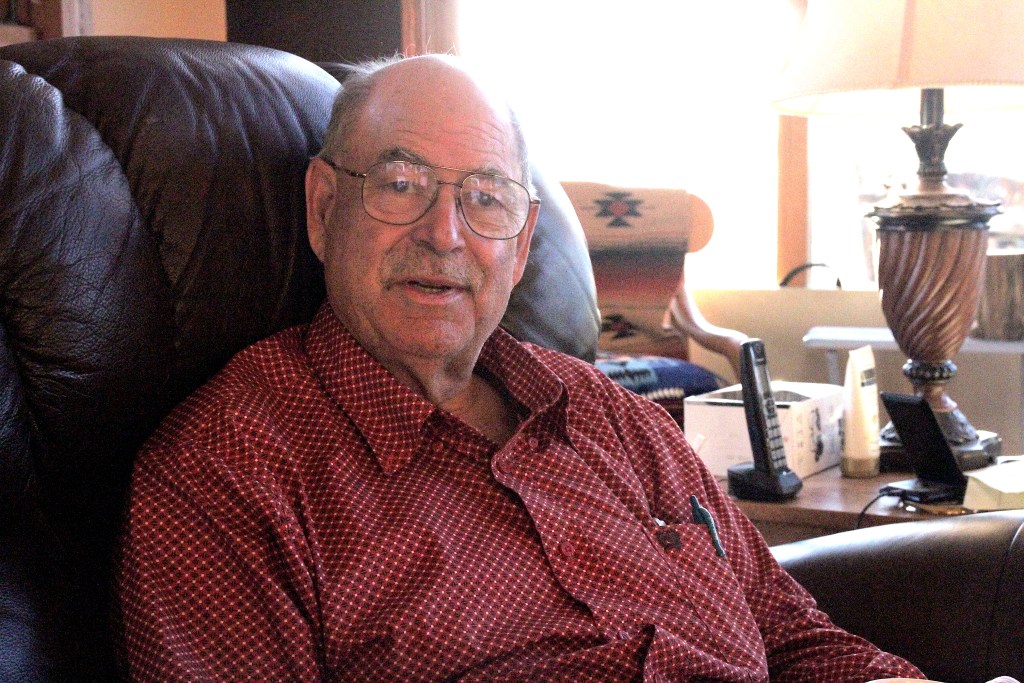
As Senate vice president, Driskill signed a letter alongside 31 other lawmakers in response to President Joe Biden’s 2020 win, urging Gov. Mark Gordon to add Wyoming to a lawsuit brought by the Texas attorney general to overturn the presidential election results of four swing states.
In 2023, his peers elected him as Senate president. The next year, however, they voted on day one of the budget session to override a decision he had made regarding committee assignments, setting the tone for much of the session, which culminated in the budget bill passing the Senate by a single vote.
As a lawmaker, Driskill has recently sponsored legislation to create the Wyoming charter school authorizing board, to establish a subcommittee to study the topic of county-aligned legislative districts and to financially incentivize the Professional Rodeo Cowboys Association to Wyoming.
Wyoming’s official candidate filing period opens May 14.

I have my personal guide for August 18th:
– Endorsed by trump – Nope
– Member of or affiliated with freedumb caucus – No way
– Vetted/financed by wygop headquarters – Absolutely No
A common sense, traditional, center right, true Republican will always get my solid YES vote.
What are your feelings about Americans for Prosperity?
I have never warmed up to Driskill but he’s a way better alternative to this supposed ultra christian checkgate freedumb clown. Hopefully by the end of the day August 18 the chip will be crying out ‘oh lawdie’ in defeat
I hope the good people of Devils Tower recognize how fully incompetent the Freedumb Caucus has been, myopically following their marching orders from out of state PACs that don’t know or care about the issues facing Wyoming, and vote this guy back to his ranch.
The freeDUM caucus, including Mr. Nieman, take their marching orders from some mysterious out of state man behind the curtain.Now, how un-Wyoming is that? All of theseFC sellouts, shysters and grifters should be run out of the state. See you at the primary polls, Chip Dip!
Let’s hope the good people of NE Wyoming tell Mr. Neiman that they would rather he feed cows and cut hay.
Me too… And for the cows’ sakes I pray that Mr. Neiman will seek and listen for “Divine” guidance as to which end of the poor unfortunate animals the hay gets forked into and does not seek his usual council from wealthy donors and DC overlords…
Remember the names of Angelos, Hoeft, Dendegraft and Singh in August. For the sake of keeping D.C policies out of Wyoming as long as possible.
I just love how Nieman hides behind “the Lord” but, sorry Checkgate Chip, the Lord and we have all seen your UnFreeDumb Carcass ways and don’t want you
Neither candidate looks good to me. A controlling fake christian and an election denier. I’m not in their district but hey, Let’s unload these goofballs.
I know! I read the article, and the first thing I thought was, “Grea – Dumb or Dumber….”
Gordon, I don’t disagree, but at this moment there are only the two vying for the position. Sometimes people feel forced to categorize candidates by: better than, or worse than. Small communities, small counties often don’t get a proliferation of viable candidates to choose from. In the 2020 primary election Neiman won by 132 votes, since then he’s run unopposed. Driskill has held a seat in the Senate since 2011, in his latest primary (2022), he defeated his nearest opponent by 388 votes. These numbers are meaningless unless you understand the dynamics behind each election. Ultimately, it will be decided by the voters whom, one hopes, is comprised of a group of intelligent, informed voters.
The danger to WY and the freedom that most people who live here value so highly is the Senate gaining a FC majority. Or as I call them the “white Christian nationalist party”. Use that name because “freedom” gives them a pass. They want nothing to do with freedom unless it is their “stuff”.
I plead with everyone out there to fight back against this!!! WY is the pilot program for the white Christian nationalist party. If they can do it here they will move on to bordering states and recreate their stranglehold. Money flows into WY from all their groups (Moms for Liberty,again that name is oxymoronic).
Speak up and help your moderate Republican in your county beat this effort back!!!
Tater chip is a phony. Driskill might be just as bad, but at least he’s not associated with freedumb caucus stupidity ..
Here’s hoping Neiman gets that message from God and stays home to feed cattle and cut hay. I think he’d be more useful there than trying to ram the freedom caucus agenda down the throats of Wyomingites.