

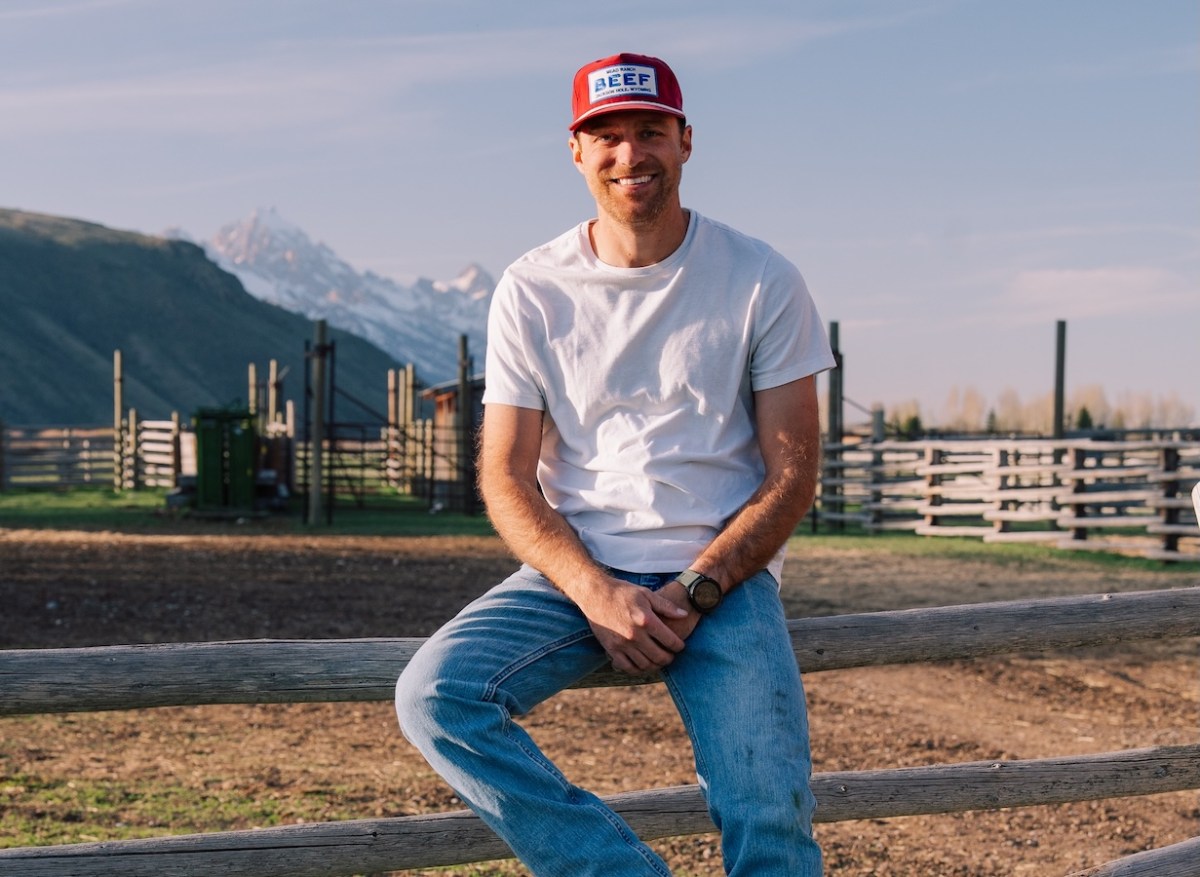
Sam Mead, Wyoming son, fifth-generation rancher, whiskey maker, Blue Origin engineer and small-town politician, will run against U.S. Rep. Harriet Hageman in the Republican primary for U.S. Senate.
Mead, 36, grew up in Jackson Hole’s Spring Gulch, where his family has a long history of ranching and politics. He studied Italian, math and business at the University of Denver, worked as an engineer at the space firm Blue Origin, branded cattle in Hot Springs County, boosted production at his family’s Wyoming Whiskey distillery in Kirby and was elected mayor of that town, population perhaps 75.
“I think I had 13 votes,” Mead said of his first election to his mayor’s post.
While 13 votes don’t represent a winning tally for a U.S. Senate seat, even in Wyoming, there’s lineage and a deep political history behind Mead.
He is the great-grandson of the late Wyoming U.S. Sen. and Gov. Cliff Hansen, the grandson of the late Mary Mead, who ran for governor in 1990, and the nephew of former Gov. Matt Mead. His mom, Teton County school board member Kate Mead, ran for the state Legislature in 2018 but lost to Democrat Mike Gierau.
“There’s kind of a standard that you have to live up to,” he said of his family’s political heritage. “I don’t feel like I can sit on my hands anymore when Wyoming deserves so much better.”
In announcing his run, Mead pointed to Wyoming’s public lands and his desire that they remain public, the federal deficit that will plague his two children and countless others if not addressed and a lack of accountability on the part of Hageman, among other things. The proposed sale or “disposal” of millions of acres of public land in the West, endorsed by Hageman, spurred him into the race, he said.
“I think that’s incompatible with a lot of the values that I believe are central to people in Wyoming,” Mead said of public land disposal. Hageman never explained herself adequately, he said.
“And when confronted about it, there didn’t seem to be a lot of listening going on,” he said of the congresswoman. “It was kind of ‘dig your heels in and say that’s the way things are.’
“It seems like the only way you can explain that is there’s interests outside of Wyoming that think [public land sales/disposal] is a good idea,” he said. “I don’t know how you can defend that and say that you’re representing Wyoming.”
“Wyoming,” Mead said, “deserves better than that.”
Lessons learned
Mead learned from his time at Blue Origin, Wyoming Whiskey, at family ranches and as mayor, he said, and all that prepared him to run.
“A lot of what I like to do is identify things that can be improved,” he said of his time at the distillery. “We went from maybe 800 barrels a year that we were making to on the order of 3,000 barrels.
“It was quite a trial by fire,” he said. “You’re so rural, there’s no cavalry to call on you when you get into trouble. We just got down to business and got it done.”
Adversity steeled him, he said. “The only good lessons are hard lessons, and I certainly had a few there.”
His department at Blue Origin, where he manufactured parts for spacecraft, was like the Wild West, he said.
“We were trying to figure things out and solve challenges that, to my knowledge, no one had solved,” he said. “It was really cutting-edge.
“I don’t feel like I can sit on my hands anymore when Wyoming deserves so much better.”
Sam Mead
“It didn’t matter, really, who brought suggestions forward,” Mead said. “It was the merit of the suggestion that mattered.”
As Kirby’s mayor, “I learned that listening is one of the most important things,” he said. “Sometimes the best advice comes from the least expected places.”
Being a good leader, “it’s really just a willingness to work with other people — listen to everybody in the room and put the work in to get it done.”
The future
Mead and his wife, Brianna, have two children, “and I worry about the future of this country if we don’t start spending in a way that reflects what we can bring in in terms of revenue.” He said legislative measures have to ensure they will pay for themselves, and more.
Americans agree we can run our government more efficiently, he said. “But I think we need to fish where the fish are.”
He pointed to the military, which he believes should remain strong. But things like the procurement process are inefficient beyond the intent of reducing fraud. He pointed instead to NASA as a model where the agency has been successful with a strategy of “smaller, cheaper, faster.”
“I think we can apply some of our best thinkers and come up with a better way to do things,” Mead said.
The Wyoming delegation has to be more in touch, Mead said. “No representative of Wyoming should talk down to the people of Wyoming,” he said. “Our representatives need to listen to us, and they need to hear us.
“I’m someone who has a wide range of experience across a wide range of careers, and full confidence that I can serve the people in Wyoming,” Mead said. “I’ve always been drawn to really hard challenges, and I’d be lying if I said I didn’t get over my head every once in a while, but that’s largely served me well.”

Harriet Hageman needs to go. She is already on record to sell off public lands. A couple of years back she was complaining that there isn’t enough private land around Pinedale for growth of that community. A quick check of the land ownership map of Sublette County proved that to be not true at all. She just makes stuff up. She was all in a tizzy about unelected bureaucrats making all the rules and at the same time was 100% in favor of Elon Musk devastating various government programs. I’d like to know who elected him.
So was Hillary Clinton, when you get down to the facts of djt.
Wonderful. Keeping our public lands is an issue that unites Wyomingites from all walks of life. Let’s support a young person who will think for himself, and work for the benefit of Wyoming, its people, wildlife and land. Thank you for throwing your hat in the ring.
I’d like to know his views on the Trump-Epstein files.
I’d be honored to post a sign for you.
I am delighted wr have a viable option to replace Hageman.
Thank goodness we have a candidate that did not beep the Trump horn. Hopefully he will continue to maintain his distance from this dishonest president.
Sam Mead, Matt Mead? Sam has never had to work an honest day in his life. He wouldn’t know adversity if it bit him in the butt. The picture of him leading this article is all that needs to be said! Sam sitting on his now, Billion dollar fence, telling me how corrupt Wyoming politics have become, and how he, with his vast amount of experience in such things, can fix it all. What a shit show Wyoming has become!
how corrupt Wyoming politics have become. and now he is telling me what is wrong with Wyoming and how he can fix it
I like him, even if he is a republican.
Heck, I’m easy. Someone not named Harriet and thinks public land in Wyoming is important.
What’s the catch?
Sounds like a solid guy, much much better then the forked tongued MAGAhag. The Senate race should be interesting, especial if Gov Gordon jumps in…
Good for Wyoming to have someone with the positive history of his family, and their values, taking this on. Again, as someone living out of state I can’t vote. But I can send a check and encourage others to do it. Including you republicans who have been moved aside by idiots.
A much needed glimmer of hope for our big square state.
Sam seems like a very interesting candidate to run against an opportunistic, knee jerk MAGA supporter who changed loyalties as soon as the wind direction changed. My guess is Harriet has barely set a foot on the Pubilc Lands that mean so much to average Wyomingites like me. So much of our enjoyment of
Wyoming lifestyle is based around they amazing lands that she sees as land to be disposed of for quick dollars, with no thought for future generations! I’m proud to be “Public Land Owner”. Dan White Cody, Wyo
The proof, as they say, is in the pudding — can we ever know exactly how someone will behave in office until they are actually elected? — but based on this article, Sam sounds like a solid guy with many varied interests and experiences, which are positive attribute to me. On the other hand, I’d vote for Sam Mead’s dog before casting my ballot for Hageman.
He sounds like a great candidate.
Sadly, with the SAVE Act in the offing, I cannot change my registration to help him in the primaries, but I can donate.
A voter has until May 13 to change party affiliation at their county clerk’s office
Sam Mead sound like he’s interested in helping the citizens of Wyoming and the rest of America rather than advancing personal interests and his political career. I admire that.
No mention of Trump, critical of Hageman and the other two, seems to be a well balanced guy from Wyoming (like the old days). I’m interested..tell me more.
“Lack of accountability” is a great definition of hageman but trump loves her. I like this guy and if he has Senator Cliff Hansen DNA there is hope.
Hageman also voted to open the Boundary Waters, the most visited Wilderness area, to mining by a foreign company. In 100 years we will still need more copper, but we will also need places untrammeled by man.
Boxes checked – public lands, entrepreneur, listener, problem-solver, obligation to future generations, (very) small town mayor. WY now has a choice in August.
As long as he isn’t endorsed by Trump who thinks he is Jesus , he will have my support.
And his position on Trump is what?
Interesting !
Wyoming just got through with a political dynasty with the Cheney’s.
They ended up endorsing & voting for vp Kamala Harris ?
Every coat has a different color on the inside whether it’s pocket lined or environment as altered, it still needs to do its job as intended.
You seem to think voting for Harris was a bad thing. She was right about everything. She told you Trump was going to be even worse and meaner the 2nd time. She told you that tariffs were inflationary. She told you he would do Putin’s bidding in Ukraine, she told you he was too stupid to handle a crisis, she told you he would drift, lie and steal. But, I guess 3 trans athletes were too much for you.
100 percent
It is kind of hard to grow up in Wyoming and not want to preserve parts of it for future generations and visitors from around the world. HH already showed us that she doesn’t value Wyoming public lands and thinks Wyomingites who do are “hysterical”. She’s now extended her footprint into Minnesota with the Boundary Waters.
Paul, I’m not sure what your comment is trying to tell me. Political dynasties, well, we see them every day in our city and county positions. There are times that I have to shake my head, and wonder if anyone has a clue that just a few extended families control so much of what happens in our communities, school districts and county government. Putting that aside, as one commenter stated, anyone other than Hageman will get my vote, and I’m all for someone smart enough to understand that the current administrations actions are not to everyone’s liking.